Echoes of Hungary's Late Bronze Age

下载的 PDF 是图像副本。如需可选中文本及更好的辅助技术支持,请使用打印功能。

Echoes of Hungary's Late Bronze Age

揭开一个失落的文明

正在加载考古记录……

正在收集古代记录

跳转到主内容
Echoes of Hungary's Late Bronze Age
文明焦点

Echoes of Hungary's Late Bronze Age

Four individuals from the Carpathian Basin illuminate local life and preliminary DNA signals

1700 CE - 800 BCE
Hungary (Carpathian Basin)
滚动开始
Chapter I

剧情

了解 Echoes of Hungary's Late Bronze Age 文化

Archaeological remains from 1700–800 BCE in Hungary (Besenyszög, Köröm-Kápolnadomb, Vas County) tie material culture to early genetic snapshots. With only four samples, DNA hints are preliminary but connect to broader Late Bronze Age shifts in Central Europe.

Time Period

1700–800 BCE

Region

Hungary (Carpathian Basin)

Common Y-DNA

Undetermined (insufficient data)

Common mtDNA

H79, H (each observed in 1 of 4 samples)

Chapter II

时间线

这种文化历史上的关键时刻

1700 BCE

Onset of Hungary_LBA horizon

Local Late Bronze Age communities in the Carpathian Basin become archaeologically visible; material culture and settlement patterns reflect continuity and new contacts.

1200 BCE

Regional transformations

Shifts in metalwork styles and exchange networks suggest intensified regional interaction across the Pannonian plain.

800 BCE

Terminal phase

By around 800 BCE, Late Bronze Age developments transition into early Iron Age trajectories across Hungary.

Chapter III

Origins & Emergence

The Hungary_LBA grouping represents human remains dated to the Late Bronze Age horizon of the Carpathian Basin (circa 1700–800 BCE). Archaeological contexts at Besenyszög (Berek-ér partja), Köröm-Kápolnadomb, and a Kápolnadomb locality in Vas County preserve fragments of a landscape in transition: cattle and sheep pastoralism, mixed cereal cultivation, and exchange networks that linked river valleys and upland routes. Material culture from this period—bronze tools, ornaments, and pottery styles—speaks to regional adaptation and interactions across the Pannonian plain.

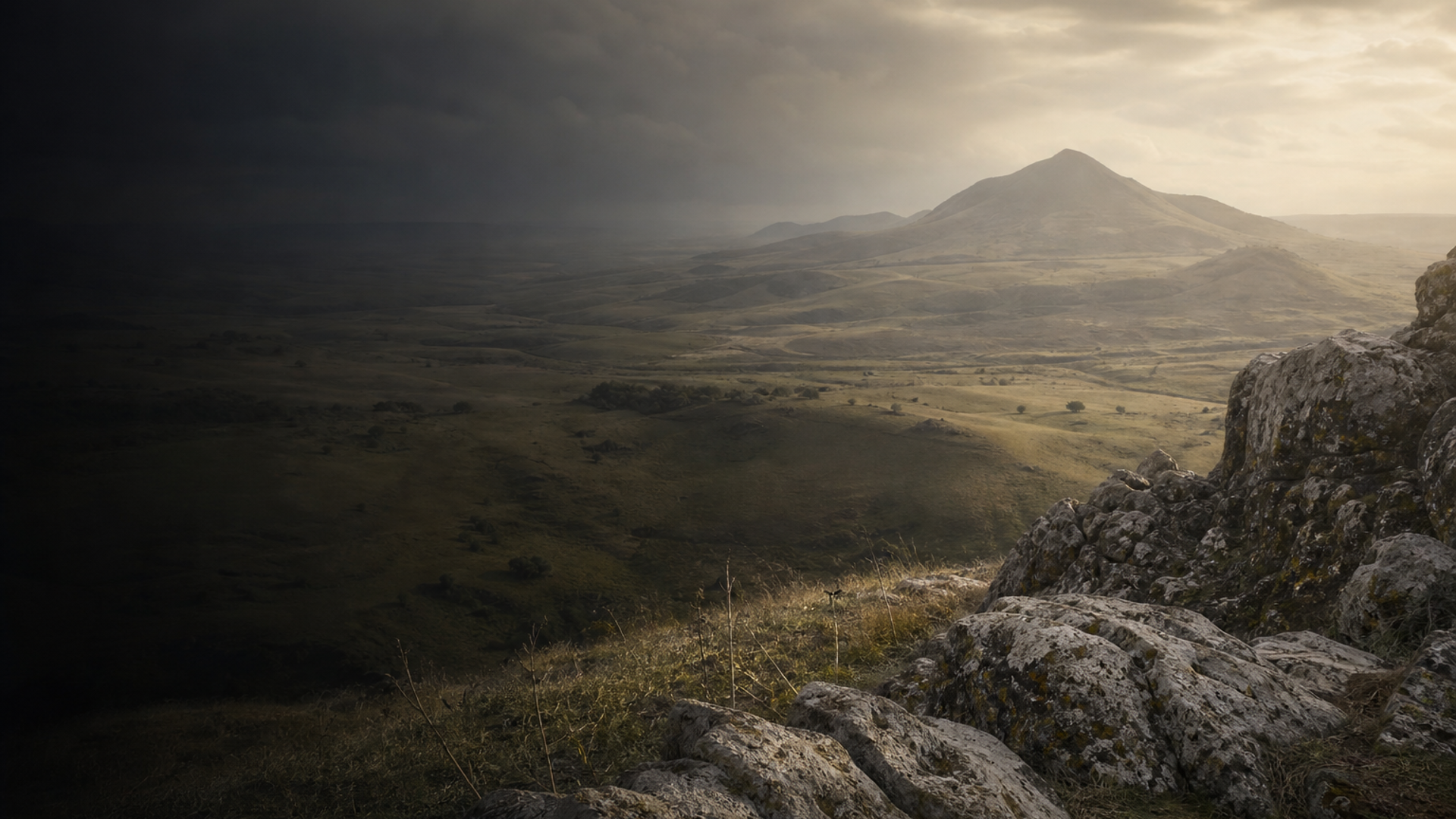
Archaeological data indicate continuity with Middle Bronze Age practices alongside new craft specializations and long-distance contacts, visible in metalwork styles and raw material sourcing. Limited settlement excavation and funerary sampling mean that many behavioral patterns remain only partially visible; however, the distribution of sites and grave goods points to communities negotiating mobility, resource control, and emerging social distinctions. The cinematic sweep of the landscape—floodplain meadows, winding rivers, and fortified hilltops—provides the stage upon which these Late Bronze Age lives unfolded.

Limited evidence suggests that local traditions persisted even as new influences arrived, making the Hungary_LBA assemblage an important but provisional window into the region’s evolving Bronze Age societies.

  • Sites: Besenyszög Berek-ér partja; Köröm-Kápolnadomb; Kápolnadomb (Vas County)
  • Material culture shows local continuity and external contacts
  • Evidence is constrained by limited excavation and sampling
Chapter IV

Daily Life & Society

Everyday life in Late Bronze Age Hungary likely revolved around mixed farming, seasonal movement, and craft production. Archaeobotanical and faunal patterns in the broader region indicate barley, emmer/wheat cultivation, and a reliance on cattle and sheep; while bronze casting and repair were community focal points, generating an economy of specialists and household producers. Grave assemblages from nearby Late Bronze Age cemeteries often include utilitarian items—knife blades, pins, and pottery—that speak to domestic routines as much as ritual behavior.

Settlement traces near river margins, such as at Besenyszög’s Berek-ér partja, suggest communities exploiting floodplain fertility and riverine resources. Social life can be glimpsed in differential burial inclusions and the spatial arrangement of graves, suggesting emerging status differences but not extreme stratification. Exchange networks carried metal objects, raw materials, and styles across the Carpathian Basin, producing a cultural landscape that is both local and connected. However, because direct contextual data from the four genetic samples are limited, detailed reconstructions of household structure or social hierarchy remain tentative.

Archaeological interpretation must therefore balance evocative reconstructions of daily life with caution: the current picture is compelling but incomplete.

  • Economy: mixed farming, herding, and bronze craft
  • Social signals visible but subtle; status differentiation plausible
Chapter V

Genetic Profile

Genetic data for Hungary_LBA derive from four individuals dated between 1700 and 800 BCE, recovered at Besenyszög Berek-ér partja, Köröm-Kápolnadomb, and a Kápolnadomb site in Vas County. With such a small sample count, conclusions must be framed as preliminary. Mitochondrial DNA shows haplogroups H79 (1 individual) and H (1 individual), lineages commonly associated with European Neolithic and later populations. No dominant Y-chromosome pattern can be reported from this dataset—Y-DNA assignments are undetermined or not consistently represented across the four samples.

In the wider Bronze Age of Central Europe, published studies consistently document the persistence of farmer-derived maternal lineages alongside incoming Steppe-related ancestry introduced earlier in the 3rd millennium BCE. Archaeogenomic patterns suggest admixture between these components during the Bronze Age, shaping regional populations. For Hungary_LBA specifically, the limited mtDNA observations fit within this broader tapestry but do not by themselves reveal population-level shifts or migration events.

Future sampling and genome-wide data would be required to test hypotheses about Steppe ancestry proportions, kinship within burial groups, and sex-biased migration. Until then, the genetic portrait remains a delicate, evocative sketch rather than a full portrait.

  • mtDNA: H79 and H observed (each in one sample); suggestive but limited
  • Y-DNA: no reliable common haplogroup detected; sample size insufficient
Chapter VI

Legacy & Modern Connections

The Hungary_LBA individuals offer a quiet but poignant link between modern Hungarians and the deep past of the Carpathian Basin. Archaeological continuity—settlements in river valleys, agricultural practices, and material traditions—connects landscapes people still inhabit today. Genetically, the mitochondrial lineages observed (H79, H) are not unusual in Europe, reminding us that some maternal ancestries persist across millennia even as demographic tides shift.

Caution is essential: with only four samples, it is premature to equate these remains with broad population histories. Nevertheless, when combined with larger regional studies, these local data points help refine models of continuity and change through the Bronze Age, contributing to a multilayered story in which mobility, exchange, and local resilience all play roles. For museum visitors and descendants alike, these bones and genomes evoke a world where daily lives—harvests, metallurgy, family ties—unfolded beneath the same skies as today.

  • Contributes to regional picture of continuity and admixture
  • Small sample size means connections to modern populations are tentative
AI 电源

AI 助手

就 Echoes of Hungary's Late Bronze Age 文化提问

AI 助手 由DNAGENICS公司制作

解锁此特性
Ask questions about the Echoes of Hungary's Late Bronze Age culture. Our AI assistant can explain genetic findings, historical context, archaeological evidence, and modern connections.

AI 样本分析

Echoes of Hungary's Late Bronze Age 文化是人类历史中值得了解的一章……

遗传分析揭示了与早期种群的联系,同时显示了独特的适应和文化创新的证据。 古代DNA样本提供了对迁徙模式、社会结构以及古代种群之间的生物关系的深刻见解。

这是人工智能分析的预览。 解锁全AI 助手, 以探索关于:

  • 遗传组成和祖先
  • 移徙模式和起源
  • 日常生活和文化习俗
  • 现代遗传遗产

探索更古老的文化

揭开古代世界文明的故事

使用优惠码 可减免 35% • 11月12日 到期




