Echoes of La Tène in Lower Austria

下载的 PDF 是图像副本。如需可选中文本及更好的辅助技术支持,请使用打印功能。

Echoes of La Tène in Lower Austria

揭开一个失落的文明

正在加载考古记录……

正在收集古代记录

跳转到主内容
Echoes of La Tène in Lower Austria
文明焦点

Echoes of La Tène in Lower Austria

Three Iron Age individuals at Pottenbrunn reveal a fragmentary genetic window into La Tène Austria

500 CE - 200 BCE
Lower Austria (St. Pölten; Pottenbrunn), Central Europe
3 Ancient Samples
滚动开始
Chapter I

剧情

了解 Echoes of La Tène in Lower Austria 文化

Archaeological evidence from Pottenbrunn (St. Pölten, Lower Austria) dated 500–200 BCE aligns with La Tène material culture. Ancient DNA from three individuals shows mtDNA diversity (H, T2b, U7b) but Y-DNA is not reported; conclusions are preliminary due to low sample count.

Time Period

500-200 BCE

Region

Lower Austria (St. Pölten; Pottenbrunn), Central Europe

Common Y-DNA

Not reported / limited samples

Common mtDNA

H (1), T2b (1), U7b (1)

Chapter II

时间线

这种文化历史上的关键时刻

500 BCE

La Tène presence documented in Lower Austria

Material culture and burials at Pottenbrunn align with La Tène styles; beginning of the dated interval for the sampled individuals.

Chapter III

Origins & Emergence

The La Tène horizon spread across much of temperate Europe during the later Iron Age, and in Lower Austria its presence is visible in pottery shapes, metalwork motifs and burial practices. At Pottenbrunn (near St. Pölten), archaeological data indicates activity between roughly 500 and 200 BCE that aligns with the empire of La Tène artistic vocabulary: sinuous decoration, stamped and inlaid metalwork, and a material world tied to ironworking and expanded regional exchange.

Limited evidence suggests these communities were integrated into long-distance networks that stretched across the Danube corridor. Settlement patterns and cemetery assemblages in nearby Austrian localities imply a mix of local traditions with incoming stylistic influences rather than wholesale population replacement. The three sampled individuals from Pottenbrunn add a genetic dimension to this picture, but must be read cautiously: with only three genomes, demographic interpretations remain tentative.

Archaeologically, La Tène emergence in Austria is best seen as a dynamic cultural expression—craftspeople, warriors, and traders fashioning a shared visual language across different peoples—rather than a single homogeneous population. Ancient DNA can test these models, but current genetic sampling from Pottenbrunn is insufficient to resolve fine-scale movements or the relative roles of ancestry versus cultural diffusion.

  • La Tène material culture present at Pottenbrunn (500–200 BCE)
  • Cultural influence across the Danube corridor, mixing local and external traditions
  • Genetic sample size (n=3) is too small for broad demographic claims
Chapter IV

Daily Life & Society

Life in La Tène-era Lower Austria unfolded along river valleys and fertile plains where iron tools reshaped agriculture and craft. Archaeological remains from the broader region suggest a society organized around small farms, craft workshops, and seasonal marketplaces that connected hinterlands to major routes. At Pottenbrunn, funerary data and surface finds imply communities with social differentiation visible in grave goods: personal adornment, imported items, and tools.

Artisans worked iron, bronze and occasionally gold, producing weapons and ornaments with the characteristic La Tène curvilinear style. Such objects were not merely functional; they were social signals. Trade in salt, metals and finished goods tied Lower Austria to networks stretching into present-day France, Switzerland and the upper Danube. Ritual and belief are glimpsed in burial orientations and offerings, but archaeological interpretations vary by site and are often contested.

Because the available DNA sample set from Pottenbrunn is small, we cannot confidently link specific material-status markers to particular ancestries. Still, the archaeological assemblage paints a cinematic picture: river mists lifting over fields, the ring of a smith’s hammer, and the glitter of inlaid decoration on a warrior’s belt.

  • Economy centered on mixed farming, ironworking and regional trade
  • Material culture shows social differentiation; grave goods indicate status
Chapter V

Genetic Profile

Ancient DNA from three individuals excavated at Pottenbrunn (St. Pölten, Lower Austria) and dated to the La Tène horizon (c. 500–200 BCE) yields a modest but informative mitochondrial picture: one H lineage, one T2b, and one U7b. These mtDNA haplogroups reflect a mix of common European maternal lineages (H, T2b) alongside a less common U7b, which today has its strongest frequencies further southeast. The presence of U7b in the sample set may indicate long-range connections or ancestry components that were present in Iron Age Central Europe, but with only three samples this is speculative.
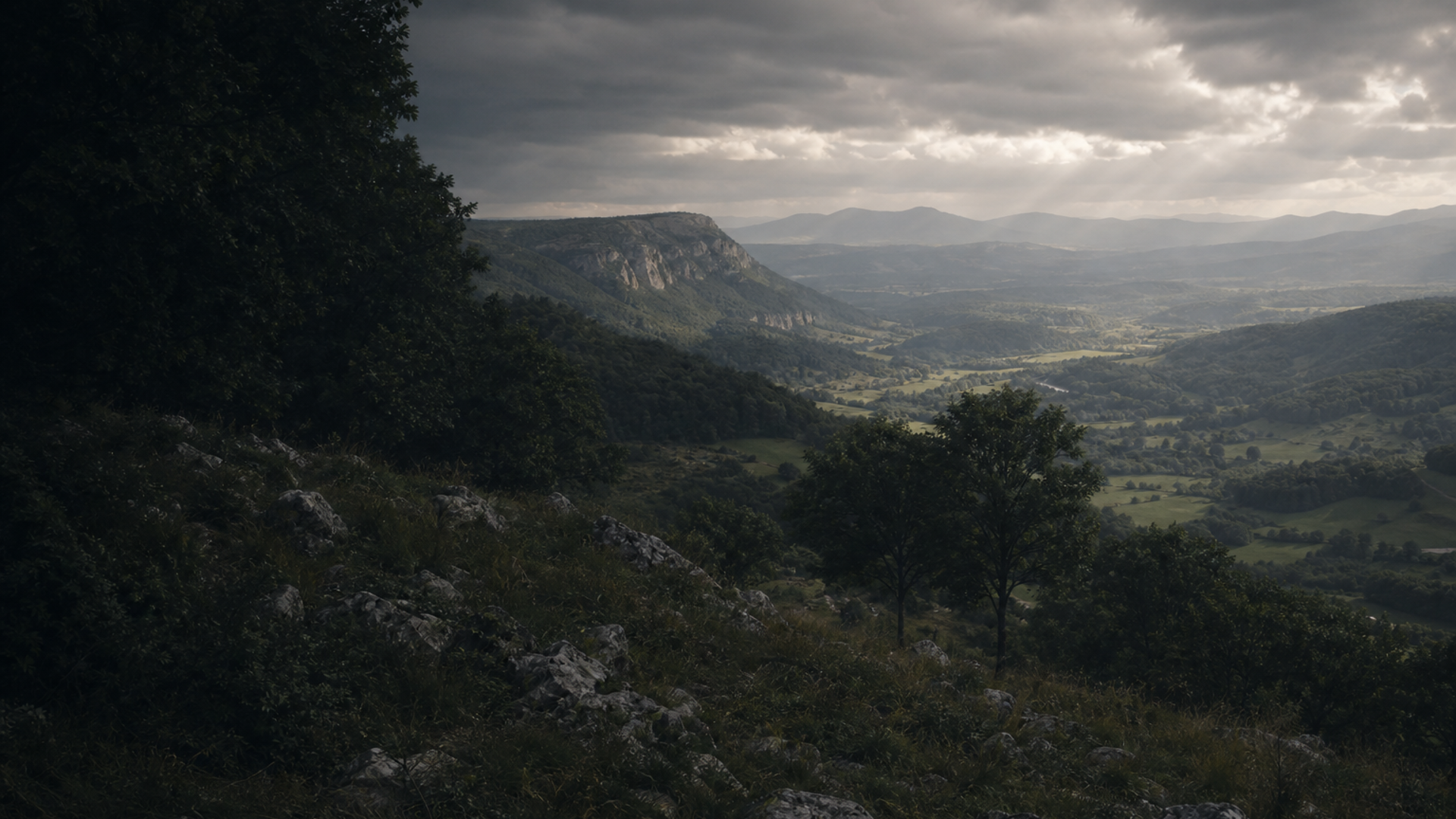

No consistent Y‑DNA pattern is reported for these individuals in the provided dataset. That absence limits our capacity to comment on paternal lineages, patrilineal social structure, or potential sex-biased migrations. Archaeological interpretations that propose mobility or elite exchange remain viable, but genetic confirmation requires larger, geographically and temporally broader sampling.

Because the sample count is below ten, all genetic inferences should be treated as preliminary. Future work—adding more genomes from Pottenbrunn and neighboring La Tène cemeteries—will be essential to test whether the maternal diversity seen here reflects local continuity, incoming gene flow, or the tangled demographics of Iron Age Europe.

  • mtDNA: H (1), T2b (1), U7b (1) — suggests maternal diversity
  • Y‑DNA: not reported; small sample size (n=3) means conclusions are preliminary
Chapter VI

Legacy & Modern Connections

The La Tène cultural legacy endures in motifs, place names and the archaeological landscape of Austria. Pottenbrunn’s three genetic snapshots hint at a region woven into broader Iron Age networks—people whose descendants, shuffled by centuries of migration, may contribute to the genetic tapestry of modern Central Europe.

Archaeogenetics bridges past and present but must be wielded with care: small ancient sample sizes cannot map neatly onto modern populations. Instead, these genomes are like film fragments—brief, evocative scenes that suggest wider narratives. As more La Tène-era genomes are recovered across Austria and neighboring regions, researchers will better resolve how ancestry, culture and mobility combined to shape the human story of the Iron Age Danube.

  • Haplogroups hint at links between Central and southeastern maternal lineages
  • Current genetic data are preliminary; additional sampling will clarify long-term connections
Chapter VII

样本目录

3 份与 Echoes of La Tène in Lower Austria 文化相关的古 DNA 样本,为研究该时期的人群提供遗传线索。

3 / 3 samples
纵向 样本 国家 大纪元 日期 文化 性别 Y-DNA mtDNA
重建的肖像画 La Tène individual, Austria
La Tène individual, Austria
Austria Austria_IA_LaTene 500-200 BCE Celtic M R-BY203521 T2b
重建的肖像画 La Tène individual, Austria
La Tène individual, Austria
Austria Austria_IA_LaTene 500-200 BCE Celtic F - H11a2
重建的肖像画 La Tène individual, Austria
La Tène individual, Austria
Austria Austria_IA_LaTene 500-200 BCE Celtic F - U7b
AI 电源

AI 助手

就 Echoes of La Tène in Lower Austria 文化提问

AI 助手 由DNAGENICS公司制作

解锁此特性
Ask questions about the Echoes of La Tène in Lower Austria culture. Our AI assistant can explain genetic findings, historical context, archaeological evidence, and modern connections.
AI 样本分析

Echoes of La Tène in Lower Austria 文化是人类历史中值得了解的一章……

遗传分析揭示了与早期种群的联系,同时显示了独特的适应和文化创新的证据。 古代DNA样本提供了对迁徙模式、社会结构以及古代种群之间的生物关系的深刻见解。

这是人工智能分析的预览。 解锁全AI 助手, 以探索关于:

  • 遗传组成和祖先
  • 移徙模式和起源
  • 日常生活和文化习俗
  • 现代遗传遗产

探索更古老的文化

揭开古代世界文明的故事

使用优惠码 可减免 35% • 11月12日 到期