Echoes of Late Iron Age England

下载的 PDF 是图像副本。如需可选中文本及更好的辅助技术支持,请使用打印功能。

Echoes of Late Iron Age England

揭开一个失落的文明

正在加载考古记录……

正在收集古代记录

跳转到主内容
Echoes of Late Iron Age England
文明焦点

Echoes of Late Iron Age England

A portrait of communities across Somerset to Yorkshire, where archaeology and DNA meet

351 BCE - 200 CE
United Kingdom (England)
滚动开始
Chapter I

剧情

了解 Echoes of Late Iron Age England 文化

England_LIA (351 BCE–200 CE): archaeological sites from Somerset to Cambridgeshire reveal Late Iron Age lifeways. Ancient DNA from 28 individuals shows a predominance of Y-lineage R and diverse maternal ancestry (H, J, U, K2a, T), suggesting local continuity with episodes of mobility and continental contact.

Time Period

351 BCE – 200 CE

Region

United Kingdom (England)

Common Y-DNA

R (most), I, G, F

Common mtDNA

H, J, U, K2a, T

Chapter II

时间线

这种文化历史上的关键时刻

350 BCE

Regional diversification in Late Iron Age

Communities across Somerset, Gloucestershire and Yorkshire develop distinct material traditions and settlement patterns.

43 CE

Roman invasion and contact

Roman military campaigns begin in southeastern Britain, accelerating cultural and economic connections across England.

200 CE

End of sampled range / provincial transitions

By the early 3rd century, Roman influence reshapes many social and economic landscapes recorded in earlier Iron Age deposits.

Chapter III

Origins & Emergence

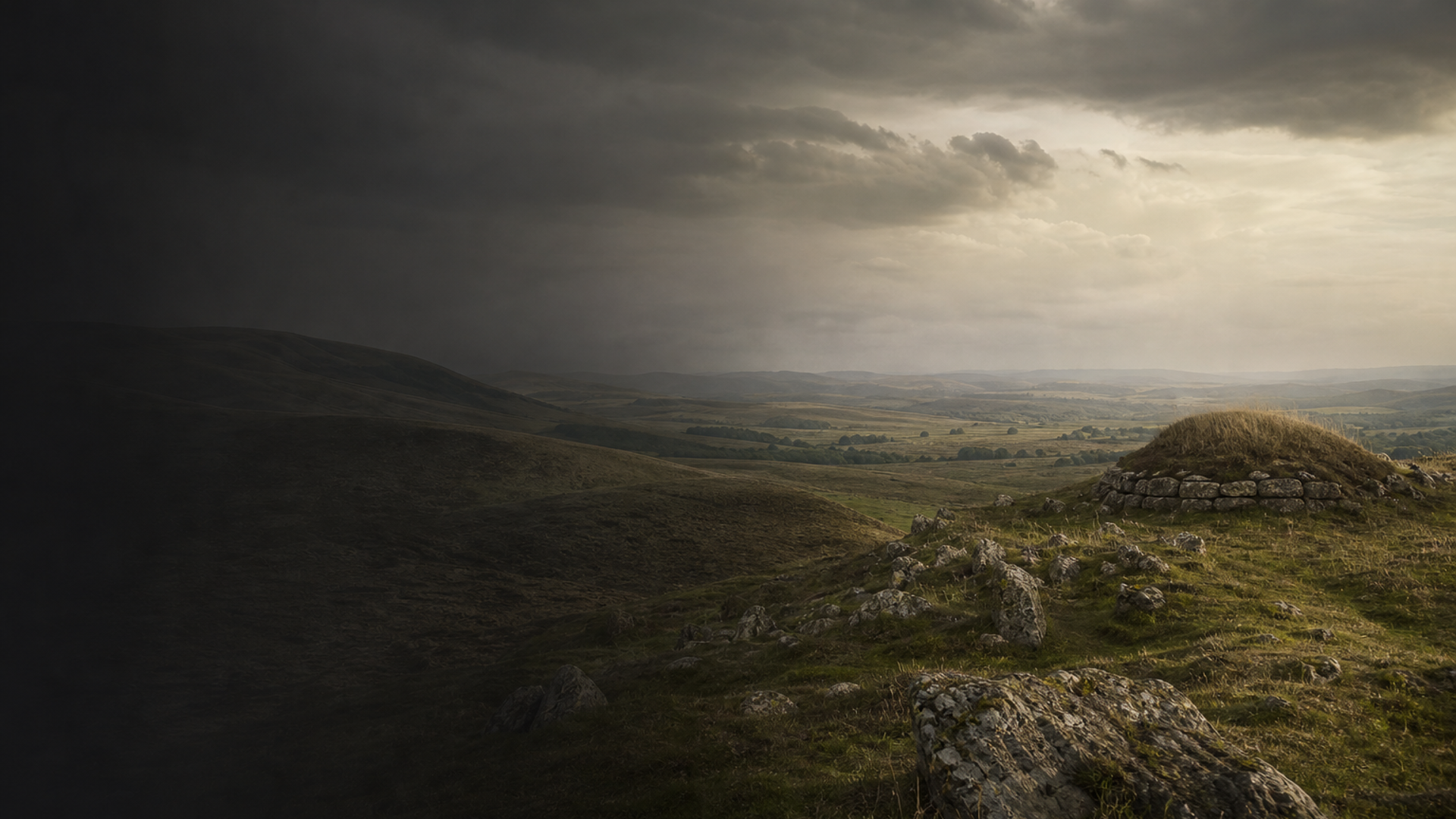
Across the late first millennium BCE the landscapes of southwestern and central England were places of slow transformation rather than sudden replacement. Archaeological layers at sites such as Diamond Cottage (Tickenham, Somerset), Greystones Farm (Bourton-on-the-Water, Gloucestershire) and North Perrott Manor (Somerset) preserve a tapestry of domestic enclosures, field systems and metalwork that connect local Bronze Age traditions with the expressive continental La Tène style. Limited evidence suggests increased social differentiation at some local centres — small hilltop enclosures and nucleated farmsteads appear alongside continued dispersed settlement.

Trade and cultural exchange flowed by river and sea: Brighton (Moulsecoomb) and coastal Kent (Highsted, Sittingbourne) show material links to continental Europe and the Channel. Archaeological data indicates continuity in subsistence — mixed cereal agriculture, stock herding and woodland management — but also rising craft specialization, especially in ironworking and decorated metalwork. The picture is regionally varied; some communities display strong continuity of local pottery and burial practices, while others adopt new forms and objects likely arriving with itinerant smiths, traders or returning migrants. This era, framed between about 350 BCE and the early Roman centuries, is best seen as a network of interacting local cultures rather than a single uniform society.

  • Local continuity from Bronze Age subsistence and settlement patterns
  • Evidence of continental artistic influences (La Tène elements) and trade
  • Regional variation: coastal, upland and riverine communities differed in material culture
Chapter IV

Daily Life & Society

Daily life in Late Iron Age England was tactile and seasonal: people tended mixed crops (emmer, barley, spelt) and herded cattle, sheep and pigs across fenced fields and commons. Archaeobotanical and zooarchaeological remains from sites in Gloucestershire and Somerset show economies tuned to local soils — richer river valleys supported more surplus production and exchange. Houses were typically post-built roundhouses or rectilinear buildings depending on local tradition; hearths, storage pits and spindle whorls point to a domestic world of food processing, textile production and metal repair.

Communities were embedded in landscapes marked by trackways, small enclosures and occasional hillforts or defended homesteads. Graves and funerary debris recovered from sites such as Cleevelands (Bishop's Cleeve) and Scorton Quarry (North Yorkshire) indicate variable burial practices — cremation and inhumation coexisted, with grave goods ranging from simple pottery to brooches and weapons. This variability suggests social roles and identities were expressed locally and could change through life: mobility, trade, and inter-regional marriage were part of the fabric of everyday experience. Archaeological remains of imported goods at Moulsecoomb (Brighton) and Highsted (Kent) narrate a seafaring thread of contact with the wider Atlantic and Channel worlds.

  • Mixed agriculture with regional specializations
  • Variable burial rites and material expressions of identity
Chapter V

Genetic Profile

The genetic portrait assembled from 28 samples spanning 351 BCE–200 CE offers a moderately sized window into Late Iron Age populations across England. Y-chromosome lineages are dominated by haplogroup R (12 individuals) with smaller counts of I (2), G (1) and F (1). Mitochondrial diversity centers on H (10), with J (4), U (3), K2a (3) and T (3) also represented. Archaeogenetic patterns here echo broader trends observed in northwestern Europe: a strong presence of R-lineages in male lines combined with diverse maternal lineages indicative of long-term local ancestry and female-mediated gene flow.

The predominance of mtDNA H suggests continuity with earlier Neolithic/Bronze Age maternal pools, while the presence of G and F Y-lineages — though small in number — signals occasional incoming males from other parts of Europe or descendant lineages of earlier migrations. Isotopic and archaeological evidence from some sites (coastal locations and riverine settlements) supports episodes of mobility consistent with these genetic signals. However, caution is necessary: 28 individuals across multiple sites and a span of ~550 years cannot fully resolve population dynamics. Sampling bias, temporal mixing, and limited resolution of some haplogroup assignments mean conclusions are provisional. Future denser sampling and integration with isotope and radiocarbon data will refine models of migration, kinship and social structure.

  • Male lineages dominated by haplogroup R; multiple maternal haplogroups indicate local continuity
  • Small counts of G and F suggest occasional non-local ancestry; conclusions are provisional given sample size
Chapter VI

Legacy & Modern Connections

The genetic and archaeological threads from England_LIA weave into the longer story of Britain. Maternal lineages common in this dataset (H, J, U, K2a, T) persist into later periods and are widespread in modern British populations, reflecting substantial continuity. The predominance of R on the Y-chromosome aligns with regional patterns that also shape present-day paternal lineages across northwest Europe. Archaeologically, objects and settlement forms from these sites prefigure the social landscapes encountered by Roman Britain after the first century CE.

Yet the Late Iron Age was not a static inheritance: it was a dynamic era of contact, craft, and movement. Genetic signals of occasional non-local ancestry, paired with archaeological evidence for trade and travel, remind us that the ancestors of many modern Britons lived in a world of both rootedness and mobility. Given the moderate sample size and uneven geographic coverage, these connections are suggestive rather than definitive — they point to continuities and exchanges that later historical processes amplified.

  • mtDNA continuity links Late Iron Age populations to modern British maternal lineages
  • Archaeological and genetic evidence together highlight both local continuity and episodic mobility
AI 电源

AI 助手

就 Echoes of Late Iron Age England 文化提问

AI 助手 由DNAGENICS公司制作

解锁此特性
Ask questions about the Echoes of Late Iron Age England culture. Our AI assistant can explain genetic findings, historical context, archaeological evidence, and modern connections.
AI 样本分析

Echoes of Late Iron Age England 文化是人类历史中值得了解的一章……

遗传分析揭示了与早期种群的联系,同时显示了独特的适应和文化创新的证据。 古代DNA样本提供了对迁徙模式、社会结构以及古代种群之间的生物关系的深刻见解。

这是人工智能分析的预览。 解锁全AI 助手, 以探索关于:

  • 遗传组成和祖先
  • 移徙模式和起源
  • 日常生活和文化习俗
  • 现代遗传遗产

探索更古老的文化

揭开古代世界文明的故事

使用优惠码 可减免 35% • 11月12日 到期




