Echoes of the Baltic Bronze Age

下载的 PDF 是图像副本。如需可选中文本及更好的辅助技术支持,请使用打印功能。

Echoes of the Baltic Bronze Age

揭开一个失落的文明

正在加载考古记录……

正在收集古代记录

跳转到主内容
Echoes of the Baltic Bronze Age
文明焦点

Echoes of the Baltic Bronze Age

Archaeology and DNA reveal shifting peoples from 2100 BCE to the late medieval Baltic shores.

2100 BCE - 1625 CE
Estonia, Latvia, Lithuania (Baltics)
1 Ancient Samples
滚动开始
Chapter I

剧情

了解 Echoes of the Baltic Bronze Age 文化

Seventy-three ancient genomes from Estonia, Latvia and Lithuania (2100 BCE–1625 CE) illuminate Bronze Age roots, later Uralic and medieval connections, and a genetic profile dominated by Y-R lineages and maternal U/H diversity. Archaeology and DNA together trace changing lifeways and migrations.

Time Period

2100 BCE – 1625 CE

Region

Estonia, Latvia, Lithuania (Baltics)

Common Y-DNA

R (~78%), N (~13%), P, J (typed n=64)

Common mtDNA

U (~37%), H (~32%), T, J, K (typed n=59)

Chapter II

时间线

这种文化历史上的关键时刻

2100 BCE

Early Baltic Bronze Age horizons

Emergence of Bronze Age burial mounds and metal use in the eastern Baltic, establishing long-distance connections.

1000 BCE

Late Bronze Age regional networks

Intensified exchange of bronze goods and stylistic influences across the Baltic and Fennoscandian zones.

1200 CE

Medieval transformations

Shifts in settlement, burial rites and material culture amid rising medieval polities and trade links.

1625 CE

Late sampled horizon

Latest genomes in this series mark continued regional continuity into the early modern era.

Chapter III

Origins & Emergence

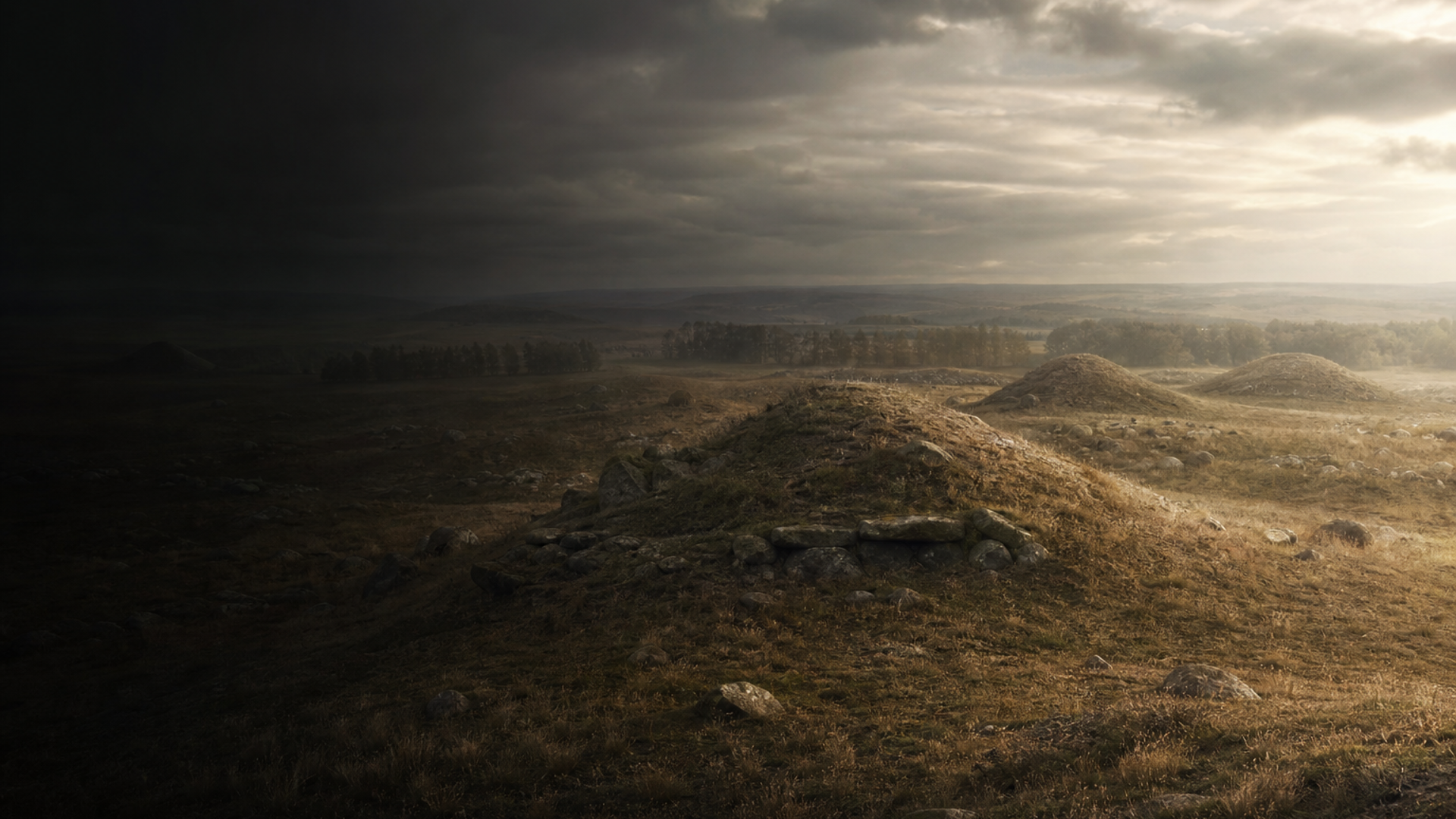
From the wind-bent stones and burial mounds of the eastern Baltic emerges a long, layered story. Archaeological horizons sampled here span the Late Bronze Age into medieval centuries — sites such as Kukruse (Ida‑Viru, Estonia), Karja (Saare), Otepää Piiri St. (Valga), Vana‑Kuuste and Mäletjärve (Tartu) and the Latvian barrow Kivutkalns anchor the record in place. Material culture links to Bronze Age communities across northeastern Europe: cremation and inhumation rites, metalwork styles, and barrow construction indicate networks of exchange across the archipelago and the continental plain.

Genetic data place the Baltic assemblage within these archaeological currents. Steppe-derived ancestry associated with late Neolithic–Bronze Age movements is visible alongside signals interpreted as locally persistent hunter‑gatherer and incoming Uralic‑linked influences. Limited evidence suggests successive waves and local continuity rather than a single population replacement; the millennium-long span (2100 BCE–1625 CE) sampled here includes cultural transitions that archaeology records as shifts in burial practice, settlement pattern and material style. Where the DNA and material culture diverge, it highlights the complexity of identity: people could adopt new practices without wholesale genetic turnover. Regional variation is clear — northern Estonian coastlines and inland southern sites sometimes show different mixes, suggesting localized demographic histories and persistent maritime lifeways.

  • Samples come from named burials at Kukruse, Karja, Otepää, Vana‑Kuuste, Mäletjärve, Kivutkalns and others
  • Archaeological evidence indicates Bronze Age connections across the eastern Baltic
  • Genetic signals point to layered ancestry rather than single-source replacement
Chapter IV

Daily Life & Society

The archaeology paints a cinematic daily world: peat smoke curling over wooden longhouses, bronze tools glinting at dusk, and coastal communities knitting livelihoods from sea and forest. Barrow and cist burials (some richly furnished, others simple) suggest social differentiation — certain graves contain metal ornaments and weapons, others modest personal items. Settlement traces near Otepää and Kivutkalns show seasonally occupied farmsteads, with cereal cultivation, stock-keeping and specialist woodworking attested by plant remains, animal bone, and tool assemblages.

Burial variability through time (inhumation → cremation shifts in parts of the region) mirrors social change — new rites may reflect incoming beliefs or internal social reorganization. Long-distance contacts appear in bronze objects and exotic raw materials, indicating trade routes that reached the eastern Baltic from central and northern Europe. Craft specialization (bronze working, textile production) and maritime resource use (fishing, seal and sea-bird exploitation) created a resilient economy adapted to a marginal but rich environment. Everyday life was therefore a blend of local continuity and external influence, experienced at the household and community scales.

  • Barrow and cist burials imply social ranking and ritual variation
  • Economy combined farming, animal husbandry, woodworking and coastal resources
Chapter V

Genetic Profile

Seventy‑three genomes across more than three millennia provide a substantial window into Baltic prehistory. Among typed Y‑chromosomes (n=64) haplogroup R dominates (R lineages ~78%), consistent with widespread Steppe‑associated paternal ancestry in Bronze Age Eurasia. Haplogroup N (~13%) is present and likely reflects later or regionally specific connections tied to Uralic‑language‑associated groups; its appearance is spatially patchy in the dataset. Minor Y lineages (P, J) appear at low frequency, indicating additional male-mediated connections.

Mitochondrial DNA (n=59) shows maternal diversity dominated by U (~37%) and H (~32%), mitochondrial clades common across northern and central Europe and often associated respectively with Mesolithic hunter‑gatherer continuity (U) and Neolithic farmer expansions (H). The presence of T, J and K further highlights the mixed maternal heritage of Baltic communities. Together, these patterns depict a population shaped by incoming Bronze Age Steppe ancestry, enduring local maternal lineages, and later inputs linked to northern/eastern contacts.

Caveats: although 73 samples are a robust dataset for the region, temporal and geographic clustering of samples can bias frequency estimates; some haplogroup counts reflect only typed individuals. Interpretations should therefore be treated as regionally informative but open to refinement as more data accumulate.

  • Y-DNA dominated by R lineages (~78%), indicating strong Steppe-derived paternal ancestry
  • mtDNA shows mixed maternal heritage: U and H are common, reflecting hunter‑gatherer and Neolithic inputs
Chapter VI

Legacy & Modern Connections

The genetic and archaeological tapestry of the Baltic Bronze-to-medieval sequence helps explain elements of the modern Baltic gene pool and cultural landscape. High frequencies of R-lineage Y-chromosomes connect ancient paternal ancestry to broader Bronze Age movements across Europe, while haplogroup N occurrences hint at later northern or Uralic links that resonate with the linguistic and cultural history of the region. Maternal continuity (U, H) underscores deep local roots that persisted through waves of contact.
Archaeology and DNA together remind us that identity is braided: material culture, subsistence strategies, and biological ancestry change at different tempos. For modern people of Estonia, Latvia and Lithuania, these ancient echoes help contextualize genetic continuity, migrations, and the many threads that compose Baltic heritage. Limited sampling in some periods means specific local narratives remain preliminary; future ancient genomes will sharpen the picture.

  • Modern Baltic genetics reflect both ancient Steppe-derived paternal ancestry and deep local maternal lineages
  • Archaeology + DNA show cultural change often occurred without complete population replacement
Chapter VII

样本目录

1 份与 Echoes of the Baltic Bronze Age 文化相关的古 DNA 样本,为研究该时期的人群提供遗传线索。

1 / 1 samples
纵向 样本 国家 大纪元 日期 文化 性别 Y-DNA mtDNA
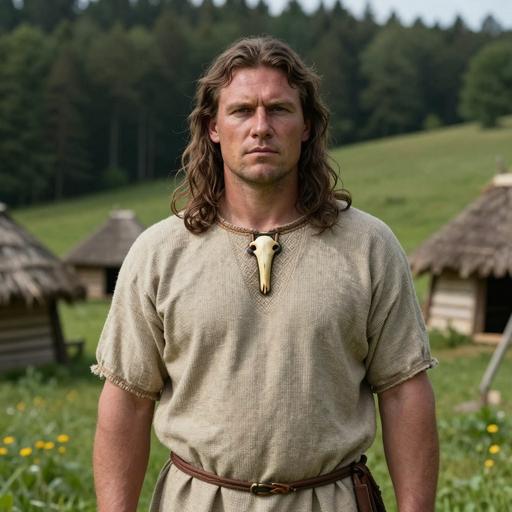
重建的肖像画 Migration Period Baltic Barrows individual, Lithuania
Migration Period Baltic Barrows individual, Lithuania
Lithuania Lithuania_Bailuliai_BarrowCulture 262-415 calCE (1690±15 BP, UCIAMS-235936) Baltic M R-M417 -
AI 电源

AI 助手

就 Echoes of the Baltic Bronze Age 文化提问

AI 助手 由DNAGENICS公司制作

解锁此特性
Ask questions about the Echoes of the Baltic Bronze Age culture. Our AI assistant can explain genetic findings, historical context, archaeological evidence, and modern connections.
AI 样本分析

Echoes of the Baltic Bronze Age 文化是人类历史中值得了解的一章……

遗传分析揭示了与早期种群的联系,同时显示了独特的适应和文化创新的证据。 古代DNA样本提供了对迁徙模式、社会结构以及古代种群之间的生物关系的深刻见解。

这是人工智能分析的预览。 解锁全AI 助手, 以探索关于:

  • 遗传组成和祖先
  • 移徙模式和起源
  • 日常生活和文化习俗
  • 现代遗传遗产

探索更古老的文化

揭开古代世界文明的故事

使用优惠码 可减免 35% • 11月12日 到期





