Echoes of Uzbekistan

下载的 PDF 是图像副本。如需可选中文本及更好的辅助技术支持,请使用打印功能。

Echoes of Uzbekistan

揭开一个失落的文明

正在加载考古记录……

正在收集古代记录

跳转到主内容
Echoes of Uzbekistan
文明焦点

Echoes of Uzbekistan

Modern genomes reflecting millennia of Silk Road exchange and recent history

2000 CE
Uzbekistan (Tashkent, Khorezm, Karakalpakstan)
滚动开始
Chapter I

剧情

了解 Echoes of Uzbekistan 文化

A portrait of Modern Uzbekistan (2000 CE) based on 69 samples: archaeological continuity from Khorezm to Tashkent meets a genetically heterogeneous population shaped by Silk Road mobility, Turkic and Persian cultural layers, and 20th-century Soviet-era movements.

Time Period

2000 CE (Modern)

Region

Uzbekistan (Tashkent, Khorezm, Karakalpakstan)

Common Y-DNA

Varied / not reported in dataset

Common mtDNA

Varied / not reported in dataset

Chapter II

时间线

这种文化历史上的关键时刻

1000 CE

Silk Road Flourishing

Oasis cities and trade hubs in Central Asia facilitate sustained mobility and cultural exchange across Eurasia.

1924 CE

Soviet National Delimitation

Creation of the Uzbek SSR and administrative reshaping that influenced migration and settlement patterns in the 20th century.

1991 CE

Independence of Uzbekistan

Uzbekistan declares independence from the Soviet Union, accelerating political and demographic changes across the country.

Chapter III

Origins & Emergence

Modern Uzbekistan is a palimpsest: the political boundaries established in the 20th century sit atop an ancient landscape of oases, riverine civilizations and Silk Road cities. Archaeological data from Khorezm, the Amu Darya floodplains, and urban stratigraphy in Tashkent indicate long-term settlement, irrigation agriculture and trade corridors that channeled people and goods across Eurasia. Ethnogenesis in the region has been layered — Sogdian and Iranian-speaking communities in the first millennium CE, large-scale Turkic linguistic and cultural change after the early medieval period, and demographic disruptions associated with Mongol conquests and later imperial expansions.

Genetically, these processes predict a mosaic population: West Eurasian (Iranian/Caucasus/European-related) components from ancient agriculturalists and historic Perso-Sogdian networks; East Eurasian components tied to Turkic and Mongolic migrations; and local admixture shaped by centuries of trade and mobility along the Silk Road. The dataset of 69 modern samples offers a snapshot of this complex tapestry at the year 2000 CE. Limited evidence suggests strong heterogeneity across regions — coastal Karakalpakstan and Khorezm oasis communities often retain different ancestry proportions than urban Tashkent. Archaeology provides the temporal depth; modern genomes register the cumulative outcome of many migrations, replacements, and continuities. Where ancient DNA from local archaeological horizons is sparse, interpretations remain provisional.

  • Long-term occupation in Khorezm and Tashkent visible in archaeological layers
  • Ethnogenesis shaped by Sogdian/Persian, Turkic, Mongol, and modern influences
  • 69 modern samples capture a heterogeneous, layered ancestry
Chapter IV

Daily Life & Society

The material world of modern Uzbekistan in 2000 blends centuries-old practices with Soviet-era modernization. In oasis towns of Khorezm and Karakalpakstan, irrigation canals, cotton monoculture introduced and intensified under Soviet planning, and market towns frame daily life; in Tashkent, layers of urban rebuilding after earthquakes and wartime shifts create a cosmopolitan demographic mix. Archaeological traces—reused building fabric, pottery continuity in rural contexts, cemetery reuse—document continuity of place even as cultural practices evolve.

From an archaeological perspective, trade and mobility leave particular signatures: imported ceramics and metalwork in market centers and disturbance layers reflecting 19th–20th century urban redevelopment. For genetics, everyday life practices such as endogamy, patrilocal or matrilocal residence, and migration for labor shape gene flow. Soviet-era industrial projects and resettlements (railways, collectivization, wartime evacuations) increased long-distance mobility and admixture within the Uzbek SSR. Therefore, community genetic profiles often reflect recent historical demography as much as deep ancestral layers. Archaeological data indicates persistent local identities, while genetic data reveal the invisible currents of mobility that interwove those communities.

  • Oasis agriculture and urban markets sustain long-term settlement patterns
  • Soviet-era mobility (industrialization, resettlement) amplified genetic mixing
Chapter V

Genetic Profile

The provided dataset of 69 modern samples from Uzbekistan (locations including Tashkent, Nukut in Karakalpakstan, and Khorezm) reveals a broadly heterogeneous genetic landscape. The dataset does not report dominant Y‑DNA or mtDNA haplogroups; therefore conclusions about specific paternal or maternal founder lineages are limited. Autosomal patterns in comparable Central Asian studies typically show admixture of West Eurasian, East Eurasian, and South Asian components — reflecting waves of prehistoric farmers, steppe pastoralists, Turkic expansions, and more recent Silk Road and imperial-era movements.

Where sample sizes are moderate (n=69), population structure can be detected, but fine-scale inferences (e.g., regional founder events or low-frequency lineages) require larger, geographically stratified datasets and comparisons to ancient DNA. Archaeological context is crucial: ancient DNA from Khorezm and surrounding regions is still relatively sparse, so linking modern allele frequencies to specific archaeological horizons is tentative. Nevertheless, genetics clarifies the tempo of change — for example, signals consistent with Turkic-related East Eurasian ancestry likely arrive on top of an older West Eurasian substrate, and 20th-century admixture associated with Soviet migrations can leave detectable shifts in haplotype sharing. Future integration of well-dated ancient genomes from Khorezm, Sogdiana, and the Amu Darya oases will sharpen the narrative connecting material culture and genes.

  • 69 modern samples show heterogeneous ancestry; no single haplogroup reported
  • Autosomal admixture expected from West Eurasian, East Eurasian, and South Asian sources
Chapter VI

Legacy & Modern Connections

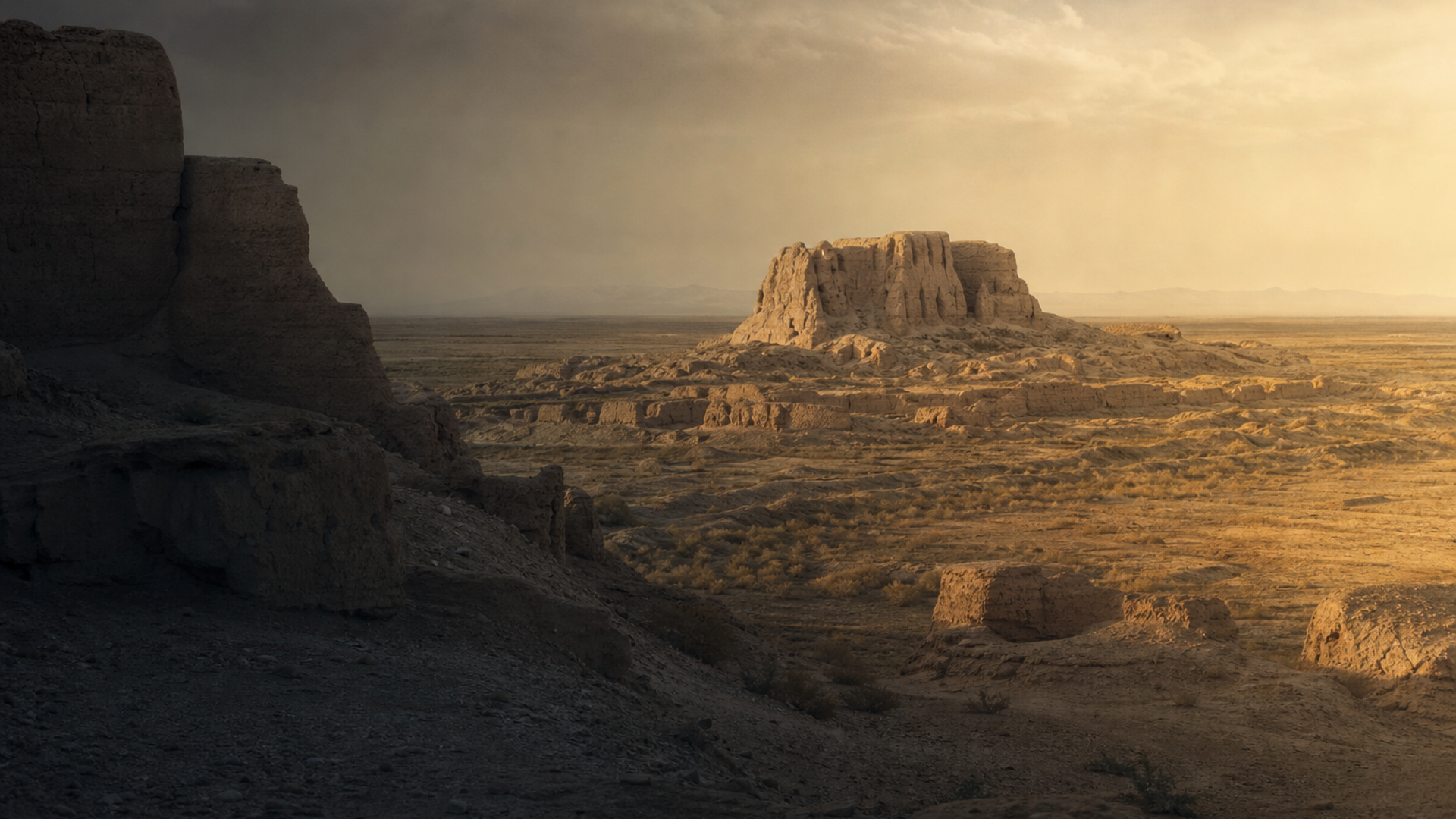
Modern Uzbek identities are the living result of long interlaced histories visible in both archaeology and genomes. Cities like Tashkent and oasis networks in Khorezm preserve architectural and material echoes of past empires; genetic data captures the invisible exchanges of people who built, traded, and farmed those landscapes. The interplay between archaeological continuity (irrigation systems, settlement locations) and genetic change (admixture pulses, mobility signatures) illustrates how place endures even as populations and languages shift.

Scientific integration—combining targeted ancient DNA from named archaeological horizons with dense modern sampling across Uzbekistan—offers the best path to disentangle layered ancestries and to ground modern genetic variation in archaeological time. Until such comparisons are available, conclusions about precise haplogroup histories or migration timings remained provisional. Archaeology frames the stage; genetics reads the audience's changing composition.

  • Material culture continuity surrounds a genetically mixed modern population
  • Stronger inferences need ancient DNA from Khorezm, Sogdiana, and oasis sites
AI 电源

AI 助手

就 Echoes of Uzbekistan 文化提问

AI 助手 由DNAGENICS公司制作

解锁此特性
Ask questions about the Echoes of Uzbekistan culture. Our AI assistant can explain genetic findings, historical context, archaeological evidence, and modern connections.
AI 样本分析

Echoes of Uzbekistan 文化是人类历史中值得了解的一章……

遗传分析揭示了与早期种群的联系,同时显示了独特的适应和文化创新的证据。 古代DNA样本提供了对迁徙模式、社会结构以及古代种群之间的生物关系的深刻见解。

这是人工智能分析的预览。 解锁全AI 助手, 以探索关于:

  • 遗传组成和祖先
  • 移徙模式和起源
  • 日常生活和文化习俗
  • 现代遗传遗产

探索更古老的文化

揭开古代世界文明的故事

使用优惠码 可减免 35% • 11月12日 到期




