Ekven Iron Age: Arctic Threads

下载的 PDF 是图像副本。如需可选中文本及更好的辅助技术支持,请使用打印功能。

Ekven Iron Age: Arctic Threads

揭开一个失落的文明

正在加载考古记录……

正在收集古代记录

跳转到主内容
Ekven Iron Age: Arctic Threads
文明焦点

Ekven Iron Age: Arctic Threads

Five ancient genomes from Ekven reveal Arctic maritime roots and Beringian connections.

376 BCE - 330 CE
Ekven, Chukotka, Russia
滚动开始
Chapter I

剧情

了解 Ekven Iron Age: Arctic Threads 文化

Genomes from Ekven (376 BCE–330 CE) link Iron Age Arctic communities to broader Beringian and Siberian ancestries. Small sample sizes limit firm conclusions, but Y haplogroup Q dominance and mtDNA A/D lineages suggest continuity with coastal hunter-gatherer populations.

Time Period

376 BCE – 330 CE

Region

Ekven, Chukotka, Russia

Common Y-DNA

Q (4), C (1)

Common mtDNA

A (3), D (1), A2a (1)

Chapter II

时间线

这种文化历史上的关键时刻

376 BCE

Earliest sampled burials at Ekven

The oldest recovered genome in this set dates to c. 376 BCE, attesting to Iron Age coastal occupation in Chukotka.

Chapter III

Origins & Emergence

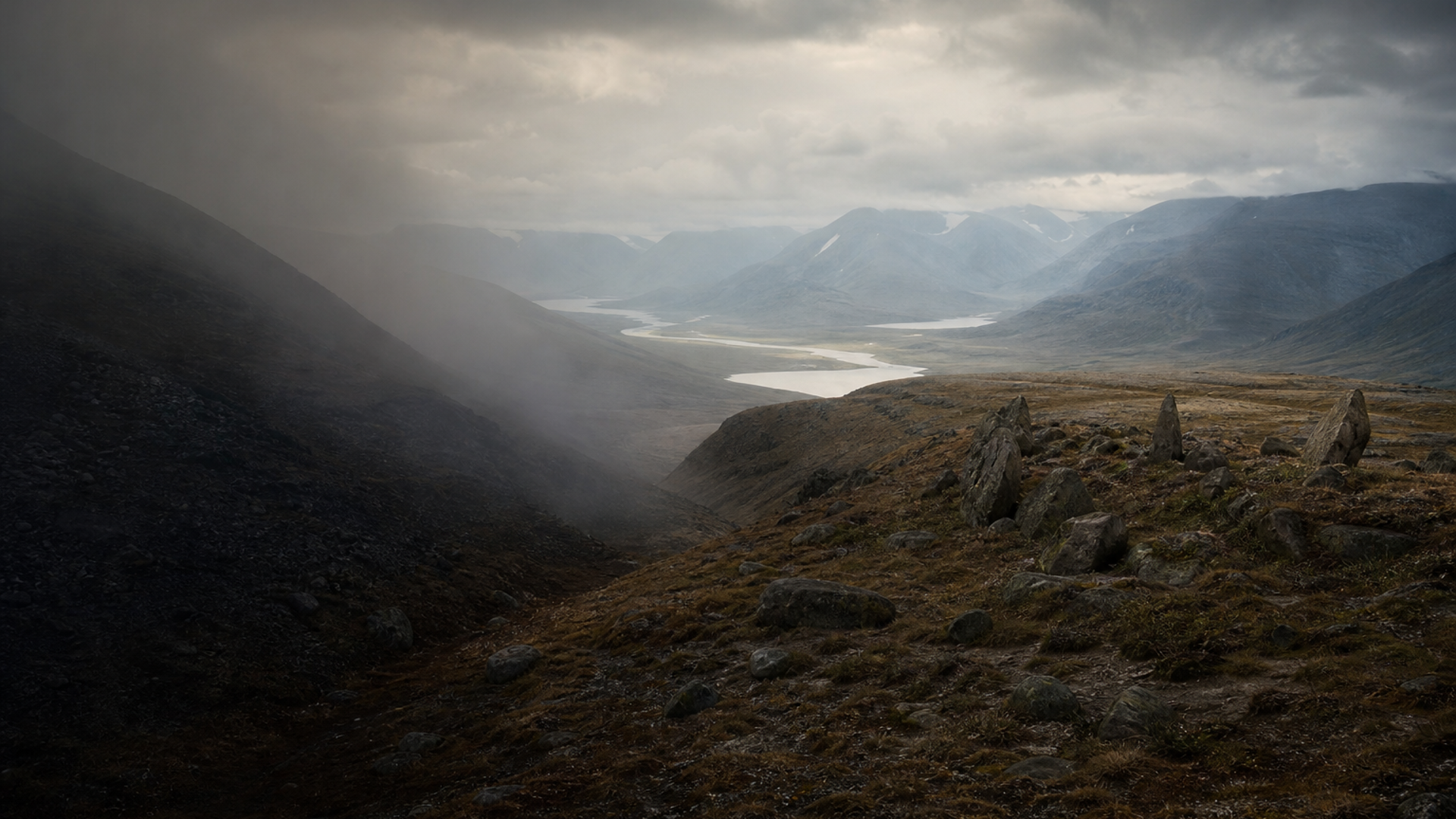
On the windswept tundra of Chukotka, the cemetery and occupation layers at Ekven preserve a whisper of Iron Age coastal life. Archaeological data indicates intermittent settlement and mortuary activity between the later first millennium BCE and the early centuries CE (samples here date between 376 BCE and 330 CE). Material culture at Ekven aligns with broader Arctic maritime traditions — a lifeway built on seal, walrus, fish and sea bird resources — and the site sits along routes that once threaded across the Bering Sea bridge of ideas and genes.

Genetic results from five individuals hint at deep eastern Siberian and Beringian roots. The predominance of Y-chromosome haplogroup Q — four of five males — echoes patterns seen in other northern Eurasian and Native American-linked populations. Maternal lineages dominated by mtDNA A and D further point toward an East Asian/Beringian genetic substrate. Limited evidence suggests continuity with earlier coastal groups, but because the sample count is small (<10), these patterns remain preliminary and invite further sampling across time and neighboring sites.

Taken together, the archaeological and genetic signals suggest Ekven functioned as a regional node in Arctic networks: culturally distinct yet genetically connected to a trans-Beringian population tapestry. Future excavations and additional genomes will be needed to confirm migration timing and local continuity.

  • Ekven site in Chukotka active c. 376 BCE–330 CE
  • Material culture consistent with Arctic maritime hunter societies
  • Genetic signals suggest Beringian and Siberian connections
Chapter IV

Daily Life & Society

Life at Ekven unfolded against a dramatic Arctic horizon: seasonal sea-ice rhythms dictated movement, food procurement and social cycles. Archaeological contexts indicate households organized around marine resources, with specialized hunting and fishing gear, seasonal camps, and mortuary spaces that encoded social identity. Coastal cairns and burial clusters preserve traces of communal practices that likely involved long-distance exchange of raw materials and ideas across the Bering Sea corridor.

The skeletal traces and burial contexts recovered at Ekven point to a community adapted to cold, maritime subsistence. Faunal remains and artifact distributions indicate strategic use of seals, walrus and migratory fish; stone and bone tools reflect skilled craftsmanship tuned to an icy environment. Ethnographically informed models suggest social networks were key — kinship, alliance-building, and seasonal aggregation would have structured labor and ritual, though direct archaeological evidence for social hierarchy at Ekven is limited.

Because soft-tissue preservation is rare, much of daily life must be inferred from toolkits, house outlines and grave assemblages. Archaeological data indicates resilience and mobility: people here were both rooted in place and entangled in wider Arctic circuits.

  • Maritime subsistence focused on seals, walrus and fish
  • Seasonal mobility and long-distance exchange shaped social life
Chapter V

Genetic Profile

The genetic portrait from Ekven is compact but evocative. Among five sampled individuals, four males carry Y-chromosome haplogroup Q and one carries haplogroup C. On the maternal side, three individuals carry mtDNA A, one carries D, and one carries A2a. These lineages are broadly associated with eastern Siberian and Beringian populations: haplogroup Q is widespread in northern Eurasia and is a primary lineage in many Native American populations, while mtDNA A and D are common in East Asian and Native American contexts. Haplogroup C, present in a single sample, also has deep roots across northern Asia.

Archaeogenetic interpretation must proceed cautiously: a sample size of five is small, and patterns may not capture full regional diversity. Nonetheless, the clustering of Q and A/D lineages supports archaeological impressions of continuity with Arctic maritime groups and with populations that took part in trans-Beringian exchanges. These genetic markers do not by themselves indicate direct continuity to any single modern group but rather place Ekven within a spectrum of Siberian-Arctic ancestries that contributed to the peopling of the circumpolar north and, ultimately, to populations across Beringia.

Future genome-wide analyses and larger sample sets will be essential to resolve admixture, population structure, and temporal change at Ekven.

  • Y-DNA dominated by Q (4/5), with one C
  • mtDNA dominated by A and D lineages, consistent with Beringian links
Chapter VI

Legacy & Modern Connections

The archaeological and genetic glimpses from Ekven stitch the site into a larger story of Arctic resilience and connectivity. Lineages observed at Ekven parallel those found in later and neighboring Arctic groups, suggesting that elements of the genetic landscape persisted across centuries. This continuity resonates with material signs of enduring maritime technologies and social practices.

However, any claimed connection to present-day groups must be framed with caution: low ancient sample counts and complex histories of migration and admixture mean that Ekven represents one thread among many in the tapestry of Arctic ancestry. Where genetic markers overlap with modern populations, they point to shared deep ancestry rather than direct one-to-one descent. Archaeological analysis combined with increased ancient DNA sampling will help illuminate how threads from places like Ekven wove into regional identities over millennia.

  • Genetic affinities suggest deep links with Arctic and Beringian populations
  • Conclusions are provisional until broader sampling increases temporal and geographic resolution
AI 电源

AI 助手

就 Ekven Iron Age: Arctic Threads 文化提问

AI 助手 由DNAGENICS公司制作

解锁此特性
Ask questions about the Ekven Iron Age: Arctic Threads culture. Our AI assistant can explain genetic findings, historical context, archaeological evidence, and modern connections.
AI 样本分析

Ekven Iron Age: Arctic Threads 文化是人类历史中值得了解的一章……

遗传分析揭示了与早期种群的联系,同时显示了独特的适应和文化创新的证据。 古代DNA样本提供了对迁徙模式、社会结构以及古代种群之间的生物关系的深刻见解。

这是人工智能分析的预览。 解锁全AI 助手, 以探索关于:

  • 遗传组成和祖先
  • 移徙模式和起源
  • 日常生活和文化习俗
  • 现代遗传遗产

探索更古老的文化

揭开古代世界文明的故事

使用优惠码 可减免 35% • 11月12日 到期