Estonia Medieval: Island and Mainland Burials

下载的 PDF 是图像副本。如需可选中文本及更好的辅助技术支持,请使用打印功能。

Estonia Medieval: Island and Mainland Burials

揭开一个失落的文明

正在加载考古记录……

正在收集古代记录

跳转到主内容
Estonia Medieval: Island and Mainland Burials
文明焦点

Estonia Medieval: Island and Mainland Burials

Seven medieval Estonian individuals illuminate movement, faith, and genetic threads, 1180–1625 CE.

1180 CE - 1625 CE
Estonia (Saare, Tartu, Valga, Lääne-Viru, Ida-Viru, Võru)
滚动开始
Chapter I

剧情

了解 Estonia Medieval: Island and Mainland Burials 文化

Seven medieval individuals from Estonian sites (1180–1625 CE) link burial landscapes on Saaremaa, Tartu, Valga and more to a mixed genetic profile—Y haplogroups N, R, J and mtDNA H, U, T2b—suggesting local continuity with episodic contacts. Conclusions are preliminary.

Time Period

1180–1625 CE

Region

Estonia (Saare, Tartu, Valga, Lääne-Viru, Ida-Viru, Võru)

Common Y-DNA

N (3), R (2), J (1)

Common mtDNA

H (3), U (3), T2b (1)

Chapter II

时间线

这种文化历史上的关键时刻

2500 BCE

Westward movement of Uralic-speaking ancestors

Linguistic and archaeological models suggest Proto-Uralic-speaking groups expanded westward into the Baltic region; this deep movement helps explain later presence of Y-haplogroup N in northeastern Europe.

Chapter III

Origins & Emergence

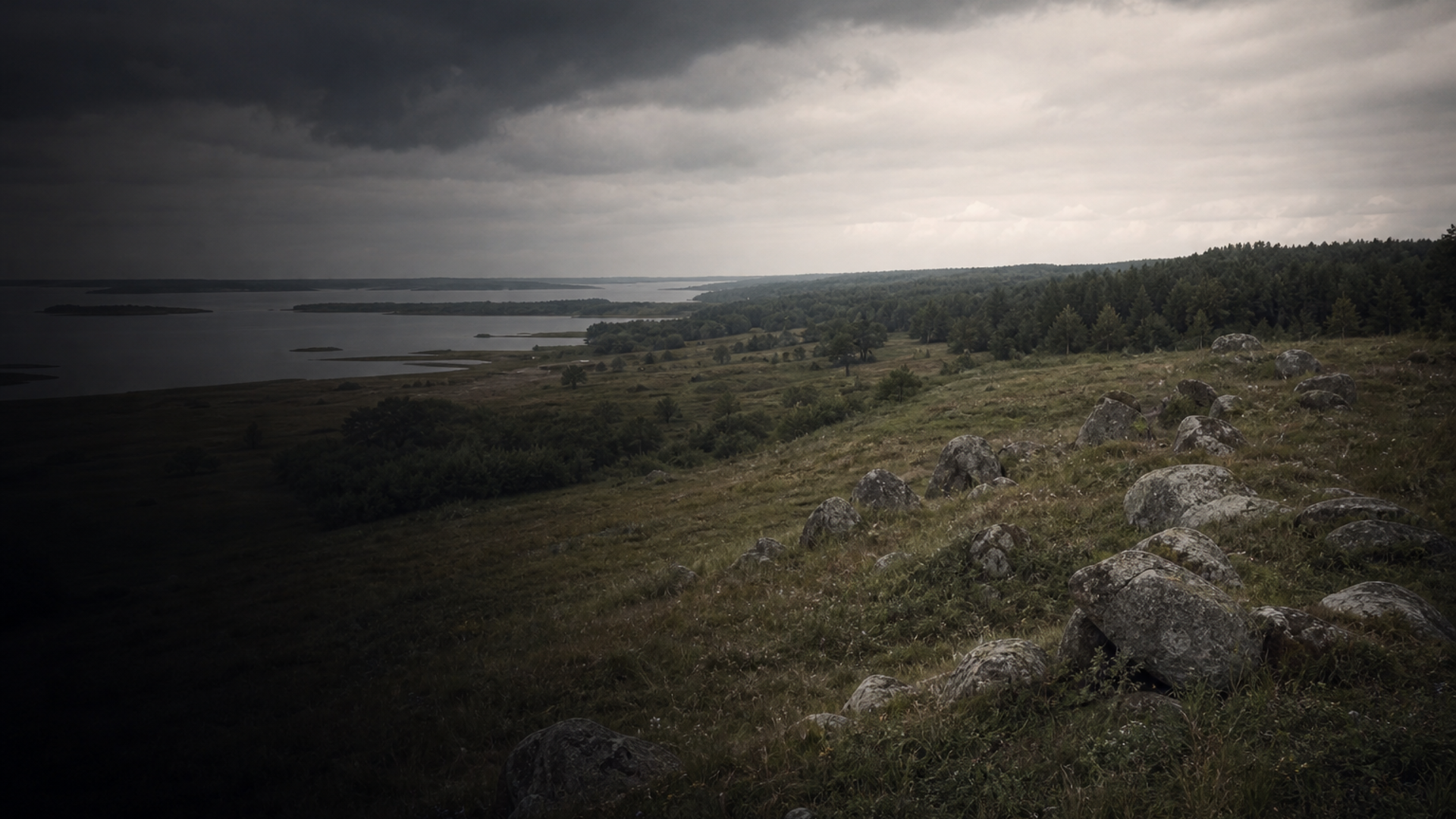
The human stories captured by the seven medieval burials span island shores and inland parishes across Estonia between 1180 and 1625 CE. Archaeological data indicates a landscape shaped by the waning Iron Age, the arrival of crusading orders, and rising Baltic trade networks. Sites sampled—Saare (Karja burial 16), Tartu (Mäletjärve burial 18; Vana-Kuuste burial 73), Valga (Otepää Piiri St. 1938 burial 1), Lääne-Viru (Pada burial 151), Ida-Viru (Kukruse burial 9), and Võru (Vaabina burial 43)—represent coastal and inland contexts that were part of a dynamic medieval Baltic world.

Genetically, the presence of Y-chromosome haplogroup N among several individuals echoes patterns associated with Uralic-speaking populations in northeastern Europe, while R-lineages reflect broader European ancestry. J-lineages, observed in one individual, may signal long-distance contacts or low-frequency lineages introduced through trade or mobility. Archaeology provides the cultural frame; ancient DNA adds biological threads that hint at continuity and contact. Because the sample set is small (n=7), these patterns should be regarded as provisional: limited evidence suggests continuity with earlier regional populations, but additional sampling is required to resolve migration versus local persistence in medieval Estonia.

  • Samples from seven burials across Saaremaa, Tartu, Valga, Lääne-Viru, Ida-Viru, Võru
  • Period overlaps crusading and Hanseatic activity (1180–1625 CE)
  • Genetic hints of Uralic-linked Y-haplogroup N alongside European R lineages
Chapter IV

Daily Life & Society

Archaeological contexts suggest varied lifeways between islands and the mainland. Coastal parishes such as Karja on Saaremaa were nodes of fishing, inter-island exchange, and ritual continuity, while inland sites near Tartu and Otepää lay along routes of pilgrimage, local markets, and political contestation. Burial practices in this period show Christianizing influences layered over earlier regional customs; grave orientations, simple inhumations, and occasional dress or personal items reflect a society negotiating local tradition and imported belief systems.

Material traces—settlement patterns, churchyard cemeteries, and trade goods recorded regionally—point to increased mobility in the medieval centuries. Archaeological excavation has documented demographic resilience: communities persisted through shifting political control from local chieftains to crusader orders and Hanseatic merchants. Bioarchaeological indicators (when available) often show mixed diets and signs of local labor. For the seven sampled individuals, the funerary contexts connect biological data to lived places—farmsteads, parish churches, and island communities—though specific grave goods or health indicators vary by site and are not uniformly preserved.

These snapshots evoke a population both rooted in place and engaged with larger Baltic networks.

  • Island and inland burials reflect different economic and ritual landscapes
  • Christian influences visible in medieval cemetery contexts alongside local practices
Chapter V

Genetic Profile

The genetic snapshot from seven individuals offers a preliminary window into medieval Estonian ancestry. Y-chromosome results: 3 individuals carry haplogroup N (commonly associated with Uralic-speaking populations across northeastern Europe), 2 carry haplogroup R (a broad European lineage), and 1 carries haplogroup J (less common in northern Europe and possibly reflecting long-distance contact or trade-related ancestry). Mitochondrial lineages are dominated by H (3) and U (3), with one T2b—profiles consistent with broad European maternal ancestry and older Paleolithic/Neolithic maternal lineages in the Baltic.

Archaeogenetic interpretation must be cautious. With only seven samples, kinship and population structure analyses are limited: small counts can overrepresent lineages by chance. Radiocarbon-calibrated dates (1180–1625 CE) anchor these genomes to the medieval period, but the low sample size means we cannot robustly quantify frequencies or demographic shifts. Technical caveats—coverage, DNA preservation, and potential contamination—affect resolution; where coverage is low, haplogroup assignments may be coarse.

Nevertheless, the mix of N and R Y-lineages alongside common European mtDNA suggests a picture of local continuity with episodes of male and female mobility. Future broader sampling and genome-wide analyses will be essential to test hypotheses about Uralic continuity, Hanseatic-era gene flow, and social patterns of marriage and mobility.

  • Y-DNA: N dominant among sampled males; R and J present
  • MtDNA: H and U predominant—consistent with wider European maternal ancestries
Chapter VI

Legacy & Modern Connections

These medieval genomes, though small in number, connect threads between past and present. Modern Estonians retain notable frequencies of haplogroup N subclades and mitochondrial lineages common in northern Europe, supporting archaeological interpretations of long-term regional continuity. The sampled individuals—drawn from island parishes and inland communities—mirror the geographic mosaic that shaped Estonia: maritime lifeways on Saaremaa, agrarian parishes inland, and towns tied to Baltic trade.

Because the dataset is limited (n=7), any direct line from these burials to contemporary populations is tentative. Still, the combination of genetic markers and archaeological context evokes a medieval society rooted in earlier northeastern European populations while open to connections across the Baltic and beyond. Ongoing aDNA sampling across more cemeteries, combined with isotopic and material analyses, will clarify how medieval mobility, commerce, and social networks shaped the genomic landscape that modern Estonians inherit.

  • Genetic patterns are consistent with elements of modern Estonian ancestry, but conclusions remain tentative
  • Expanded sampling and isotopic studies will better reveal mobility and social structure
AI 电源

AI 助手

就 Estonia Medieval: Island and Mainland Burials 文化提问

AI 助手 由DNAGENICS公司制作

解锁此特性
Ask questions about the Estonia Medieval: Island and Mainland Burials culture. Our AI assistant can explain genetic findings, historical context, archaeological evidence, and modern connections.
AI 样本分析

Estonia Medieval: Island and Mainland Burials 文化是人类历史中值得了解的一章……

遗传分析揭示了与早期种群的联系,同时显示了独特的适应和文化创新的证据。 古代DNA样本提供了对迁徙模式、社会结构以及古代种群之间的生物关系的深刻见解。

这是人工智能分析的预览。 解锁全AI 助手, 以探索关于:

  • 遗传组成和祖先
  • 移徙模式和起源
  • 日常生活和文化习俗
  • 现代遗传遗产

探索更古老的文化

揭开古代世界文明的故事

使用优惠码 可减免 35% • 11月12日 到期