Frisian Saxons of Midlum

下载的 PDF 是图像副本。如需可选中文本及更好的辅助技术支持,请使用打印功能。

Frisian Saxons of Midlum

揭开一个失落的文明

正在加载考古记录……

正在收集古代记录

跳转到主内容
Frisian Saxons of Midlum
文明焦点

Frisian Saxons of Midlum

Three voices from 350–700 CE on the watery edge of medieval Friesland

350 CE - 700 CE
Midlum, Friesland, Netherlands
滚动开始
Chapter I

剧情

了解 Frisian Saxons of Midlum 文化

Archaeological remains from Midlum (Friesland, Netherlands) dated 350–700 CE reveal a small snapshot of Medieval Frisian Saxons. Limited ancient DNA (n=3) shows maternal lineages H, K, and U. Archaeology and genetics together hint at local continuity and regional connections—preliminary but evocative.

Time Period

350–700 CE

Region

Midlum, Friesland, Netherlands

Common Y-DNA

Undetermined (limited samples)

Common mtDNA

H, K, U (each in 1 of 3 samples)

Chapter II

时间线

这种文化历史上的关键时刻

350 CE

Early Medieval occupation at Midlum

Burials and settlement traces at Midlum in Friesland date from c. 350–700 CE, marking a local expression of Medieval Frisian Saxon life on the North Sea coast.

Chapter III

Origins & Emergence

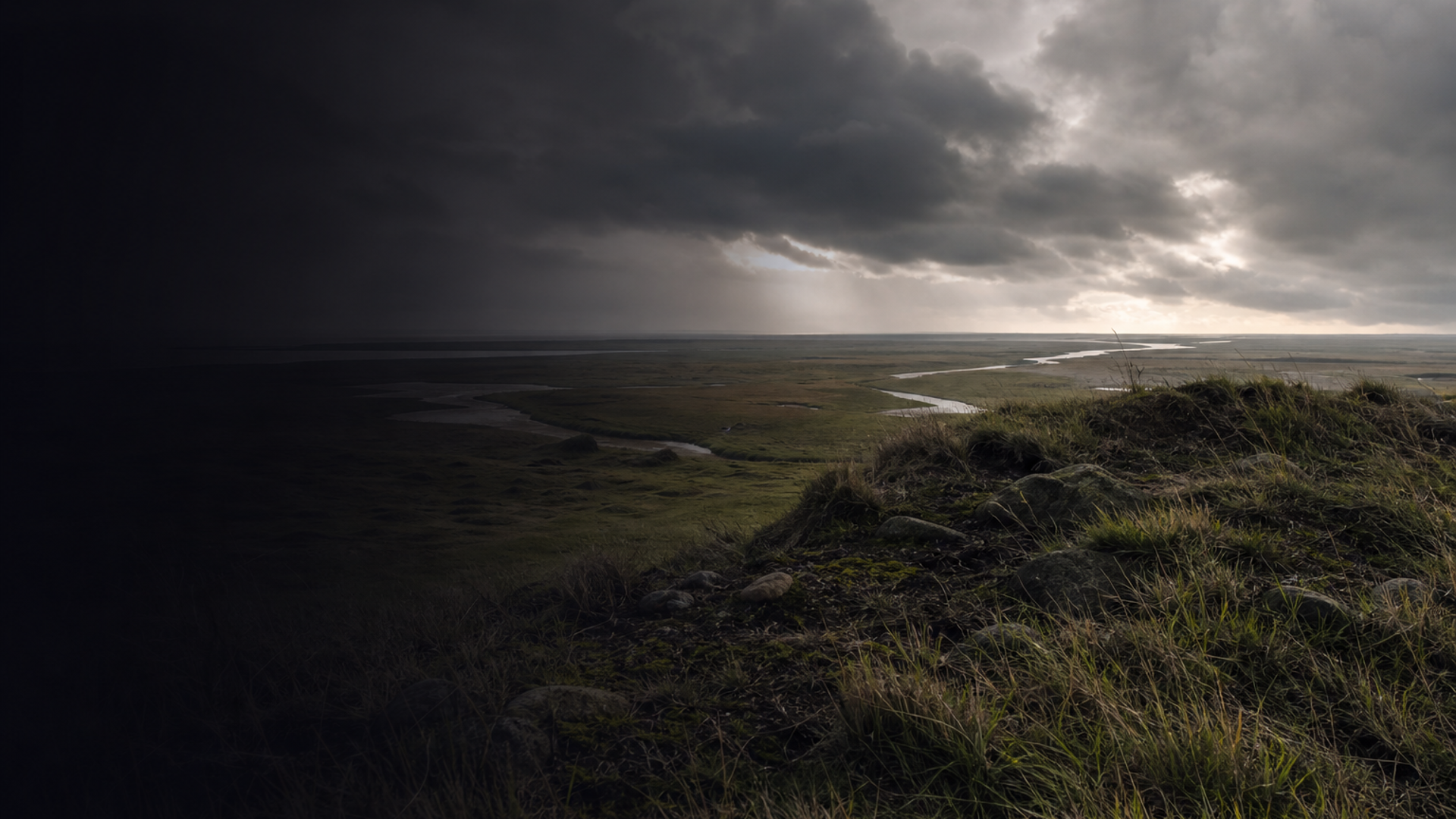
Along the low-lying marshes and tidal creeks of Friesland, communities identified by archaeologists as Medieval Frisian Saxons emerged in the centuries after the Roman withdrawal. Excavations at Midlum (province of Friesland, Netherlands) have produced burials and settlement traces dated to roughly 350–700 CE, placing these people squarely in the turbulent Early Middle Ages when local traditions, long-distance ties, and shifting power networks intersected.

Archaeological data indicates continuity of local coastal lifeways—salt marsh husbandry, estuarine fishing, and small-scale agriculture—combined with material signals that reflect contact across the North Sea and the North Sea littoral. Limited evidence suggests social organization anchored in kin groups with burial practices that vary across small cemeteries, hinting at both local continuity and incoming influences associated with broader 'Saxon' identities appearing in historical texts.

Because evidence from Midlum is fragmentary and sample sizes are small, any narrative of origins must remain provisional. The picture that emerges is cinematic: marshy landscapes, boats cutting silver channels at dawn, and a people whose identity was forged at the meeting point of land, sea, and migrating traditions.

  • Archaeological finds dated to 350–700 CE at Midlum, Friesland
  • Local coastal economies with regional North Sea contacts
  • Preliminary evidence for both continuity and external influences
Chapter IV

Daily Life & Society

Life in Medieval Frisian Saxon communities along the Friesland coast would have been defined by the rhythm of tides and seasons. People managed reclaimed marshes and pasture, practiced mixed farming, and exploited estuarine resources. Houses and homesteads clustered on slightly higher ground; specialist craft and small-scale trade connected Midlum to nearby settlements and seafaring routes.

Archaeological indicators—house plans, domestic pits, and cemetery layouts in comparable regional sites—suggest households organized around extended family units with both agricultural and maritime knowledge. Grave goods in the region vary, sometimes containing personal items that reflect daily use and social roles; however, the Midlum assemblage is modest and must be interpreted carefully.

Social life would have balanced local traditions and long-distance influences: seasonal fairs, exchange of salt and wool, and ties to broader Saxon and Frisian networks. The landscape itself—peat, tidal channels, and dykes—shaped resilient communities skilled in water management and adaptive economies.

  • Mixed farming, animal husbandry, and estuarine resource use
  • Households organized around family units with regional trade links
Chapter V

Genetic Profile

The ancient DNA dataset from Midlum is very small (n=3) and should be treated as preliminary. Mitochondrial DNA (maternal lineages) recovered from these individuals includes haplogroups H, K, and U—each represented once. These mtDNA lineages are widespread in Europe: H is common in many post-Neolithic populations, K is often linked to Neolithic farmer ancestry, and U includes sublineages associated with Mesolithic hunter-gatherer heritage. Together, they suggest maternal diversity consistent with long-term population layering along the northwestern European coast.

No robust Y-chromosome pattern is available from the published Midlum samples (Y-DNA undetermined or not reported), so paternal continuity or turnover cannot be assessed for this site. With only three genomes, we cannot infer population-level structure; instead, these sequences provide tantalizing, individual glimpses. Archaeogenetic interpretation must therefore remain cautious: the mtDNA mix is compatible with regional continuity and admixture between local farmer-descended groups and older hunter-gatherer ancestry, and may also reflect contacts with neighboring Germanic communities.

When combined with archaeological context—burials, settlement patterns, and material links across the North Sea—these genetic results contribute to a nuanced narrative in which coastal Friesland was a mosaic of ancestries and identities. However, larger sample sizes and genome-wide data would be necessary to test hypotheses about migration, sex-biased admixture, or continuity with modern populations.

  • mtDNA haplogroups H, K, and U each found in 1 of 3 samples
  • Y-DNA not determined; conclusions are highly preliminary (n=3)
Chapter VI

Legacy & Modern Connections

The people of Midlum lived at a cultural crossroads whose echoes may still be felt in the genetics and traditions of modern Frisian and Dutch populations. Archaeological continuity in settlement and economy suggests local resilience, while the mixed maternal lineages hint at long-term layering of ancestries. Modern genetic surveys of the Netherlands find a complex patchwork of lineages consistent with repeated mobility and local persistence across millennia.

Because the ancient DNA sample is so small, any direct links to contemporary groups must be tentative. What is clear is that Midlum contributes a cinematic fragment to the story: a coastal community shaped by water, trade, and shifting identities that fed into the tapestry of medieval Northwestern Europe. Future sampling and genome-wide analyses could clarify how much of that tapestry threads directly into present-day Friesland.

  • Potential genetic and cultural continuity with modern Friesland, but uncertain
  • Small sample size limits direct inference—more data needed
AI 电源

AI 助手

就 Frisian Saxons of Midlum 文化提问

AI 助手 由DNAGENICS公司制作

解锁此特性
Ask questions about the Frisian Saxons of Midlum culture. Our AI assistant can explain genetic findings, historical context, archaeological evidence, and modern connections.
AI 样本分析

Frisian Saxons of Midlum 文化是人类历史中值得了解的一章……

遗传分析揭示了与早期种群的联系,同时显示了独特的适应和文化创新的证据。 古代DNA样本提供了对迁徙模式、社会结构以及古代种群之间的生物关系的深刻见解。

这是人工智能分析的预览。 解锁全AI 助手, 以探索关于:

  • 遗传组成和祖先
  • 移徙模式和起源
  • 日常生活和文化习俗
  • 现代遗传遗产

探索更古老的文化

揭开古代世界文明的故事

使用优惠码 可减免 35% • 11月12日 到期