Funnel Beaker Sweden: Kvärlöv & Gökhem

下载的 PDF 是图像副本。如需可选中文本及更好的辅助技术支持,请使用打印功能。

Funnel Beaker Sweden: Kvärlöv & Gökhem

揭开一个失落的文明

正在加载考古记录……

正在收集古代记录

跳转到主内容
Funnel Beaker Sweden: Kvärlöv & Gökhem
文明焦点

Funnel Beaker Sweden: Kvärlöv & Gökhem

A Middle Neolithic tapestry (3945–2633 BCE) of farmers, stone monuments and cautious DNA clues.

3945 CE - 2633 BCE
Skåne & Västergötland, Sweden
滚动开始
Chapter I

剧情

了解 Funnel Beaker Sweden: Kvärlöv & Gökhem 文化

Middle Neolithic Funnel Beaker communities in southern Sweden (3945–2633 BCE). Archaeological sites Kvärlöv Saxtorp and Gökhem reveal farming settlements and burials; five ancient genomes (preliminary) show Y‑haplogroup I and mtDNA H within a mixed farmer–hunter ancestry.

Time Period

3945–2633 BCE

Region

Skåne & Västergötland, Sweden

Common Y-DNA

I (observed in 1/5 samples)

Common mtDNA

H (observed in 1/5 samples)

Chapter II

时间线

这种文化历史上的关键时刻

2500 BCE

Active TRB communities in southern Sweden

Approximate mid‑range date when Funnel Beaker settlements and burials at Kvärlöv Saxtorp and Gökhem were active; represents agricultural communities with mixed ancestries.

Chapter III

Origins & Emergence

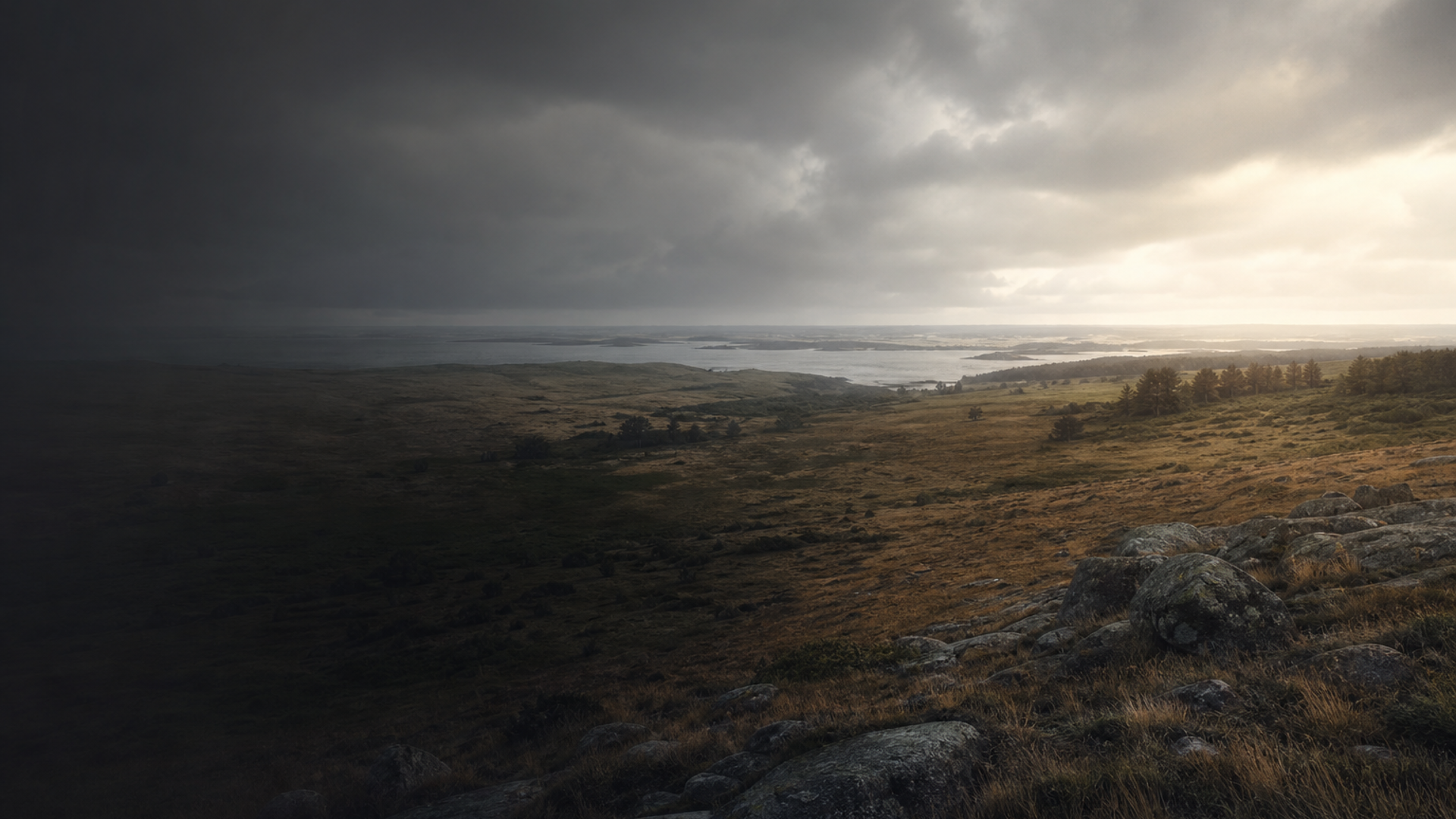
The Middle Neolithic Funnel Beaker phenomenon in Sweden unfolds between about 3945 and 2633 BCE, a time when farming practices and distinctive pottery styles carried across the southern Scandinavian landscape. Archaeological data indicates the presence of TRB material culture at sites such as Kvärlöv. Saxtorp (Skåne) and Gökhem (Västergötland). These sites sit in a maritime, archipelagic world where farmers adapted continental crops and domestic animals to northern conditions.

Cinematically, imagine small communities clearing forest edges to plant barley and tend cattle, while ritual and social life left traces in tombs and ceramics. From a genetic perspective, the TRB of Sweden likely represents a blend: ancestry linked to incoming Early European Farmers (Anatolian-derived) combined with persistent local hunter-gatherer lineages. Archaeological data indicates exchange of ideas and goods across the Öresund and Kattegat, and regional variation is notable across southern Sweden.

Because only five genomes are associated with the Sweden_TRB_MN sample set, conclusions about population replacement, migration, or continuity remain tentative. Limited evidence suggests that these communities were part of a broader Neolithic network across northern Europe, but local trajectories of culture and ancestry must be inferred cautiously.

  • TRB presence in Skåne and Västergötland (Kvärlöv. Saxtorp; Gökhem)
  • Dates: 3945–2633 BCE (Middle Neolithic)
  • Archaeology points to mixed farmer–hunter cultural origins
Chapter IV

Daily Life & Society

Archaeological features from Kvärlöv. Saxtorp and Gökhem reveal the textures of everyday Middle Neolithic life: domestic structures, pottery with funnel-shaped rims, flint toolkits, and communal burials. Material remains indicate mixed economies—crop cultivation and animal husbandry supplemented by fishing and foraging in nearby coastal and wetland environments.

Communal monuments and burial practices suggest social boundaries and ritual expression: graves and collective monuments anchored landscapes and memories. Craft traditions—pottery styles, polished axes, and bone tools—trace networks of contact beyond southern Sweden. Seasonal rhythms of sowing, harvesting, and maritime resource use framed social life, while exchange of raw materials connected TRB communities to neighboring regions.

Archaeological data indicates variability between settlements: some show more intensive farming signals, others stronger continuity with forager lifeways. This mosaic would have shaped childhood, labor roles, and social ceremonies, although specifics at individual sites remain partly obscured by the passage of millennia.

  • Mixed economy: farming, herding, fishing, and foraging
  • Communal burial practices and distinctive funnel‑rim pottery
Chapter V

Genetic Profile

Genetic data from the Sweden_TRB_MN grouping are sparse—only five ancient genomes—so interpretations must be cautious and framed as preliminary. Within this small sample set, one Y‑chromosome haplogroup I lineage and one mitochondrial haplogroup H lineage are observed. Haplogroup I has deep roots in northern Europe and is often associated with Mesolithic hunter‑gatherer populations in Scandinavia; its presence here is consistent with continuity of local paternal lineages.

Mitochondrial haplogroup H is widespread across Neolithic and later European populations and is commonly found among farming communities; its occurrence in the TRB samples aligns with the expected mix of maternal lineages seen elsewhere in Neolithic Europe. Autosomal profiles from TRB individuals in Scandinavia (general research context) typically show a combination of Early European Farmer (Anatolian‑derived) ancestry and Western Hunter‑Gatherer (WHG) ancestry. Within the Sweden_TRB_MN samples, limited evidence suggests similar mixed ancestry, with little clear signal for large steppe‑derived input in this date range—though later centuries saw increasing steppe influence across northern Europe.

Given n=5, population‑level assertions (such as frequency estimates or migration models) are premature. These genomes are valuable reconnaissance: they hint at a mosaic society where farmer lineages and long‑standing northern hunter‑gatherer ancestry met and blended.

  • Small sample size (n=5) — conclusions are preliminary
  • Observed uniparental markers: Y‑I and mtDNA H, consistent with hunter‑gatherer continuity and farmer maternal lineages
Chapter VI

Legacy & Modern Connections

The material and genetic echoes of Middle Neolithic TRB communities in southern Sweden shaped regional landscapes: field systems, tombs, and ceramic traditions left durable marks on the archaeological record. Genetically, elements of TRB ancestry—particularly hunter‑gatherer lineages like haplogroup I—persist in the broader Scandinavian gene pool, though later Bronze Age and Iron Age movements layered additional ancestries onto that foundation.

Modern inhabitants of Sweden inherit a tapestry of ancestries formed across millennia. While some uniparental markers observed in the Sweden_TRB_MN samples are still found in northern Europe, demographic events after 2633 BCE (notably increasing steppe influence and historic migrations) mean direct continuity should not be assumed. Archaeogenetics combined with archaeology provides a cinematic but careful reconstruction: echoes of Kvärlöv and Gökhem remain readable, but the picture is complex and still being refined.

  • TRB traditions contributed to long‑term landscape and ritual practices in southern Sweden
  • Genetic signals are ancestral threads in modern northern European diversity, but later migrations complicate direct continuity
AI 电源

AI 助手

就 Funnel Beaker Sweden: Kvärlöv & Gökhem 文化提问

AI 助手 由DNAGENICS公司制作

解锁此特性
Ask questions about the Funnel Beaker Sweden: Kvärlöv & Gökhem culture. Our AI assistant can explain genetic findings, historical context, archaeological evidence, and modern connections.
AI 样本分析

Funnel Beaker Sweden: Kvärlöv & Gökhem 文化是人类历史中值得了解的一章……

遗传分析揭示了与早期种群的联系,同时显示了独特的适应和文化创新的证据。 古代DNA样本提供了对迁徙模式、社会结构以及古代种群之间的生物关系的深刻见解。

这是人工智能分析的预览。 解锁全AI 助手, 以探索关于:

  • 遗传组成和祖先
  • 移徙模式和起源
  • 日常生活和文化习俗
  • 现代遗传遗产

探索更古老的文化

揭开古代世界文明的故事

使用优惠码 可减免 35% • 11月12日 到期