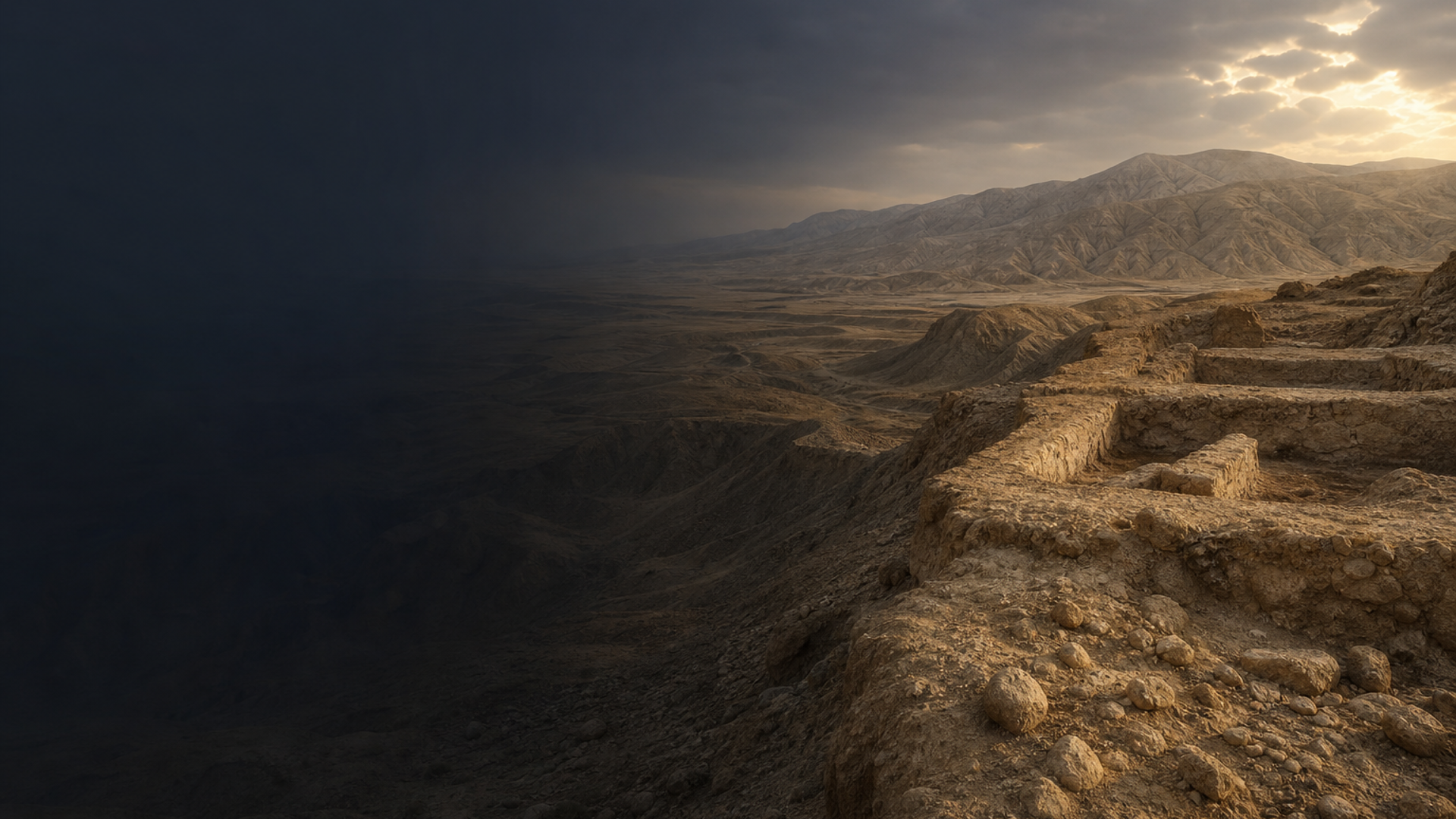
Geoksyur Chalcolithic Echoes

下载的 PDF 是图像副本。如需可选中文本及更好的辅助技术支持,请使用打印功能。

Geoksyur Chalcolithic Echoes

揭开一个失落的文明

正在加载考古记录……

正在收集古代记录

跳转到主内容
Geoksyur Chalcolithic Echoes
文明焦点

Geoksyur Chalcolithic Echoes

A Turkmen oasis community at the crossroads of Near Eastern and Central Asian worlds

3500 CE - 2800 BCE
Turkmenistan (Geoksyur)
滚动开始
Chapter I

剧情

了解 Geoksyur Chalcolithic Echoes 文化

Archaeological remains from Geoksyur (3500–2800 BCE) reveal a Chalcolithic community in present-day Turkmenistan. Ancient DNA links show predominantly Near Eastern maternal and paternal lineages, with minor Central Asian inputs. Evidence suggests regional interaction and complex ancestry.

Time Period

3500–2800 BCE

Region

Turkmenistan (Geoksyur)

Common Y-DNA

J (7), R (1), Q (1)

Common mtDNA

J (5), HV (4), U7a (2), T (2), H (2)

Chapter II

时间线

这种文化历史上的关键时刻

2500 BCE

Peak occupation at Geoksyur

Archaeological and genetic evidence indicate a thriving Chalcolithic community engaged in regional exchange around 2500 BCE.

Chapter III

Origins & Emergence

Between roughly 3500 and 2800 BCE, the settlement at Geoksyur (also written Geoksiur) occupies a cinematic niche on the ancient margins of the Near East and Central Asia. Archaeological data indicates a Chalcolithic horizon often characterized by copper use, ceramic assemblages, and settled households — material traces that suggest sustained occupation rather than short-term camps. The site sits, in effect, as a local node in wider exchange networks: raw metals, finished pottery styles, and craft techniques imply contact across the Iranian plateau and into the steppe fringe.

Ancient DNA from human remains tied to Geoksyur paints a complementary picture. Maternal lineages such as mtDNA J and HV, and paternal lineages dominated by haplogroup J, point toward substantial connections with populations of the Near East and the Zagros–Iranian frontier. At the same time, the presence of Q and a single R lineage hints at sporadic genetic inputs from more northerly or steppe-influenced groups. Archaeological evidence alone cannot resolve the tempo of these contacts; genetics suggests multi-directional movement but, with the current dataset, the details remain provisional.

Limited evidence suggests that this community emerged from local Neolithic roots while also absorbing newcomers and ideas, resulting in a hybrid cultural landscape that is visible both in the material record and in the genomes of those interred at Geoksyur.

  • Occupied 3500–2800 BCE during the Chalcolithic period
  • Material culture indicates Near Eastern and regional interactions
  • Genetic signals show predominant Near Eastern ancestry with minor Central Asian input
Chapter IV

Daily Life & Society

Life at Geoksyur can be reconstructed as a mix of domestic labor, craft production, and mobility. Archaeological deposits recovered at the site include household debris, pottery sherds with decorative motifs, and small copper objects consistent with Chalcolithic technology. These finds suggest a community practicing a mixed subsistence economy: seasonal herding, small-scale cultivation where water permitted, and specialized craft work.

Burial practices provide another window into social life. Funerary contexts from Geoksyur yielded the skeletal remains now analyzed for ancient DNA — the distribution and treatment of those burials hint at household-level social organization rather than deeply stratified hierarchy. Grave goods are sometimes simple and at other times more elaborate, implying variation in status or role. Ceramic styles and toolkits show both local continuity and borrowed forms, reflecting the flow of ideas along exchange routes.

Archaeological data indicates that Geoksyur’s inhabitants negotiated a landscape of oases, steppe, and mountain corridors. Mobility was likely part of seasonal economy and social networks: people, herds, and goods moved, and the material traces left behind reveal a community adept at connecting local lifeways with broader regional currents.

  • Mixed subsistence: herding, limited cultivation, and craft production
  • Burials and household assemblages indicate household-scale social structure
Chapter V

Genetic Profile

Ancient DNA from human remains at Geoksyur offers a direct line to ancestry. Among reported paternal lineages, haplogroup J appears most frequently (7 occurrences), with single occurrences of R and Q. On the maternal side, mtDNA lineages include J (5), HV (4), U7a (2), T (2), and H (2). These markers collectively point toward a strong Near Eastern component: haplogroup J on both Y and mtDNA, and HV and U7a maternally, are broadly associated with populations of the Near East and adjacent regions.

The presence of Q and R, each in low frequency, suggests occasional gene flow from more northerly or steppe-associated groups or from Central Asian pockets carrying those lineages. Because reported Y-chromosome counts here total fewer than ten individuals, conclusions about paternal structure must be treated as preliminary: limited paternal sampling can exaggerate or understate particular lineages' prevalence. Likewise, while the maternal dataset is larger, it still reflects a finite sample from a single community and time span.

Taken together, the genetic signal supports archaeological interpretations of Geoksyur as a place of intersection: principally Near Eastern ancestry with minor contributions from other regional gene pools. Future sampling across neighboring sites and time slices will be essential to test whether this profile reflects local continuity, episodic migration, or broader population shifts during the Chalcolithic transition.

  • Dominant Near Eastern signal: Y and mtDNA J and mtDNA HV/U7a
  • Low-frequency Q and R hint at limited northern/Central Asian admixture
Chapter VI

Legacy & Modern Connections

The echoes of Geoksyur persist in both material and genetic landscapes. Modern populations of Turkmenistan and adjacent regions retain some of the mitochondrial and Y-chromosome lineages seen at the site, but continuity is complex: millennia of migration, language shifts, and cultural reorganization have layered new ancestries atop ancient ones. Archaeogenetic results from Geoksyur strengthen a regional narrative in which the Iranian plateau and Near East were important sources of ancestry into the oasis and steppe fringes.

At a broader level, Geoksyur exemplifies how Chalcolithic communities contributed to the tapestry of West and Central Asian prehistory. The site’s combination of Near Eastern maternal and paternal signatures with sporadic northern lineages mirrors patterns elsewhere where sedentary farming communities and mobile pastoralists interacted. While direct lines from Geoksyur individuals to specific modern groups cannot be drawn without denser sampling and temporal coverage, the dataset provides a vivid touchstone: a community whose bones preserve stories of movement, contact, and cultural blending that still shape the genetic geography of the region today.

  • Contributes to understanding regional Near Eastern–Central Asian ancestry dynamics
  • Genetic continuity is plausible but layered by subsequent migrations and cultural change
AI 电源

AI 助手

就 Geoksyur Chalcolithic Echoes 文化提问

AI 助手 由DNAGENICS公司制作

解锁此特性
Ask questions about the Geoksyur Chalcolithic Echoes culture. Our AI assistant can explain genetic findings, historical context, archaeological evidence, and modern connections.
AI 样本分析

Geoksyur Chalcolithic Echoes 文化是人类历史中值得了解的一章……

遗传分析揭示了与早期种群的联系,同时显示了独特的适应和文化创新的证据。 古代DNA样本提供了对迁徙模式、社会结构以及古代种群之间的生物关系的深刻见解。

这是人工智能分析的预览。 解锁全AI 助手, 以探索关于:

  • 遗传组成和祖先
  • 移徙模式和起源
  • 日常生活和文化习俗
  • 现代遗传遗产

探索更古老的文化

揭开古代世界文明的故事

使用优惠码 可减免 35% • 11月12日 到期