Gold and Graves of Varna

下载的 PDF 是图像副本。如需可选中文本及更好的辅助技术支持,请使用打印功能。

Gold and Graves of Varna

揭开一个失落的文明

正在加载考古记录……

正在收集古代记录

跳转到主内容
Gold and Graves of Varna
文明焦点

Gold and Graves of Varna

Chalcolithic Varna: a coastal necropolis where early metallurgy met diverse ancestries

4750 CE - 4347 BCE
Varna (province), Bulgaria
滚动开始
Chapter I

剧情

了解 Gold and Graves of Varna 文化

Varna Chalcolithic (4750–4347 BCE): the famed Varna Necropolis reveals lavish burials, early gold metallurgy, and a genetically diverse community (23 samples). Archaeological and aDNA evidence together hint at complex social hierarchies and mixed ancestries in Copper Age Bulgaria.

Time Period

4750–4347 BCE

Region

Varna (province), Bulgaria

Common Y-DNA

L (7), V88 (4), PF (3), M70 (1)

Common mtDNA

H (5), K (3), U (3), T (2), X2 (1)

Chapter II

时间线

这种文化历史上的关键时刻

4600 BCE

Peak Varna Necropolis burials

Major cemetery use with richly furnished burials, including extensive gold artifacts, marking social differentiation in the region.

Chapter III

Origins & Emergence

The Varna Chalcolithic horizon emerges on the Black Sea plain as a luminous chapter in Europe's Copper Age. Centered on the Varna Necropolis (Varna municipality), dated here between 4750 and 4347 BCE, the archaeological record presents elite burials loaded with the earliest known processed gold in the region. These graves speak of wealth concentration, long-distance exchange in raw materials, and emerging craft specialization.

Archaeological data indicates continuity with earlier Neolithic farming communities of the Balkans, but also growing complexity: specialized workshops, standardized decorative motifs, and socially differentiated funerary rites. The corpora of grave goods—copper tools, bead strings, and abundant gold items—suggest networks that reached beyond the immediate coast, though the precise routes and partners remain debated.

Limited evidence suggests that Varna was not an isolated city-state but part of a web of Chalcolithic communities across the Balkans and the lower Danube. The combination of opulent burials and regional settlement patterns implies rising inequality and the institutionalization of status during the fifth millennium BCE. Yet many questions remain about political organization, household economies, and the rhythm of seasonal movement; ongoing excavations continue to nuance the narrative.

  • Varna Necropolis (Varna, Bulgaria) dated 4750–4347 BCE
  • Earliest extensive processed gold in prehistoric Europe
  • Signs of craft specialization and long-distance exchange
Chapter IV

Daily Life & Society

Daily existence in Chalcolithic Varna likely blended farming, herding, craft production, and maritime exchange. Archaeobotanical and zooarchaeological assemblages from nearby settlements indicate mixed cereal agriculture and secondary products from sheep and cattle. The coastal position enabled access to salt, shells, and possibly long-range seafaring contacts along the Black Sea.
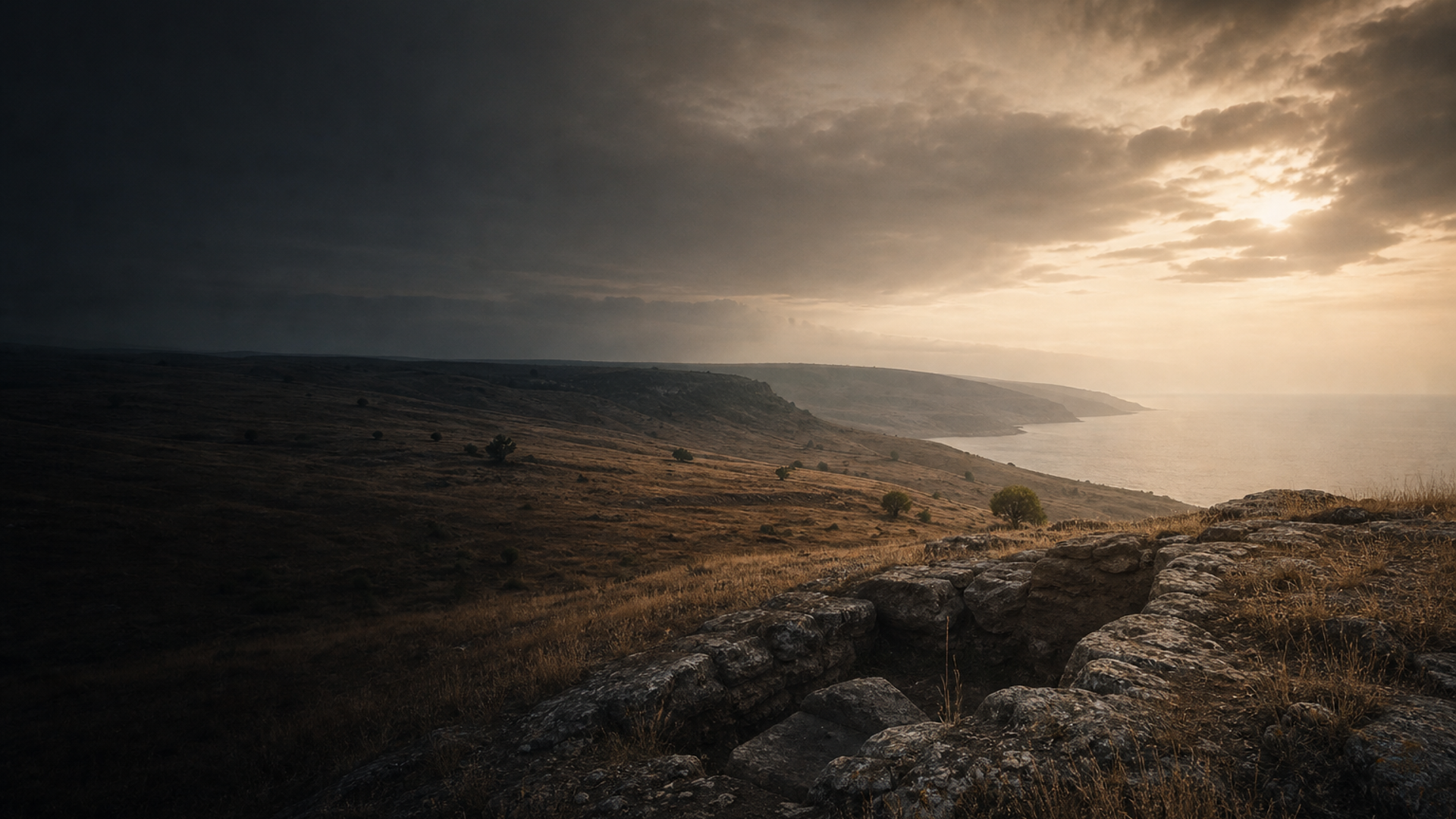

Grave goods imply status differences that probably extended into everyday life: some households would have hosted skilled metalworkers or bead-makers, while others maintained agricultural labor. Copper tools and standardized ornamentation point to workshops and apprenticeship traditions. Funerary practice—individual burials with rich personal ornaments versus simpler interments—signals social stratification and possibly inherited rank.

Material culture also preserves gestures of identity: patterned pottery, distinctive bead styles, and burial postures. While monumental elite graves capture the imagination, most people are archaeologically visible through modest domestic debris: hearths, storage pits, and flint toolkits. These traces show a community balancing local production with participation in wider exchange networks, though the exact scale of urbanization remains uncertain.

  • Mixed farming, herding, and coastal resource use
  • Evidence for workshops (metal, bead production) and social ranking
Chapter V

Genetic Profile

Ancient DNA from 23 individuals associated with Varna Chalcolithic offers a unique window into the population tapestry of the northern Balkans. Y-chromosome results show unexpected diversity: multiple individuals carry haplogroup L (7), several carry V88 (4), smaller counts for PF (3) and M70 (1). These paternal lineages are noteworthy because some (for example haplogroup L) are today concentrated in regions far from the Balkans; their presence here may reflect ancient population structure or long-distance connections that do not persist into the modern period. Interpretations should be cautious: while 23 samples are substantial for a single site, the geographic and chronological scope is still limited.

Mitochondrial genomes are dominated by lineages common to European Neolithic and Chalcolithic contexts—H, K, U, T, and X2—suggesting substantial maternal continuity with farming populations of Anatolian and Balkan origin, with a minority of U lineages hinting at lingering hunter-gatherer maternal ancestry. Overall, the aDNA signal is consistent with a community built on Neolithic farmer ancestry but enriched by diverse paternal inputs and possible contact-related gene flow. Ongoing sampling across the region will refine models of migration, kinship, and social structure.

  • Diverse Y-DNA (L, V88, PF, M70) indicates complex paternal ancestries
  • mtDNA (H, K, U, T, X2) aligns with Neolithic farmer maternal lineages
Chapter VI

Legacy & Modern Connections

The Varna Chalcolithic imprint endures in both material and genetic memory. Archaeologically, the necropolis demonstrates early social complexity and metallurgical innovation that would shape later Balkan traditions. Genetically, the mixture seen in Varna underscores the Balkans' long role as a crossroads: Neolithic farmer matrilines combined with varied paternal lineages produce a genomic mosaic whose echoes may persist in regional variation today.

Caution is essential: population turnover after the Chalcolithic (including Bronze Age movements) altered genetic landscapes. Nonetheless, Varna remains a pivotal case for understanding how craft, wealth, and mobility intertwined in prehistoric Europe. Future ancient DNA from surrounding settlements and time-transgressive samples will clarify which elements were local continuities and which were transient contacts.

  • Varna exemplifies early social inequality and metallurgical innovation
  • aDNA shows Balkan role as a crossroads; later events reshaped ancestry
AI 电源

AI 助手

就 Gold and Graves of Varna 文化提问

AI 助手 由DNAGENICS公司制作

解锁此特性
Ask questions about the Gold and Graves of Varna culture. Our AI assistant can explain genetic findings, historical context, archaeological evidence, and modern connections.
AI 样本分析

Gold and Graves of Varna 文化是人类历史中值得了解的一章……

遗传分析揭示了与早期种群的联系,同时显示了独特的适应和文化创新的证据。 古代DNA样本提供了对迁徙模式、社会结构以及古代种群之间的生物关系的深刻见解。

这是人工智能分析的预览。 解锁全AI 助手, 以探索关于:

  • 遗传组成和祖先
  • 移徙模式和起源
  • 日常生活和文化习俗
  • 现代遗传遗产

探索更古老的文化

揭开古代世界文明的故事

使用优惠码 可减免 35% • 11月12日 到期




