Goyet Q376-19: A Paleolithic Maternal Voice

下载的 PDF 是图像副本。如需可选中文本及更好的辅助技术支持,请使用打印功能。

Goyet Q376-19: A Paleolithic Maternal Voice

揭开一个失落的文明

正在加载考古记录……

正在收集古代记录

跳转到主内容
Goyet Q376-19: A Paleolithic Maternal Voice
文明焦点

Goyet Q376-19: A Paleolithic Maternal Voice

A single Upper Paleolithic individual from the Troisième caverne of Goyet, Belgium, speaking across 25 millennia

25771 CE - 25348 BCE
Troisième caverne, Goyet Cave; Namur, Belgium (Western Europe)
滚动开始
Chapter I

剧情

了解 Goyet Q376-19: A Paleolithic Maternal Voice 文化

A lone Upper Paleolithic genome (c. 25,771–25,348 BCE) from Goyet Cave's Troisième caverne carries mtDNA U2. Archaeology links this individual to deep Gravettian-era landscapes in Belgium; genetic data are sparse but suggest maternal lineages shared across Palaeolithic Europe. Conclusions remain preliminary.

Time Period

c. 25,771–25,348 BCE (Upper Paleolithic)

Region

Troisième caverne, Goyet Cave; Namur, Belgium (Western Europe)

Common Y-DNA

Unknown (no Y-DNA reported for this sample)

Common mtDNA

U2 (1 sample)

Chapter II

时间线

这种文化历史上的关键时刻

25560 BCE

Goyet Q376-19 (sampled individual)

A single individual from the Troisième caverne of Goyet dated to ~25,771–25,348 BCE; carries mtDNA U2. (Preliminary, n = 1.)

Chapter III

Origins & Emergence

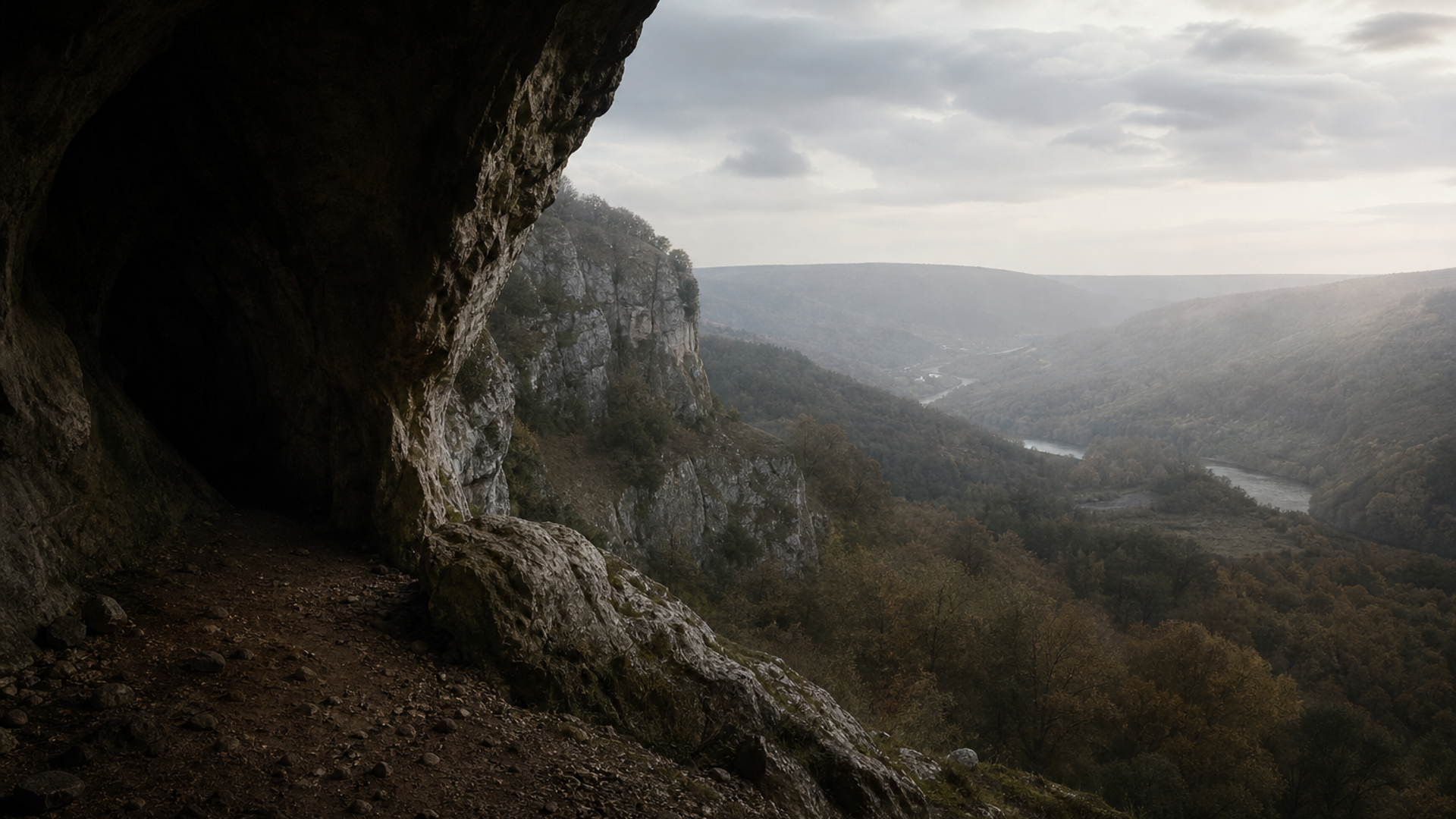
Beneath the limestone vaults of Goyet Cave, human stories are preserved in bone, charcoal and crush of centuries. The Troisième caverne (Third Cave) yields a pulse from the deep Upper Paleolithic: a radiocarbon-calibrated window between roughly 25,771 and 25,348 BCE. Archaeological data indicate repeated occupation of Goyet through much of the Late Pleistocene; lithic assemblages and faunal remains suggest mobile hunter-gatherer bands moving across the river valleys of what is now Namur province.

This individual—labeled Goyet Q376-19—comes from contexts associated with Upper Paleolithic technology. While some layers at Goyet have been linked to Gravettian-type industries, stratigraphic complexity and later disturbance mean cultural assignments should be cautious: limited evidence suggests affinities with mid-Upper Paleolithic toolkits but absolute association is not firmly established. The broader landscape would have been a mosaic of parkland and riverine corridors, with large mammals such as reindeer and horse drawing groups to predictable hunting grounds and sheltered caves.

Important caveats: only one genome is represented here. With n = 1, origins and population dynamics inferred from this sample remain provisional. Nevertheless, this individual offers a cinematic, human-scale anchor for studies of Late Pleistocene presence in northwestern Europe.

  • Radiocarbon range c. 25,771–25,348 BCE from Troisième caverne, Goyet Cave
  • Associated with Upper Paleolithic activity; possible Gravettian affinities but stratigraphy is complex
  • Sample count = 1; broader population conclusions are preliminary
Chapter IV

Daily Life & Society

Imagine a frigid plain lit by low sun and wind driven spark from hearths sheltered inside a cavern mouth. The people who used Goyet moved seasonally, exploiting riverine and upland game and creating finely made stone tools. Archaeological remains from Goyet more broadly include rich faunal assemblages, burnt bone, ochre and human interments—traces of ritual and sustained use rather than a single transient camp.

Domestic life would have centered on hearths for warmth, food processing and tool retouching. Organic materials rarely survive in such contexts, but bone tools and worked flints speak to tasks of hunting, hide preparation, and hafting. The presence of ornaments and pigment at Goyet indicates symbolic behavior—marking identity, memory, or social ties—while the cave’s repeated use suggests long-term knowledge of local landscapes passed across generations.

Archaeological data from Goyet combine with the climatic backdrop of the Late Pleistocene to suggest flexible, resilient lifeways adapted to highly seasonal resources. Yet the human story at Q376-19 remains one thread in a wider tapestry; individual life histories require more samples to reconstruct social networks or mobility patterns with confidence.

  • Cave hearths, faunal remains, and worked flint indicate repeated occupation and complex subsistence
  • Ornaments and pigments at Goyet point to symbolic practices alongside daily survival
Chapter V

Genetic Profile

The genetic data for Belgium_UP_GoyetQ376_19 are sparse but revealing. The single sequenced individual carries mitochondrial haplogroup U2. mtDNA U2 is observed in several Upper Paleolithic and later Palaeolithic contexts across Eurasia, suggesting that maternal lineages of this branch were part of the deep genetic tapestry of Palaeolithic Europe. That said, the presence of U2 in one individual cannot speak to frequencies, structure, or demographic change on its own.

No Y-chromosome data are reported for this sample, so paternal lineages and sex-specific demographic signals remain unknown. With only one genome from this horizon (sample count < 10, specifically n = 1), any population-level inference—such as continuity with earlier or later groups, admixture events, or population replacements—must be framed as provisional. Archaeogeneticists therefore combine such individual data with other regional genomes, stratigraphic information, and material culture to build hypotheses.

Archaeological context from Goyet paired with the mtDNA U2 signal suggests possible maternal continuity with other Ice Age groups in northwest Europe, but stronger claims require larger sample sets. Future aDNA from adjacent layers and nearby sites would help test whether this mtDNA reflects a localized lineage, a mobile maternal network, or broader Palaeolithic maternal diversity.

  • mtDNA U2 identified in the single sample, consistent with some Upper Paleolithic maternal lineages
  • No Y-DNA available; with n = 1, population-level conclusions are preliminary
Chapter VI

Legacy & Modern Connections

The individual from Goyet offers a hauntingly direct link to Europe’s deep past—an ancestral voice preserved in mitochondrial code. While one genome cannot map ancestry across millennia, it contributes to a growing mosaic showing how Ice Age populations were structured and how maternal lineages moved across vast landscapes.

For modern populations, signals like mtDNA U2 represent threads that may persist in low frequencies or have been reshuffled by later migrations. Archaeogenetics frames Goyet Q376-19 not as a solitary ancestor of any living group but as part of a shared Palaeolithic heritage: a testament to mobility, resilience, and the social networks that allowed humans to thrive in challenging climates. Robust links to present-day populations require many more genomes and careful demographic modeling.

  • Contributes to understanding of maternal lineage diversity in Upper Paleolithic Europe
  • Not a direct claim of continuity to modern groups; broader sampling needed
AI 电源

AI 助手

就 Goyet Q376-19: A Paleolithic Maternal Voice 文化提问

AI 助手 由DNAGENICS公司制作

解锁此特性
Ask questions about the Goyet Q376-19: A Paleolithic Maternal Voice culture. Our AI assistant can explain genetic findings, historical context, archaeological evidence, and modern connections.
AI 样本分析

Goyet Q376-19: A Paleolithic Maternal Voice 文化是人类历史中值得了解的一章……

遗传分析揭示了与早期种群的联系,同时显示了独特的适应和文化创新的证据。 古代DNA样本提供了对迁徙模式、社会结构以及古代种群之间的生物关系的深刻见解。

这是人工智能分析的预览。 解锁全AI 助手, 以探索关于:

  • 遗传组成和祖先
  • 移徙模式和起源
  • 日常生活和文化习俗
  • 现代遗传遗产

探索更古老的文化

揭开古代世界文明的故事

使用优惠码 可减免 35% • 11月12日 到期