Goyet Q376-19: A Voice from 25,500 BCE

下载的 PDF 是图像副本。如需可选中文本及更好的辅助技术支持,请使用打印功能。

跳转到主内容
文明焦点

Goyet Q376-19: A Voice from 25,500 BCE

A single Upper Paleolithic individual from the Troisième caverne of Goyet speaks to deep European prehistory.

25771 CE - 25348 BCE
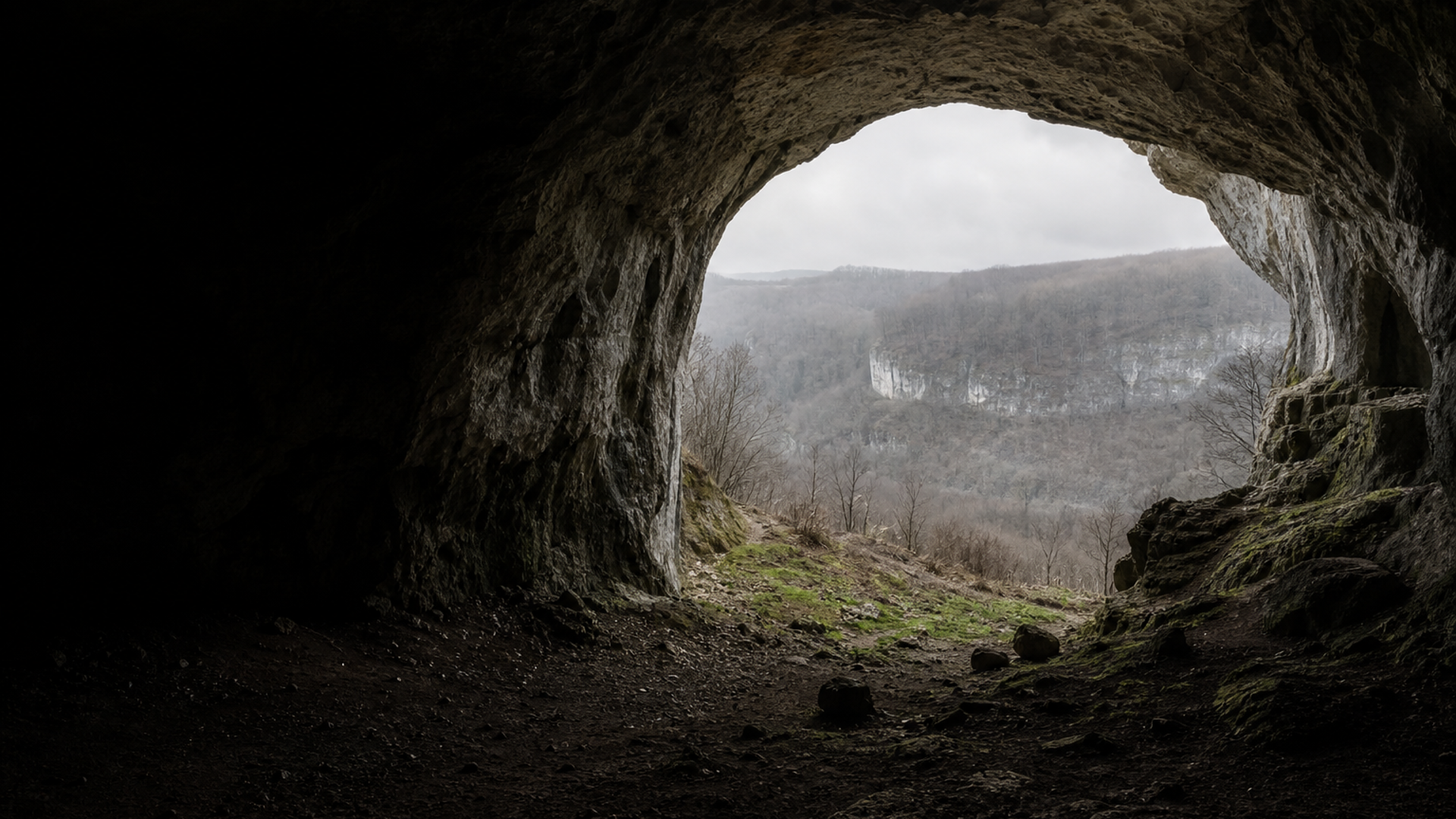
Goyet cave, Namur province, Belgium

剧情

A solitary Upper Paleolithic burial (Goyet Q376-19) from the Troisième caverne of Goyet, Belgium, dated ~25,771–25,348 BCE. Archaeological context and mtDNA U2 link this individual to broader Upper Paleolithic populations, though conclusions remain preliminary from a single sample.

Time Period

c. 25,771–25,348 BCE (Upper Paleolithic)

Region

Goyet cave, Namur province, Belgium

Common Y-DNA

Not reported / unknown

Common mtDNA

U2 (1 sample)

时间线

25560 BCE

Goyet individual lived and was deposited

Radiocarbon dating places the individual at c. 25,771–25,348 BCE; the burial/occupation reflects Upper Paleolithic presence in Belgium.

Origins & Emergence

The Troisième caverne of Goyet (Goyet Cave) in the Namur province of Belgium preserves long sequences of Middle and Upper Paleolithic deposits. The individual labelled Belgium_UP_GoyetQ376_19 dates to roughly 25,771–25,348 BCE — a cold-stage moment in the Late Pleistocene when hunter-gatherer groups retracted, adapted, and occasionally aggregated in cave sites. Archaeological data from Goyet indicate repeated occupations: hearths, stone tools, and faunal remains testify to episodic use of the cave as a shelter and activity locus.

This period in northwestern Europe is often associated with Gravettian and late Aurignacian cultural expressions; however, stratigraphic complexity at Goyet means cultural attributions should be cautious. Limited evidence suggests that human groups in this era maintained mobile lifeways centered on reindeer, horse, and other cold-adapted fauna, with seasonal rounds across a shifting landscape of steppe and tundra pockets.

The cinematic image is of a dim, smoke-lit chamber where toolmakers repaired blades and families tended fires while harsh winds howled outside — but archaeologically we rely on fragments: charcoal fragments for radiocarbon dating, lithic scatters, and animal bones. From such fragments, researchers reconstruct lifeways and movements across Pleistocene Europe, always noting the gaps and ambiguities inherent in deep prehistory.

  • Sample from Troisième caverne of Goyet Cave, Namur, Belgium
  • Dated 25,771–25,348 BCE (Late Upper Paleolithic)
  • Archaeological context shows repeated cave use; cultural attribution remains cautious

Daily Life & Society

Archaeological deposits at Goyet capture the echo of daily tasks: knapping stone into blades, processing carcasses, and tending hearths that warmed small social groups. Faunal remains at Goyet illustrate reliance on large mammals adapted to cold environments; skin-processing, bone tool manufacture, and curated toolkits are consistent with highly mobile, task-specialized communities.

Material culture from Goyet and comparable Upper Paleolithic sites suggests social networks for raw material exchange and possibly seasonal aggregation events. Personal ornaments and worked bone found in nearby contexts evoke complex symbolic lives — marks of identity, social ties, or ritual behavior — though specific associations to Q376-19 are not established.

Because only one genetic sample is available for this specific individual, linking personal artifacts directly to their biographical story is not possible; instead, we place the individual within a tapestry of regional behavior inferred from many excavation layers. The image is intimate and immediate: a person living at the edge of climatic limits, skilled in technology and social cooperation, leaving behind a trace in stone, bone, and now DNA.

  • Economy centered on cold-adapted large game and mobile foraging
  • Evidence for skilled tool production, bone working, and potential symbolic behavior

Genetic Profile

The genetic data for Belgium_UP_GoyetQ376_19 are limited but meaningful. Mitochondrial DNA is assigned to haplogroup U2, a lineage found in several Upper Paleolithic European individuals. mtDNA U2 contributes to the broader pattern of U-lineages (including U2, U4, U5) that dominate maternal ancestries in Pleistocene Europe.

No Y-chromosome (paternal) haplogroup is reported for this individual. Autosomal data, if available, could clarify affinities to other contemporaneous populations (for example, Gravettian-associated groups or regional Upper Paleolithic clusters), but with a single sample we must be cautious. Limited sample count (n=1) makes population-level inferences preliminary: the U2 result is consistent with known maternal diversity in Upper Paleolithic Europe but cannot by itself define migration routes or demographic events.

Genetic signals at this horizon elsewhere in Europe show complex patterns: regional continuity in some areas and population turnover in others. Integrating the Goyet mtDNA result with wider datasets helps place this person within continental threads of ancestry, demonstrating how archaeogenetics converts isolated cave fragments into clues about movement, kinship, and survival networks across glacial landscapes. Researchers will require more samples from Goyet and surrounding regions to resolve autosomal affinities and demographic processes with confidence.

  • mtDNA: U2 — aligns with Upper Paleolithic maternal lineages in Europe
  • Y-DNA: not reported; autosomal conclusions are preliminary due to single sample

Legacy & Modern Connections

This solitary individual from Goyet serves as a poetic bridge between present-day Europeans and Late Pleistocene foragers. The mtDNA U2 lineage links them to deep maternal threads that persisted across millennia in Europe. While no direct, individual-to-modern population line can be drawn from one sample, the data contribute to a growing atlas of ancient variation that informs models of post-glacial recolonization and regional persistence.

Modern genetic landscapes are the palimpsest of many such voices: Upper Paleolithic contributors like Goyet leave traces layered beneath later migrations of the Neolithic, Bronze Age, and historical periods. Each authenticated ancient genome — even singular ones — sharpens our picture of how ancient people moved, mixed, and adapted. At the same time, researchers emphasize restraint: patterns suggested by a single mtDNA result are hypotheses to be tested, not final answers.

  • Connects to deep maternal lineages found in Upper Paleolithic Europe
  • Contributes to larger datasets used to model post-glacial population dynamics

AI 助手

AI 助手 由DNAGENICS公司制作

解锁此特性
Ask questions about the Goyet Q376-19: A Voice from 25,500 BCE culture. Our AI assistant can explain genetic findings, historical context, archaeological evidence, and modern connections.
AI 样本分析

Goyet Q376-19: A Voice from 25,500 BCE 文化是人类历史中值得了解的一章……

遗传分析揭示了与早期种群的联系,同时显示了独特的适应和文化创新的证据。 古代DNA样本提供了对迁徙模式、社会结构以及古代种群之间的生物关系的深刻见解。

这是人工智能分析的预览。 解锁全AI 助手, 以探索关于:

  • 遗传组成和祖先
  • 移徙模式和起源
  • 日常生活和文化习俗
  • 现代遗传遗产
使用优惠码 可减免 30% • 11月15日 到期