Ikiztepe Horizon: Black Sea Chalcolithic

下载的 PDF 是图像副本。如需可选中文本及更好的辅助技术支持,请使用打印功能。

Ikiztepe Horizon: Black Sea Chalcolithic

揭开一个失落的文明

正在加载考古记录……

正在收集古代记录

跳转到主内容
Ikiztepe Horizon: Black Sea Chalcolithic
文明焦点

Ikiztepe Horizon: Black Sea Chalcolithic

Three genomes from İkiztepe sketch an Anatolian coastal community with farmer-linked ancestry

3500 CE - 3100 BCE
Samsun Province, Turkey (İkiztepe)
滚动开始
Chapter I

剧情

了解 Ikiztepe Horizon: Black Sea Chalcolithic 文化

İkiztepe (Samsun Province), 3500–3100 BCE: three ancient genomes show predominance of Y-haplogroup G and suggest continuity with Anatolian Neolithic farmer lineages. Evidence is preliminary; further sampling is needed to resolve population dynamics.

Time Period

3500–3100 BCE

Region

Samsun Province, Turkey (İkiztepe)

Common Y-DNA

G (observed in 2 of 3 samples)

Common mtDNA

Undetermined (insufficient data)

Chapter II

时间线

这种文化历史上的关键时刻

3500 BCE

Emergence of the Ikiztepe Horizon

Settlement intensification at İkiztepe marks a distinct Chalcolithic horizon on the Black Sea littoral, with material culture linking to Anatolian farming traditions.

Chapter III

Origins & Emergence

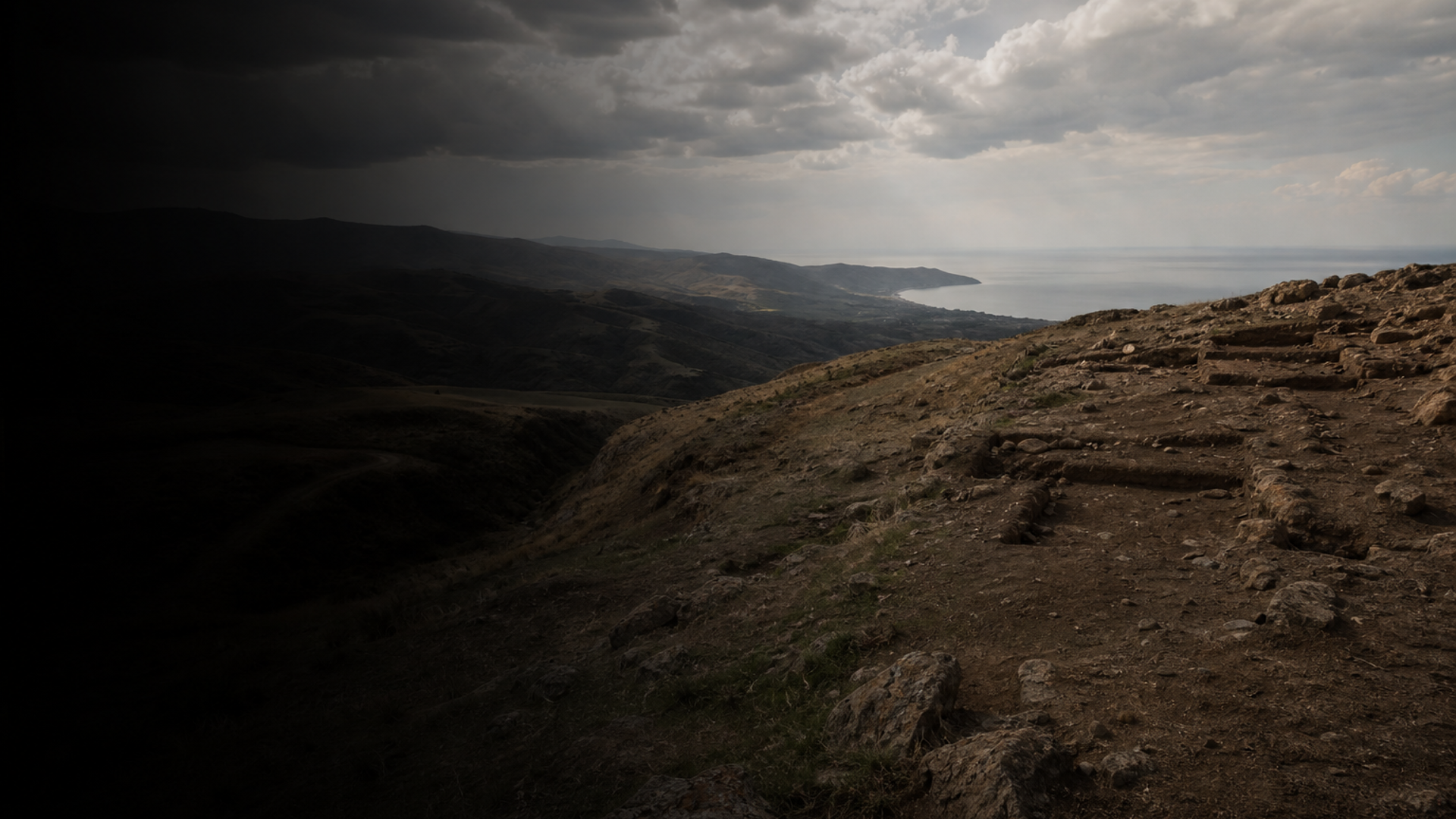
Perched on the southern rim of the Black Sea, the tell of İkiztepe in Samsun Province preserves the layered pulse of Chalcolithic life along Anatolia’s northern coast. Archaeological excavations at İkiztepe reveal a horizon archaeologists call the Ikiztepe Culture — a regional expression of settlement, craft, and burial practice that flourished roughly between 3500 and 3100 BCE. Material culture from the mound and associated satellite sites indicates persistent coastal occupation, trade connections into the interior, and a local pottery and funerary vocabulary that distinguishes this community from neighboring groups.

Archaeological data indicates continuity with earlier Anatolian farming traditions: domesticated crops and livestock, permanent settlement features, and long-lived ceramic styles that trace back to Neolithic developments. Limited evidence suggests maritime and riverine exchange along the Kızılırmak and Black Sea littoral, which would have shaped social networks and resource flows. The Ikiztepe horizon emerges as a regional node where long-standing Anatolian farmer ancestries and coastal trade intersect, setting the stage for demographic and cultural transformations in later millennia. Because the genetic sample size is very small, these origins are best framed as a tentative portrait rather than a conclusive demographic model.

  • İkiztepe is a tell settlement on the Black Sea coast (Samsun Province).
  • Cultural continuity with Anatolian Neolithic farming traditions is archaeologically evident.
  • Coastal and riverine exchange likely structured regional connections.
Chapter IV

Daily Life & Society

Archaeology paints İkiztepe as a lived-in landscape of households, craft spaces, and burial grounds. Domestic architecture — mudbrick or wattle-and-daub structures built atop the tell — suggests year-round settlement rather than seasonal camps. Ceramic assemblages show everyday cooking, storage, and ritual forms; lithic and obsidian fragments point to long-distance procurement networks. Zooarchaeological remains indicate herding and fishing complemented by cultivated cereals and pulses, reflecting a mixed subsistence economy tuned to both coastal and hinterland resources.

Social life at İkiztepe likely revolved around household groups and community-level rituals visible in burial placement and shared material styles. Funerary traces at the site suggest variation in grave treatment, but sample sizes and preservation limit strong social inferences. Craft specialization is hinted at through standardized pottery and secondary-working debris, while exchange is implied by exotic raw materials. Together, these archaeological lines suggest a resilient, interconnected community skilled in balancing agriculture, animal husbandry, and coastal resource use — a picture that archaeological data indicates but does not yet fully resolve.

  • Mixed economy: farming, herding, fishing — leveraging coastal and river resources.
  • Evidence of craft production and long-distance exchange in artifact assemblages.
Chapter V

Genetic Profile

Ancient DNA from İkiztepe is sparse but evocative. Three genome-wide samples dated to 3500–3100 BCE provide the first genetic window into this coastal Anatolian community. Two of the three male individuals carry Y-chromosome haplogroup G, a lineage commonly associated with early Neolithic farmers in Anatolia and the Caucasus. This prevalence is consistent with archaeological signals of continuity from earlier farming populations.

Mitochondrial haplogroups are currently undetermined in the public summary for these three samples, and genome-wide ancestry proportions are provisional because of the very small sample count. With only three genomes, statistical power is low; any population-level inference must be framed as preliminary. Nevertheless, the observed Y-G presence aligns with broader patterns where Anatolian farmer-related ancestry persisted in northern Anatolia during the Chalcolithic. There is no clear, robust signal of substantial Steppe-derived ancestry in this tiny dataset, but absence of evidence is not evidence of absence. Expanded sampling and higher-coverage genomes are required to test for admixture events, sex-biased migrations, or continuity versus replacement scenarios.

In short: current genetic data hint at farmer-derived continuity at İkiztepe, but the dataset is too small (<10 samples) to draw firm demographic conclusions.

  • Y-haplogroup G found in 2 of 3 male samples — consistent with Anatolian Neolithic farmer links.
  • Sample size (3) is very small; genetic conclusions are preliminary and require more data.
Chapter VI

Legacy & Modern Connections

İkiztepe’s archaeological and genetic traces form a fragment of Anatolia’s long human story. The prevalence of Y-haplogroup G in the limited sample set resonates with broader regional continuity from early farmers — a legacy that helped shape the genetic landscape of later Anatolian populations. Cultural practices documented at the site contribute to the tapestry of traditions that would be woven into subsequent Bronze Age and Iron Age societies along the Black Sea coast.

Modern populations of Anatolia and the Caucasus retain complex genetic signatures reflecting millennia of continuity, migration, and admixture. While İkiztepe adds a small but meaningful datapoint to that continuum, its true legacy will be clarified only as further aDNA sampling and refined archaeological work expand the dataset. For now, İkiztepe stands as a cinematic, coastal chapter in the story of Anatolian farmers and their long-term influence on the region.

  • Y-G presence aligns with long-term farmer-derived genetic continuity in Anatolia.
  • Further sampling is necessary to map the site’s contribution to modern regional ancestry.
AI 电源

AI 助手

就 Ikiztepe Horizon: Black Sea Chalcolithic 文化提问

AI 助手 由DNAGENICS公司制作

解锁此特性
Ask questions about the Ikiztepe Horizon: Black Sea Chalcolithic culture. Our AI assistant can explain genetic findings, historical context, archaeological evidence, and modern connections.
AI 样本分析

Ikiztepe Horizon: Black Sea Chalcolithic 文化是人类历史中值得了解的一章……

遗传分析揭示了与早期种群的联系,同时显示了独特的适应和文化创新的证据。 古代DNA样本提供了对迁徙模式、社会结构以及古代种群之间的生物关系的深刻见解。

这是人工智能分析的预览。 解锁全AI 助手, 以探索关于:

  • 遗传组成和祖先
  • 移徙模式和起源
  • 日常生活和文化习俗
  • 现代遗传遗产

探索更古老的文化

揭开古代世界文明的故事

使用优惠码 可减免 35% • 11月12日 到期