Iron Gates Mesolithic Echoes

下载的 PDF 是图像副本。如需可选中文本及更好的辅助技术支持,请使用打印功能。

Iron Gates Mesolithic Echoes

揭开一个失落的文明

正在加载考古记录……

正在收集古代记录

跳转到主内容
Iron Gates Mesolithic Echoes
文明焦点

Iron Gates Mesolithic Echoes

Riverborne hunter-gatherers of the Danube gorge between 7584–5630 BCE

7584 CE - 5630 BCE
Iron Gates, Romania (Danube Gorge)
滚动开始
Chapter I

剧情

了解 Iron Gates Mesolithic Echoes 文化

Archaeological and genetic evidence from 13 Iron Gates Mesolithic individuals (Romania, 7584–5630 BCE) reveals river-focused lifeways and a profile typical of European hunter‑gatherers. Genetic signals—Y haplogroup R dominance, diverse maternal U and K lineages—illuminate local population structure and later ancestry contributions.

Time Period

7584–5630 BCE

Region

Iron Gates, Romania (Danube Gorge)

Common Y-DNA

R (7), I (1)

Common mtDNA

U (4), K1 (2), K1i (2), H13 (2), K (2)

Chapter II

时间线

这种文化历史上的关键时刻

7584 BCE

Earliest dated Iron Gates individual

One of the oldest directly dated individuals from Magura Buduiasca (Teleor 3), anchoring human presence in the Danube gorge around 7584 BCE.

Chapter III

Origins & Emergence

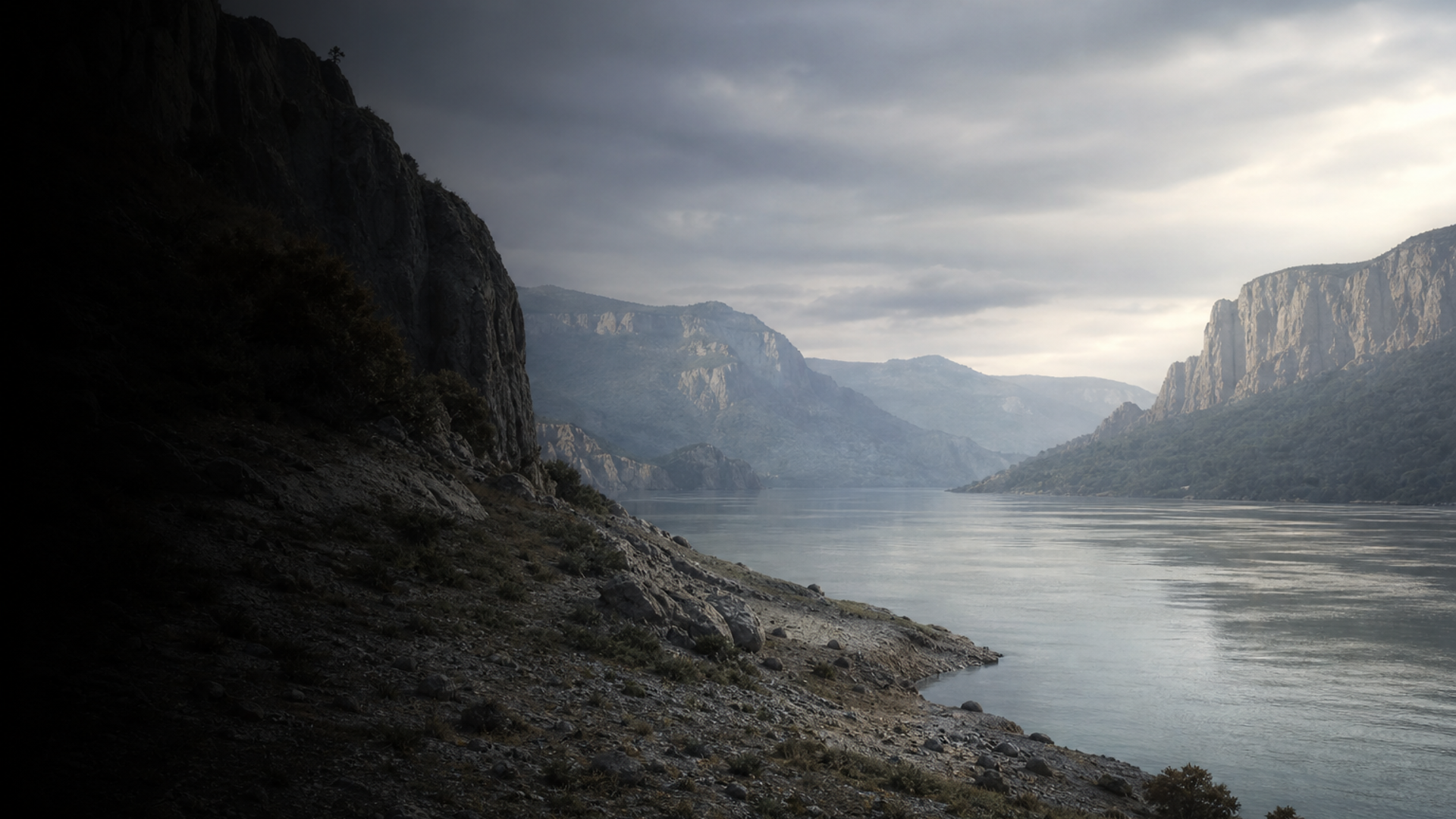
The Iron Gates Mesolithic communities emerged along the steep, river-carved corridors of the Danube in what is today southwestern Romania. Archaeological sites such as Schela Cladovei, Ostrovul Corbului (Mehedinți County, Hinova) and Magura Buduiasca (Teleor 3) preserve sequences of camp floors, hearths and burials dated between 7584 and 5630 BCE. The landscape itself—fishing-rich channels, limestone terraces and forested slopes—shaped a mobile but place-anchored lifeway.

Archaeological data indicates repeated seasonal occupation of sheltered promontories and rock shelters, often with stone and bone toolkits optimized for fishing, small-game hunting and woodworking. Burials found in riverine contexts and on terraces provide cultural markers: grave goods are modest, but body placement and ochre use suggest shared ritual practices.

Limited palaeoenvironmental evidence implies a post-glacial, temperate setting where rising river levels and shifting resources required flexible subsistence strategies. Genetic data from 13 individuals tie these communities to broader European hunter‑gatherer networks while also pointing to local continuity and micro-regional differences within the Danube corridor.

  • Occupied Danube Gorge sites: Schela Cladovei, Ostrovul Corbului, Magura Buduiasca
  • Dates: 7584–5630 BCE; Mesolithic riverine adaptations
  • Archaeological indicators: seasonally revisited camps, burials, fishing-specialized toolkits
Chapter IV

Daily Life & Society

Daily existence in the Iron Gates Mesolithic was shaped by the river’s pulse. Archaeological layers record hearth clusters, knapped stone concentrations and fish bone-rich middens, which together evoke scenes of communal processing of riverine resources. The Danube provided abundant freshwater fish and migratory runs that could be exploited with nets, traps and bone points; terrestrial hunting and gathering complemented this focus.

Material culture shows both local invention and long-distance connections. Lithic technology includes locally sourced flint and curated microliths; personal ornaments and occasional non-local raw materials indicate exchange or mobility beyond the immediate gorge. Burial practices—bodies sometimes extended in shallow graves, occasional use of red ochre—hint at social memory and place-based identity rather than clear status differentiation.

Household size and social organization must be inferred from site layout and midden scale: small kin-based bands, seasonally aggregating for resource pulses, likely characterized social life. Preservation biases mean our picture is partial; coupled archaeological and genetic data help reconstruct who these people were, how they moved and how they related to neighboring groups.

  • Economy focused on river fishing, supplemented by hunting and foraging
  • Small kin groups with seasonal aggregation; modest grave assemblages
Chapter V

Genetic Profile

Thirteen genome samples from Iron Gates Mesolithic contexts provide a window into ancestry and kinship along the Danube corridor. Y‑chromosome data show a dominance of haplogroup R (7 individuals) with at least one individual carrying haplogroup I. Mitochondrial lineages are diverse: multiple U haplotypes (4), several K‑related lineages (K1, K1i, K) and H13 appear across the sample set. These uniparental markers align broadly with patterns seen in Mesolithic Europe but also reflect local heterogeneity.

On a genome‑wide level, the Iron Gates individuals cluster with European hunter‑gatherer variation; their affinities are consistent with western and southeastern hunter‑gatherer groups rather than with incoming Neolithic farmers. However, with only 13 samples the power to detect fine-scale admixture or rare lineages is limited—interpretations must remain cautious. Archaeological context bridges this uncertainty: the riverine lifeways and repeated site occupation increase the chance that sampled individuals represent multiple family groups and temporal phases rather than a single homogeneous population.

Together, archaeology and genetics depict a community that was genetically part of the wider hunter‑gatherer tapestry of Europe, yet distinct in its local maternal diversity and Y‑lineage composition. Future sampling and high‑coverage genomes will refine kinship, migration and continuity models for the Iron Gates.

  • Y-DNA dominated by haplogroup R; presence of I
  • mtDNA shows U and multiple K lineages; 13 samples — informative but preliminary
Chapter VI

Legacy & Modern Connections

The genetic echoes of the Iron Gates Mesolithic persist subtly in later populations of southeastern Europe. Maternal haplogroups such as K and U survive into Neolithic and historical gene pools, reflecting both continuity and reshaping by later migrations. Archaeologically, the Danube corridor remained a conduit for cultural exchange long after the Mesolithic, and the patterns of seasonal resource use and mobility influenced subsequent settlement strategies.

Caution is essential: direct lines of descent are rarely straightforward. The Iron Gates assemblage contributed to a palimpsest of ancestry that, through admixture with incoming farming groups and later steppe movements, became woven into the genetic fabric of the Balkans. For people seeking ancestry connections today, these Mesolithic individuals represent one of many deep threads—distinct, regionally rooted and part of the broader story of European genetic and cultural formation.

  • Maternal lineages (K, U) appear in later European populations, indicating partial continuity
  • Danube served as an enduring corridor for cultural and genetic exchange
AI 电源

AI 助手

就 Iron Gates Mesolithic Echoes 文化提问

AI 助手 由DNAGENICS公司制作

解锁此特性
Ask questions about the Iron Gates Mesolithic Echoes culture. Our AI assistant can explain genetic findings, historical context, archaeological evidence, and modern connections.
AI 样本分析

Iron Gates Mesolithic Echoes 文化是人类历史中值得了解的一章……

遗传分析揭示了与早期种群的联系,同时显示了独特的适应和文化创新的证据。 古代DNA样本提供了对迁徙模式、社会结构以及古代种群之间的生物关系的深刻见解。

这是人工智能分析的预览。 解锁全AI 助手, 以探索关于:

  • 遗传组成和祖先
  • 移徙模式和起源
  • 日常生活和文化习俗
  • 现代遗传遗产

探索更古老的文化

揭开古代世界文明的故事

使用优惠码 可减免 35% • 11月12日 到期