Jabuticabeira II Sambaqui: Coastal Ancestors

下载的 PDF 是图像副本。如需可选中文本及更好的辅助技术支持,请使用打印功能。

Jabuticabeira II Sambaqui: Coastal Ancestors

揭开一个失落的文明

正在加载考古记录……

正在收集古代记录

跳转到主内容
Jabuticabeira II Sambaqui: Coastal Ancestors
文明焦点

Jabuticabeira II Sambaqui: Coastal Ancestors

Shellmound builders on Brazil’s south coast (742–1 BCE) whose DNA connects to founding Native American lineages

742 CE - 1 BCE
South Coast, Brazil (Jabuticabeira II)
滚动开始
Chapter I

剧情

了解 Jabuticabeira II Sambaqui: Coastal Ancestors 文化

Archaeological and ancient-DNA evidence from 14 individuals at Jabuticabeira II (742–1 BCE) reveal a coastal Sambaqui community with predominantly Y-haplogroup Q and universal mtDNA C1c, linking material culture and maritime lifeways to deep Indigenous American ancestry.

Time Period

742–1 BCE (approx.)

Region

South Coast, Brazil (Jabuticabeira II)

Common Y-DNA

Q (9/14 samples)

Common mtDNA

C1c (14/14 samples)

Chapter II

时间线

这种文化历史上的关键时刻

742 BCE

Early documented occupation at Jabuticabeira II

Archaeological layers indicate use and midden accumulation beginning by ca. 742 BCE.

200 BCE

Peak midden construction and burial activity

Middle phases show intensive shell accumulation, craft debris, and interments in mound contexts.

1 BCE

Terminal occupation phase in this dataset

The latest dated material in the sampled sequence approaches the turn of the era (1 BCE).

Chapter III

Origins & Emergence

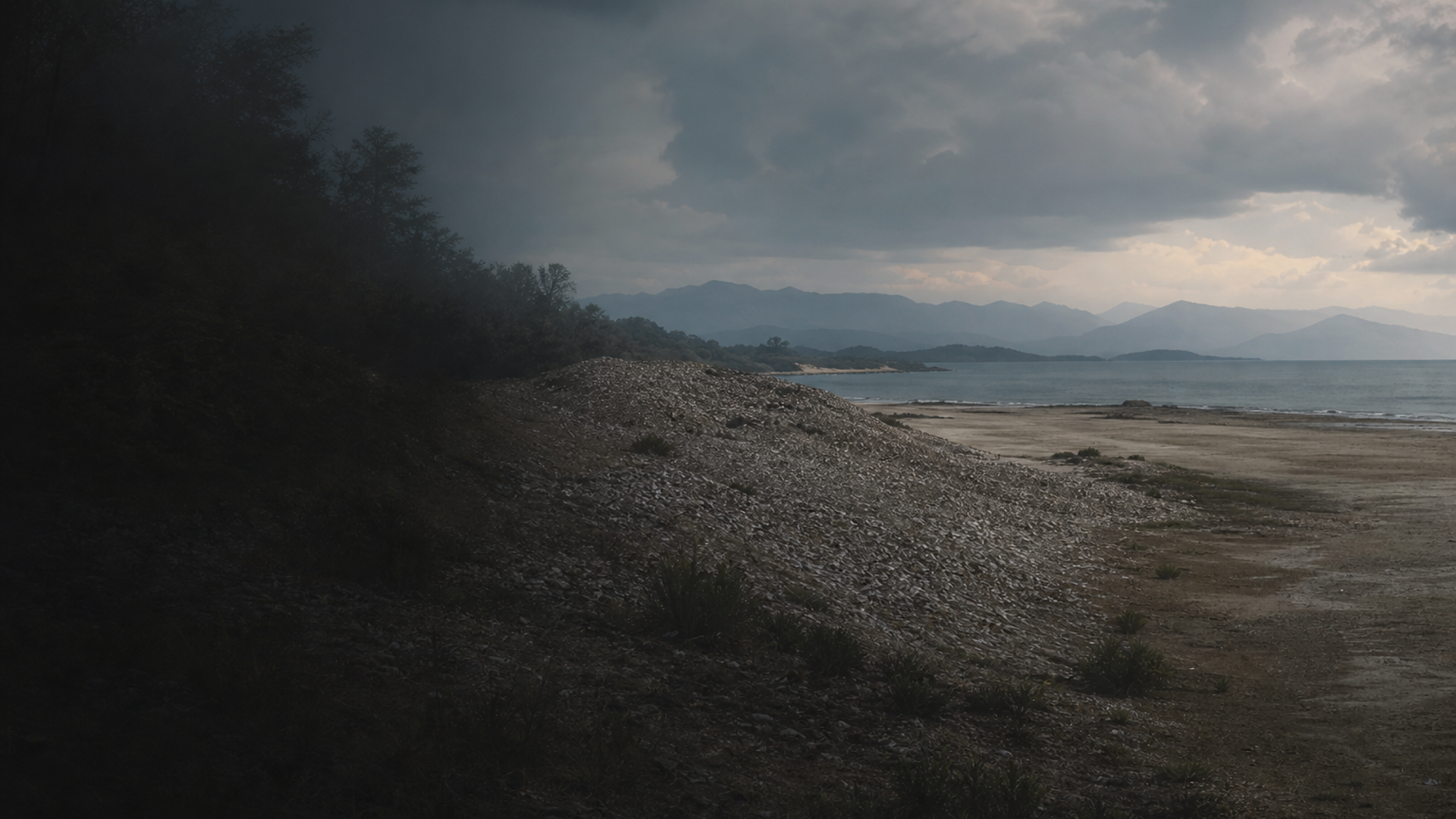
Along the rocky southern shores of what is today Santa Catarina state, the shellmound—sambaqui—at Jabuticabeira II preserves the layered traces of generations who lived from roughly 742 BCE to the turn of the Common Era. Archaeological data indicates successive midden-building episodes: accumulated shell, bone, pottery, and hearths that form a visible palimpsest of coastal occupation. These mounds are not simply refuse heaps but cultural landscapes: elevated living platforms, ritual loci, and cemeteries. The material assemblage—fish and shellfish remains, stone tools, and decorated ceramics—points to a lifeway intensely adapted to the marine littoral.

Regional comparisons tie Jabuticabeira II to the broader Sambaqui tradition that arose centuries earlier along Brazil’s Atlantic coast. Limited evidence suggests mobility and exchange along the shoreline, with stylistic links in pottery and shared midden construction techniques. While the archaeological sequence provides rich ecological and cultural context, it is inherently local: Jabuticabeira II offers a window into one community within a mosaic of coastal groups, and careful stratigraphic and radiocarbon work anchors this site within the 742–1 BCE interval without implying uniform behavior across all sambaquis.

  • Site: Jabuticabeira II, South Coast, Brazil
  • Occupation window: ~742 BCE to 1 BCE
  • Part of the regional Sambaqui shellmound tradition
Chapter IV

Daily Life & Society

The lived experience at Jabuticabeira II unfolded amid the smell of smoke, salt, and carved bone. Archaeobotanical and faunal remains from sambaqui contexts indicate a diet dominated by marine resources—fish, mollusks, and crustaceans—supplemented by terrestrial game and gathered plants. Hearths and cooking features cut into midden layers suggest repetitive seasonal or year-round processing of seafood. The concentration of grave deposits within the mound hints at social memory enacted through communal burial practices: individuals interred with simple ornaments, shell beads, and occasionally altered bone artifacts.

Craft production—stone tool retouching, shell bead manufacture, and pottery shaping—speaks to specialized skills embedded in everyday life. Spatial organization within the mound, inferred from excavation layers, suggests areas of habitation, craft, and funerary use, indicating a complex social landscape. Archaeological indicators also point to networks of contact: marine resources can be exchanged inland, and stylistic affinities in decoration imply communication between coastal sambaquis. Nevertheless, site-specific taphonomy and excavation coverage limit how far we can extrapolate community size and social hierarchy from Jabuticabeira II alone.

  • Diet focused on marine resources, supplemented by terrestrial foods
  • Mound served as living, craft, and burial space
Chapter V

Genetic Profile

Ancient-DNA analysis from 14 individuals recovered at Jabuticabeira II provides a rare genetic portrait directly tied to a sambaqui context. Mitochondrial genomes are uniform: all 14 samples carry mtDNA haplogroup C1c, one of the founding maternal lineages recognized across the Americas. This ubiquity suggests strong matrilineal continuity within the sampled burial population, consistent with local kinship or endogamous practices, though preservation and sampling choices can bias results.

On the paternal side, Y-chromosome data show haplogroup Q in 9 of the male-assigned individuals—again matching common patterns observed in pre-contact Indigenous American populations. The prevalence of Q aligns genetically with deep founding ancestries that spread across the continents. Taken together, the genetic profile from Jabuticabeira II reinforces archaeological interpretations of long-standing Indigenous occupation of the Atlantic coast and shows direct genetic continuity with broader Native American lineages.

Caveats: the dataset is geographically concentrated to a single site and temporally constrained to 742–1 BCE. While 14 samples offer a substantive sample relative to many coastal sites, regional diversity among sambaquis and later demographic shifts mean these findings should be integrated cautiously into larger models of population history. Future sampling from adjacent sites and time periods will refine patterns of kinship, mobility, and gene flow.

  • mtDNA C1c present in all 14 samples, suggesting matrilineal continuity
  • Y-haplogroup Q predominant in available male samples (9/14)
Chapter VI

Legacy & Modern Connections

The human story preserved at Jabuticabeira II resonates with living Indigenous traditions along Brazil’s coast and beyond. Genetic markers found in these ancient individuals—maternal C1c and paternal Q lineages—are part of a broader genetic tapestry shared among Indigenous peoples of the Americas, reflecting deep pre-contact ancestries rather than later trans-oceanic inputs.

Archaeologically, sambaquis like Jabuticabeira II are visible reminders of sustained coastal adaptation and social memory expressed through monumental midden construction. For modern communities and researchers, the site underscores continuity of place, subsistence, and cultural practice. Respectful collaboration with descendant and local communities is essential when interpreting and publishing ancient-DNA results, to ensure scientific narratives are contextualized alongside cultural meanings. While Jabuticabeira II provides a powerful case study, its legacy is best seen as one thread within a complex human tapestry along the South American Atlantic coast.

  • Ancient lineages at Jabuticabeira II link to broader Indigenous American ancestry
  • Sambaqui architecture embodies long-term coastal lifeways and memory
AI 电源

AI 助手

就 Jabuticabeira II Sambaqui: Coastal Ancestors 文化提问

AI 助手 由DNAGENICS公司制作

解锁此特性
Ask questions about the Jabuticabeira II Sambaqui: Coastal Ancestors culture. Our AI assistant can explain genetic findings, historical context, archaeological evidence, and modern connections.
AI 样本分析

Jabuticabeira II Sambaqui: Coastal Ancestors 文化是人类历史中值得了解的一章……

遗传分析揭示了与早期种群的联系,同时显示了独特的适应和文化创新的证据。 古代DNA样本提供了对迁徙模式、社会结构以及古代种群之间的生物关系的深刻见解。

这是人工智能分析的预览。 解锁全AI 助手, 以探索关于:

  • 遗传组成和祖先
  • 移徙模式和起源
  • 日常生活和文化习俗
  • 现代遗传遗产

探索更古老的文化

揭开古代世界文明的故事

使用优惠码 可减免 35% • 11月12日 到期




