Kazanlak–Stara Zagora: Late Iron Age Bulgaria

下载的 PDF 是图像副本。如需可选中文本及更好的辅助技术支持,请使用打印功能。

Kazanlak–Stara Zagora: Late Iron Age Bulgaria

揭开一个失落的文明

正在加载考古记录……

正在收集古代记录

跳转到主内容
Kazanlak–Stara Zagora: Late Iron Age Bulgaria
文明焦点

Kazanlak–Stara Zagora: Late Iron Age Bulgaria

Archaeology and three ancient genomes from central Bulgaria, 450 BCE–150 CE

450 BCE - 150 CE
Central Bulgaria (Kazanlak, Stara Zagora, Rozovo, Yasenovo)
滚动开始
Chapter I

剧情

了解 Kazanlak–Stara Zagora: Late Iron Age Bulgaria 文化

Late Iron Age communities in central Bulgaria (Kazanlak, Yasenovo, Rozovo, Stara Zagora) are visible in funerary mounds, metalwork, and limited genetic data. Three genomes (one mtDNA HV9) hint at local continuity and regional mobility; conclusions remain preliminary.

Time Period

450 BCE – 150 CE

Region

Central Bulgaria (Kazanlak, Stara Zagora, Rozovo, Yasenovo)

Common Y-DNA

Not reported / limited data

Common mtDNA

HV9 (1 of 3 samples)

Chapter II

时间线

这种文化历史上的关键时刻

450 BCE

Earliest samples in cohort

Earliest dated individuals in the Bulgaria_LIA set appear around 450 BCE in the Kazanlak–Stara Zagora area.

150 CE

Late ensemble and Roman influence

By 150 CE the region shows stronger Roman-era material influence alongside persistent local traditions.

Chapter III

Origins & Emergence

Archaeological setting

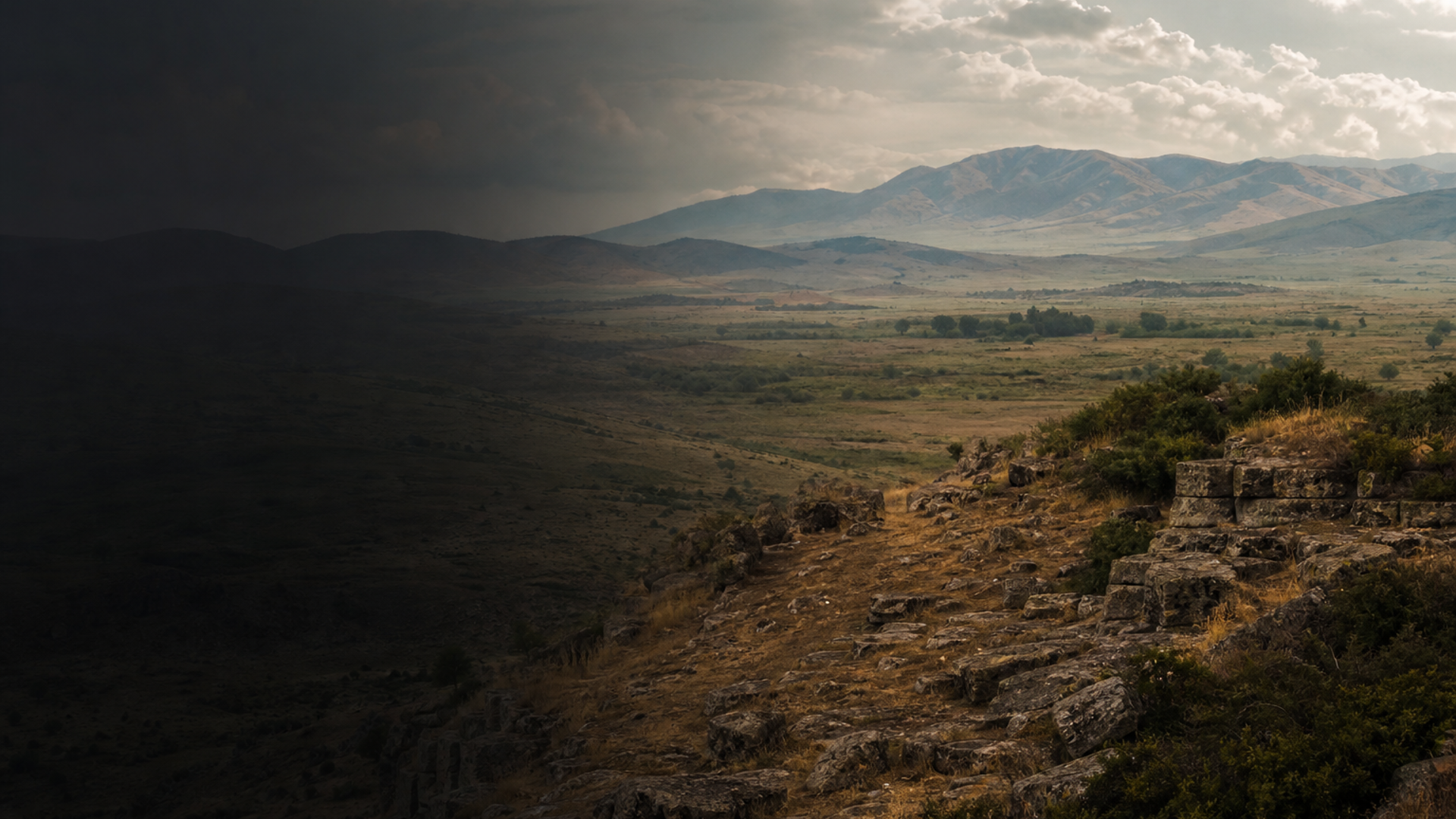
The Bulgaria_LIA group represents Late Iron Age communities occupying the fertile plains and low hills of central Bulgaria between about 450 BCE and 150 CE. Archaeological data from the Kazanlak valley and surrounding sites (Kazanlak, Yasenovo, Rozovo, Stara Zagora) indicate a landscape of small fortified settlements, tumulus and flat burials, and dispersed rural farms. Rich metalworking — in iron and bronze — and locally produced wheel-made pottery attest to skilled local craft traditions.

Cultural connections

Material culture shows tangible links with broader Thracian traditions recorded in the region: horse harness elements, composite fibulae, and certain burial rites mirror patterns seen across the eastern Balkans. Limited evidence suggests active exchange with Greek colonies on the Black Sea and later influence from Roman administrative expansion after the 1st century BCE.

Cautions

Because archaeological contexts vary locally and the current genetic sample set is very small, any narrative of emergence or external influence must remain provisional. Archaeological data indicates continuity of local practices alongside episodes of intensified trade and mobility rather than simple population replacement.

  • Sites: Kazanlak, Yasenovo, Rozovo, Stara Zagora
  • Material culture consistent with regional Thracian traditions
  • Evidence of craft specialization and long-distance exchange
Chapter IV

Daily Life & Society

Economy and settlement

Life in the central Bulgarian plains combined mixed farming, pastoralism, and craft production. Archaeological remains — storage pits, loom weights, and agricultural tools — point to cereal cultivation and animal husbandry as economic backbones. Small nucleated settlements and hilltop refuges suggest communities organized around kin groups with seasonal movements of herds.

Craft, trade, and material culture

Metalworkers produced iron tools and weapons and continued a strong tradition of bronze ornamentation. Finds of imported Greek pottery and amphora fragments in some contexts reveal participation in Mediterranean exchange networks. Local artisans adapted foreign forms while maintaining regional styles in personal adornment and funerary equipment.

Social life and ritual

Burial practices vary from mound (tumuli) in the Kazanlak area to flat graves elsewhere, implying social differentiation and possibly varying local identities. Richly furnished graves indicate status display through weapons, horse trappings, and decorated vessels. Archaeological evidence indicates structured ritual activity around burial mounds and communal spaces.

  • Mixed farming, pastoralism, and craft specialization
  • Imported goods alongside strong local artistic traditions
Chapter V

Genetic Profile

Overview of genomic evidence

The Bulgaria_LIA dataset currently comprises only three ancient genomes from central Bulgaria (Kazanlak, Yasenovo, Rozovo/Stara Zagora) dated to c. 450 BCE–150 CE. One sample carries mitochondrial haplogroup HV9. No consistent Y‑DNA pattern can be reported from these three individuals because either Y-haplogroups were not recovered or the sample set is too small to identify common male lineages.

Interpreting limited data

With fewer than ten samples, conclusions must be treated as preliminary. Limited evidence suggests continuity with longstanding Balkan maternal lineages — HV subclades are present in Neolithic and later European populations — but a single HV9 detection does not demonstrate population-wide frequency. Archaeogenetic studies across the Balkans commonly reveal mixtures of local Neolithic-derived ancestry with Bronze Age Steppe-related inputs and later Iron Age mobility; it is plausible that the Bulgaria_LIA individuals reflect a complex mosaic of these influences, but this hypothesis requires larger samples.

Research directions

To move beyond suggestive patterns, more genomes from varied burial contexts and stratified radiocarbon dates are needed. Future sampling should target both sexes, a range of ages, and multiple cemetery sites to resolve questions of continuity, migration, and social structure in Late Iron Age central Bulgaria.

  • Sample count = 3 — interpretations are preliminary
  • mtDNA HV9 observed in one individual; Y-DNA not reported/insufficient
Chapter VI

Legacy & Modern Connections

Cultural and genetic continuity

The material heritage of the Late Iron Age in central Bulgaria — metalwork styles, burial mound traditions, and settlement patterns — helped shape later regional identities encountered by Roman-era populations. Genetically, modern populations of Bulgaria carry layered ancestries that include Neolithic farmer lineages, Bronze Age Steppe-related input, and subsequent historical admixtures. Haplogroups like HV persist into the present-day mitochondrial pool in Europe, indicating some maternal continuity, though demographic events since antiquity have further reshaped the landscape.

Why this matters

Connecting archaeology and DNA, even when data are sparse, offers a richer portrait of how communities lived, moved, and interacted. For the Bulgaria_LIA group, ongoing excavations and expanded ancient DNA sampling will refine our understanding of local continuity, social complexity, and the impact of wider Mediterranean and Roman networks.

  • Material culture influenced later regional identities under Roman influence
  • Genetic hints of continuity exist but require more data to confirm
AI 电源

AI 助手

就 Kazanlak–Stara Zagora: Late Iron Age Bulgaria 文化提问

AI 助手 由DNAGENICS公司制作

解锁此特性
Ask questions about the Kazanlak–Stara Zagora: Late Iron Age Bulgaria culture. Our AI assistant can explain genetic findings, historical context, archaeological evidence, and modern connections.
AI 样本分析

Kazanlak–Stara Zagora: Late Iron Age Bulgaria 文化是人类历史中值得了解的一章……

遗传分析揭示了与早期种群的联系,同时显示了独特的适应和文化创新的证据。 古代DNA样本提供了对迁徙模式、社会结构以及古代种群之间的生物关系的深刻见解。

这是人工智能分析的预览。 解锁全AI 助手, 以探索关于:

  • 遗传组成和祖先
  • 移徙模式和起源
  • 日常生活和文化习俗
  • 现代遗传遗产

探索更古老的文化

揭开古代世界文明的故事

使用优惠码 可减免 35% • 11月12日 到期