Khuvsgul Edge: Xiongnu‑Age Voices

下载的 PDF 是图像副本。如需可选中文本及更好的辅助技术支持,请使用打印功能。

Khuvsgul Edge: Xiongnu‑Age Voices

揭开一个失落的文明

正在加载考古记录……

正在收集古代记录

跳转到主内容
Khuvsgul Edge: Xiongnu‑Age Voices
文明焦点

Khuvsgul Edge: Xiongnu‑Age Voices

11 genomes from Salkhityn Am reveal a Steppe frontier of blended east–west ancestries.

356 CE - 1 BCE
Khuvsgul Province, northern Mongolia (Salkhityn Am)
滚动开始
Chapter I

剧情

了解 Khuvsgul Edge: Xiongnu‑Age Voices 文化

Genomes from 11 individuals (356–1 BCE) excavated at Salkhityn Am, Khuvsgul, Mongolia, show a mosaic of West and East Eurasian lineages. Archaeological context and DNA point to a mobile steppe frontier during the Xiongnu era, with evidence of long‑range contacts and regional continuity.

Time Period

356–1 BCE (late Iron Age / Xiongnu era)

Region

Khuvsgul Province, northern Mongolia (Salkhityn Am)

Common Y-DNA

R (4), Q (2), J (1)

Common mtDNA

I1a (3), U (2), G (2), F (1), C4 (1)

Chapter II

时间线

这种文化历史上的关键时刻

356 BCE

Earliest dated sample at Salkhityn Am

The oldest directly dated genome in the set falls to ca. 356 BCE, marking the beginning of this local genetic snapshot within the late Iron Age/Xiongnu horizon.

Chapter III

Origins & Emergence

Salkhityn Am sits on the cusp of taiga and steppe, a place where horizons open like film reels of dust and horsehair. Archaeological data from Khuvsgul indicates human presence across the late Iron Age, and the dated DNA samples here span roughly 356–1 BCE. This timeframe overlaps the formative centuries of the Xiongnu polities that would come to dominate much of the eastern steppe.

The genetic signal in these 11 individuals suggests a tapestry woven from both western Steppe-associated ancestries and eastern Siberian lineages. Y‑chromosome types dominated by haplogroup R — often linked in other studies to West Eurasian and Steppe male lines — sit alongside Q and occasional J lineages, hinting at complex male-mediated movements and contacts. Maternal lineages are similarly mixed: European-associated I1a and U appear with East Eurasian G, F, and C4 haplogroups, indicating female lineages from both east and west.

Limited evidence suggests Salkhityn Am functioned as a nexus of mobility rather than an isolated enclave. The archaeological record and the genetic mosaic together point to the Khuvsgul region as a dynamic frontier where people, animals, and ideas flowed between forest and grassland.

Caution: with 11 genomes the picture is suggestive rather than definitive; broader sampling across nearby cemeteries and earlier/later horizons is needed to chart population change through time.

  • Samples dated to 356–1 BCE, overlapping Xiongnu formation
  • Site at Salkhityn Am, Khuvsgul Province — forest‑steppe frontier
  • Genetic mix of West and East Eurasian lineages suggests long‑range contacts
Chapter IV

Daily Life & Society

Archaeological inference for Khuvsgul during the late first millennium BCE paints a landscape of mobility: seasonal herding, hunting in taiga margins, and horse‑oriented lifeways adapted to lakes and river valleys. Graves and habitation traces in the broader Khuvsgul area indicate a material world of portable technologies and resources acquired through networks that spanned vast distances.

In such frontier zones, lifeways are often plural. Communities combined pastoral herding with riverine fishing and forest resources; trade and gift exchange connected them to steppe polities like the early Xiongnu and to more distant groups. The presence of both western and eastern genetic markers at Salkhityn Am supports archaeological interpretations of sustained interaction — marriages, alliances, and movement along seasonal routes shaped the social fabric.

Archaeological data indicates that identity was expressed through mobility and material assemblages rather than dense urban settlement. Burials may contain objects that signal status or affiliation, but without extensive comparative excavation across Khuvsgul the societal picture remains incomplete.
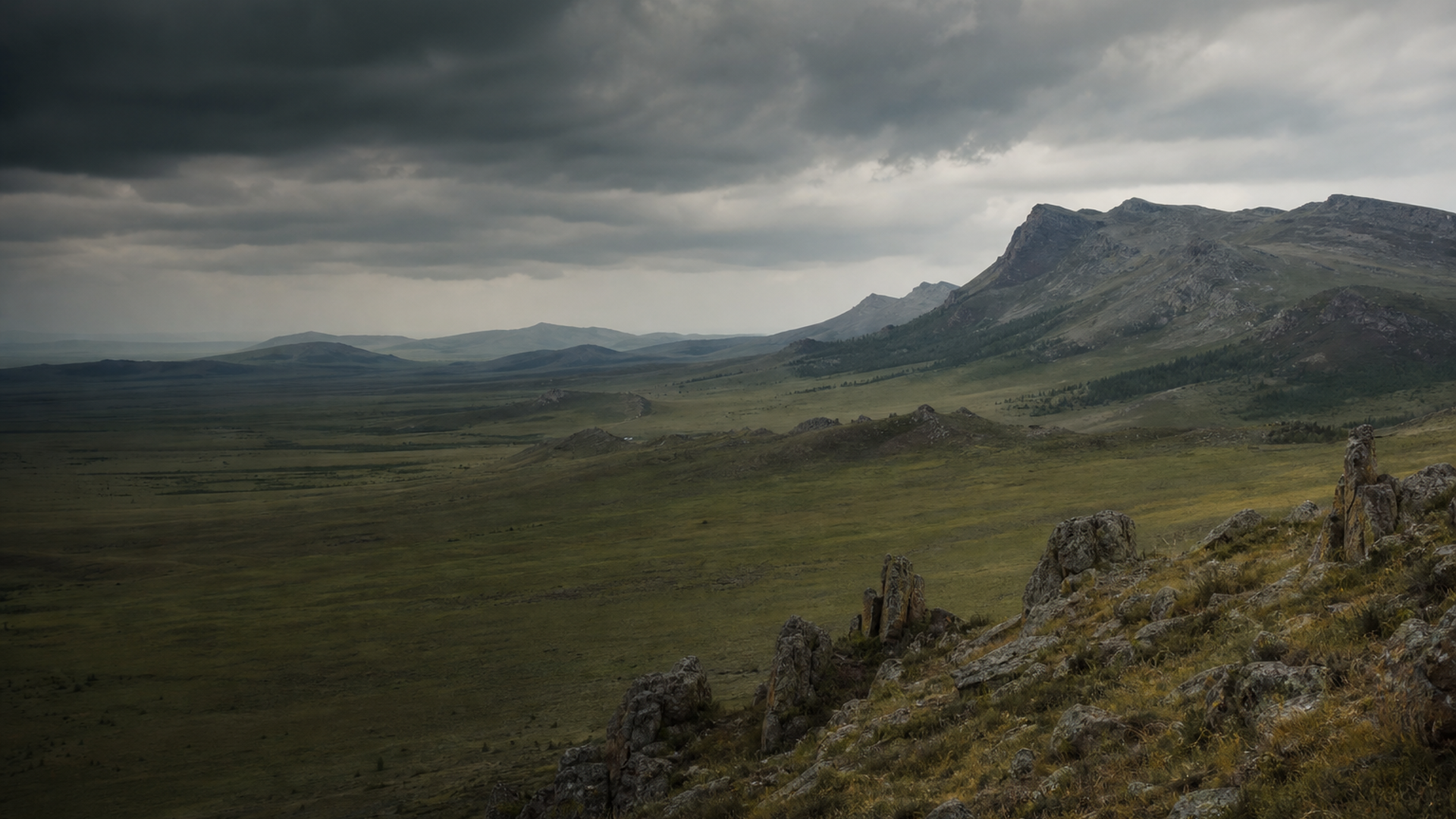
The cinematic image is of riders and herders moving between lake shores and spruce stands, carrying genes and stories as readily as goods.

  • Mixed subsistence: pastoral mobility plus forest and aquatic resources
  • Social life shaped by seasonal movement and long‑distance exchange
Chapter V

Genetic Profile

The genetic dataset from Salkhityn Am (11 individuals) provides a snapshot of ancestry at a northern edge of Xiongnu‑era influence. Y‑DNA: four individuals carry haplogroup R, two carry Q, and one carries J. Haplogroup R is broadly associated in Eurasian studies with Steppe‑derived male lines; Q is frequently recorded across Siberia and in lineages that later peopled the Americas; J likely reflects western or southwestern Eurasian connections. These contrasts in paternal lines suggest multiple male‑line sources and episodes of male mobility.

Mitochondrial DNA shows a similarly mixed picture: I1a (3) and U (2) are typically linked to West Eurasian maternal ancestry, while G (2), F (1), and C4 (1) are East Eurasian/Siberian lineages. The co‑occurrence of these maternal types implies that both women and men with diverse backgrounds lived and reproduced here, supporting a model of bi‑directional gene flow rather than unidirectional replacement.

Population genetic modelling based on such mixed haplogroups typically indicates admixture between Steppe‑related and Siberian/East Asian gene pools. However, small sample size and uneven preservation can bias haplogroup frequencies; with only 11 genomes the inferences are preliminary. Future sampling across nearby cemeteries and temporal horizons will be crucial to test whether the Salkhityn pattern reflects localized mixture, transient contact groups, or broader regional demography during the Xiongnu era.

  • Paternal mix: R (dominant), Q (Siberian links), and occasional J
  • Maternal mix: both West Eurasian (I1a, U) and East Eurasian (G, F, C4) haplogroups
Chapter VI

Legacy & Modern Connections

The genetic mosaic at Khuvsgul resonates with the living tapestry of Mongolia today: populations in northern Mongolia retain mixed ancestries shaped by millennia of movement across the steppe and forest margins. Archaeological continuity in mobility strategies and genetic evidence of east–west admixture both hint at long‑standing connections that would later feed into larger polities and cultural formations, including Xiongnu networks and their successors.

Important caveats remain. The 11 genomes from Salkhityn Am provide a valuable window but are not definitive for the entire region or for later medieval periods. They do, however, illustrate how integrated archaeological and aDNA studies can illuminate the human stories behind material trace — the migrants, marriages, and encounters that knit the Eurasian steppe into a living, moving world.

For modern ancestry seekers, these results underscore that deep ancestry in the steppe was rarely homogeneous: genetic heritage often reflects layered episodes of contact rather than single origin narratives.

  • Suggests continuity of mixed east–west ancestry into historic steppe polities
  • Highlights the value of combined archaeological and aDNA approaches for ancestry
AI 电源

AI 助手

就 Khuvsgul Edge: Xiongnu‑Age Voices 文化提问

AI 助手 由DNAGENICS公司制作

解锁此特性
Ask questions about the Khuvsgul Edge: Xiongnu‑Age Voices culture. Our AI assistant can explain genetic findings, historical context, archaeological evidence, and modern connections.
AI 样本分析

Khuvsgul Edge: Xiongnu‑Age Voices 文化是人类历史中值得了解的一章……

遗传分析揭示了与早期种群的联系,同时显示了独特的适应和文化创新的证据。 古代DNA样本提供了对迁徙模式、社会结构以及古代种群之间的生物关系的深刻见解。

这是人工智能分析的预览。 解锁全AI 助手, 以探索关于:

  • 遗传组成和祖先
  • 移徙模式和起源
  • 日常生活和文化习俗
  • 现代遗传遗产

探索更古老的文化

揭开古代世界文明的故事

使用优惠码 可减免 35% • 11月12日 到期




