La Almoloya — Argaric Heartland

下载的 PDF 是图像副本。如需可选中文本及更好的辅助技术支持,请使用打印功能。

La Almoloya — Argaric Heartland

揭开一个失落的文明

正在加载考古记录……

正在收集古代记录

跳转到主内容
La Almoloya — Argaric Heartland
文明焦点

La Almoloya — Argaric Heartland

Southeast Iberia's Bronze Age polity where hillforts, tombs and DNA meet

2127 CE - 1506 BCE
Murcia, Southeast Iberia (Spain)
滚动开始
Chapter I

剧情

了解 La Almoloya — Argaric Heartland 文化

Archaeological and genetic evidence from La Almoloya, El Argar and La Bastida (c. 2127–1506 BCE) illuminates a hierarchical Argaric society in Murcia. Seventy-one ancient genomes reveal dominant Y haplogroup R and maternal lineages K, U and H, linking material culture to population movements.

Time Period

c. 2127–1506 BCE (Bronze Age)

Region

Murcia, Southeast Iberia (Spain)

Common Y-DNA

Haplogroup R (32/71 samples)

Common mtDNA

K, U, H (notably K:16, U:14, H:10)

Chapter II

时间线

这种文化历史上的关键时刻

2127 BCE

Earliest sampled Argaric individual in dataset

One of the oldest genome samples in this collection dates to c. 2127 BCE from La Almoloya, anchoring the early Argaric sequence.

1800 BCE

Height of Argaric urbanism

By the mid-2nd millennium BCE fortified citadels, intensive metallurgy and ranked burials are archaeologically prominent across Murcia.

1506 BCE

Latest sampled Argaric individual in dataset

The most recent genome in this set dates to c. 1506 BCE, marking the end of the sampled Argaric time-series.

Chapter III

Origins & Emergence

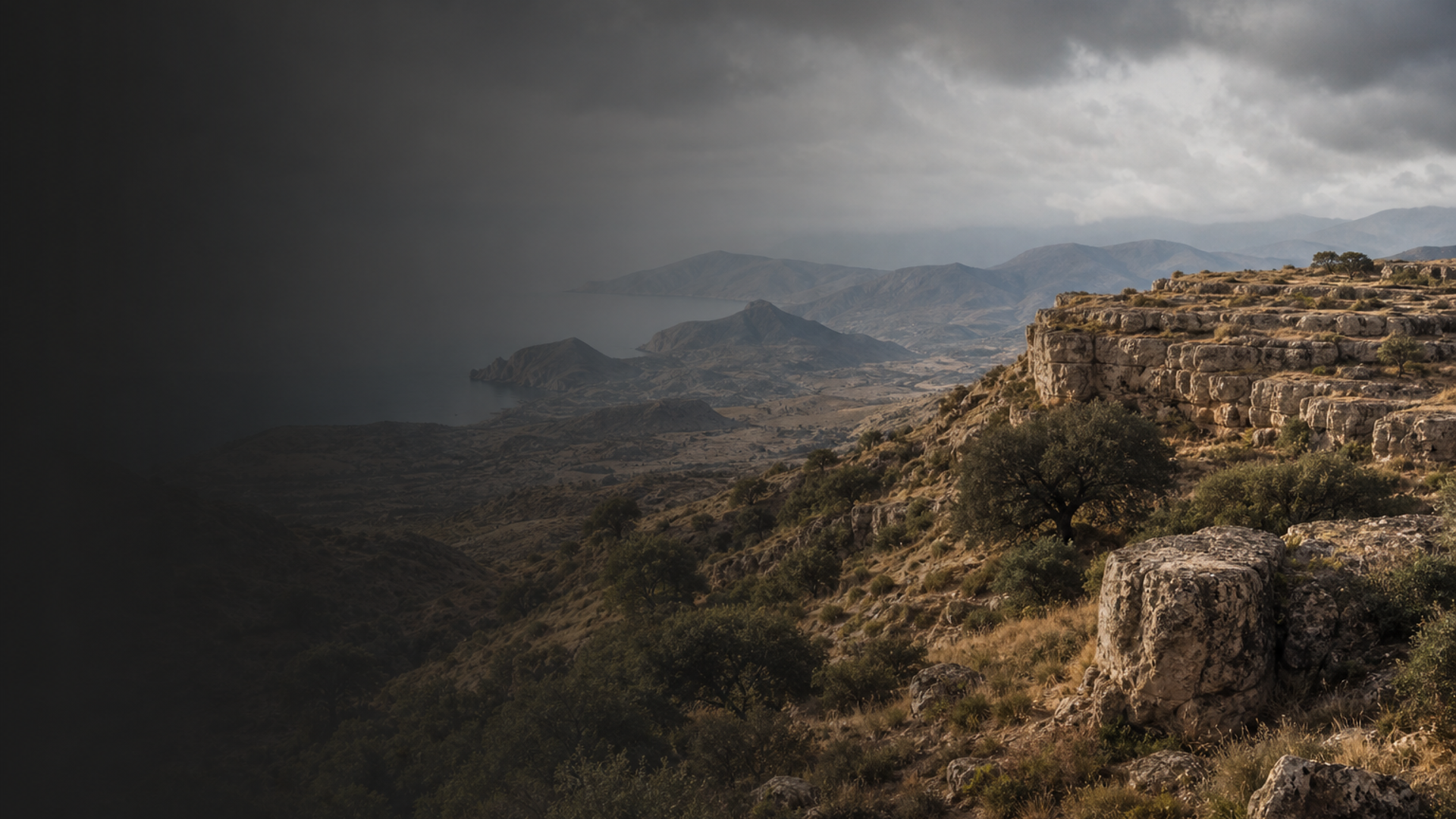
The Argaric phenomenon emerges in the sun-baked uplands and river valleys of southeast Iberia during the Early Bronze Age. Archaeological horizons crystallize around fortified settlements such as La Almoloya (Pliego, Murcia), El Argar (near modern-day Antas, often used as a type-name), and La Bastida (Totana, Murcia). Radiocarbon-calibrated contexts and material assemblages in this dataset span roughly 2127–1506 BCE, a period of demographic change, intensified metallurgy and new burial rites.

Archaeological data indicates an accelerating concentration of wealth and craft production: hilltop citadels, stone architecture, and standardized bronze tools and weapons. Mortuary practices shift toward individual and often richly furnished graves beneath settlement floors, suggesting emerging social hierarchy. Ceramic styles and metalworking techniques show regional coherence across the Murcia plateau but also hints of wider Iberian interaction.

Limited evidence suggests that these developments are tied to broader Bronze Age networks in western Europe: trade in tin and copper, exchange of prestige goods, and stylistic influences in pottery and metallurgy. At the same time, local continuity in some domestic traditions indicates that the Argaric transformation blended innovations with deep-rooted Iberian lifeways. While artifacts give us texture and form, the genetic data included in this project help test models of migration, admixture and social change.

  • Key fortified sites: La Almoloya, El Argar, La Bastida
  • Dates framed by samples: c. 2127–1506 BCE
  • Archaeology shows increased social stratification and metallurgy
Chapter IV

Daily Life & Society

Life in Argaric settlements balanced subsistence agriculture with specialized crafts under the shadow of citadel walls. Terraced fields and dryland cereals supported dense populations; zooarchaeological remains point to domesticated sheep, goats and cattle. House plans and storage pits reveal household-based production and control of surpluses, while craft workshops attest to skilled bronze-smithing and bead-making.

Burial contexts at La Almoloya and La Bastida are among the most revealing social mirrors: some individuals were interred with bronze weaponry, copper diadems, and imported objects, whereas others received simpler grave treatments. This pattern suggests ranked social organization, possibly with elite households controlling metal resources and long-distance exchange. Fortified architecture and signs of planned urban layouts indicate coordinated communal effort and perhaps centralized leadership.

Everyday objects — spindle whorls, polishing stones, and pottery forms — evoke domestic rhythms and gendered divisions of labor, though the exact social roles remain debated. Evidence for violence is present but uneven: some sites show signs of conflict and abrupt abandonment, while others display continuity. Interpretations of Argaric society must therefore balance striking displays of inequality with pockets of local resilience and continuity.

  • Agriculture and animal husbandry sustained dense settlements
  • Burials show social ranking and control of metal wealth
Chapter V

Genetic Profile

Seventy-one genome-wide ancient DNA samples from the Murcia region (La Almoloya, El Argar, La Bastida) provide a robust window into Argaric population history. The most frequent Y-chromosome classification in these samples is haplogroup R (32 counts), indicating a strong paternal signal associated with this community; however, subclade resolution varies across laboratories and not all R-lineages are fully resolved in the dataset.

Mitochondrial diversity is rich and broadly West Eurasian: haplogroup K is the most common maternal lineage (16 samples), with substantial presence of U (14), and H lineages (H total 10; H1:7, H3:4). These maternal markers are consistent with continuity of European maternal lineages during the Bronze Age while also reflecting admixture dynamics.

Archaeogenetic patterns from Iberia's Bronze Age often show increased ancestry components shared with populations that expanded across Europe during the 3rd and 2nd millennia BCE. The La Almoloya/Argar dataset is compatible with a significant presence of R-lineage males and a mixture of maternal lineages typical of contemporary western Europe, suggesting both local continuity and input from wider Bronze Age demographic movements. Because haplogroup counts alone cannot fully reconstruct migration histories, genome-wide analyses (e.g., ancestry components, admixture dates) are necessary to refine models. While 71 samples provide substantial power compared with many ancient datasets, certain sub-regional questions may still be sensitive to sampling density and temporal resolution.

  • Dominant paternal haplogroup R (32 of 71 samples), subclade resolution variable
  • Maternal lineages dominated by K (16), U (14) and H (10), reflecting West Eurasian continuity
Chapter VI

Legacy & Modern Connections

The Argaric world left an imprint on the landscape and, through genetics, on later populations of Iberia. Archaeological legacies — fortified hilltops, metallurgical knowledge, and social hierarchies — mark a transformative chapter in southeast Spain's prehistory. Genetic signals identified in La Almoloya and neighboring sites anchor these cultural shifts to real population processes: continuity of local maternal lineages alongside a pronounced paternal R signal suggests complex patterns of movement, marriage networks and social organization.

Caution is essential when linking ancient genomes to modern populations: millennia of migration, drift and admixture have reshaped Iberia's genetic landscape. Nevertheless, studies like this help trace threads of ancestry and illuminate how Bronze Age communities contributed to the mosaic of modern Iberian diversity. Future sampling, finer chronological control and higher-resolution haplogroup assignment will further clarify these long-term connections.

  • Argaric culture shaped regional Bronze Age social complexity
  • Genetic continuity and admixture link Argaric populations to broader Iberian ancestry
AI 电源

AI 助手

就 La Almoloya — Argaric Heartland 文化提问

AI 助手 由DNAGENICS公司制作

解锁此特性
Ask questions about the La Almoloya — Argaric Heartland culture. Our AI assistant can explain genetic findings, historical context, archaeological evidence, and modern connections.
AI 样本分析

La Almoloya — Argaric Heartland 文化是人类历史中值得了解的一章……

遗传分析揭示了与早期种群的联系,同时显示了独特的适应和文化创新的证据。 古代DNA样本提供了对迁徙模式、社会结构以及古代种群之间的生物关系的深刻见解。

这是人工智能分析的预览。 解锁全AI 助手, 以探索关于:

  • 遗传组成和祖先
  • 移徙模式和起源
  • 日常生活和文化习俗
  • 现代遗传遗产

探索更古老的文化

揭开古代世界文明的故事

使用优惠码 可减免 35% • 11月12日 到期




