Lada Cave: A Guangxi Voice from Sui–Tang

下载的 PDF 是图像副本。如需可选中文本及更好的辅助技术支持,请使用打印功能。

Lada Cave: A Guangxi Voice from Sui–Tang

揭开一个失落的文明

正在加载考古记录……

正在收集古代记录

跳转到主内容
Lada Cave: A Guangxi Voice from Sui–Tang
文明焦点

Lada Cave: A Guangxi Voice from Sui–Tang

A single maternal genome from Hechi illuminates life on the southeastern frontier during dynastic transition.

484 CE - 644 CE
Guangxi (Hechi City, Lada Cave)
滚动开始
Chapter I

剧情

了解 Lada Cave: A Guangxi Voice from Sui–Tang 文化

Archaeological and genetic data from one burial in Lada Cave (Guangxi; 484–644 CE) offer a tentative glimpse into population dynamics during the Northern–Southern Dynasties through early Tang. Limited evidence suggests regional continuity of East Asian maternal lineages (mtDNA D4a).

Time Period

484–644 CE

Region

Guangxi (Hechi City, Lada Cave)

Common Y-DNA

unknown (no Y data from sample)

Common mtDNA

D4a (1 sample)

Chapter II

时间线

这种文化历史上的关键时刻

520 CE

Probable burial at Lada Cave

An individual buried at Lada Cave dating within 484–644 CE provides the single genetic sample for this profile.

Chapter III

Origins & Emergence

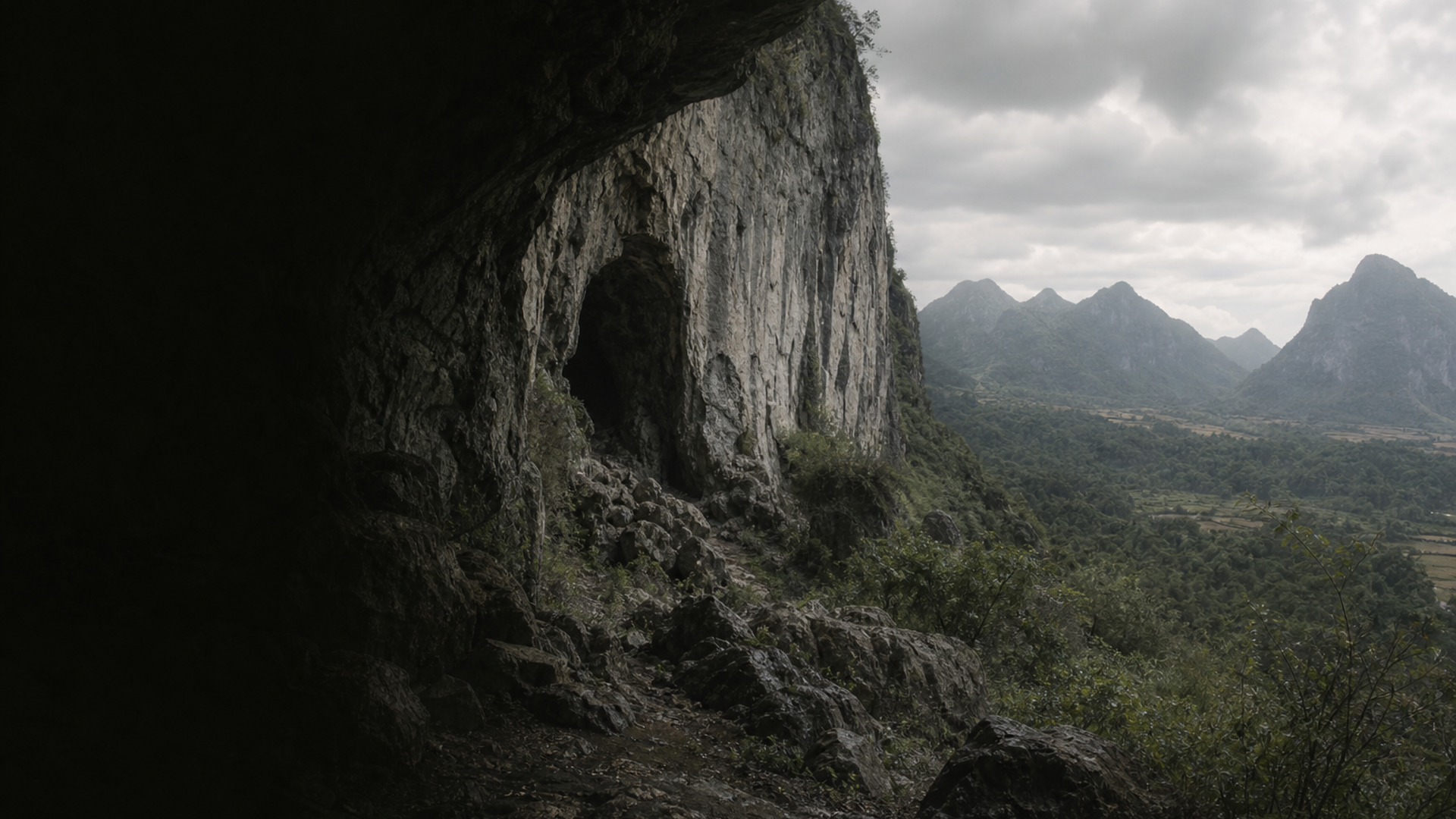
The human remains from Lada Cave sit within the complex historical horizon that spans the late Northern–Southern Dynasties and the early Sui–Tang transition (circa 484–644 CE). Lada Cave is located in Jinchengjiang District, Hechi City, Guangxi — a karst landscape where caves and river valleys have long preserved human activity. Archaeological data indicates a burial context dated to this era, but the overall assemblage is limited: only one individual has yielded genome-scale data.

Culturally, this period in southern China was marked by fluid interactions between local Baiyue-associated communities and waves of court-directed migration, military resettlement, and trade networks extending inland from the coast. Material culture in the broader Lingnan region shows both indigenous continuities and incremental adoption of northern Chinese administrative and ritual practices as Sui and Tang polities expanded.

Limited evidence suggests the Lada individual represents a local inhabitant of the Guangxi frontier rather than an elite envoy; however, with a single sample, population-level inferences are preliminary. Future excavation and direct dating of associated features would clarify whether the burial reflects long-term local continuity, recent mobility, or a mixture of both.

  • Single individual dated to 484–644 CE from Lada Cave, Hechi, Guangxi
  • Site lies in Lingnan karst landscape with long human use
  • Evidence hints at local Baiyue-related communities interacting with north–south contacts
Chapter IV

Daily Life & Society

Life in Guangxi during the late 5th to mid-7th centuries unfolded in a humid subtropical environment of rivers, terraces, and limestone caves. Archaeological research across Lingnan suggests subsistence based on wet-rice agriculture, riverine fishing, foraging, and regional craft production. Karst caves such as Lada could serve as temporary shelters, ritual spaces, or burial places; the specific function at Lada is inferred from the burial context rather than monumental architecture.

Social organization in this frontier landscape was likely heterogeneous: small farming communities, local chiefs, and mobile households interacting through marriage, trade, and seasonal movement. The period encompassed political disruptions and administrative reforms as Sui–Tang structures extended into southern commanderies; these processes often brought new goods, technologies, and kinship ties but did not erase longstanding local lifeways.

Archaeological indicators from nearby Guangxi sites show ceramics, iron tools, and textile production at village scales. While Lada itself has yielded only one genetic sample so far, the burial invites questions about daily health, diet, and mobility that are best addressed by stable isotope and broader archaeological sampling. Any reconstruction remains tentative until more samples and contextual data are available.

  • Subsistence likely centered on wet-rice agriculture, fishing, and local crafts
  • Frontier society blended indigenous practices with increasing Sui–Tang influences
Chapter V

Genetic Profile

The genomic evidence from Lada Cave is currently limited to one sequenced individual whose mitochondrial haplogroup is D4a. Haplogroup D4 is widespread across East Asia and is commonly observed in both ancient and modern populations from northern and eastern regions; D4a is one subclade within this diverse family. The presence of D4a in a Guangxi burial dated 484–644 CE is consistent with maternal lineages found throughout China, reflecting deep regional matrilineal continuity and long-distance connections across East Asia.

No Y-chromosome haplogroup has been reported from this individual, so paternal affiliations remain unknown. With a sample count of one, population-level interpretations are speculative: the finding cannot by itself resolve questions about migration, admixture, or the demographic impact of political change. However, when integrated with broader ancient DNA datasets from southern China and neighboring regions, the Lada mtDNA contributes a point of comparison for maternal lineage diversity during the Sui–Tang transition.

Future work—additional genomes from Lada Cave and surrounding sites, plus isotopic mobility studies—could test whether this mtDNA signature reflects local maternal continuity, incoming lineages, or admixture. For now, conclusions are preliminary and framed by the caveat that n=1 limits statistical inference.

  • mtDNA haplogroup D4a identified (1 individual)
  • No Y-DNA reported; population-level conclusions remain preliminary
Chapter VI

Legacy & Modern Connections

The Lada Cave individual offers a cinematic, if cautious, bridge between ancient lifeways in Guangxi and the genetic tapestry of modern East Asia. Archaeological context and the mtDNA clue together hint at maternal lineages that persisted across centuries in southern China. This continuity aligns with broader patterns observed in the region: deep-rooted maternal haplogroups recurrently appear across time in both coastal and interior Southeast China.

For communities and scientists today, Lada is a reminder that every sampled genome refines our map of past human movement and mixture. Though the evidence from Lada is limited, it encourages targeted fieldwork in Guangxi to reveal how local populations navigated political shifts from the Northern–Southern Dynasties into the Sui and Tang periods. Integrating archaeology, paleogenetics, and isotopic chemistry will build a more nuanced picture of identity, mobility, and cultural change along China's southern frontier.

  • mtDNA result suggests maternal line continuity in the region
  • Adds impetus for expanded sampling to clarify population history in Guangxi
AI 电源

AI 助手

就 Lada Cave: A Guangxi Voice from Sui–Tang 文化提问

AI 助手 由DNAGENICS公司制作

解锁此特性
Ask questions about the Lada Cave: A Guangxi Voice from Sui–Tang culture. Our AI assistant can explain genetic findings, historical context, archaeological evidence, and modern connections.
AI 样本分析

Lada Cave: A Guangxi Voice from Sui–Tang 文化是人类历史中值得了解的一章……

遗传分析揭示了与早期种群的联系,同时显示了独特的适应和文化创新的证据。 古代DNA样本提供了对迁徙模式、社会结构以及古代种群之间的生物关系的深刻见解。

这是人工智能分析的预览。 解锁全AI 助手, 以探索关于:

  • 遗传组成和祖先
  • 移徙模式和起源
  • 日常生活和文化习俗
  • 现代遗传遗产

探索更古老的文化

揭开古代世界文明的故事

使用优惠码 可减免 35% • 11月12日 到期




