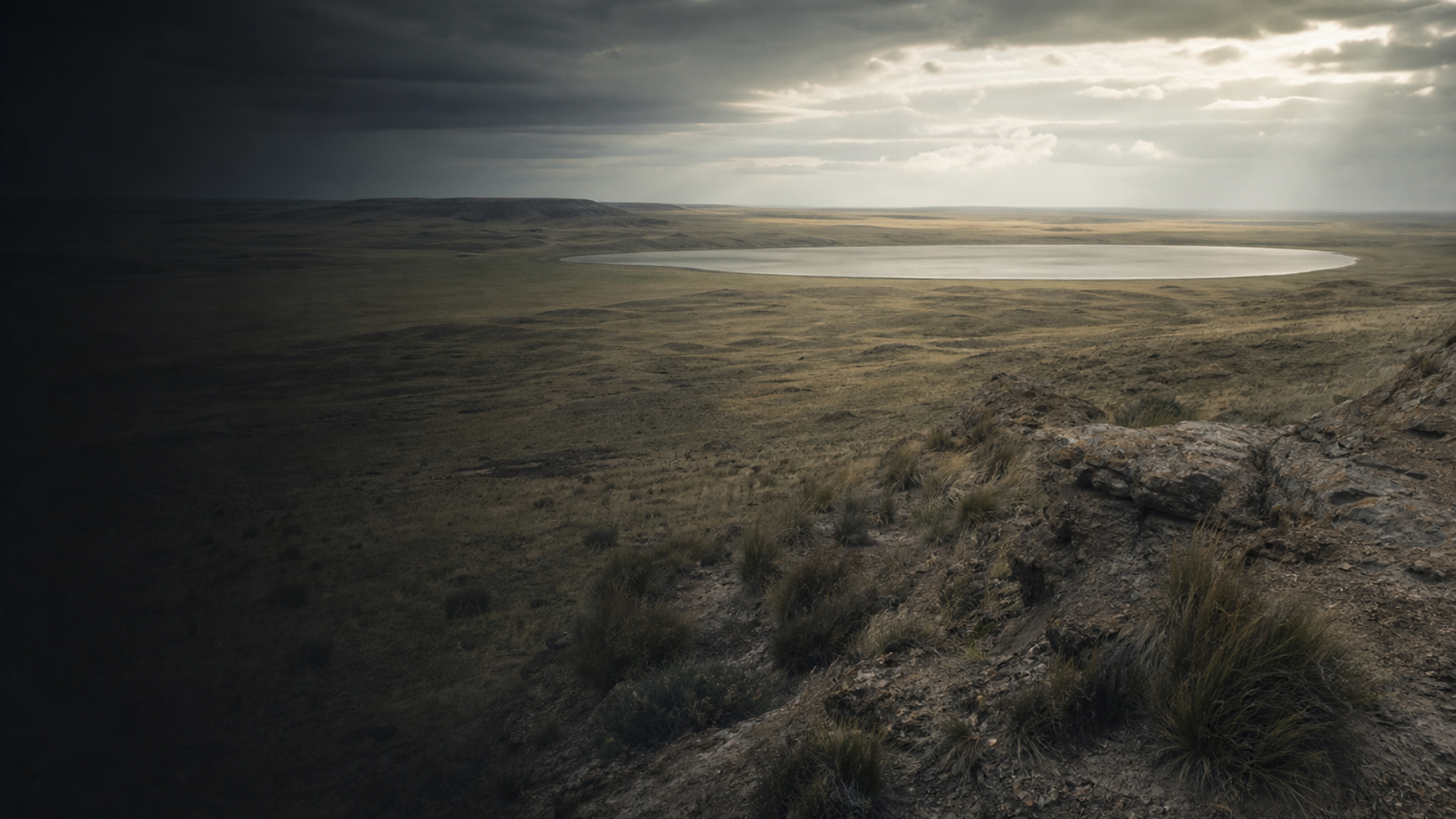
Laguna Chica: Pampas Foragers

下载的 PDF 是图像副本。如需可选中文本及更好的辅助技术支持,请使用打印功能。

跳转到主内容
文明焦点

Laguna Chica: Pampas Foragers

Holocene lagoon dwellers of the Argentine Pampas where archaeology and ancient DNA meet

7000 CE - 4500 BCE
Pampas, Argentina (Laguna Chica)

剧情

Archaeological and genetic evidence from Laguna Chica (Pampas, Argentina) illuminates small-scale Holocene forager occupation between 7000–4500 BCE. Limited samples (n=3) show Native American founding lineages, suggesting regional continuity but requiring more data.

Time Period

7000–4500 BCE

Region

Pampas, Argentina (Laguna Chica)

Common Y-DNA

Q (observed in 1 sample)

Common mtDNA

B2b, C1b, A2 (each observed once)

时间线

4800 BCE

Estimated Laguna Chica occupation (circa 6800 BP)

Occupation of lagoon margins in the Pampas; archaeological and genetic samples date to the middle Holocene. (Preliminary evidence, based on limited samples.)

Origins & Emergence

The Laguna Chica horizon unfolds on the windswept grasslands and freshwater margins of the Pampas, where human presence is recorded during the middle to late Holocene (broadly 7000–4500 BCE). Archaeological data indicates episodic occupation of lagoon and wetland ecotones — settings that would have offered fish, waterfowl, and small- to medium-sized terrestrial game. Radiometric and stratigraphic work at Laguna Chica and comparable Pampas localities place these occupations within a period of climatic transition when regional hydrology and vegetation were responding to Holocene shifts.

Material traces are modest but evocative: lithic scatters and isolated faunal remains suggest highly mobile forager lifeways rather than dense, permanent settlements. Limited evidence suggests seasonal rounds tied to wetland productivity, with camps sited to exploit both aquatic and grassland resources. Cultural continuity across the Pampas during this interval is plausible, but the scarcity of well-preserved sites and secure dates means interpretations remain provisional. Ongoing survey and targeted excavation at Laguna Chica aim to strengthen the chronological and behavioral picture.

  • Occupations dated to the middle–late Holocene (7000–4500 BCE)
  • Sites concentrated along lagoon and wetland margins in the Pampas
  • Evidence points to mobile forager lifeways exploiting aquatic and terrestrial resources

Daily Life & Society

Imagine small groups moving across a mosaic of grassland and shallow lagoons, where mornings might begin with netting fish or gathering shellfish and afternoons with tracking guanaco or marsh birds. Archaeological indicators from Laguna Chica — stone tool reduction debris, isolated bone fragments, and hearth features in analogous Pampas sites — point to task-specific occupation episodes rather than long-term villages.

Toolkits were likely lightweight and versatile, reflecting logistical mobility and a reliance on locally available lithic raw materials. Social organization can only be inferred indirectly: low-density sites imply small co-residential groups and broad social networks for resource exchange and mate choice. Seasonal aggregation at productive lagoons remains a working hypothesis supported by ecological reasoning and limited archaeological context rather than extensive settlement data.

  • Highly mobile groups with lightweight, multifunctional toolkits
  • Seasonal exploitation of lagoon and grassland resources

Genetic Profile

Ancient DNA from three individuals attributed to Laguna Chica (sample count = 3) provides a tantalizing but preliminary genetic snapshot. All three mitochondrial lineages — A2, B2b, and C1b — are among the founding maternal clades widely distributed across the Americas, consistent with deep Native American ancestry in the Pampas. On the paternal side, one Y-chromosome was assigned to haplogroup Q, a lineage commonly observed among Indigenous populations of the Americas and linked to early peopling events.

Because the sample size is very small (<10), any population-level inferences must be made cautiously. The observed mitochondrial diversity in three individuals hints at multiple maternal lineages present in local groups, which could reflect broad regional connectivity or the retention of ancestral diversity. The presence of haplogroup Q on the Y-chromosome aligns with continental patterns but does not resolve finer-scale relationships to neighboring Holocene populations. Comparative genomic analyses with larger datasets from the Pampas, Patagonia, and Andean regions are necessary to clarify ancestry, migration, and continuity. In short: genetics corroborate Indigenous American origins for Laguna Chica individuals but cannot yet define detailed demographic history.

  • mtDNA lineages A2, B2b, C1b observed — typical founding maternal clades
  • Y-DNA haplogroup Q observed; small sample size (n=3) makes conclusions preliminary

Legacy & Modern Connections

The strands of DNA recovered at Laguna Chica link these ancient lagoon dwellers to the broader tapestry of Indigenous populations across the Americas. Archaeological continuity in the Pampas, when paired with genetic signals, suggests long-term occupation and local adaptation, even as precise cultural lineages remain indistinct due to sparse data. For modern descendant communities and researchers alike, these findings underscore deep temporal roots in the landscape and highlight the need for respectful collaboration to expand sampling and contextual knowledge.

Future work — more aDNA, improved radiocarbon frameworks, and integrated paleoenvironmental studies — will refine connections between ancient Pampas groups and later historic communities. Until then, Laguna Chica stands as a cinematic snapshot: a mirror lagoon reflecting ancient lifeways and the first genetic threads of South American prehistory.

  • Genetic lineages tie Laguna Chica individuals to pan-American Indigenous ancestry
  • Further sampling and collaboration are required to clarify regional continuity

AI 助手

AI 助手 由DNAGENICS公司制作

解锁此特性
Ask questions about the Laguna Chica: Pampas Foragers culture. Our AI assistant can explain genetic findings, historical context, archaeological evidence, and modern connections.

AI 样本分析

Laguna Chica: Pampas Foragers 文化是人类历史中值得了解的一章……

遗传分析揭示了与早期种群的联系,同时显示了独特的适应和文化创新的证据。 古代DNA样本提供了对迁徙模式、社会结构以及古代种群之间的生物关系的深刻见解。

这是人工智能分析的预览。 解锁全AI 助手, 以探索关于:

  • 遗传组成和祖先
  • 移徙模式和起源
  • 日常生活和文化习俗
  • 现代遗传遗产
使用优惠码 可减免 30% • 11月15日 到期