Lapa do Santo: Dawn of Lagoa Santa

下载的 PDF 是图像副本。如需可选中文本及更好的辅助技术支持,请使用打印功能。

Lapa do Santo: Dawn of Lagoa Santa

揭开一个失落的文明

正在加载考古记录……

正在收集古代记录

跳转到主内容
Lapa do Santo: Dawn of Lagoa Santa
文明焦点

Lapa do Santo: Dawn of Lagoa Santa

Early Holocene lifeways and the first genetic echoes from Lapa do Santo, Brazil

8250 CE - 7140 BCE
Lapa do Santo, Lagoa Santa, Brazil
滚动开始
Chapter I

剧情

了解 Lapa do Santo: Dawn of Lagoa Santa 文化

Archaeological and genetic evidence from seven individuals (8250–7140 BCE) at Lapa do Santo, Brazil, reveal diverse mortuary practices and pan-American maternal and paternal lineages. Limited samples make conclusions preliminary but suggest early Holocene population complexity in central-eastern Brazil.

Time Period

8250–7140 BCE (Early Holocene)

Region

Lapa do Santo, Lagoa Santa, Brazil

Common Y-DNA

Q (3), C (1)

Common mtDNA

A2 (3), B2 (2), C (1), D (1)

Chapter II

时间线

这种文化历史上的关键时刻

8250 BCE

Earliest occupation layers

Archaeological contexts at Lapa do Santo begin showing repeated human use and burials in the early Holocene.

7140 BCE

Latest dated individuals (site sample)

The most recent individuals in this study date to about 7140 BCE, framing nearly a millennium of activity.

Chapter III

Origins & Emergence

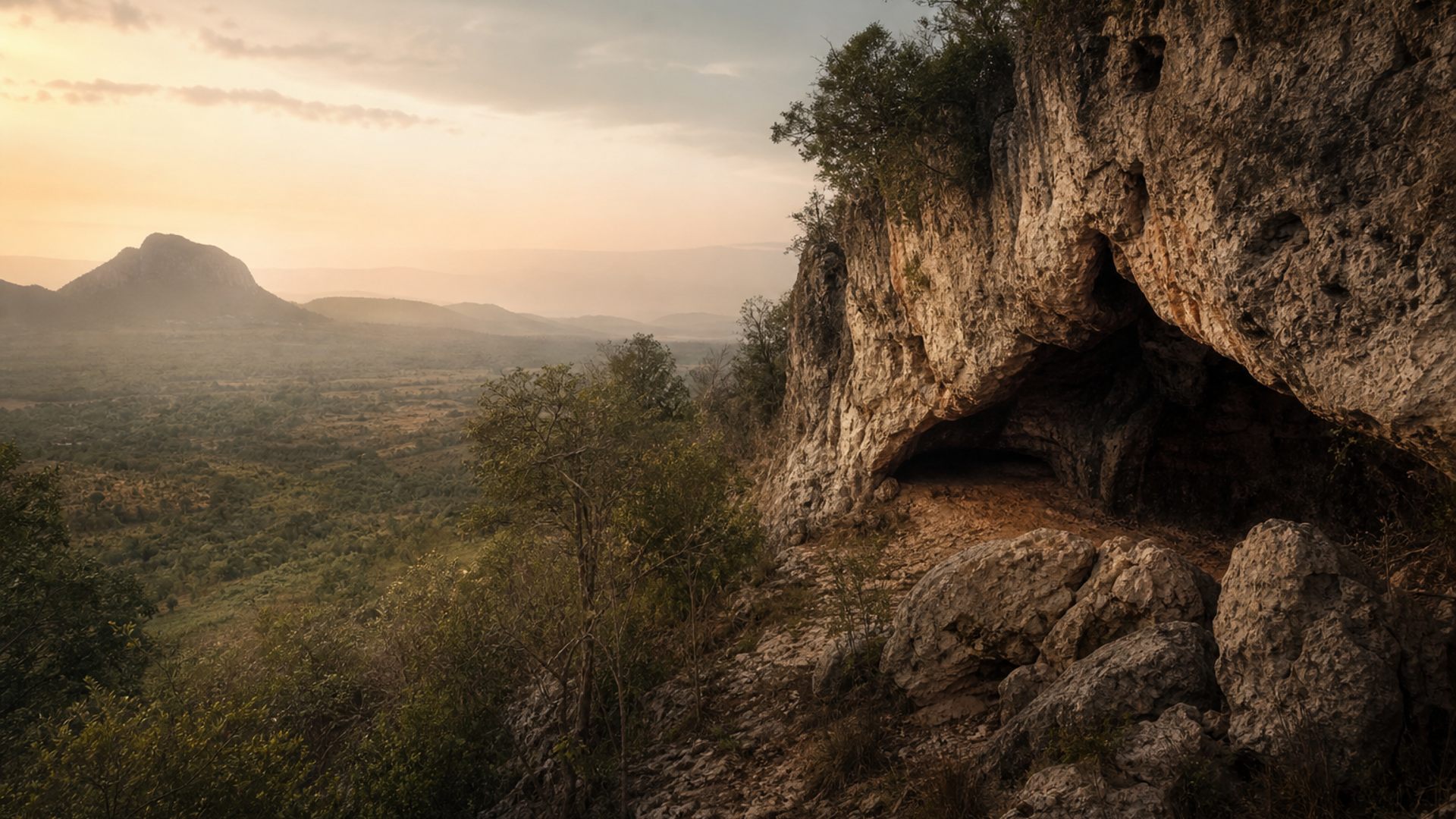
In the echoing shelters of Lagoa Santa, archaeological layers at Lapa do Santo preserve human presence in the early Holocene. Radiocarbon-calibrated contexts spanning roughly 8250 to 7140 BCE record repeated use of the site during a period of environmental transition as post-glacial climates stabilized. Archaeological data indicates a long-term foraging economy based on local freshwater resources, small game, and plant gathering across a mosaic of gallery forests and open habitats.

Material culture recovered from the site—stone tools, worked bone, and ochre stains—speaks to adaptive lifeways tuned to seasonal resources. Mortuary deposits at Lapa do Santo are particularly striking: burials show varied treatments, spatial clustering, and some perimortem modifications, suggesting ritualized behaviors rather than uniform internment. Limited evidence suggests that some burial sequences may represent both primary and secondary interments, indicating complex social responses to death.

Genetically, the individuals sampled from these contexts provide direct biological windows into these early peoples. However, with only seven genomes investigated, any regional demographic model must remain tentative. Archaeological patterns combined with early genetic data hint at a population that was both rooted in the Lagoa Santa landscape and linked, through broader maternal and paternal lineages, to wider early American ancestries.

  • Site: Lapa do Santo, Lagoa Santa, Minas Gerais, Brazil
  • Date range: c. 8250–7140 BCE (Early Holocene)
  • Evidence of varied mortuary practices and long-term site use
Chapter IV

Daily Life & Society

Life at Lapa do Santo would have unfolded in an intimate interplay with water, rock shelters, and seasonal plants and animals. Archaeological deposits document a toolkit of flaked stone and bone implements—quiet traces of hunting, butchery, hide working, and plant processing. Hearths and concentrations of food refuse indicate repeated occupations, perhaps by mobile bands revisiting favored spots within a familiar landscape.

Symbolic life emerges from the mortuary record: burials arranged within sheltered alcoves and occasional use of pigments suggest ritual attention to the dead. Social networks can be inferred from both material and spatial variability in burials; different treatment categories may reflect age, gender, social role, or event-based responses. Yet archaeological inference here must be cautious—grave goods are sparse, and preservation biases shape the record.

Seasonal mobility, small group size, and kin-based social organization are plausible models given the foraging context. Ethnographic analogy can provide frameworks, but direct inference is bounded by the archaeological and genetic samples available. Importantly, the human remains themselves—carefully excavated at Lapa do Santo—offer the strongest direct evidence for how these people lived and died.

  • Foraging economy with stone and bone toolkits
  • Mortuary variability implies complex social behaviors
Chapter V

Genetic Profile

Seven ancient genomes sampled from Lapa do Santo span roughly 8250–7140 BCE and reveal a snapshot of early Holocene genetic diversity in central-eastern Brazil. Maternal lineages include A2 (3 individuals), B2 (2), C (1), and D (1), while paternal markers show haplogroup Q in three males and C in one male. These mitochondrial haplogroups—A2, B2, C, and D—are among the founding maternal lineages widespread across the Americas; their presence here aligns Lapa do Santo with broad pan-American maternal ancestry patterns.

Haplogroup Q is a principal Native American Y-chromosome lineage found widely in both North and South America; its recurrence in these samples supports continuity of early male-line ancestries in the region. The detection of Y-haplogroup C—less common in modern South American populations—suggests additional paternal diversity during the early Holocene, though with a single C sample this may represent a transient or locally important lineage.

Crucially, the small sample count (n=7) limits population-level inference. Observed diversity could reflect local heterogeneity, migration, or kin-structured burial practices. Genetic affinities to later Indigenous groups remain plausible, but assertions about continuity, sex-biased migration, or specific migration routes require larger datasets. Thus, while the genetic data from Lapa do Santo illuminate early lineages in Brazil, they are best read as preliminary signposts rather than definitive maps.

  • mtDNA diversity: A2 (3), B2 (2), C (1), D (1)
  • Y-DNA: Q dominant (3), with a single C lineage; interpretations remain tentative
Chapter VI

Legacy & Modern Connections

The human remains and genomes from Lapa do Santo form a fragile bridge between deep time and the genetic tapestry of contemporary Indigenous peoples of the Americas. The presence of founding maternal and paternal haplogroups resonates with pan-American ancestry signals seen across both ancient and modern datasets, suggesting some degree of biological continuity across millennia. Yet the archaeological and genetic records caution against simple narratives: population histories are complex, shaped by local persistence, movement, and interaction.

For descendant communities and researchers alike, these findings are a call for respectful collaboration and expanded sampling. Increasing the number of securely dated genomes, contextualized within careful archaeological excavations, will permit more robust reconstructions of population dynamics, migrations, and cultural change. Until then, Lapa do Santo remains a cinematic, evidence-rich window into the varied human stories of early Holocene Brazil.

  • Genetic lineages connect to pan-American ancestry but do not prove direct continuity alone
  • Small sample size underscores need for further, ethically guided research
AI 电源

AI 助手

就 Lapa do Santo: Dawn of Lagoa Santa 文化提问

AI 助手 由DNAGENICS公司制作

解锁此特性
Ask questions about the Lapa do Santo: Dawn of Lagoa Santa culture. Our AI assistant can explain genetic findings, historical context, archaeological evidence, and modern connections.
AI 样本分析

Lapa do Santo: Dawn of Lagoa Santa 文化是人类历史中值得了解的一章……

遗传分析揭示了与早期种群的联系,同时显示了独特的适应和文化创新的证据。 古代DNA样本提供了对迁徙模式、社会结构以及古代种群之间的生物关系的深刻见解。

这是人工智能分析的预览。 解锁全AI 助手, 以探索关于:

  • 遗传组成和祖先
  • 移徙模式和起源
  • 日常生活和文化习俗
  • 现代遗传遗产

探索更古老的文化

揭开古代世界文明的故事

使用优惠码 可减免 35% • 11月12日 到期




