Levanluhta: Wetland Burials of Finland

下载的 PDF 是图像副本。如需可选中文本及更好的辅助技术支持,请使用打印功能。

Levanluhta: Wetland Burials of Finland

揭开一个失落的文明

正在加载考古记录……

正在收集古代记录

跳转到主内容
Levanluhta: Wetland Burials of Finland
文明焦点

Levanluhta: Wetland Burials of Finland

Iron Age water-burial assemblage (c. 300–800 CE) from Isokyro, revealing maternal continuity

300 CE - 800 CE
Isokyro, Ostrobothnia, Finland
滚动开始
Chapter I

剧情

了解 Levanluhta: Wetland Burials of Finland 文化

Levanluhta (Isokyro, Finland) is an Iron Age wetland burial site dated c.300–800 CE. Four ancient individuals yield mtDNA U lineages, hinting at deep maternal continuity in northern Finland. Small sample size means conclusions remain preliminary.

Time Period

300–800 CE

Region

Isokyro, Ostrobothnia, Finland

Common Y-DNA

Undetermined (no robust paternal data)

Common mtDNA

U (all 4 samples)

Chapter II

时间线

这种文化历史上的关键时刻

300 CE

Onset of wetland depositions

Archaeological evidence places the earliest Levanluhta depositions around 300 CE within the broader Iron Age/Migration Period landscape.

800 CE

Cessation of primary deposition phase

By c.800 CE the main phase of wetland burials at Levanluhta appears to conclude, marking the end of the site's Iron Age use-life.

Chapter III

Origins & Emergence

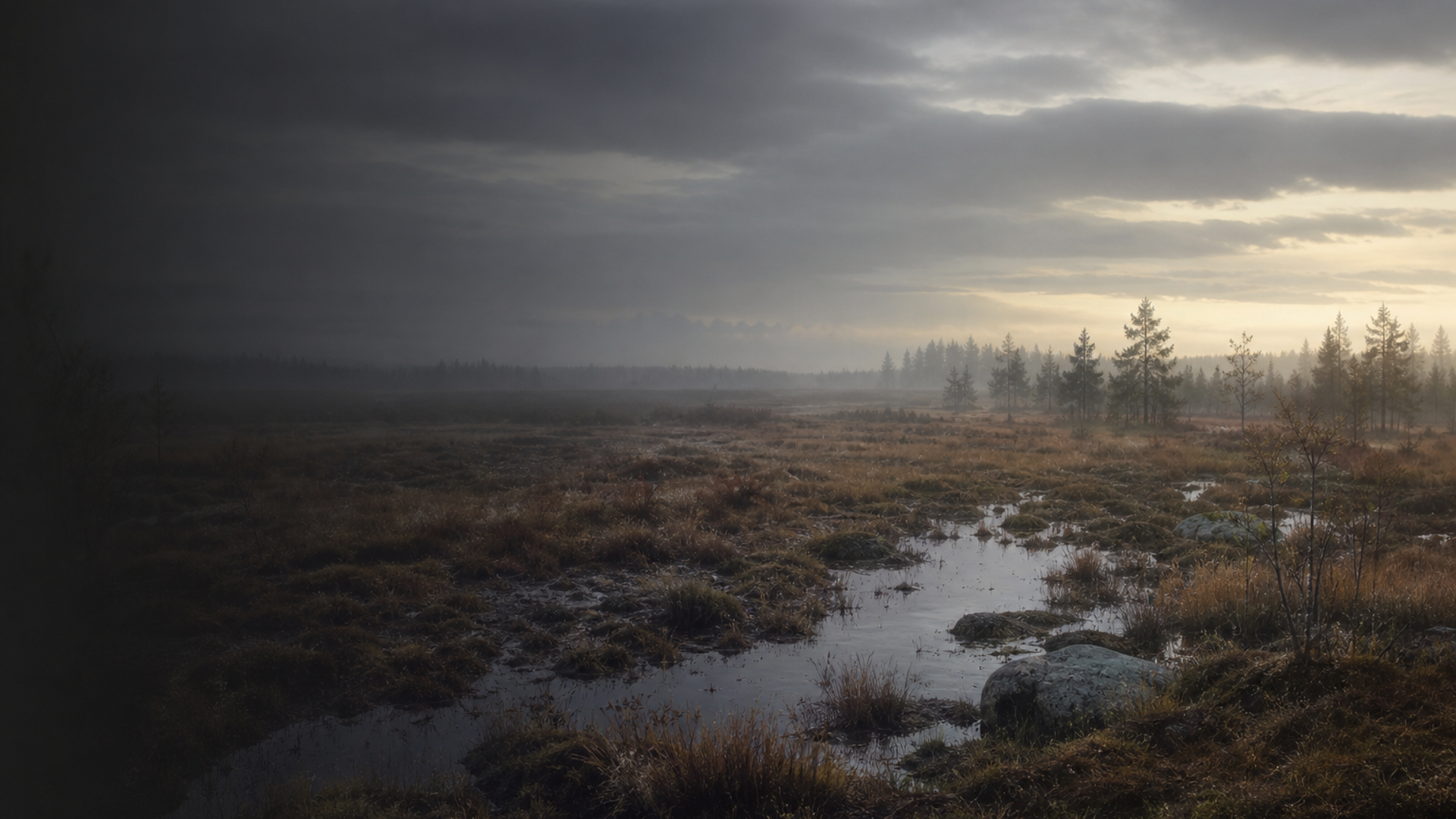
The Levanluhta assemblage sits at the edge of marsh and memory: human remains recovered from a wetland context in Isokyro, Ostrobothnia, testify to a funerary practice active during the later Iron Age of Finland (roughly 300–800 CE). Archaeological data indicates that individuals were deposited into a spring or marsh, a practice interpreted by many researchers as a form of wetland burial or votive deposition. The site lies within a broader northern European horizon of the Migration Period and Early Middle Ages when coastal and inland communities negotiated changing trade networks, climates, and social landscapes.

Limited evidence suggests these depositions may have ritual dimensions rather than being simple refuse. The wetland context preserves bone in unusual ways, but it also complicates interpretation: aquatic taphonomy and possible redeposition can mix materials from different moments. Radiocarbon dating in wetland contexts can be affected by reservoir effects if diets include substantial aquatic resources, so chronological assessments carry extra uncertainty. With only four ancient DNA samples from the site, any reconstruction of origin or mobility must be cautious. Nonetheless, the material evokes a community rooted in the boreal world—lakes, rivers and peatlands shaping identity and death rites in a dramatic, watery landscape.

  • Wetland (spring/marsh) burial context in Isokyro, Ostrobothnia, Finland
  • Active during the Iron Age / Migration Period (c. 300–800 CE)
  • Interpretation complicated by taphonomy and potential reservoir effects
Chapter IV

Daily Life & Society

Archaeological inference from the Levanluhta setting paints a vivid northern tableau: communities living amid forests, lakes and cultivated clearings, exploiting a mixed economy of fishing, hunting, dairying and small-scale agriculture. Material remains from comparable Iron Age Finnish contexts show wooden implements, iron tools, and textiles, and point to a mobile, seasonally organized life where waterways were highways and wetlands were both resource and ritual stage.

The social fabric of this landscape likely combined kinship ties, local leaders and long-distance contacts along the Baltic littoral. Levanluhta’s wetland depositions hint at funerary choices that set certain individuals apart—whether by status, group affiliation, or ritual practice is unclear. Osteological data from wetland burials sometimes show stress markers consistent with hard subsistence lifeways: repetitive workload, infectious disease, and nutritional stress. Yet such marks are community-wide signals, not individual stories. With only four sequenced individuals from Levanluhta, reconstructions of social stratification and day-to-day practice must remain provisional and anchored to comparisons with better-documented Iron Age sites across Finland and the Baltic region.

  • Mixed economy: fishing, hunting, dairying, and small-scale farming
  • Wetland burials suggest ritualized treatment of certain individuals
Chapter V

Genetic Profile

Ancient DNA from Levanluhta is tantalizing but sparse: four individuals yielded mitochondrial genomes assigned to haplogroup U. Haplogroup U (including subclades such as U4 and U5 in northern Europe) is widely associated with Mesolithic hunter-gatherer maternal lineages and persists into later periods across northern Europe. Archaeogenetic interpretation suggests that the maternal ancestry of these Levanluhta individuals carries deep roots in the Mesolithic/Neolithic populations of the region, consistent with archaeological evidence for long-term local continuity in parts of Finland.

Crucially, no robust Y-chromosome profiles are available from these four samples, so paternal lineages remain undetermined. The small sample count (<10) mandates caution: the uniform mtDNA signal could reflect a real pattern of maternal continuity, or it could be biased by burial selection, kin groups represented at the deposit, or preservation and sampling choices. Additionally, wetland contexts introduce analytical challenges—diagenesis and contamination risks are higher, and dietary reservoir effects can complicate radiocarbon calibration used to anchor genetic dates. Broader genomic data from other Iron Age and modern populations in the region are necessary to trace admixture events (for example, steppe-derived ancestry or later medieval inputs) and to place Levanluhta into the fuller tapestry of northern European genetic history.

  • All four sequenced individuals carry mtDNA haplogroup U, indicating deep maternal roots
  • No reliable Y-DNA reported; paternal ancestry remains unknown and conclusions are preliminary
Chapter VI

Legacy & Modern Connections

The Levanluhta assemblage resonates with contemporary interest in how past populations lived, died, and contributed to modern genomes. The presence of mtDNA U aligns with patterns of long-standing maternal lineages in northern Europe and raises the possibility of maternal continuity between Iron Age inhabitants and later populations in Finland. Yet the small number of samples and the lack of paternal data make it impossible to quantify continuity or change with confidence.

Levanluhta’s true legacy is methodological and narrative: wetland burials force archaeologists and geneticists to refine sampling strategies, account for reservoir effects, and integrate osteology, burial context, and aDNA to build cautious stories. Future work—more samples, genome-wide data, and comparative studies across the Baltic and Fennoscandia—will be needed to convert the powerful images of Levanluhta into robust models of ancestry, mobility and cultural practice.

  • mtDNA U suggests possible maternal continuity with northern European populations
  • More samples and genome-wide data are required to confirm links to modern Finns
AI 电源

AI 助手

就 Levanluhta: Wetland Burials of Finland 文化提问

AI 助手 由DNAGENICS公司制作

解锁此特性
Ask questions about the Levanluhta: Wetland Burials of Finland culture. Our AI assistant can explain genetic findings, historical context, archaeological evidence, and modern connections.
AI 样本分析

Levanluhta: Wetland Burials of Finland 文化是人类历史中值得了解的一章……

遗传分析揭示了与早期种群的联系,同时显示了独特的适应和文化创新的证据。 古代DNA样本提供了对迁徙模式、社会结构以及古代种群之间的生物关系的深刻见解。

这是人工智能分析的预览。 解锁全AI 助手, 以探索关于:

  • 遗传组成和祖先
  • 移徙模式和起源
  • 日常生活和文化习俗
  • 现代遗传遗产

探索更古老的文化

揭开古代世界文明的故事

使用优惠码 可减免 35% • 11月12日 到期