Loess Voices: Henan Late Bronze–Iron People

下载的 PDF 是图像副本。如需可选中文本及更好的辅助技术支持,请使用打印功能。

Loess Voices: Henan Late Bronze–Iron People

揭开一个失落的文明

正在加载考古记录……

正在收集古代记录

跳转到主内容
Loess Voices: Henan Late Bronze–Iron People
文明焦点

Loess Voices: Henan Late Bronze–Iron People

Genetic and archaeological glimpses from Jiaozuoniecun and Haojiatai (1550–48 BCE)

1550 CE - 48 BCE
Henan province, China (Yellow River basin)
滚动开始
Chapter I

剧情

了解 Loess Voices: Henan Late Bronze–Iron People 文化

Archaeological remains from Jiaozuoniecun and Haojiatai in Henan (1550–48 BCE) illuminate Late Bronze to Iron Age lifeways. Six genomes show East Asian maternal haplogroups and Y haplogroup O traits; limited samples mean conclusions remain preliminary but suggest local continuity in the Yellow River heartland.

Time Period

1550–48 BCE

Region

Henan province, China (Yellow River basin)

Common Y-DNA

O (observed in 2/6 samples)

Common mtDNA

A, B, C, F, M (each found among samples)

Chapter II

时间线

这种文化历史上的关键时刻

1550 BCE

Earliest occupations

Archaeological horizons at Jiaozuoniecun and Haojiatai begin within the Late Bronze Age (circa 1550 BCE).

500 BCE

Bronze-to-Iron transition

Material culture shows increasing iron use and changing burial practices, marking social and technological shifts.

48 BCE

Latest sampled individuals

The most recent dated genome in this dataset falls near 48 BCE; additional research needed to trace later continuity.

Chapter III

Origins & Emergence

The bones and pottery recovered from Jiaozuoniecun (Jiazuo city) and Haojiatai (Shicaozhao village, Luohe) sit like fossils in the loess — layered sediments spoken to by the Yellow River. Archaeological data indicates these sites were occupied during a long span from the Late Bronze Age into the Iron Age (roughly 1550–48 BCE), a time of technological shifts: bronze metallurgy matures, iron begins to appear, and settled agrarian communities intensify along fertile river valleys.

Material culture — including ceramic forms, burial arrangements, and metallurgical debris — ties these assemblages to broader central China developments after the Shang period and during regional Zhou transformations. Limited evidence suggests local continuity rather than wholesale population replacement: grave goods and settlement patterns reflect long-term adaptation to riverine agriculture, millet and wheat cultivation, and seasonal mobility.

Because direct ancient DNA samples from these sites are few (six individuals), the narrative of origin remains cautious. Archaeology frames a scene of evolving social complexity in Henan; genetics offers initial glimpses that largely align with an East Asian regional signature but require more samples to confirm migration, admixture, or social stratification processes with confidence.

  • Sites: Jiaozuoniecun (Jiazuo) and Haojiatai (Luohe), Henan
  • Era: Late Bronze Age to Iron Age (1550–48 BCE)
  • Evidence: ceramics, metallurgy, burials indicating continuity in river-valley agrarian life
Chapter IV

Daily Life & Society

The household and the field animated these communities. Archaeobotanical traces and agricultural tools point to mixed farming economies dominated by millet and supplemented by wheat and barley, while animal bones show pigs, cattle, and domesticated dogs were integral to ritual and diet. Hearths, storage pits, and ceramic assemblages found at both Jiaozuoniecun and Haojiatai suggest households specialized in grain processing and small-scale metalworking.

Burial practices recorded in the sites reveal social nuance: some graves are richly furnished with bronze fragments or distinctive pottery, while others are modest. This variability hints at emerging social hierarchies across the Late Bronze–Iron transition. Trade and craft networks likely connected Henan villages to nearby regional centers; metallurgical slag and non-local object styles imply exchange routes along river corridors.

Archaeological traces are evocative but incomplete — organic preservation is variable and excavation samples are limited. Nonetheless, the material world preserved in these Henan sites paints a cinematic tableau of daily rhythms: ploughed fields, smoky hearths, and the metallic glint of a craftsperson’s workshop.

  • Economy: millet-based farming with animal husbandry
  • Social life: variable grave goods indicate emerging social differentiation
Chapter V

Genetic Profile

Six ancient individuals sampled from Jiaozuoniecun and Haojiatai provide the first direct genetic window into this Henan population. Y-chromosome analysis found haplogroup O in two male individuals — a lineage widely distributed across East Asia and commonly associated with later Sino-Tibetan and other East Asian-speaking groups. Mitochondrial DNA shows diversity typical of northern and central East Asia: haplogroups A, B, C, F, and M each appear among the samples, reflecting maternal lineages found broadly across prehistoric and modern populations in the region.

Archaeogenetic patterns are broadly consistent with archaeological expectations of local continuity in the Yellow River basin: the maternal and paternal lineages align with an East Asian genetic background rather than clear signals of distant Eurasian influx. However, with only six genomes, statistical power is low: population structure, subtle admixture events, and sex-biased migration are difficult to resolve. Any inference about population continuity, mobility, or genetic turnover must therefore be presented as provisional.

Future sampling across more graves, neighboring sites, and temporal layers will be needed to test whether the observed haplogroups represent a stable local gene pool or a snapshot influenced by small scale movements, marriage networks, or social selection in burial practices.

  • Y-DNA: haplogroup O observed in 2 of 6 samples (East Asian-associated)
  • mtDNA: A, B, C, F, M present — typical East Asian maternal lineages; sample size small
Chapter VI

Legacy & Modern Connections

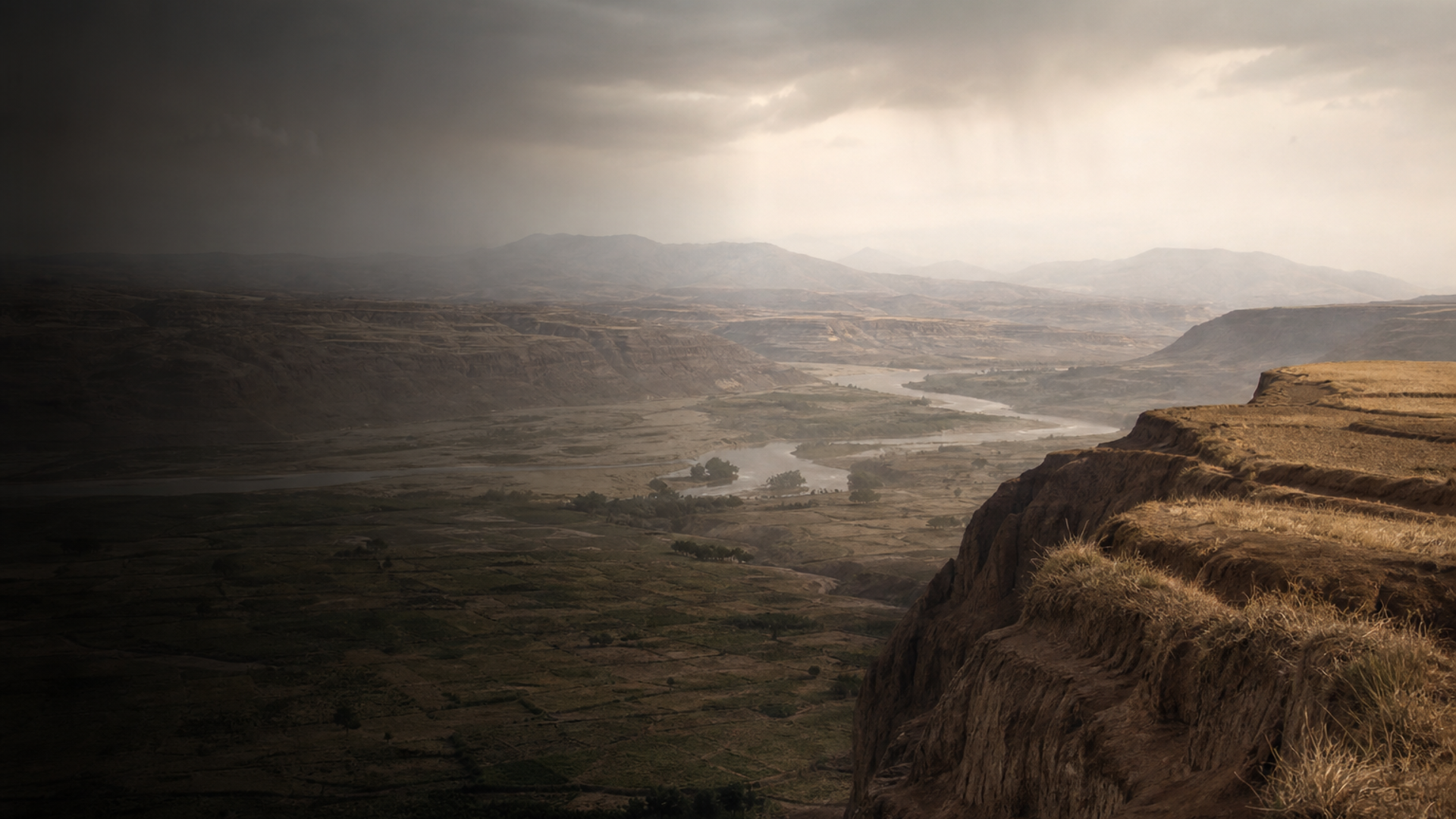
The loess plains of Henan are a palimpsest. Archaeological and genetic traces from these Late Bronze–Iron Age individuals contribute to the deep-time story of populations that shaped central China’s demographic background. The mtDNA and Y-DNA signatures match broad patterns seen in later East Asian populations, suggesting threads of continuity between ancient village communities and the genetic landscape of subsequent millennia.

Caution is essential: six samples cannot capture the full genetic diversity of the era. Nevertheless, when combined with material culture — ceramics, metallurgy, and burial customs — these genetic glimpses help anchor cultural transformations in human bodies, not just artifacts. They remind us that modern populations are mosaics of long-standing regional lineages and episodes of movement. Additional sampling across Henan and adjoining regions will clarify how these Late Bronze–Iron Age communities contributed to the ancestry of later historical populations.

  • Genetic continuity suggested but provisional due to low sample count
  • Combined genetic and archaeological evidence links these communities to broader East Asian ancestries
AI 电源

AI 助手

就 Loess Voices: Henan Late Bronze–Iron People 文化提问

AI 助手 由DNAGENICS公司制作

解锁此特性
Ask questions about the Loess Voices: Henan Late Bronze–Iron People culture. Our AI assistant can explain genetic findings, historical context, archaeological evidence, and modern connections.
AI 样本分析

Loess Voices: Henan Late Bronze–Iron People 文化是人类历史中值得了解的一章……

遗传分析揭示了与早期种群的联系,同时显示了独特的适应和文化创新的证据。 古代DNA样本提供了对迁徙模式、社会结构以及古代种群之间的生物关系的深刻见解。

这是人工智能分析的预览。 解锁全AI 助手, 以探索关于:

  • 遗传组成和祖先
  • 移徙模式和起源
  • 日常生活和文化习俗
  • 现代遗传遗产

探索更古老的文化

揭开古代世界文明的故事

使用优惠码 可减免 35% • 11月12日 到期




