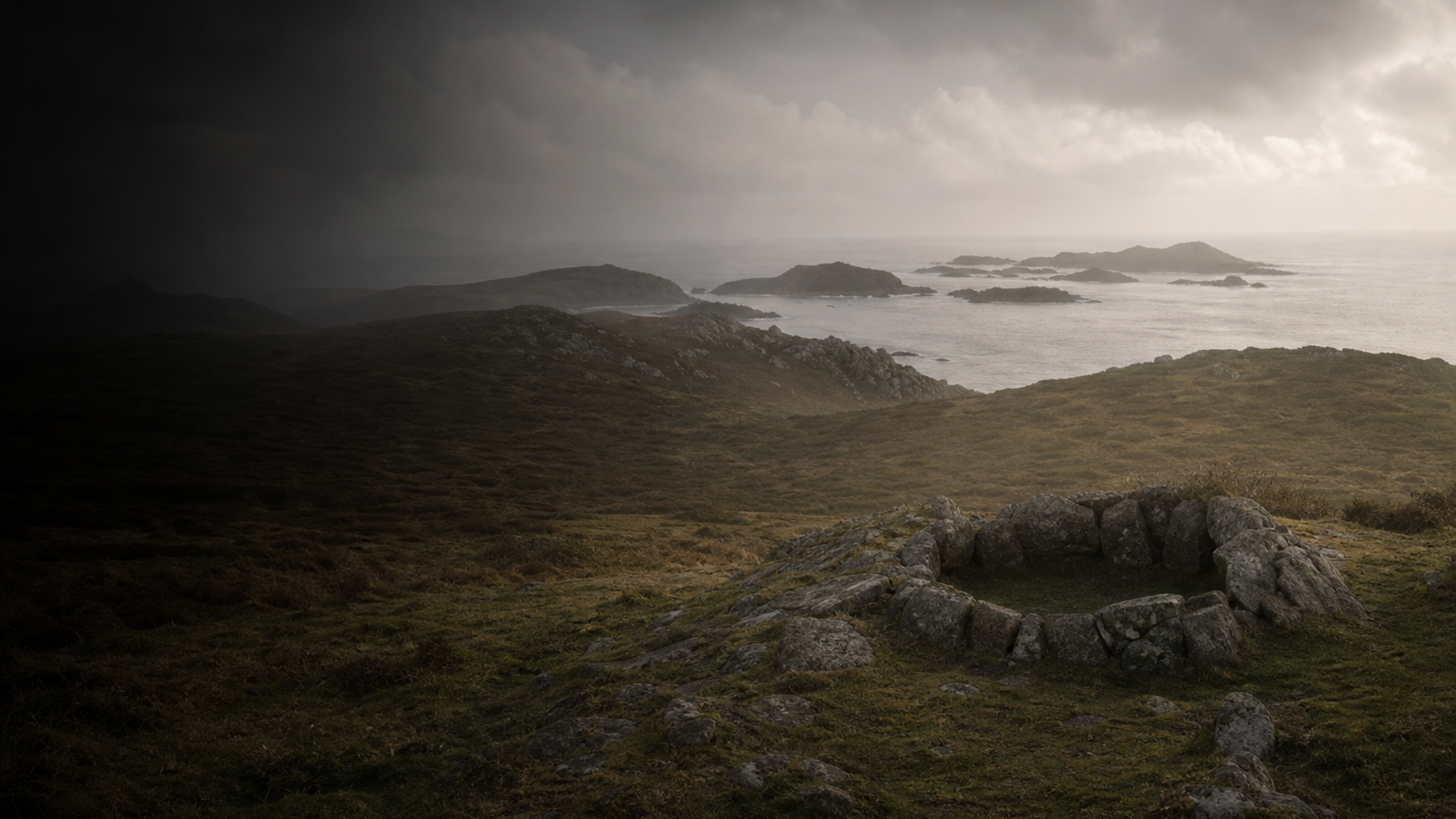
Longis Common La Tène Presence

下载的 PDF 是图像副本。如需可选中文本及更好的辅助技术支持,请使用打印功能。

Longis Common La Tène Presence

揭开一个失落的文明

正在加载考古记录……

正在收集古代记录

跳转到主内容
Longis Common La Tène Presence
文明焦点

Longis Common La Tène Presence

A single Late Iron Age voice from Alderney links island shores to continental La Tène networks

170 CE - 90 BCE
Channel Islands (Alderney), United Kingdom
滚动开始
Chapter I

剧情

了解 Longis Common La Tène Presence 文化

Archaeological traces and one ancient mitochondrial genome from Longis Common (Alderney) hint at La Tène-era connections across the Channel, suggesting maritime exchange and complex ancestry — conclusions remain preliminary due to a single sample.

Time Period

c.170–90 BCE

Region

Channel Islands (Alderney), United Kingdom

Common Y-DNA

Undetermined (insufficient samples)

Common mtDNA

U (single sample)

Chapter II

时间线

这种文化历史上的关键时刻

170 BCE

Earliest La Tène context at Longis Common (approx.)

Archaeological contexts and radiocarbon dates place La Tène-associated activity at Longis Common beginning around 170 BCE.

90 BCE

Latest sample date

The sampled individual falls within a horizon extending to about 90 BCE; interpretations remain provisional.

50 BCE

Heightened continental contact (regional pattern)

Regional archaeological evidence suggests continued exchange across the Channel during the late La Tène period.

Chapter III

Origins & Emergence

Along the wind-scoured headlands of Alderney, archaeological data indicates the presence of La Tène–style material culture during the later Iron Age. Longis Common, a coastal locality on Alderney in the Channel Islands, preserves the faint imprint of cross-Channel networks that linked Brittany, Normandy and southern Britain. Radiocarbon-calibrated contexts associated with the cultural horizon sampled here fall within c.170–90 BCE, a time when continental La Tène communities were at their artistic and maritime height.

Limited evidence suggests that these island contacts were episodic and focused on trade, seasonal use, or small-scale settlement rather than large colonization. Pottery sherds, worked metal fragments reported in regional surveys, and other La Tène-associated finds from nearby coasts point to seafaring exchange. The Longis Common genetic sample provides a singular human voice from this landscape; it must be framed against the wider archaeological pattern rather than taken as a definitive population signal. In short, Longis Common speaks of a maritime frontier where continental La Tène influence met insular traditions, but the story remains fragmentary until more samples and stratified excavations expand the dataset.

  • La Tène presence on Alderney dated to c.170–90 BCE
  • Evidence suggests maritime exchange rather than mass migration
  • Conclusions are provisional due to sparse archaeological and genetic data
Chapter IV

Daily Life & Society

Archaeological indicators from Alderney and nearby Channel coasts paint a picture of small, maritime-oriented lifeways in the Late Iron Age. Subsistence likely combined cereal agriculture, grazing, fishing and shellfish gathering; coastal settlements and seasonal camps exploited the rich tidal ecologies. La Tène material culture arriving by boat — decorated metalwork, imported pottery forms and personal ornaments recorded regionally — would have entered local social worlds as prestige goods, participating in networks of exchange and identity.

Social structure on the islands was probably organized at small-community scale: households or kin groups tied to particular coastal hollows and ridges. Craft specializations (metalworking, woodworking, rope and sail technologies) could have been crucial for sustaining long-distance contacts. Archaeological data indicates a selective adoption of continental styles rather than wholesale cultural replacement: local traditions persisted alongside foreign objects. However, without broader excavation and more human remains, reconstructions of everyday life remain tentative, assembled from material traces and comparative studies of better-documented La Tène sites on the nearby mainland.

  • Economy blended agriculture, pastoralism and marine resources
  • Imported La Tène goods likely served as prestige and trade items
Chapter V

Genetic Profile

The genetic evidence from Longis Common is a single mitochondrial genome assigned to haplogroup U. Haplogroup U is widespread in European prehistory — found in Mesolithic hunter-gatherers and later populations — and by itself does not specify precise ancestry or migration routes. Because only one sample is available, any population-level inference would be speculative: the result is best read as an individual snapshot that can be compared to broader trends.

Broader ancient-DNA research across Iron Age Europe shows regional continuity with preceding Bronze Age populations, combined with local variation and continued exchange. Continental La Tène groups sampled elsewhere often display ancestry profiles reflecting earlier Neolithic farmer lineages and Bronze Age/Steppe-derived components; without nuclear (autosomal) data or more individuals from Alderney we cannot place the Longis Common individual precisely within those continental patterns. Y-chromosome data are currently undetermined for this context, so male-lineage affinities remain unknown. In short: the mitochondrial U lineage connects the individual to long-standing European matrilines, but larger sample sizes and genome-wide data are required to resolve questions of mobility, admixture and the scale of continental contact in the Channel Islands.

  • Single mtDNA sample = haplogroup U; suggests connections to widespread European matrilines
  • No Y-DNA or genome-wide conclusions possible; findings are preliminary
Chapter VI

Legacy & Modern Connections

The Longis Common find gestures toward deep, layered interactions across the English Channel. Cultural echoes of La Tène artistic language and maritime routes influenced coastal communities and later historical trajectories. For modern inhabitants and visitors, the site is a reminder that the Channel Islands sat within active networks of exchange long before recorded history.

Genetic legacy is uncertain: a single mtDNA result cannot establish continuity with present-day Channel Islanders. Nevertheless, the discovery underscores the value of integrating archaeology and ancient DNA to illuminate island histories. Future sampling and careful excavation could reveal whether Longis Common represents a transient voyager, an immigrant family, or a local with continental ties. Conserving the site and expanding interdisciplinary research will sharpen connections between Bronze-to-Iron Age mobility and the genetic landscapes of today.

  • Cultural ties link the islands to wider La Tène maritime networks
  • Modern genetic continuity is unresolved; further ancient DNA is essential
AI 电源

AI 助手

就 Longis Common La Tène Presence 文化提问

AI 助手 由DNAGENICS公司制作

解锁此特性
Ask questions about the Longis Common La Tène Presence culture. Our AI assistant can explain genetic findings, historical context, archaeological evidence, and modern connections.
AI 样本分析

Longis Common La Tène Presence 文化是人类历史中值得了解的一章……

遗传分析揭示了与早期种群的联系,同时显示了独特的适应和文化创新的证据。 古代DNA样本提供了对迁徙模式、社会结构以及古代种群之间的生物关系的深刻见解。

这是人工智能分析的预览。 解锁全AI 助手, 以探索关于:

  • 遗传组成和祖先
  • 移徙模式和起源
  • 日常生活和文化习俗
  • 现代遗传遗产

探索更古老的文化

揭开古代世界文明的故事

使用优惠码 可减免 35% • 11月12日 到期