Manang Kyang: Late Iron Age Threads

下载的 PDF 是图像副本。如需可选中文本及更好的辅助技术支持,请使用打印功能。

Manang Kyang: Late Iron Age Threads

揭开一个失落的文明

正在加载考古记录……

正在收集古代记录

跳转到主内容
Manang Kyang: Late Iron Age Threads
文明焦点

Manang Kyang: Late Iron Age Threads

A Himalayan highland community (800–1 BCE) where archaeology and DNA sketch a fragile story

800 CE - 1 BCE
Manang (Kyang), Nepal — Central Himalaya
滚动开始
Chapter I

剧情

了解 Manang Kyang: Late Iron Age Threads 文化

Archaeological finds from Manang Kyang, Nepal (800–1 BCE) and seven ancient genomes reveal a Late Iron Age highland community with predominantly Y‑DNA haplogroup O and diverse maternal lineages (M, F, A6b, U). Limited evidence suggests local continuity with Himalayan populations; conclusions remain preliminary.

Time Period

800–1 BCE (Late Iron Age)

Region

Manang (Kyang), Nepal — Central Himalaya

Common Y-DNA

O (4 of 7)

Common mtDNA

M (3), F (2), A6b (1), U (1)

Chapter II

时间线

这种文化历史上的关键时刻

800 BCE

Late Iron Age presence in Manang

Archaeological layers dated to ca. 800–1 BCE at Kyang indicate occupation during the Late Iron Age; genetic samples recovered provide a first, limited glimpse of the population.

Chapter III

Origins & Emergence

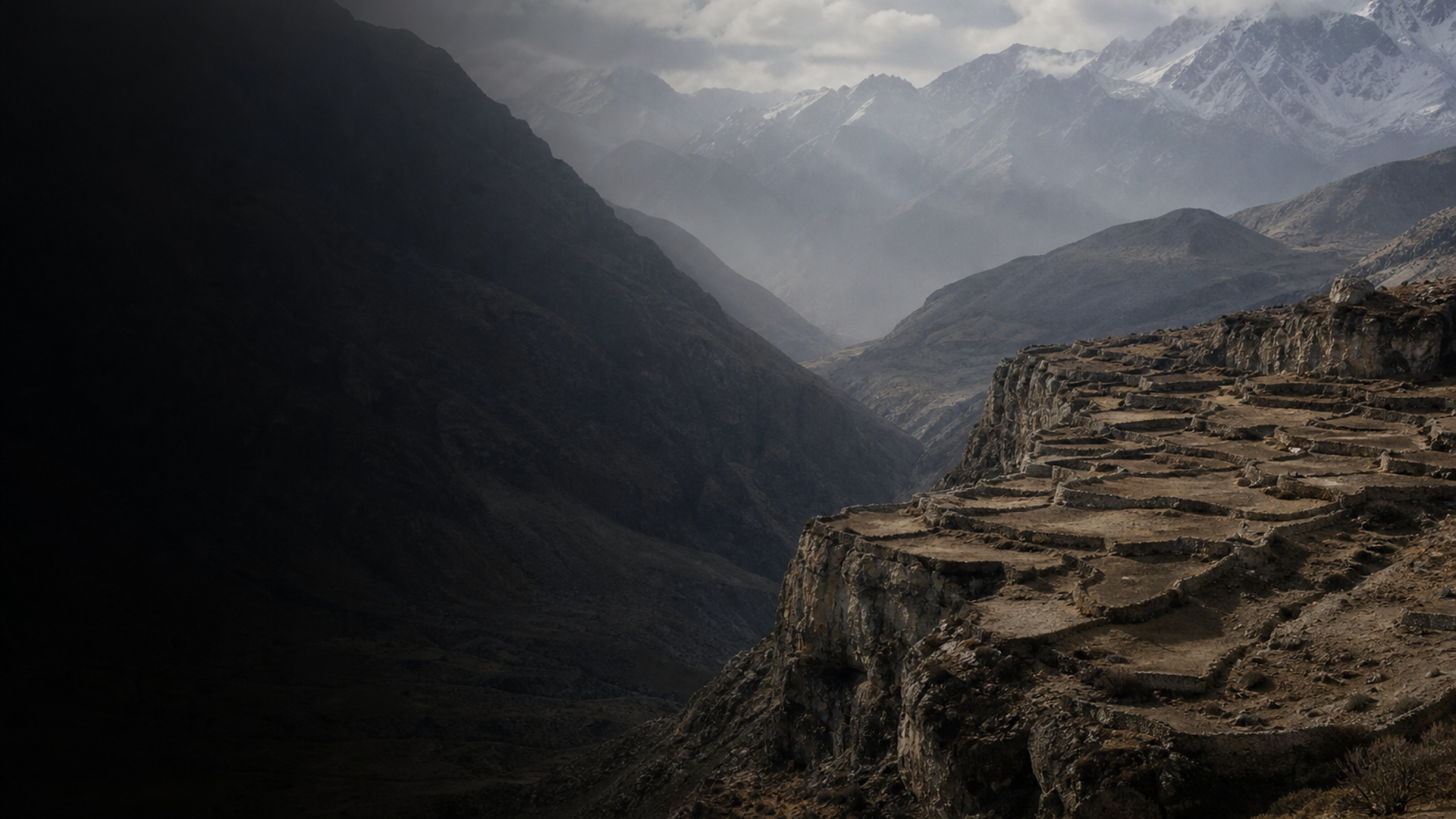
Perched in the rain-shadow valleys of the Central Himalaya, the people represented by the Nepal_Manang_Kyang_LIA samples lived during the Late Iron Age (approximately 800–1 BCE). Archaeological data indicates human presence in the Manang basin during this span, a landscape of terraced slopes, high pastures and narrow trade corridors. Limited evidence suggests these communities were part of broader Himalayan networks rather than isolated enclaves: seasonal mobility, exchange of goods and ideas, and the slow accumulation of material culture likely link Manang to lowland and highland neighbors.

The genetic snapshot we have—seven low-coverage genomes—captures only a sliver of that past. The small sample size (<10 individuals) makes any sweeping narrative tentative: patterns visible in these genomes provide hypotheses rather than firm conclusions. Nonetheless, the combination of archaeological context (Late Iron Age strata in Kyang) with genetic signals begins to outline origins shaped by local continuity together with long-distance contacts across the Himalayan arc. Future excavations and additional sampling will be required to test whether Manang’s Late Iron Age identity represents a distinct regional population, an intersection of migrating groups, or a resilient local lineage shaped by centuries of highland lifeways.

  • Date range: ca. 800–1 BCE, Late Iron Age in Nepal
  • Site: Manang, Kyang — high Central Himalayan valley context
  • Evidence points to regional connectivity; conclusions are tentative
Chapter IV

Daily Life & Society

Archaeological imagination must read between sparse traces. In the high valleys around Manang, daily life would have been dictated by altitude and season: short growing seasons on terraces, winter transhumance to lower elevations, and intensive knowledge of mountain resources. Archaeological data indicates settlement patterns consistent with small, mobile households tied to pastoralism and mixed cultivation, while the valley’s topography favours tight-knit communities reliant on local craft and long-distance exchange.

Material remains are limited for this specific sample set, so much of the social picture is inferred from comparable Himalayan sites: communal labor to maintain terraces and irrigation, ritual practices linked to landscape features, and knotted networks of marriage and trade that embedded Manang in a wider economic web. The cinematic image is of stone hamlets catching the pale light of the high plain, voices and pack animals threading ancient routes—yet scientifically we must stress that these reconstructions are provisional and guided by regional analogies rather than abundant local assemblages.

  • Highland subsistence: pastoralism, terrace cultivation, seasonal mobility
  • Small communities embedded in wider trans‑Himalayan exchange networks
Chapter V

Genetic Profile

The genetic record from Manang Kyang is compact but revealing. Among the seven sampled individuals, four carry Y‑DNA haplogroup O—a lineage widely associated with East and Southeast Asian paternal ancestries and common in many Tibeto‑Burman and other Himalayan groups today. This predominance of O suggests that paternal ancestry in this small Late Iron Age sample aligns more closely with eastern Himalayan and East Asian genetic traditions than with western Eurasian paternal lineages.

Mitochondrial diversity in the same set includes three individuals with haplogroup M (a deep Eurasian maternal lineage common across South and East Asia), two with F (frequent in East and Southeast Asia), one with A6b (a rarer East Eurasian branch), and one with U (a typically West Eurasian maternal lineage). The mixed maternal profile hints at complex ancestry inputs: predominantly Asian maternal roots with at least one lineage tracing to western Eurasian maternal ancestry. Because only seven genomes are available, these patterns must be treated as preliminary. Archaeogenetic interpretation should emphasize plausible scenarios—local continuity with East Asian‑affiliated paternal lines, and maternal heterogeneity potentially reflecting mobility, marriage networks, or small-scale admixture—while acknowledging the high uncertainty driven by low sample counts and uneven preservation.

  • Predominant Y‑DNA O (4/7) suggests East/Himalayan paternal ties
  • mtDNA shows mainly Asian lineages (M, F, A6b) with one U indicating minor western input
Chapter VI

Legacy & Modern Connections

The Manang Kyang assemblage offers a poignant, if tentative, bridge between ancient Himalayan lifeways and the genetic landscape of modern mountain peoples. Archaeological and genetic hints together suggest continuity of East‑Asian‑affiliated paternal lineages and a mosaic of maternal ancestries that may reflect centuries of mobility and exchange across the high passes. This portrait resonates with ethnographic patterns in the region today—multilayered identities, intermarriage across ecological zones, and resilient adaptations to altitude.

However, the scientific verdict remains cautious: seven samples are not enough to assert broad continuity or cultural ancestry claims. The true legacy of Manang Kyang will emerge as more sites are excavated, more genomes recovered, and archaeological context is expanded. For now, these remains act as a cinematic whisper from the Late Iron Age Himalaya—an invitation to deeper investigation rather than a closed chapter.

  • Suggests partial genetic continuity with Himalayan populations, but tentative
  • Highlights need for more sampling to understand long-term demographic change
AI 电源

AI 助手

就 Manang Kyang: Late Iron Age Threads 文化提问

AI 助手 由DNAGENICS公司制作

解锁此特性
Ask questions about the Manang Kyang: Late Iron Age Threads culture. Our AI assistant can explain genetic findings, historical context, archaeological evidence, and modern connections.
AI 样本分析

Manang Kyang: Late Iron Age Threads 文化是人类历史中值得了解的一章……

遗传分析揭示了与早期种群的联系,同时显示了独特的适应和文化创新的证据。 古代DNA样本提供了对迁徙模式、社会结构以及古代种群之间的生物关系的深刻见解。

这是人工智能分析的预览。 解锁全AI 助手, 以探索关于:

  • 遗传组成和祖先
  • 移徙模式和起源
  • 日常生活和文化习俗
  • 现代遗传遗产

探索更古老的文化

揭开古代世界文明的故事

使用优惠码 可减免 35% • 11月12日 到期




