Mayahak Cab Pek: Belize, 5600 BP

下载的 PDF 是图像副本。如需可选中文本及更好的辅助技术支持,请使用打印功能。

Mayahak Cab Pek: Belize, 5600 BP

揭开一个失落的文明

正在加载考古记录……

正在收集古代记录

跳转到主内容
Mayahak Cab Pek: Belize, 5600 BP
文明焦点

Mayahak Cab Pek: Belize, 5600 BP

A solitary Archaic burial from the Maya Mountains hints at deep Indigenous roots

3761 CE - 3637 BCE
Belize (Maya Mountains, Toledo District)
滚动开始
Chapter I

剧情

了解 Mayahak Cab Pek: Belize, 5600 BP 文化

Archaeological and aDNA evidence from a single burial at Mayahak Cab Pek (Toledo District, Belize) dated 3761–3637 BCE offers a tentative glimpse into Archaic-period lifeways in the Maya Mountains and their genetic connections to broader Indigenous American lineages.

Time Period

3761–3637 BCE

Region

Belize (Maya Mountains, Toledo District)

Common Y-DNA

No published data (single sample)

Common mtDNA

No published data (single sample)

Chapter II

时间线

这种文化历史上的关键时刻

3700 BCE

Burial at Mayahak Cab Pek

A single individual interred in a cave context within the Maya Mountains, dated c. 3761–3637 BCE, provides the only aDNA link for this early Belizean Archaic horizon.

Chapter III

Origins & Emergence

Carved into the cool, limestone hush of the Maya Mountains, Mayahak Cab Pek preserves a fragile snapshot of human presence in southern Belize during the mid-4th millennium BCE. Archaeological data indicates the burial context—found within cave-associated deposits in what is now Bladen Nature Reserve—dates to roughly 3761–3637 BCE. This places the individual squarely in the Belizean Archaic horizon, a period characterized across Mesoamerica by mobile hunter-gatherer groups experimenting with early plant management and riverine resources.

The material traces at and near Mayahak Cab Pek are sparse but evocative: isolated burials, occasional lithic fragments, and ephemeral hearth features suggest small, dispersed communities whose lifeways were tightly bound to karst landscapes, seasonal wetlands, and tropical forest resources. Limited evidence suggests ritual use of caves for interment and possibly for cosmological practice, a pattern that recurs in later Maya religion but whose origins remain poorly constrained.

From a cinematic vantage, the site offers a moment when human movement, landscape knowledge, and nascent cultural traditions intersect. From a scientific vantage, it is a single point in a vast, under-sampled record: with one aDNA sample, questions of population continuity, migration, and interaction remain open and provisional. Future excavations and additional samples are essential to transform evocative possibility into robust inference.

  • Burial dated 3761–3637 BCE within Mayahak Cab Pek cave system
  • Archaic-period context: mobile groups, early plant use, cave ritual traces
  • Evidence is limited; broader regional patterns require more samples
Chapter IV

Daily Life & Society

The lifeways of Archaic Belize were sculpted by a humid, biodiverse landscape. Archaeological indicators from nearby Archaic sites—combined with the cave burial at Mayahak Cab Pek—suggest subsistence strategies focused on fishing, small-game hunting, foraging of tree fruits and tubers, and the very early management of edible plants. Seasonal mobility would have allowed groups to exploit river floodplains and upland forest mosaics, while caves offered secure locales for mortuary practice and perhaps storage.
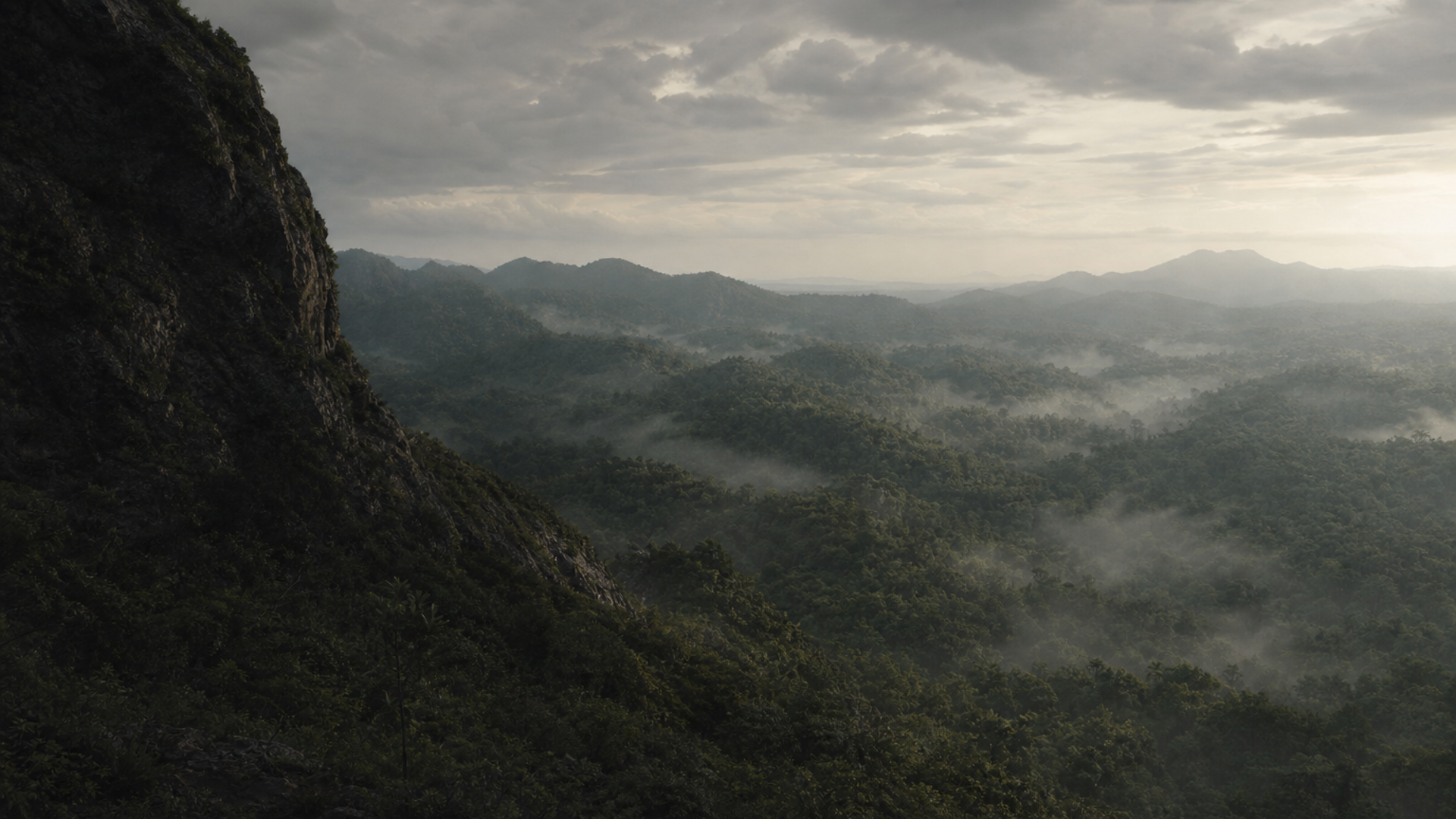

Material culture in this era tends to be ephemeral: perishable fibers and wooden tools rarely survive, leaving stone tools, shell ornaments, and occasional pottery or ground stone as our primary traces. Social organization was likely flexible and kin-based, with communal sharing of resources and knowledge systems anchored in intimate landscape familiarity. The interment at Mayahak Cab Pek may reflect social memory or ancestral veneration rather than hierarchical burial rites: a solitary individual laid to rest in limestone quiet hints at localized ritual choices rather than palace-centered display.

Archaeologically, these impressions are cautious reconstructions. They rely on comparisons with better-documented Archaic sites in Belize and adjacent regions, and each inference should be framed as provisional pending expanded excavation and multidisciplinary analyses.

  • Subsistence: fishing, hunting, foraging, early plant management
  • Caves used for burial and possible ritual, indicating place-based practices
Chapter V

Genetic Profile

Genetic data from Mayahak Cab Pek is presently extremely limited: only one ancient DNA sample is documented for the Belize_5600BP identifier. No common Y-DNA or mtDNA haplogroups are reported for this individual in the supplied data. As a result, definitive statements about population affiliation, sex-biased migration, or maternal/paternal continuity cannot be made from this dataset alone.

Despite the paucity of samples, aDNA from tropical cave contexts can be highly informative when preservation allows. Even a single genome—if sequenced to sufficient coverage—can be compared to other ancient and modern Indigenous American genomes to assess affinities, shared ancestry components, and long-term continuity. However, with n = 1, statistical power is minimal: signals of admixture, population structure, or continuity may be noisy or misleading. It is therefore scientifically responsible to emphasize the preliminary nature of any genetic inference from this context.

Future directions that would substantially improve understanding include: additional sampling across Belizean Archaic sites; targeted capture of uniparental markers (mtDNA, Y-chromosome) if preservation permits; and isotopic analyses to link mobility and diet with genetic ancestry. Together, such datasets can begin to situate Mayahak Cab Pek within the broader tapestry of Native American genetic history without overstating conclusions based on a solitary sample.

  • Single aDNA sample; no reported Y- or mtDNA haplogroups
  • Any genetic conclusions are preliminary until more samples are analyzed
Chapter VI

Legacy & Modern Connections

Mayahak Cab Pek's lone burial resonates across millennia: it gestures toward deep Indigenous connections to the Maya Mountains and the enduring significance of caves in Mesoamerican cosmologies. Archaeological data indicate cultural behaviors—mortuary deposition, landscape attachment—that reappear in later Preclassic and Classic contexts, though direct cultural or genetic continuity cannot be assumed from one sample.

For contemporary Indigenous communities, such finds can intersect with oral histories and ancestral landscapes in meaningful ways. Scientifically, responsibly communicating uncertainty and collaborating with descendant communities are essential. As ancient DNA sampling in Belize expands, researchers may better assess links between Archaic inhabitants, later Maya populations, and present-day Indigenous groups. Until then, Mayahak Cab Pek stands as a poignant, provisional thread in a deep human story.

  • Echoes later cave-based ritual practices seen in Preclassic and Classic periods
  • Modern genetic and community research are needed to clarify ancestral links
AI 电源

AI 助手

就 Mayahak Cab Pek: Belize, 5600 BP 文化提问

AI 助手 由DNAGENICS公司制作

解锁此特性
Ask questions about the Mayahak Cab Pek: Belize, 5600 BP culture. Our AI assistant can explain genetic findings, historical context, archaeological evidence, and modern connections.
AI 样本分析

Mayahak Cab Pek: Belize, 5600 BP 文化是人类历史中值得了解的一章……

遗传分析揭示了与早期种群的联系,同时显示了独特的适应和文化创新的证据。 古代DNA样本提供了对迁徙模式、社会结构以及古代种群之间的生物关系的深刻见解。

这是人工智能分析的预览。 解锁全AI 助手, 以探索关于:

  • 遗传组成和祖先
  • 移徙模式和起源
  • 日常生活和文化习俗
  • 现代遗传遗产

探索更古老的文化

揭开古代世界文明的故事

使用优惠码 可减免 35% • 11月12日 到期




