Mentesh Tepe: Echoes of Shomutepe

下载的 PDF 是图像副本。如需可选中文本及更好的辅助技术支持,请使用打印功能。

Mentesh Tepe: Echoes of Shomutepe

揭开一个失落的文明

正在加载考古记录……

正在收集古代记录

跳转到主内容
Mentesh Tepe: Echoes of Shomutepe
文明焦点

Mentesh Tepe: Echoes of Shomutepe

Western Azerbaijan's early Bronze Age community seen through archaeology and ancient DNA

6000 CE - 4000 BCE
Mentesh Tepe, Tovuz district, Azerbaijan
滚动开始
Chapter I

剧情

了解 Mentesh Tepe: Echoes of Shomutepe 文化

Archaeological and genetic glimpses from Mentesh Tepe (Tovuz district, Azerbaijan) illuminate a Shulaveri‑Shomutepe horizon between c. 6000–4000 BCE. Three ancient genomes—two with Y haplogroup J—suggest Near Eastern farmer ancestry mingling in the Caucasus; conclusions remain provisional.

Time Period

c. 6000–4000 BCE

Region

Mentesh Tepe, Tovuz district, Azerbaijan

Common Y-DNA

J (observed in 2 of 3)

Common mtDNA

Undetermined / not reported

Chapter II

时间线

这种文化历史上的关键时刻

5000 BCE

Occupation at Mentesh Tepe

Archaeological layers dating around 5000 BCE indicate settled farming households within the Shulaveri‑Shomutepe cultural horizon in western Azerbaijan.

Chapter III

Origins & Emergence

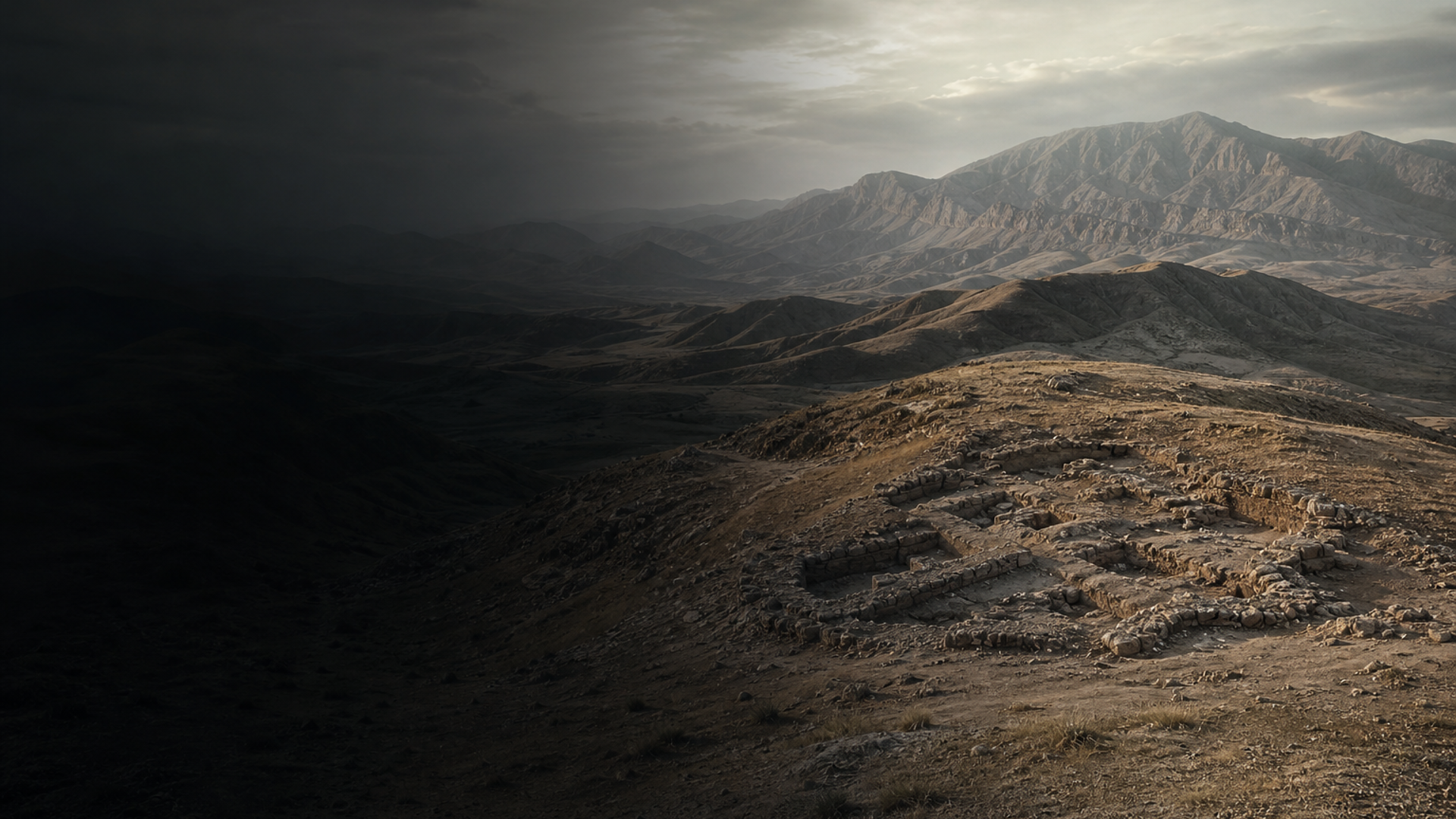
Mentesh Tepe sits in western Azerbaijan's Tovuz district and belongs to the broader Shulaveri‑Shomutepe cultural complex that spread across the South Caucasus in the late Neolithic to early Bronze Age. Archaeological data indicates long‑occupied tells with compact, often circular or rectangular mudbrick and stone structures, households practicing mixed farming, and material culture that blends local traditions with influences from neighboring lowland and highland zones. Radiocarbon frameworks for the region place this horizon broadly between c. 6000 and 4000 BCE, a time of intensifying sedentism, orchard and field cultivation, and regional exchange.

Genetically, three ancient individuals sampled from Mentesh Tepe provide a narrow but valuable window into population formation. Two male individuals carry Y‑DNA haplogroup J, a lineage often associated with early Near Eastern farmers and later Caucasus groups. Limited evidence suggests these people were part of local farming communities whose ancestry reflects both indigenous Caucasus elements and gene flow from western Near Eastern populations. Because the sample count is only three, archaeological and genetic interpretations must remain tentative: these genomes hint at broader processes but cannot alone define demographic patterns across the Shulaveri‑Shomutepe horizon.

  • Part of the Shulaveri‑Shomutepe cultural horizon in the South Caucasus
  • Radiocarbon range c. 6000–4000 BCE; sedentary farming communities
  • Early indication of Near Eastern farmer-related Y‑DNA (haplogroup J)
Chapter IV

Daily Life & Society

At Mentesh Tepe, everyday life would have unfolded in close quartered houses clustered upon tells: hearths, storage pits, and work surfaces betray a household economy anchored in cultivation, herding, and craft. Archaeological traces from Shulaveri‑Shomutepe contexts across Azerbaijan include pottery styles—simple, often burnished wares—flint and obsidian tools, and evidence for domesticated cereals and caprines. The landscape was worked seasonally and intensively, with orchards and granaries implied by storage features and grinding stones.

Socially, communities likely organized around extended households with ritual and communal spaces. Burials found nearby in comparable sites show varying treatments—single graves and small cemeteries—suggesting emerging social differentiation, though the scale of hierarchy remains uncertain. Exchange networks are visible in portable material and raw materials such as obsidian sourced from distant outcrops, indicating connections across the Caucasus and into Anatolia and the Near East.

Taken together, the archaeological record paints a vivid, tactile world of small farming villages, skilled craftspeople, and regional ties that would later shape Bronze Age societies in the Caucasus.

  • Household-centered farming and herding economy
  • Material links to wider Caucasus and Near Eastern exchange networks
Chapter V

Genetic Profile

Ancient DNA from Mentesh Tepe consists of three sequenced individuals—an extremely small but informative dataset. Two males carry Y‑chromosome haplogroup J, a lineage frequently observed in early farmers of the Near East and in later Caucasus populations. This pattern aligns with archaeological impressions of agriculturalists whose roots intersected with western Near Eastern gene pools.

Genome-wide signals (limited by sample size) suggest predominant ancestry components related to early Anatolian/Levantine farmers mixed with local Caucasus hunter‑gatherer contributions. Such admixture is consistent with models in which the spread of farming into the South Caucasus involved both movement of people and local assimilation. No robust mtDNA pattern can be declared for this assemblage because maternal haplogroups were not consistently reported or the counts are too low to be representative.

Crucially, with only three genomes the statistical power to resolve subtle ancestry proportions, sex‑biased gene flow, or temporal shifts is very low. These data are best read as preliminary signals: they point toward Near Eastern farmer-associated Y‑lineages and a mixed ancestry profile for early Shulaveri‑Shomutepe communities, but broader sampling across sites and time is required to test demographic models.

  • Two of three males carry Y‑DNA haplogroup J, linking to Near Eastern farmer lineages
  • Genome-wide signals indicate mixed Near Eastern farmer and Caucasus hunter‑gatherer ancestry; conclusions remain preliminary
Chapter VI

Legacy & Modern Connections

The genetic and archaeological echoes of Mentesh Tepe resonate into the modern Caucasus. Haplogroup J and related ancestry components appear among later Bronze Age and historic populations across the region, suggesting threads of continuity even amid later migrations and cultural transformations. Archaeologically, the Shulaveri‑Shomutepe world helped lay foundations for persistent agricultural practices, craft traditions, and exchange routes that shaped subsequent Bronze Age polities in Azerbaijan.

However, modern genetic landscapes are palimpsests of many movements; while Mentesh Tepe contributes an early chapter, it is one of many layers. Because the ancient sample is small (n = 3), we must be cautious about drawing strong lines from these individuals to contemporary populations. Still, these genomes are cinematic fragments—tiny windows that, when joined with further archaeological excavation and ancient DNA, will sharpen our picture of how early farming communities in the Caucasus contributed to the deep ancestry of the region.

  • Early genetic components seen at Mentesh Tepe recur in later Caucasus populations
  • Small sample size limits direct claims about continuity to modern groups
AI 电源

AI 助手

就 Mentesh Tepe: Echoes of Shomutepe 文化提问

AI 助手 由DNAGENICS公司制作

解锁此特性
Ask questions about the Mentesh Tepe: Echoes of Shomutepe culture. Our AI assistant can explain genetic findings, historical context, archaeological evidence, and modern connections.
AI 样本分析

Mentesh Tepe: Echoes of Shomutepe 文化是人类历史中值得了解的一章……

遗传分析揭示了与早期种群的联系,同时显示了独特的适应和文化创新的证据。 古代DNA样本提供了对迁徙模式、社会结构以及古代种群之间的生物关系的深刻见解。

这是人工智能分析的预览。 解锁全AI 助手, 以探索关于:

  • 遗传组成和祖先
  • 移徙模式和起源
  • 日常生活和文化习俗
  • 现代遗传遗产

探索更古老的文化

揭开古代世界文明的故事

使用优惠码 可减免 35% • 11月12日 到期




