Miaozigou: Voices of the Middle Neolithic

下载的 PDF 是图像副本。如需可选中文本及更好的辅助技术支持,请使用打印功能。

Miaozigou: Voices of the Middle Neolithic

揭开一个失落的文明

正在加载考古记录……

正在收集古代记录

跳转到主内容
Miaozigou: Voices of the Middle Neolithic
文明焦点

Miaozigou: Voices of the Middle Neolithic

Three genomes from Inner Mongolia illuminate northern Neolithic lifeways and ancestry — small sample, big implications.

3550 CE - 3050 BCE
Inner Mongolia, China (Miaozigou site)
滚动开始
Chapter I

剧情

了解 Miaozigou: Voices of the Middle Neolithic 文化

Middle Neolithic Miaozigou (c. 3550–3050 BCE), from the Miaozigou site in Uraharura, Qahar Youyi Qianqi, Inner Mongolia, yields three genomes. Two carry Y-DNA C; mtDNA includes A14, C, D. Limited samples suggest links to northern East Asian lineages; conclusions remain preliminary.

Time Period

c. 3550–3050 BCE (Middle Neolithic)

Region

Inner Mongolia, China (Miaozigou site)

Common Y-DNA

C (2 of 3)

Common mtDNA

A14, C, D (each in 1 sample)

Chapter II

时间线

这种文化历史上的关键时刻

3300 BCE

Miaozigou middle Neolithic occupation

Occupations at the Miaozigou site reflect settled households, pottery production, and participation in regional networks around c. 3300 BCE.

Chapter III

Origins & Emergence

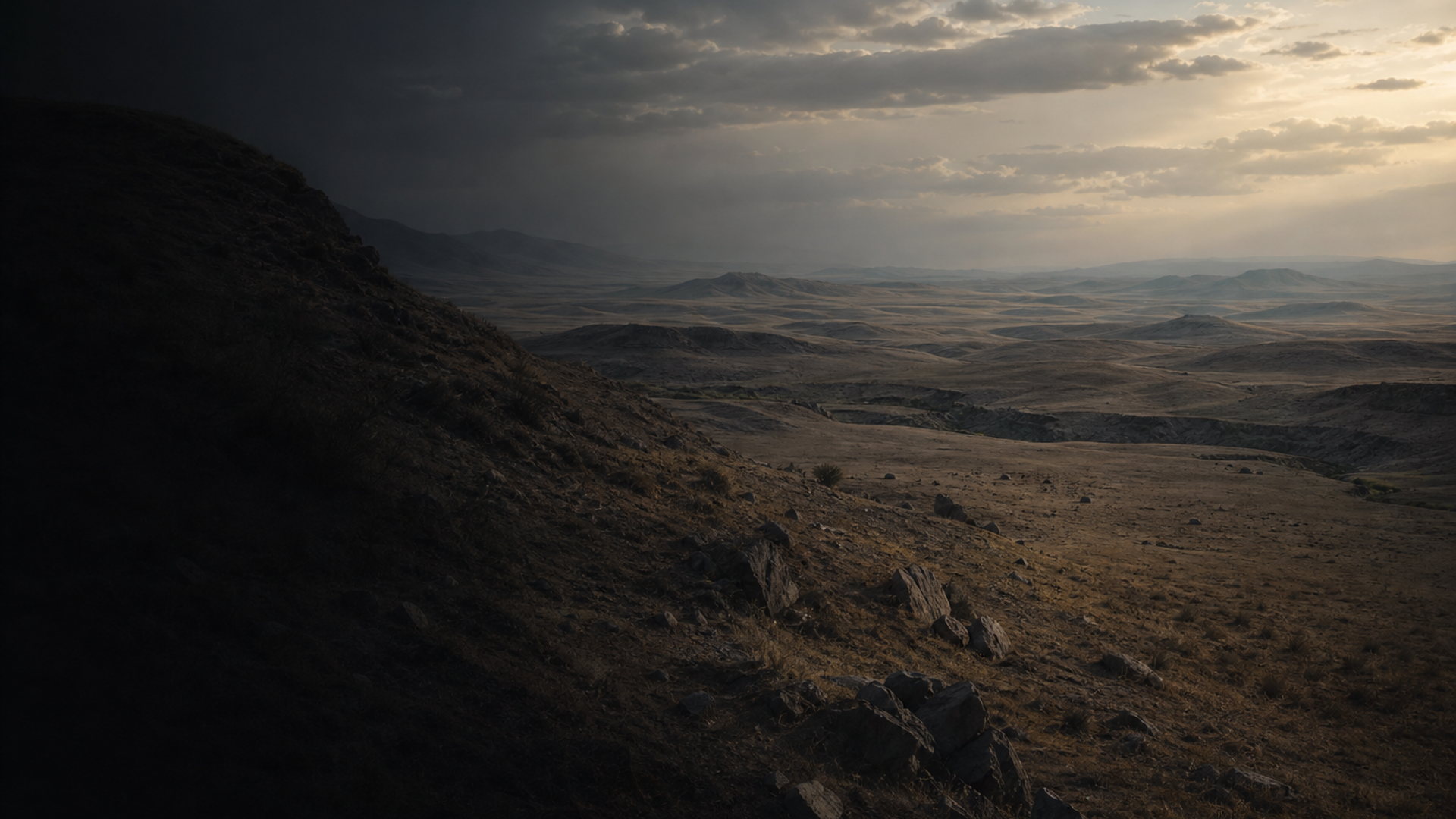
The Miaozigou occupation sits in the cool plains and river valleys of what is today eastern Inner Mongolia. Archaeological data indicates intermittent settlement at the Miaozigou site (Uraharura, Qahar Youyi Qianqi) during the Middle Neolithic, roughly between 3550 and 3050 BCE. The material record from Miaozigou-related assemblages includes pottery, ground stone tools, and house features that point to settled communities experimenting with cultivation, seasonal mobility, and local resource exploitation.

Cinematic landscapes — winds sweeping across grasslands and reed-lined streams — frame a period when human groups in northern China were negotiating a mosaic of wild resources and emerging domesticated plants and animals. Limited evidence suggests that millet cultivation was part of the broader subsistence economy in northern China by this time; archaeobotanical remains from the region indicate early millet use, though direct, abundant plant data from Miaozigou itself is sparse.

In cultural terms, Miaozigou stands within a web of Middle Neolithic interaction across northeastern China. Pottery styles and lithic technologies show affinities with contemporaneous northern cultures, implying networks of exchange and shared knowledge rather than a single, uniform lifeway. Given the small genetic sample available, any narrative linking Miaozigou peoples to later populations must be tentative and framed as a working hypothesis pending broader sampling.

  • Miaozigou site: Uraharura, Qahar Youyi Qianqi, Inner Mongolia
  • Middle Neolithic occupation: c. 3550–3050 BCE
  • Archaeological evidence suggests pottery, house features, and early millet in the regional record
Chapter IV

Daily Life & Society

Life in the Miaozigou world likely blended settled tasks with seasonal movement. Archaeological features such as house foundations and storage pits at related regional sites indicate households organized around processing plant foods and craft production. Ground stone tools and pottery forms imply activities like grain processing, cooking, and storage. The visual image is domestic and tactile: hands turning pottery, stones worn smooth by repeated grinding, and smoke from hearths marking the rhythm of days.

Hunting, fishing, and foraging of wild plants probably complemented early cultivation. Faunal remains from the broader northern Chinese Neolithic point to a mixed economy where people exploited deer, boar, and freshwater fish alongside cultivated cereals. Socially, small aggregated settlements and burial practices hint at kin-based groups with emerging differentiation, but extensive hierarchical complexity is not clearly visible in the Miaozigou record.

Material culture and site layout suggest dense local networks of interaction — exchange of pottery styles, lithic raw materials, and possibly ritual objects — connecting Miaozigou communities with neighboring groups. However, archaeological data specific to Miaozigou remains incomplete, and many reconstructions of social life rely on parallels from better-sampled contemporaneous sites.

  • Mixed subsistence: early cultivation likely paired with hunting and foraging
  • Household crafts and food processing visible in regional archaeological assemblages
Chapter V

Genetic Profile

Three ancient genomes from the Miaozigou site (dated to c. 3550–3050 BCE) provide a narrow but evocative window into people of northern Neolithic China. Two of the three male individuals carry Y-chromosome haplogroup C, and the three mitochondrial lineages are A14, C, and D. These haplogroups are broadly associated with northern and northeastern Asian populations in the prehistoric and modern record.

Y-haplogroup C has deep roots across East Asia and Siberia and appears in multiple ancient contexts; its presence in two Miaozigou males aligns with northern Eurasian paternal connections. Mitochondrial haplogroups A, C, and D are common markers of northern East Asian maternal ancestry and are frequently encountered in ancient and present-day populations across East Asia and the Russian Far East.

Crucially, the sample size is very small (n = 3). Limited sampling means population-wide inferences are preliminary: frequencies observed here may not represent the full diversity of the Miaozigou community. Archaeogenetic signals are consistent with continuity of northern East Asian lineages in this region, but alternative scenarios — local diversity, drift, or connections with neighbouring groups — remain plausible. Future sampling across more Miaozigou burials and nearby sites will be essential to test whether these haplogroups reflect broader demographic patterns or a restricted subset of the community.

  • Two of three males carry Y-DNA haplogroup C
  • mtDNA lineages: A14, C, D — consistent with northern East Asian maternal ancestry
Chapter VI

Legacy & Modern Connections

The genetic and archaeological threads from Miaozigou weave into a longer tapestry of northern East Asia. The observed haplogroups (Y-C; mtDNA A, C, D) echo lineages that persist in many modern populations across northeastern China and Siberia, suggesting at least partial demographic continuity in the broad region. Cultural legacies — pottery traditions, house-building techniques, and early cultivation practices — contributed to the mosaic of Neolithic adaptations that would shape later societies.

Yet the story must be told with restraint. With only three genomes, the Miaozigou genetic snapshot is a beginning, not a conclusion. Archaeological nuance and expanded ancient DNA sampling are needed to map how Miaozigou people relate to subsequent cultures in Inner Mongolia, northern China, and beyond. When integrated carefully, archaeology and genetics together will illuminate how everyday life, mobility, and ancestry combined to shape the long history of this landscape.

  • Genetic affinities align with broader northern East Asian lineages, suggesting regional continuity
  • Interpretations remain tentative until more archaeological and genetic sampling is available
AI 电源

AI 助手

就 Miaozigou: Voices of the Middle Neolithic 文化提问

AI 助手 由DNAGENICS公司制作

解锁此特性
Ask questions about the Miaozigou: Voices of the Middle Neolithic culture. Our AI assistant can explain genetic findings, historical context, archaeological evidence, and modern connections.
AI 样本分析

Miaozigou: Voices of the Middle Neolithic 文化是人类历史中值得了解的一章……

遗传分析揭示了与早期种群的联系,同时显示了独特的适应和文化创新的证据。 古代DNA样本提供了对迁徙模式、社会结构以及古代种群之间的生物关系的深刻见解。

这是人工智能分析的预览。 解锁全AI 助手, 以探索关于:

  • 遗传组成和祖先
  • 移徙模式和起源
  • 日常生活和文化习俗
  • 现代遗传遗产

探索更古老的文化

揭开古代世界文明的故事

使用优惠码 可减免 35% • 11月12日 到期





