
Modern Central African Republic – Living Threads

下载的 PDF 是图像副本。如需可选中文本及更好的辅助技术支持,请使用打印功能。

Modern Central African Republic – Living Threads

揭开一个失落的文明

正在加载考古记录……

正在收集古代记录

跳转到主内容
Modern Central African Republic – Living Threads
文明焦点

Modern Central African Republic – Living Threads

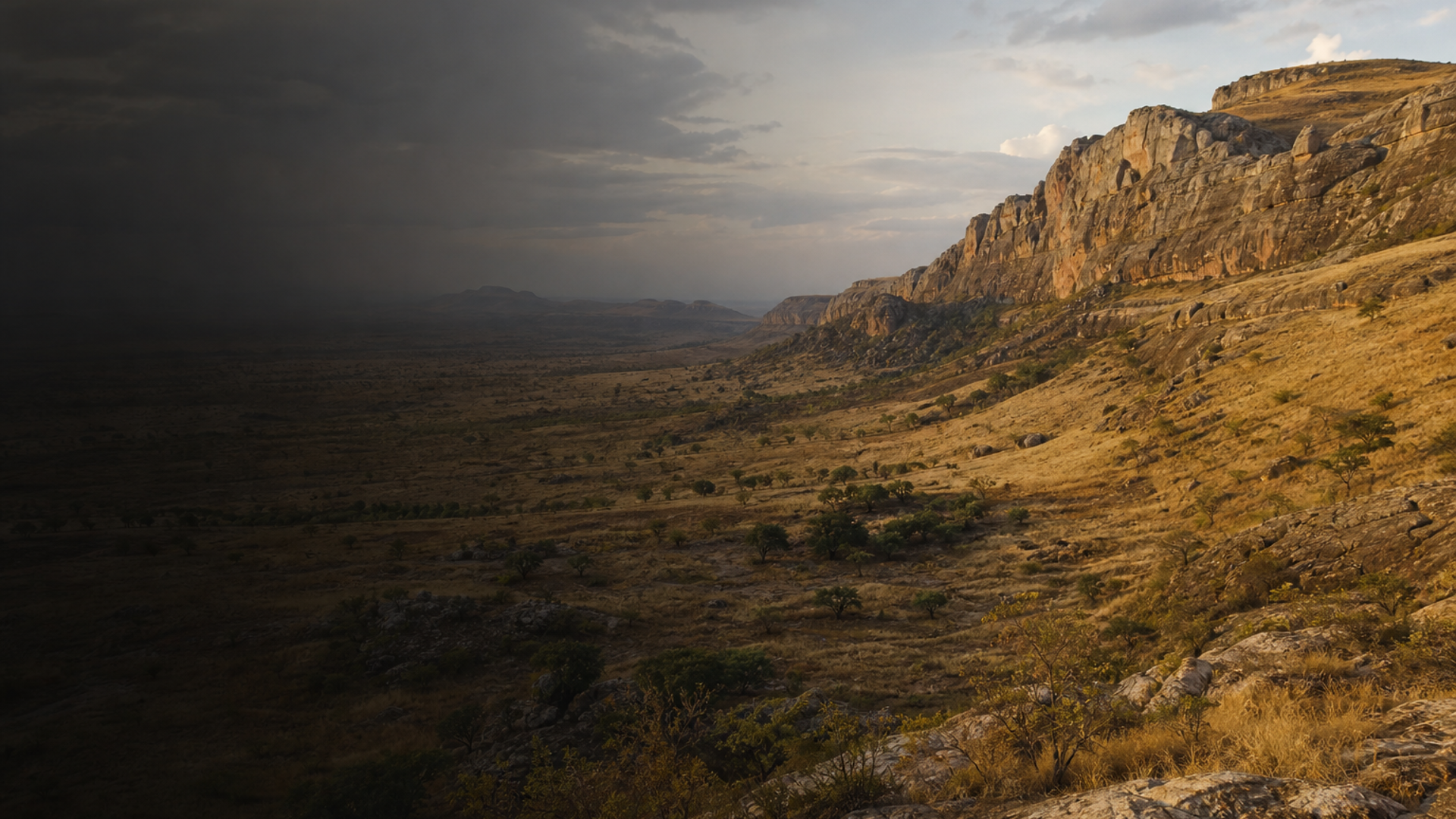
A cinematic glimpse into lives and genomes from Paoua to the national heartland in 2000 CE

2000 CE
Central African Republic (Paoua, national sample)
滚动开始
Chapter I

剧情

了解 Modern Central African Republic – Living Threads 文化

Contemporary samples (n=25) from the Central African Republic capture living genetic diversity around Paoua and beyond. Archaeological context and regional history suggest layered ancestry from Bantu expansions, rainforest hunter-gatherers, and recent mobility—however, dataset limits require cautious interpretation.

Time Period

2000 CE (modern samples)

Region

Central African Republic (Paoua, national sample)

Common Y-DNA

Not reported in dataset; regionally often E1b1a and A/B

Common mtDNA

Not reported in dataset; regional mtDNA L lineages predominate

Chapter II

时间线

这种文化历史上的关键时刻

1960 CE

Independence of the Central African Republic

The CAR gained independence from France on August 13, 1960, a major political turning point affecting migration and administration.

2000 CE

Year of sampling represented in dataset

This collection represents modern samples taken around the year 2000, including material from Paoua and other locations.

2003 CE

Political upheaval and population movement

A coup and ensuing instability in 2003 increased internal displacement and cross-border mobility, processes that affect recent genetic landscapes.

Chapter III

Origins & Emergence

The samples in this collection date to the year 2000 CE and represent living communities within the modern Central African Republic, including a cluster from Paoua (Ouham-Pendé). Archaeological data indicates that the region's deep past was shaped by long-term interactions between rainforest foragers, incoming Bantu-speaking farmers, and Nilotic and Sahelian groups moving along trade and riverine corridors. While material traces of these processes are fragmentary in many parts of the CAR, linguistic and archaeological surveys across Central Africa suggest successive waves of mobility that layered new cultural practices onto older regional lifeways.

In cinematic terms, the landscape carries palimpsests: pottery sherds and ironworking traditions echo past economic shifts; seasonal tracks and market crossroads record more recent mobility. Limited evidence suggests that modern genetic profiles often mirror this mosaic—local genomes preserve signatures of ancient forest-adapted groups alongside markers associated with the widespread Bantu expansion. It is important to stress that the dataset here is contemporary and geographically focused; archaeological continuity can be inferred in broad strokes, but pinpointing direct ancestry to particular prehistoric sites in the CAR requires ancient DNA from dated contexts, which remains scarce.

  • Samples are modern (2000 CE), including specimens from Paoua.
  • Regional history shaped by Bantu expansions, forest foragers, and trans-Sahelian movements.
  • Archaeological continuity is plausible but ancient DNA from CAR is still limited.
Chapter IV

Daily Life & Society

The everyday world reflected by these modern samples is one of diverse subsistence strategies, social networks, and material craft. In and around Paoua, livelihoods blend small-scale agriculture (sorghum, millet, cassava), fishing and seasonal foraging, and participation in regional markets. Ethnolinguistic diversity—Ubangian languages, Sango as a lingua franca, and other local tongues—structures social life and marriage networks, which in turn shape patterns of genetic exchange.

Archaeological surveys in the broader region document pottery traditions, iron tools, and village settlements that offer analogues for recent lifeways; these material traces help ground genetic patterns in tangible behaviors. Oral histories and colonial records further illuminate migrations, slave-era disruptions, and colonial-era labor mobility that have influenced family histories. Importantly, modern social practices—exogamous marriage, seasonal labor migration to larger towns, and cross-border ties—continue to rearrange genetic landscapes, meaning contemporary samples capture a snapshot of ongoing demographic dynamics rather than a static ancestral state.

  • Mixed subsistence: agriculture, fishing, seasonal foraging, and trade.
  • Social networks and mobility (markets, marriage, labor migration) actively shape genetic diversity.
Chapter V

Genetic Profile

The dataset comprises 25 modern samples from the Central African Republic with collection locales including Paoua and unspecified national sites. The sample size and geographic clustering allow for initial observations but limit broad inference across the entire CAR. No specific Y-DNA or mtDNA haplogroup lists were provided with this input; where regional studies exist, central African populations commonly show Y-chromosome lineages such as E1b1a (E-M2) among Bantu-speaking groups and haplogroups A and B among some rainforest forager populations. Mitochondrial DNA in Central Africa is dominated by sub-Saharan L lineages (L0, L1, L2, L3), reflecting deep maternal continuity on the continent.

Genome-wide analyses from neighboring regions indicate admixture between expanding Bantu-speaking farmers and resident hunter-gatherer groups, producing clines of ancestry rather than discrete categories. For the present collection, archaeological context and known historical mobility imply that observed genetic variation likely reflects both older forest and Bantu-linked ancestries plus recent gene flow from Sahelian and coastal routes. Given the modest sample count and modern provenance, conclusions should be framed as preliminary: more extensive, geographically stratified sampling and, ideally, ancient DNA from dated archaeological deposits would be required to resolve timing and magnitude of admixture events with confidence.

  • Dataset: 25 modern samples (including Paoua); geographically focused, so patterns are preliminary.
  • Regional expectations: Y-lineages often include E1b1a (Bantu) and A/B (forager-linked); mtDNA dominated by L haplogroups.
Chapter VI

Legacy & Modern Connections

The living genomes sampled here are threads in an ongoing story: they record centuries of movement, contact, and cultural creativity across the Central African landscape. Archaeological traces—pottery styles, ironworking scars on the earth, and settlement patterns—provide a material backdrop for interpreting genetic signals of admixture and continuity. For citizens and descendants, genetic results can illuminate connections to wider Central African and continental histories but should be presented with care: modern identity is shaped by culture, language, and memory as much as by genes.

Looking forward, integrating more comprehensive DNA sampling with targeted archaeological excavation (especially in under-sampled regions of the CAR) will sharpen our understanding of how past lifeways map onto present-day genomes. Ethical collaboration with local communities and transparent communication about limitations are essential as scientific narratives are woven into living heritages.

  • Modern genomes capture layered ancestry and recent mobility as much as deep history.
  • Future progress depends on more samples, ancient DNA, and community-engaged research.
AI 电源

AI 助手

就 Modern Central African Republic – Living Threads 文化提问

AI 助手 由DNAGENICS公司制作

解锁此特性
Ask questions about the Modern Central African Republic – Living Threads culture. Our AI assistant can explain genetic findings, historical context, archaeological evidence, and modern connections.
AI 样本分析

Modern Central African Republic – Living Threads 文化是人类历史中值得了解的一章……

遗传分析揭示了与早期种群的联系,同时显示了独特的适应和文化创新的证据。 古代DNA样本提供了对迁徙模式、社会结构以及古代种群之间的生物关系的深刻见解。

这是人工智能分析的预览。 解锁全AI 助手, 以探索关于:

  • 遗传组成和祖先
  • 移徙模式和起源
  • 日常生活和文化习俗
  • 现代遗传遗产

探索更古老的文化

揭开古代世界文明的故事

使用优惠码 可减免 35% • 11月12日 到期




