Mycenaean Greece: Palaces & People

下载的 PDF 是图像副本。如需可选中文本及更好的辅助技术支持,请使用打印功能。

Mycenaean Greece: Palaces & People

揭开一个失落的文明

正在加载考古记录……

正在收集古代记录

跳转到主内容
Mycenaean Greece: Palaces & People
文明焦点

Mycenaean Greece: Palaces & People

Bronze Age palaces of the Peloponnese—craft, sea power, and a layered genetic heritage.

1610 CE - 950 BCE
Peloponnese, Greece
滚动开始
Chapter I

剧情

了解 Mycenaean Greece: Palaces & People 文化

Archaeological and ancient DNA evidence from 19 samples (1610–950 BCE) in the Peloponnese reveals the material splendour and genetic diversity of Mycenaean-era communities centered on palaces such as Pylos and regional cemeteries.

Time Period

1610–950 BCE

Region

Peloponnese, Greece

Common Y-DNA

J (detected)

Common mtDNA

X2, J, HV, H7 (observed)

Chapter II

时间线

这种文化历史上的关键时刻

1600 BCE

Rise of palatial centers

Early palaces and fortified centers expand across the Peloponnese; craft production and long-distance trade intensify.

1300 BCE

Pylos at its zenith

The Palace of Nestor flourishes; Linear B tablets record palace administration and resource management.

1200 BCE

Crisis and transformation

Regional destructions and social reorganization around 1200 BCE mark the end of palace dominance across many centers.

Chapter III

Origins & Emergence

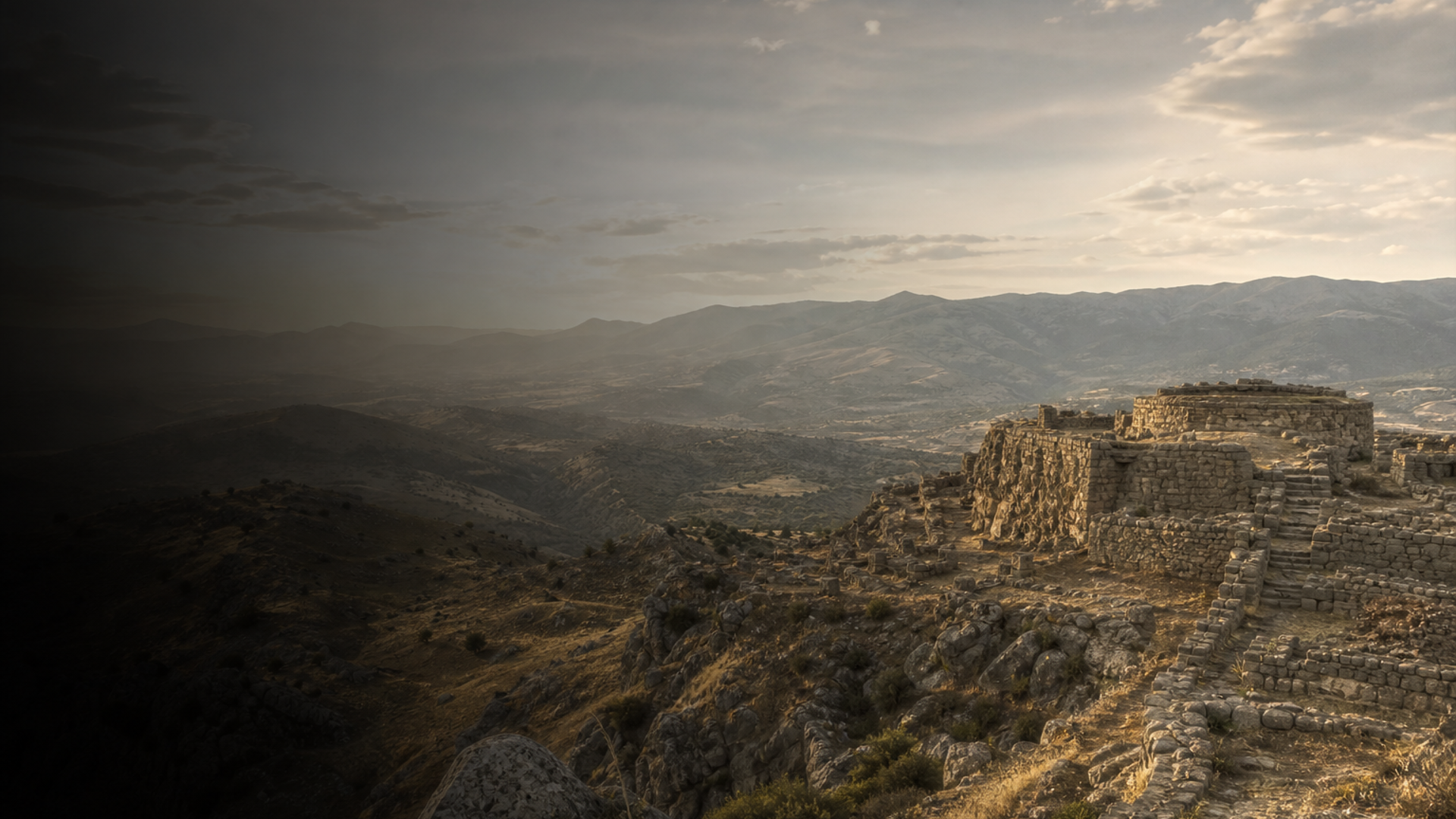
In the twilight glow of Bronze Age courts, the Mycenaean polities rose from older Aegean traditions into a network of fortified palaces and coastal anchors. Archaeological layers and monumental architecture at sites such as Pylos (Palace of Nestor), the cemetery at Peristeria Tryfilia, and settlement traces at Galatas Apatheia and Kolikrepi-Spata show a pulse of intensified craft, long-distance exchange, and administrative complexity beginning in the second millennium BCE. Material culture—fine pottery, bronze weapons, and elite grave goods—speaks to connections across the eastern Mediterranean, while Linear B administrative tablets from Pylos record a palace economy organized around redistributed resources and specialized production.

Genetic data from 19 dated individuals (1610–950 BCE) sampled across the Peloponnese provide a biological dimension to this story. The DNA picture aligns with archaeological expectations of a mixed society: continuity with earlier Neolithic farmers in the region, significant eastern Mediterranean affinities, and detectable strands of Steppe-related ancestry known from wider Bronze Age Europe. Limited sample numbers and uneven spatial coverage mean that population histories remain nuanced and partly unresolved: current genetic data indicate mixtures rather than simple population replacement. Ongoing sampling and direct radiocarbon linkage will continue to refine how migration, trade, and local development combined to shape the emergence of Mycenaean polities.

  • Palatial centers (e.g., Pylos) emerged during the Middle–Late Bronze Age.
  • Archaeology shows craft specialization, elite funerary displays, and long-distance trade.
  • Genetic data reveal mixed ancestry—local Neolithic, eastern Mediterranean, and Steppe-related inputs.
Chapter IV

Daily Life & Society

Life in Mycenaean communities oscillated between palace-led administration and local household production. The palaces functioned as economic hubs: scribes recorded oil, grain, and textiles; workshops produced bronze tools and feasting wares; and coastal harbors connected inland elites to maritime exchange. At Pylos, household and workshop residues, storeroom architecture, and Linear B entries together suggest highly organized food storage and craft distribution under palatial oversight.

Burial practices reveal social gradations. Chamber tombs and tholoi (beehive tombs) near palaces contained richly furnished burials expressing elite status, while simpler shaft graves and rock-cut graves at sites like Peristeria reflect broader community practices. Material traces—weaponry, feasting vessels, sealstones—signal competitive displays of wealth and access to imported raw materials such as amber and metal. Mobility was real but uneven: seafaring traders and mercantile agents linked the Peloponnese to Cyprus, Anatolia, and the Levant, while many households show continuity in local pottery traditions. Archaeobotanical and zooarchaeological remains depict diets rich in barley, wheat, olives, sheep, and goats, punctuated by ritual feasting.

Archaeological data indicate hierarchical social structures mediated by palatial elites, yet the genetic record suggests everyday households included diverse maternal lineages, hinting at local endogamy with occasional external ties—through marriage, travel, or adoption of outsiders into household networks.

  • Palaces organized production, storage, and redistribution; Linear B records reinforce administrative control.
  • Burial variety—from simple graves to monumental tholoi—reflects social differentiation and regional customs.
Chapter V

Genetic Profile

Ancient DNA from 19 individuals dated between 1610 and 950 BCE across the Peloponnese offers a window into Mycenaean biological diversity. Mitochondrial haplogroups observed include X2 (two individuals, including X2d once), J (two), HV (two), and H7 (two), among others—an assemblage that is consistent with broad eastern Mediterranean maternal lineages known from the Bronze Age. On the paternal side, Y-haplogroup J was detected (one sample), a lineage often associated with Near Eastern and eastern Mediterranean connections.

These mitochondrial and Y-chromosome signals should be interpreted in the context of genome-wide ancestry: previous regional studies indicate Mycenaean populations derive largely from local Neolithic farmer ancestry combined with incoming Steppe-related ancestry and sustained eastern Mediterranean gene flow. The Peloponnese samples fit this blended pattern, showing maternal diversity and evidence for external links—consistent with archaeological indicators of trade and mobility. However, 19 samples cover limited temporal and geographic breadth; while informative, they are not sufficient to resolve fine-grained demographic processes such as the tempo of admixture, sex-biased migration, or household-level kinship across all Mycenaean communities.

Caution is warranted: uneven preservation, sampling focused on certain cemeteries and palatial centers, and the small number of assigned Y-lineages mean interpretations of patrilineal continuity or elite lineage structure remain provisional. Future sampling across more sites and chronological intervals will better clarify patterns of migration, marriage networks, and the relationship between genetic ancestry and archaeological status.

  • Mitochondrial diversity (X2, J, HV, H7) points to a mixture of local and eastern Mediterranean maternal lines.
  • Y-haplogroup J appears but few male lineages are sampled—interpretations of patrilineal structure remain preliminary.
Chapter VI

Legacy & Modern Connections

The Mycenaean world cast long shadows: its palaces and myths fed the later Greek poetic imagination, and its administrative innovations presage complex state formation. Genetic continuity between Bronze Age Aegeans and later Greek populations has been suggested by genomic studies, showing that while core ancestry persists, centuries of mobility—classical-era trade, Roman and medieval movements, and Ottoman-era connections—layered additional diversity onto the gene pool.

For modern Greeks, the Mycenaean past is both an archaeological spectacle of monumental architecture and a biologically resonant chapter in deep ancestry. Yet modern identities cannot be reduced to single ancient populations; genetics complements archaeology by highlighting continuity alongside change. Where archaeological landscapes reveal swords, storerooms, and feasting halls, DNA reveals the human stories of migration, marriage, and local continuity that knit communities together over centuries. Continued collaboration between excavators and geneticists will refine how the Palatial age shaped, and was shaped by, networks of human movement across the eastern Mediterranean.

  • Mycenaean cultural motifs influenced later Greek myth, art, and administrative practice.
  • Genetic studies show continuity with later Greeks but also accumulating admixture over millennia.
AI 电源

AI 助手

就 Mycenaean Greece: Palaces & People 文化提问

AI 助手 由DNAGENICS公司制作

解锁此特性
Ask questions about the Mycenaean Greece: Palaces & People culture. Our AI assistant can explain genetic findings, historical context, archaeological evidence, and modern connections.
AI 样本分析

Mycenaean Greece: Palaces & People 文化是人类历史中值得了解的一章……

遗传分析揭示了与早期种群的联系,同时显示了独特的适应和文化创新的证据。 古代DNA样本提供了对迁徙模式、社会结构以及古代种群之间的生物关系的深刻见解。

这是人工智能分析的预览。 解锁全AI 助手, 以探索关于:

  • 遗传组成和祖先
  • 移徙模式和起源
  • 日常生活和文化习俗
  • 现代遗传遗产

探索更古老的文化

揭开古代世界文明的故事

使用优惠码 可减免 35% • 11月12日 到期




