Nazarlebi: Late Bronze Age Echoes

下载的 PDF 是图像副本。如需可选中文本及更好的辅助技术支持,请使用打印功能。

Nazarlebi: Late Bronze Age Echoes

揭开一个失落的文明

正在加载考古记录……

正在收集古代记录

跳转到主内容
Nazarlebi: Late Bronze Age Echoes
文明焦点

Nazarlebi: Late Bronze Age Echoes

Small Kakheti community (1500–1000 BCE) where bones and genes meet

1500 CE - 1000 BCE
Eastern Georgia (Kakheti, Shiraki Plain)
滚动开始
Chapter I

剧情

了解 Nazarlebi: Late Bronze Age Echoes 文化

Archaeological and genetic glimpses from Nazarlebi (Kakheti, Georgia; 1500–1000 BCE). Three samples link burial contexts to paternal IJ/I and maternal K/N lineages—preliminary evidence tying local Late Bronze Age lifeways to broader West Eurasian ancestries.

Time Period

1500–1000 BCE

Region

Eastern Georgia (Kakheti, Shiraki Plain)

Common Y-DNA

IJ (1), I (1)

Common mtDNA

K (2), N (1)

Chapter II

时间线

这种文化历史上的关键时刻

1500 BCE

Late Bronze Age occupation at Nazarlebi

Archaeological traces and human remains at Nazarlebi date broadly to 1500–1000 BCE, marking local participation in regional Bronze Age networks.

Chapter III

Origins & Emergence

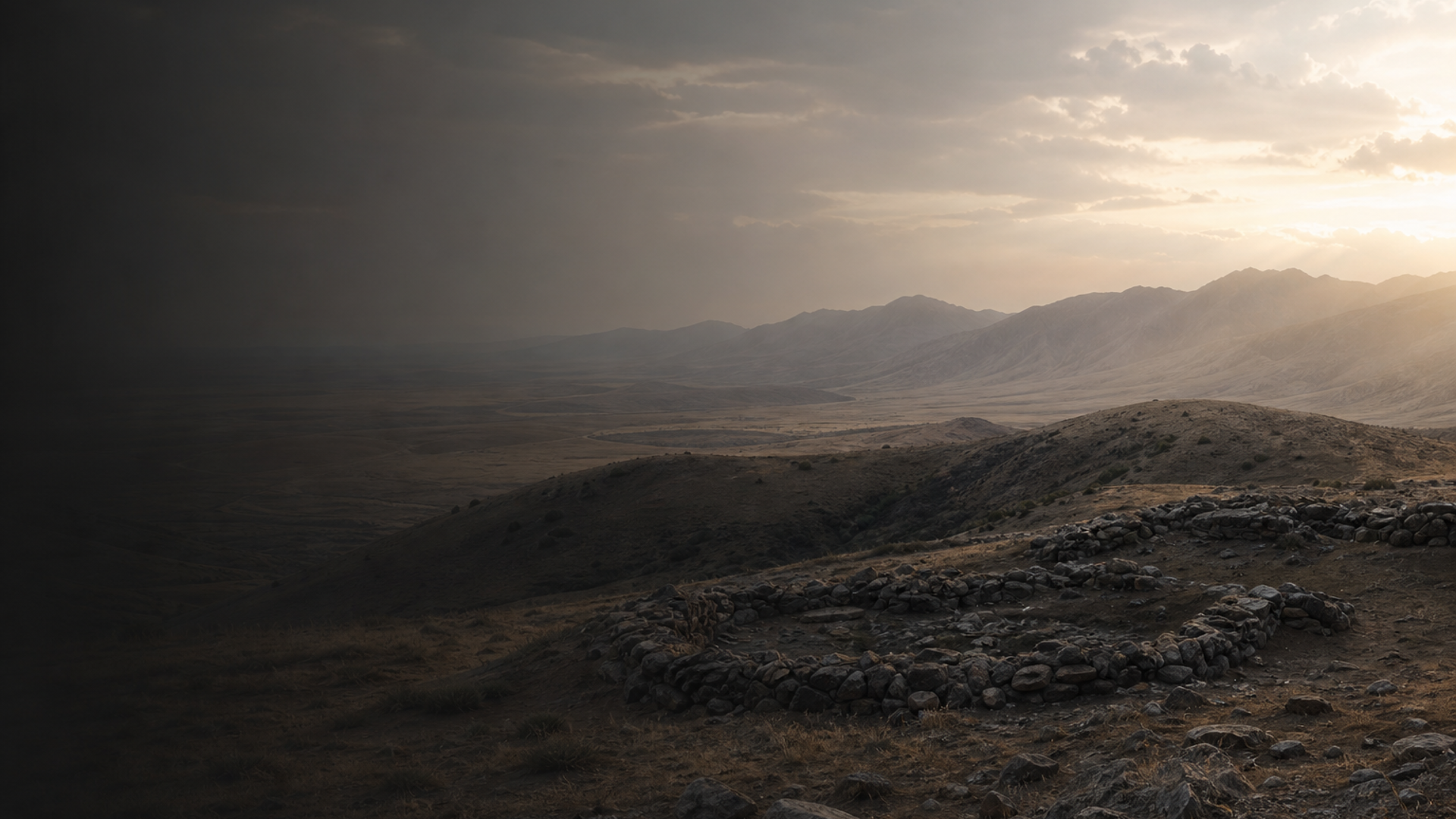
In the shimmering plains of eastern Kakheti, archaeological data indicates a Late Bronze Age presence at Nazarlebi between about 1500 and 1000 BCE. Limited excavations and surface surveys attribute material traces to the Nazarlebi cultural horizon of Georgia — a local expression within the wider tapestry of South Caucasus societies.

Cinematic yet careful, the story here is one of regional continuity mixed with external threads: pottery styles, metallurgical fragments and settlement patterns recoverable in the Shiraki Plain suggest communities rooted in local traditions while also participating in long-distance exchange across the Caucasus corridor. These patterns reflect a landscape where mountain passes and river valleys funneled goods, ideas and people.

Archaeological data indicates that Nazarlebi was not an isolated outpost but part of networks connecting the Georgian interior to Anatolia and the steppe fringe. However, available evidence is sparse and patchy; limited sampling and stratigraphic uncertainties mean that conclusions about the precise origins and timing of cultural change remain provisional. Ongoing fieldwork and additional radiocarbon dates would help anchor the evocative fragments recovered so far.

  • Occupied during the Late Bronze Age, ca. 1500–1000 BCE
  • Located on the Shiraki Plain in Kakheti, eastern Georgia
  • Material culture shows local traditions with external interactions
Chapter IV

Daily Life & Society

Archaeological indicators from the Nazarlebi area paint a portrait of agrarian lifeways shaped by the open plains and seasonal rhythms. Fields on the Shiraki Plain would have supported cereal cultivation and herding; portable artifacts imply craft activities such as copper working and pottery production that sustained household economies.

Burial contexts sampled at Nazarlebi — the source of the three genetic specimens — provide glimpses into social practice: individuals interred with personal items suggest distinct identities and perhaps family-based groups. Yet the record is fragmentary. Limited excavations mean we must avoid grand narratives: existing finds offer tantalizing snapshots rather than a continuous story of social hierarchy or ritual.

Archaeologically, the community appears embedded in exchange networks: exotic raw materials and stylistic elements in material culture imply contacts beyond Kakheti, while everyday objects reflect adaptation to a semi-arid plain environment. The human stories remain partially obscured, inviting careful synthesis of further excavation, paleoenvironmental study and bioarchaeological analysis.

  • Economy likely based on mixed farming and herding on the Shiraki Plain
  • Burials and artifacts suggest household craft and regional exchange
Chapter V

Genetic Profile

Genetic data from Nazarlebi is tantalizing but very limited: three individuals dated to 1500–1000 BCE provide the basis for preliminary inferences. Y-chromosome results include IJ in one sample and I in another; mitochondrial results include haplogroup K in two samples and N in one. These markers are informative at a broad level but cannot by themselves resolve fine-scale ancestry or population dynamics.

Haplogroup IJ is ancestral to branches common across West Eurasia and its presence at Nazarlebi is broadly compatible with paternal lineages seen in the Caucasus and adjacent regions during the Bronze Age. Haplogroup I, often associated with European hunter-gatherer-descended lineages, may reflect local or regional substrate ancestry; however, interpretations must be cautious without autosomal context.

Maternal lineages K and N are deep West Eurasian branches: K is frequently detected in Neolithic and Bronze Age contexts across Europe and the Near East, while N encompasses early Eurasian diversity. Together these mtDNA results hint at genetic continuity and connections with wider West Eurasian pools, but the small sample count (<10) makes all conclusions preliminary. Archaeological correlation, additional genome-wide sequencing and more samples from Kakheti are required to clarify admixture, migration or kinship patterns.

  • Small sample set (n=3) — interpretations are preliminary
  • Y-DNA: IJ and I; mtDNA: K and N — consistent with West Eurasian affinities
Chapter VI

Legacy & Modern Connections

The genetic and archaeological fragments from Nazarlebi add subtle threads to the long human tapestry of eastern Georgia. Limited DNA signals—paternal IJ/I and maternal K/N—resonate with broader West Eurasian patterns documented across the Caucasus and adjoining regions, suggesting enduring connections across millennia.

However, connecting these Late Bronze Age individuals directly to modern Georgian populations demands caution. Genetic continuity is plausible in parts of the Caucasus, but population turnover, migration and local admixture across the Bronze and Iron Ages complicate direct ancestry claims. Nazarlebi’s true contribution is to illuminate local variation: it provides a snapshot that, when joined with future data, will help map the deep roots of communities that still shape the cultural landscape of Kakheti today.

  • Findings hint at long-term West Eurasian connections in eastern Georgia
  • Direct links to modern populations remain uncertain without more data
AI 电源

AI 助手

就 Nazarlebi: Late Bronze Age Echoes 文化提问

AI 助手 由DNAGENICS公司制作

解锁此特性
Ask questions about the Nazarlebi: Late Bronze Age Echoes culture. Our AI assistant can explain genetic findings, historical context, archaeological evidence, and modern connections.
AI 样本分析

Nazarlebi: Late Bronze Age Echoes 文化是人类历史中值得了解的一章……

遗传分析揭示了与早期种群的联系,同时显示了独特的适应和文化创新的证据。 古代DNA样本提供了对迁徙模式、社会结构以及古代种群之间的生物关系的深刻见解。

这是人工智能分析的预览。 解锁全AI 助手, 以探索关于:

  • 遗传组成和祖先
  • 移徙模式和起源
  • 日常生活和文化习俗
  • 现代遗传遗产

探索更古老的文化

揭开古代世界文明的故事

使用优惠码 可减免 35% • 11月12日 到期