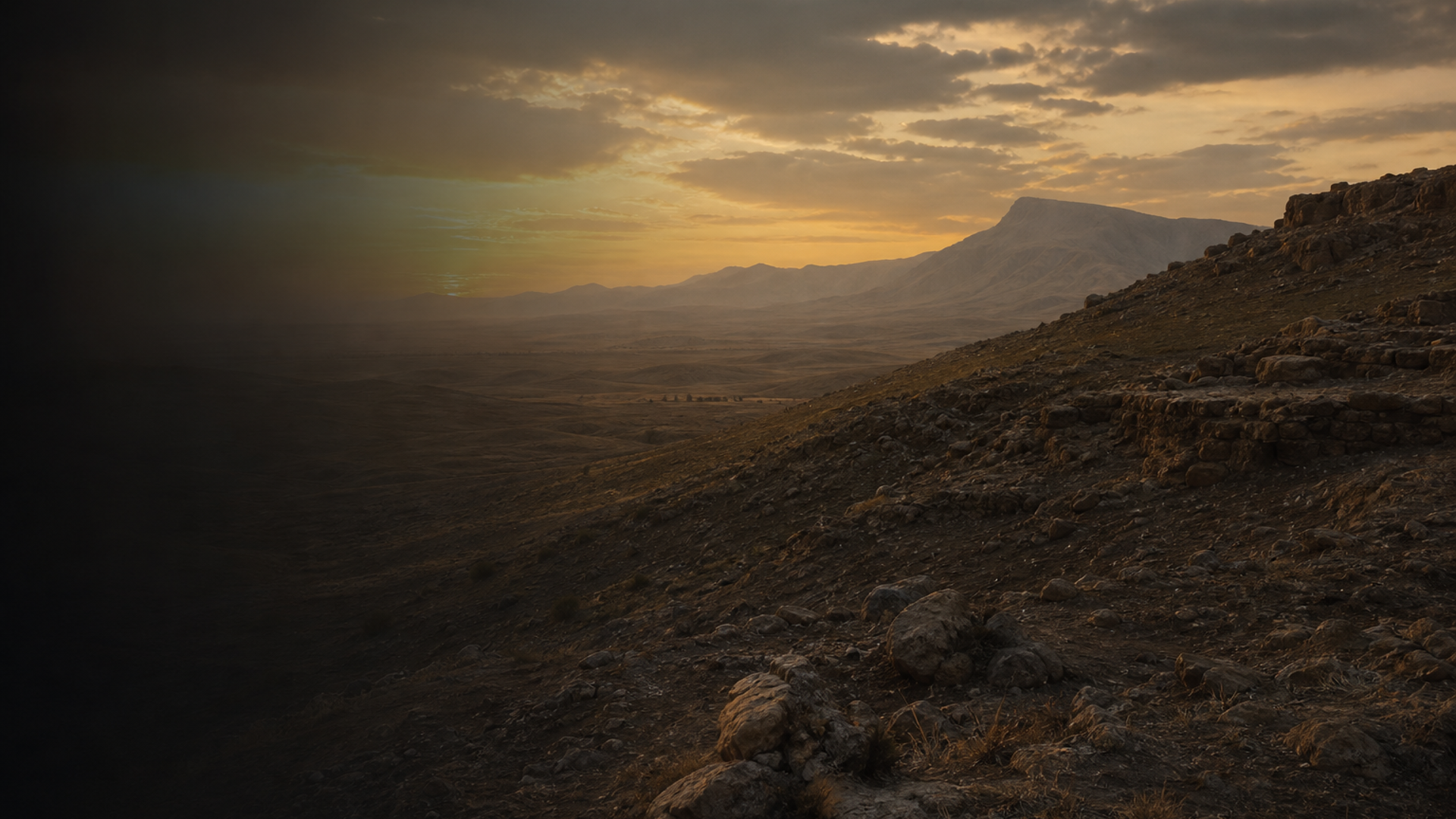
Nemrik Dawn

下载的 PDF 是图像副本。如需可选中文本及更好的辅助技术支持,请使用打印功能。

Nemrik Dawn

揭开一个失落的文明

正在加载考古记录……

正在收集古代记录

跳转到主内容
Nemrik Dawn
文明焦点

Nemrik Dawn

Early Neolithic lives at Nemrik 9, where pottery-free villages met emerging maternal lineages

9500 CE - 1200 BCE
Northern Iraq (Nemrik 9)
滚动开始
Chapter I

剧情

了解 Nemrik Dawn 文化

Archaeogenetic and archaeological data from Nemrik 9 (Iraq) illuminate Pre-Pottery Neolithic life between c. 9500–1200 BCE. Low sample counts (n=5) suggest maternal ties to Near Eastern lineages (HV, J1d, U) but conclusions remain preliminary.

Time Period

9500–1200 BCE (broad range)

Region

Northern Iraq (Nemrik 9)

Common Y-DNA

Not reported / insufficient data

Common mtDNA

HV (2), J1d (1), U (1)

Chapter II

时间线

这种文化历史上的关键时刻

9500 BCE

Early occupation at Nemrik 9

Archaeological levels consistent with Pre-Pottery Neolithic activity at Nemrik 9 begin in the early Holocene, marking early village establishment in northern Mesopotamia.

Chapter III

Origins & Emergence

The people of Nemrik 9 belong to the long arc of the Pre-Pottery Neolithic in northern Mesopotamia—a period when small villages and intensive foraging began to give way to more permanent settlements. Archaeological data indicates occupation levels at Nemrik 9 that reflect repeated seasonal or year-round use, with material culture showing affinities to wider PPNA networks across the Zagros and Levant. Climatic amelioration after the terminal Pleistocene and shifting resources likely encouraged sedentism and new social rhythms: communal hearths, repeated house plans, and focused exploitation of wild cereals and game.

Limited evidence suggests cultural exchange along river corridors and upland routes, connecting Nemrik to contemporaneous sites in the Fertile Crescent. The range of dates associated with the input dataset (9500–1200 BCE) spans a long sequence; however, the archaeological context for the core Neolithic occupation at Nemrik 9 is likely concentrated in the early Holocene (c. 9500–8000 BCE). Chronological mixing and later intrusions can produce wider date ranges in compilations, so careful stratigraphic and radiocarbon correlation remain essential. Genetic data described below provides a maternal snapshot that, when combined with excavation records, helps place Nemrik within the broader story of Neolithic emergence in Mesopotamia.

  • Occupation tied to early Holocene environmental improvement
  • Material culture connects Nemrik to PPNA networks in the Fertile Crescent
  • Broader date range reflects complex stratigraphy and later intrusions
Chapter IV

Daily Life & Society

Archaeological data from Nemrik 9 paints a textured picture of daily life: compact habitations, hearth-focused domestic activities, and a toolkit adapted to a mixed hunting, gathering, and early cultivation economy. Stone tools—microliths and flaked implements—dominated daily tasks, while groundstone fragments indicate processing of plant foods. Faunal remains suggest a reliance on wild ungulates supplemented by smaller game and intensive use of local wetlands and riverine resources.

The absence of pottery (a defining trait of PPNA contexts) did not imply a simple lifestyle; composite technologies, woven materials, and perishable wood and reed constructions likely structured household and community life. Communal behaviors—shared architectural features and repeated deposit patterns—hint at emerging social institutions that organized labor, ritual, and food sharing. Artistic expressions and personal ornaments, when recovered, emphasize identity within and between groups.

Archaeological interpretation must remain cautious: preservation biases mean many organic elements of daily life are invisible. Nevertheless, Nemrik 9 offers a cinematic snapshot of early village life on the northern Mesopotamian landscape—dynamic, adaptive, and in dialogue with neighboring communities.

  • Mixed economy: hunting, gathering, plant processing
  • Domestic life centered on hearths, stone tools, and perishable technologies
Chapter V

Genetic Profile

The available genetic dataset from Nemrik 9 is small (n=5), so conclusions must be framed as preliminary. Maternal lineages recovered include HV (two individuals), J1d (one), and U (one); one sample lacks reported mtDNA or is unassigned in this compilation. These haplogroups are informative in broad strokes: HV and J sublineages are commonly associated with Near Eastern and Mediterranean populations across the Holocene, while U is an older West Eurasian lineage with deep Paleolithic presence in Eurasia.

Two HV individuals could indicate maternal continuity from regional Epipaleolithic or early Neolithic stocks, or they may reflect demographic processes—founder effects, local drift, or small-community dynamics. J1d aligns with lineages known from early farming and pre-farming contexts in the Near East, suggesting links to expanding Neolithic networks. The presence of U, often diverse and ancient, may testify to local continuity or admixture with older regional groups.

Crucially, common Y-DNA haplogroups are not reported for this sample set, leaving paternal history poorly constrained. With only five samples, any population-level inference is tentative: genetic diversity may be under-sampled, temporal mixing could obscure patterns, and later intrusions could distort signals. Future sampling—especially paired nuclear DNA and radiocarbon dated context—will be necessary to resolve paternal lineages, estimate admixture, and test hypotheses about mobility, kinship, and the demographic processes behind Neolithic transformations in northern Iraq.

  • Maternal haplogroups: HV (2), J1d (1), U (1) — small sample, tentative patterns
  • No robust Y-DNA signal reported; paternal history remains uncertain
Chapter VI

Legacy & Modern Connections

The genetic and archaeological echoes of Nemrik 9 reverberate through the millennia. Maternal lineages like HV and J-related clades persist in varying frequencies across West Asia and into Europe, marking threads of continuity and movement that began in the early Holocene. Archaeological practices pioneered in PPNA communities—sedentary villages, intensive resource use, and social innovations—laid foundations for later Neolithic complexity in Mesopotamia.

However, direct lines from Nemrik individuals to contemporary populations should not be overstated. Millennia of migration, admixture, and population turnover have layered multiple ancestries across Iraq and its neighbors. Genetic signals from five individuals offer a valuable but narrow window; they suggest possible regional continuity and participation in broader Near Eastern networks, yet full demographic reconstructions require larger, well-dated samples and genome-wide data. Where DNA and archaeology intersect, the story becomes richer: Nemrik 9 is both a local chapter in human adaptation and part of the broader tale of how communities shaped—and were shaped by—the early Holocene world.

  • Maternal lineages show links to broader Near Eastern genetic landscapes
  • Long-term population continuity is plausible but requires more data to confirm
AI 电源

AI 助手

就 Nemrik Dawn 文化提问

AI 助手 由DNAGENICS公司制作

解锁此特性
Ask questions about the Nemrik Dawn culture. Our AI assistant can explain genetic findings, historical context, archaeological evidence, and modern connections.
AI 样本分析

Nemrik Dawn 文化是人类历史中值得了解的一章……

遗传分析揭示了与早期种群的联系,同时显示了独特的适应和文化创新的证据。 古代DNA样本提供了对迁徙模式、社会结构以及古代种群之间的生物关系的深刻见解。

这是人工智能分析的预览。 解锁全AI 助手, 以探索关于:

  • 遗传组成和祖先
  • 移徙模式和起源
  • 日常生活和文化习俗
  • 现代遗传遗产

探索更古老的文化

揭开古代世界文明的故事

使用优惠码 可减免 35% • 11月12日 到期