Orkney North: Voices from the Banks Tomb

下载的 PDF 是图像副本。如需可选中文本及更好的辅助技术支持,请使用打印功能。

Orkney North: Voices from the Banks Tomb

揭开一个失落的文明

正在加载考古记录……

正在收集古代记录

跳转到主内容
Orkney North: Voices from the Banks Tomb
文明焦点

Orkney North: Voices from the Banks Tomb

Neolithic burials from Orkney (3495–2905 BCE) where archaeology meets ancient DNA

3495 CE - 2905 BCE
Orkney, United Kingdom
滚动开始
Chapter I

剧情

了解 Orkney North: Voices from the Banks Tomb 文化

Six Neolithic individuals from the Banks tomb (Orkney, UK) dated 3495–2905 BCE reveal a predominance of Y-DNA I and mixed maternal lineages (K, U, H). Limited samples make conclusions preliminary; archaeological context and genetics together hint at local male continuity and diverse maternal origins.

Time Period

3495–2905 BCE

Region

Orkney, United Kingdom

Common Y-DNA

I (majority of samples)

Common mtDNA

K, U, H sublineages

Chapter II

时间线

这种文化历史上的关键时刻

3300 BCE

Banks tomb burials (approx.)

Radiocarbon dates place human remains at the Banks tomb within the Neolithic centuries around 3495–2905 BCE, marking communal funerary use.

Chapter III

Origins & Emergence

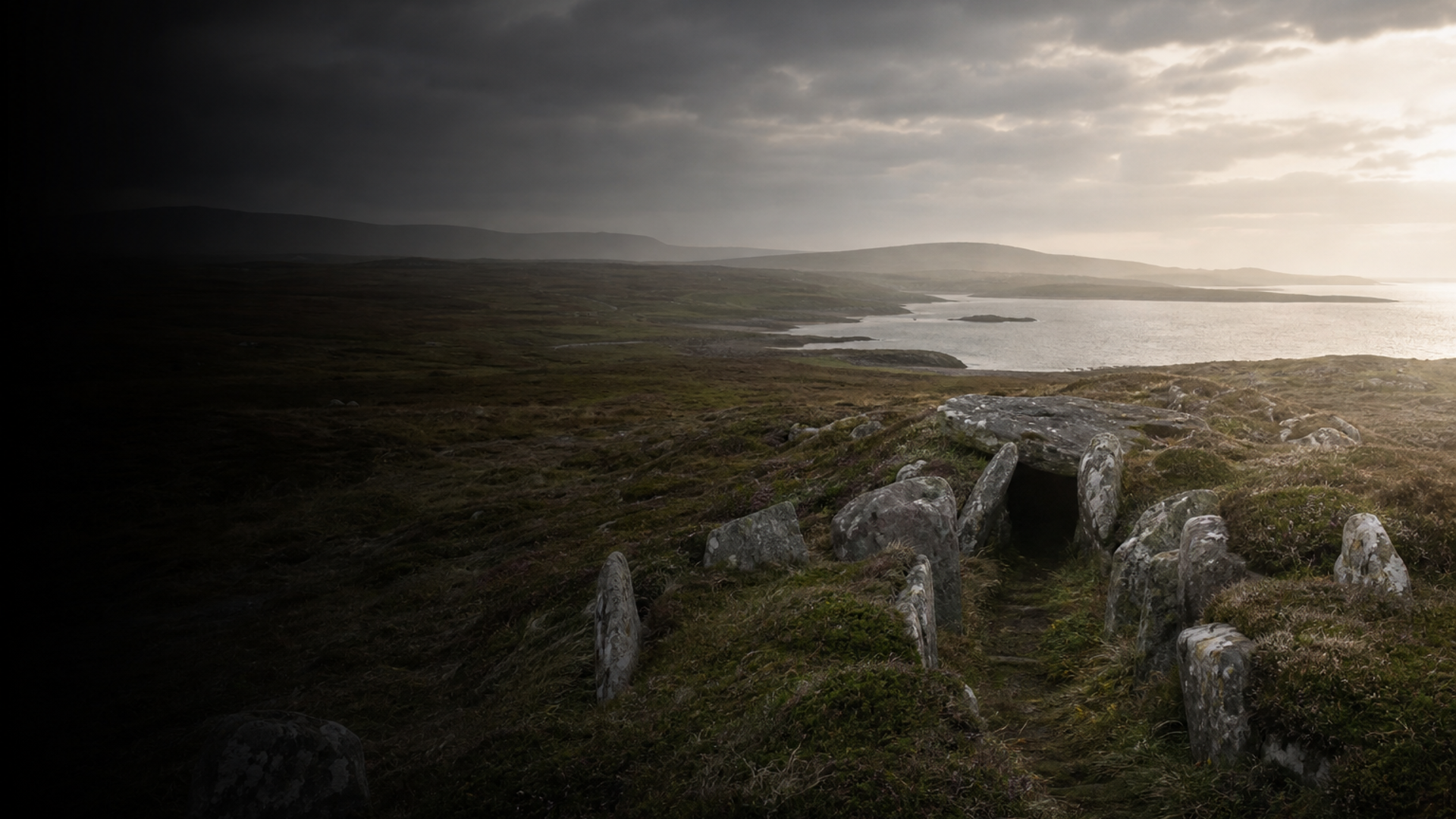
The human story recorded at the Banks tomb unfolds across the cool North Atlantic winds of Neolithic Orkney. Radiocarbon dates for the six sampled individuals fall between 3495 and 2905 BCE, placing them within the island archipelago’s flourishing Neolithic phase, when monumental architecture and intensive coastal resource use reshaped local lifeways. Archaeological data indicates that chambered tombs and communal burial practices were prominent in Orkney; the Banks site is part of this wider landscape of ritual and memory.

Genetic evidence from these six samples suggests a strong continuity in male lineage: five individuals carry Y-DNA haplogroup I. This points to a possible local persistence of male ancestry across generations, consistent with archaeological patterns of inherited land and tombs. Maternal haplogroups are more varied (K, U, H sublineages), suggesting women may have come from heterogeneous maternal backgrounds or reflect broader regional diversity in maternal lines.

Limited evidence and a small sample size require caution. With only six genomes, any model of population movement, kinship system, or demographic change is provisional. Archaeology provides contextual anchors—tomb architecture, artifact distributions, and landscape use—while genetics offers a new axis of evidence. Together they create a more textured, if still tentative, picture of how Neolithic Orkney communities emerged and maintained social ties.

  • Radiocarbon dates: 3495–2905 BCE
  • Banks tomb (Orkney) part of Neolithic mortuary landscape
  • Male-line continuity suggested by Y-DNA I, but sample size is small
Chapter IV

Daily Life & Society

Life in Neolithic Orkney was shaped by the sea, stone, and community rituals. Archaeological remains across the islands show tightly knit settlements, monumental cairns, and material culture adapted to a maritime environment. At the Banks tomb, burial assemblages and the tomb’s setting imply sustained use by a local group whose identity was expressed through shared mortuary space. Tools, pottery fragments, and local lithics from Orkney contexts suggest economies based on mixed farming, coastal foraging, and inter-island exchange.

Social structure may have combined household-based labor with broader communal projects—building and maintaining tombs, managing grazing, and organizing seasonal resources. The genetic signal discussed below (a predominance of Y-DNA I among sampled males) could be consistent with patrilineal inheritance of land or access to tombs, though archaeological evidence for strict patriliny is limited. Funerary deposition in chambered tombs can reflect complex kinship ties, ancestor veneration, and social memory rather than simple lineage charts.

Archaeological interpretation is interpretive: stone monuments freeze certain rituals in the landscape, but they do not record everyday gestures. DNA offers glimpses into biological relationships that, when paired with finds from the Banks tomb and other Orkney sites, help reconstruct a more human portrait of Neolithic lifeways.

  • Economy: mixed farming, marine resources, inter-island exchange
  • Communal monuments and shared tomb use indicate collective identity
Chapter V

Genetic Profile

The genetic snapshot from the Banks tomb is vivid but narrowly lit. Of six analyzed individuals, five carry Y-chromosome haplogroup I — a lineage often associated in northwest Europe with Mesolithic and early Neolithic male ancestry. This predominance suggests a local male-line continuity or a demographic pattern where certain paternal lines were prominent in this burial context. However, with only six male lineage data points, this inference remains provisional.

Mitochondrial DNA among the six individuals is more diverse: two samples with haplogroup K, two with U, one H1, and one H67. Haplogroups K and U appear frequently in Neolithic and earlier European contexts, indicating maternal lineages shared across broader regional networks. The mix of K, U, and H sublineages may reflect female mobility, marriage exchange networks, or simply the retention of multiple maternal lines within a small island community.

When archaeological context is combined with genetics, patterns emerge: repeated use of a tomb by individuals sharing paternal markers could reflect kin-based burial practices, whereas maternal diversity points to wider biological connections beyond the immediate group. Yet, because the sample count is below ten, conclusions about population structure, migration, or kinship systems should be treated as preliminary. Future sampling across Orkney will be essential to confirm whether the Banks pattern is local peculiarity or representative of broader Neolithic dynamics in the Northern Isles.

  • Y-DNA: I in 5 of 6 samples — suggests male-line prominence
  • mtDNA: K, U, H diversity — indicates mixed maternal origins
Chapter VI

Legacy & Modern Connections

The people interred at the Banks tomb contribute a fragile genetic voice to Orkney’s long story. Contemporary inhabitants of Orkney and northern Britain carry complex mixtures of ancestries accumulated over millennia; some components visible in these Neolithic samples (notably Y-DNA I and mtDNA lineages such as K and U) persist in the wider British genetic landscape. Archaeogenetic links provide evocative threads connecting living populations to ancient islanders, but continuity is rarely simple: later migrations, cultural shifts, and demographic changes layered new ancestries onto older ones.

For scholars and museum visitors alike, these six genomes illuminate how archaeology and DNA together can trace aspects of identity, mobility, and social practice. They invite careful, evidence-based storytelling—one that highlights both the power of genetic data and the limits imposed by small sample sizes.

  • Some genetic lineages seen here persist in northern British populations
  • Combined archaeogenetic study enriches narratives but requires more data
AI 电源

AI 助手

就 Orkney North: Voices from the Banks Tomb 文化提问

AI 助手 由DNAGENICS公司制作

解锁此特性
Ask questions about the Orkney North: Voices from the Banks Tomb culture. Our AI assistant can explain genetic findings, historical context, archaeological evidence, and modern connections.
AI 样本分析

Orkney North: Voices from the Banks Tomb 文化是人类历史中值得了解的一章……

遗传分析揭示了与早期种群的联系,同时显示了独特的适应和文化创新的证据。 古代DNA样本提供了对迁徙模式、社会结构以及古代种群之间的生物关系的深刻见解。

这是人工智能分析的预览。 解锁全AI 助手, 以探索关于:

  • 遗传组成和祖先
  • 移徙模式和起源
  • 日常生活和文化习俗
  • 现代遗传遗产

探索更古老的文化

揭开古代世界文明的故事

使用优惠码 可减免 35% • 11月12日 到期




