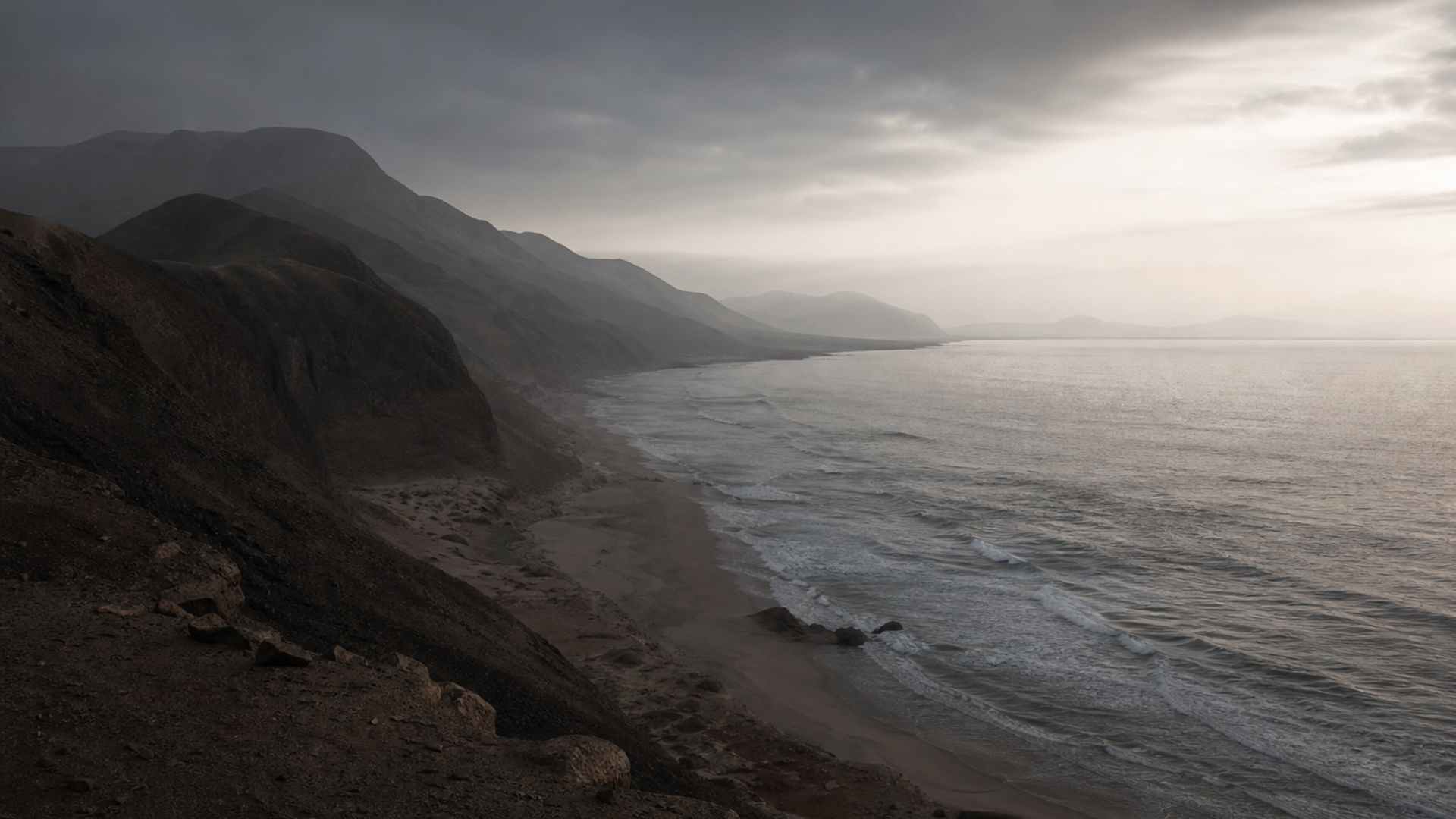
Palimpsest: Modern Peru in DNA and Earth

下载的 PDF 是图像副本。如需可选中文本及更好的辅助技术支持,请使用打印功能。

Palimpsest: Modern Peru in DNA and Earth

揭开一个失落的文明

正在加载考古记录……

正在收集古代记录

跳转到主内容
Palimpsest: Modern Peru in DNA and Earth
文明焦点

Palimpsest: Modern Peru in DNA and Earth

A living landscape where millennia of peoples leave traces in soil, stone, and genomes

2000 CE
Peru (coast, Lima)
滚动开始
Chapter I

剧情

了解 Palimpsest: Modern Peru in DNA and Earth 文化

Modern Peruvian populations (samples dated to 2000 CE, n=93) reflect deep Indigenous roots reshaped by colonial and global migrations. Archaeology from Lima and coastal sites complements DNA evidence to reveal layered ancestry and ongoing cultural continuity.

Time Period

2000 CE (modern)

Region

Peru (coast, Lima)

Common Y-DNA

Not reported / varied in dataset

Common mtDNA

Not reported / varied in dataset

Chapter II

时间线

这种文化历史上的关键时刻

1200 CE

Late pre‑Columbian urban activity in Lima area

Archaeological work documents sustained settlement and ceremonial mounds along the central coast centuries before European contact.

1532 CE

Spanish contact and colonial transformation

The arrival of Spanish forces initiates political, demographic, and economic changes that reshape population structure.

1800 CE

19th-century global migrations

Movements of enslaved Africans and later Asian contract laborers add new genetic and cultural threads to coastal populations.

2000 CE

Modern sample collection

The dataset's 93 modern Peruvian samples were collected around this year, capturing recent demographic histories.

Chapter III

Origins & Emergence

The material and genetic story of Modern Peru is a palimpsest: coastal pre‑Columbian settlements, imperial-era reorganization, colonial upheaval, and global migration all write over one another. Archaeological landmarks in the Lima basin — including Huaca Pucllana and the ritual complex of Pachacamac — testify to continuous occupation of the central coast long before European contact. These sites reveal urban centers, ritual mounds, and midden deposits that document diet, craft, and social hierarchy.

By 2000 CE the individuals sampled for this dataset (n = 93, collected in Lima and other Peruvian localities) lived within a landscape shaped by the Inca imperial networks and four centuries of Spanish colonial rule followed by republican state formation. Archaeological data indicates long-term sedentism and coastal trade, alongside pulses of long‑distance movement. Limited evidence suggests substantial mobility during the 19th and 20th centuries — including migration from Andean highlands to coastal cities and transoceanic flows that brought Asian and African laborers — which are archaeologically visible in urban expansion, cemeteries, and changing material assemblages.

Archaeology therefore frames the genomes: the people represented are modern inheritors of millennia of regional interaction, not direct analogs of any single pre-Columbian population. Where archaeological sequences are rich, they provide context for interpreting genetic signals of continuity and change; where archaeological coverage is thin, conclusions must remain cautious.

  • Dataset represents modern individuals sampled in 2000 CE (n=93)
  • Archaeological continuity in Lima (Huaca Pucllana, Pachacamac) anchors cultural context
  • Multiple migration episodes (pre‑ and post‑contact) shape the modern genetic landscape
Chapter IV

Daily Life & Society

The everyday life evoked by archaeological deposits in Lima and coastal Peru is both familiar and layered with history. Ceramic fragments, food remains, and architectural footprints reveal diets centered on marine resources, maize, and tubers that persisted from pre‑Columbian times into the modern era. Urban archaeology — street plans, domestic compounds, and cemetery sequences — records household composition, craft production, and social networks that undergird city life.

For modern inhabitants sampled in this collection, archaeological traces help reconstruct ancestral lifeways: isotopic studies of coastal skeletons show marine and terrestrial dietary inputs; stratified middens and refuse pits indicate long-term exploitation of coastal fisheries and agriculture; and urban huacas continued to structure neighborhood identities even after Spanish conquest. Socially, archaeological indicators of craft specialization, long‑distance trade goods, and variable burial treatment point to a complex society of farmers, fishermen, merchants, and ritual specialists.

These material patterns intersect with demographic processes visible in DNA. Urban growth and internal migration — especially movements from the Andes to Lima during the 19th and 20th centuries — altered household composition and genetic diversity. Archaeological contexts therefore provide a scaffold for understanding how daily subsistence, migration for work, and urbanization translate into the genetic mosaics seen in modern Peruvian populations.

  • Stable coastal diets evident from middens and isotopes
  • Urban archaeology documents household life and long‑distance trade
Chapter V

Genetic Profile

The genetic portrait of these 93 modern Peruvian samples reflects cumulative demographic history rather than a single origin. Modern populations in coastal Peru typically show a mixture of Indigenous American ancestry with variable contributions from European (largely Iberian) sources after 1532 CE, and additional African and Asian inputs related to slave trade and later migrations. Archaeogenetic studies emphasize that autosomal profiles in modern coastal urban cohorts are heterogeneous: some individuals retain high proportions of Indigenous ancestry, while others show substantial post‑contact admixture.

Because the dataset provided does not list specific Y‑DNA or mtDNA haplogroups, direct haplogroup summaries are not reported here. Instead, the genetic interpretation relies on broad patterns: autosomal analyses capture admixture timing, proportions, and population structure; uniparental markers (when available) can reveal sex‑biased admixture and maternal or paternal continuity. In urban centers like Lima, genetic diversity is increased by internal migration (highland → coast) and by immigrant communities (19th–20th century Chinese and Japanese migrants, and Afro‑Peruvian communities descended from enslaved Africans).

Interpretive cautions: these are modern samples dated to 2000 CE and so reflect recent demographic processes. Coastal sampling biases mean these genomes may underrepresent highland Andean lineages. Genetic inferences must therefore be integrated with archaeological and historical evidence to avoid overgeneralizing from a geographically constrained dataset.

  • Autosomal profiles show Indigenous majority ancestry with variable European, African, and Asian admixture
  • Lack of reported uniparental haplogroups limits detailed Y/mtDNA conclusions
Chapter VI

Legacy & Modern Connections

The legacy of Modern Peru is visible both in stone and in genomes. Archaeology preserves long‑running cultural practices — coastal fishing, craft traditions, ritual sites — that continue to shape identities in Lima today. Genetic data complements this picture by revealing how centuries of contact, forced migration, and voluntary movement transformed population structure.

For users of a DNA ancestry platform, the message is twofold: first, modern Peruvian genomes are mosaics produced by long and recent histories; second, individual ancestry percentages reflect these layered processes and the particular local histories of sampling. Where archaeological coverage is strong, it provides crucial context for interpreting admixture events and the timing of demographic shifts. Where coverage or haplogroup reporting is limited, conclusions should be framed as provisional and targeted for further, geographically broader sampling.

Bridging archaeology and genetics illuminates personal and collective pasts — but it also requires care to avoid deterministic narratives. Material culture, historical records, and genomes together can tell a richer, more accurate story of continuity, resilience, and change.

  • Material culture and genomes together illuminate layered ancestry
  • Modern DNA reflects both ancient continuity and colonial/post‑colonial change
AI 电源

AI 助手

就 Palimpsest: Modern Peru in DNA and Earth 文化提问

AI 助手 由DNAGENICS公司制作

解锁此特性
Ask questions about the Palimpsest: Modern Peru in DNA and Earth culture. Our AI assistant can explain genetic findings, historical context, archaeological evidence, and modern connections.
AI 样本分析

Palimpsest: Modern Peru in DNA and Earth 文化是人类历史中值得了解的一章……

遗传分析揭示了与早期种群的联系,同时显示了独特的适应和文化创新的证据。 古代DNA样本提供了对迁徙模式、社会结构以及古代种群之间的生物关系的深刻见解。

这是人工智能分析的预览。 解锁全AI 助手, 以探索关于:

  • 遗传组成和祖先
  • 移徙模式和起源
  • 日常生活和文化习俗
  • 现代遗传遗产

探索更古老的文化

揭开古代世界文明的故事

使用优惠码 可减免 35% • 11月12日 到期