Parkhai Chalcolithic (Turkmenistan)

下载的 PDF 是图像副本。如需可选中文本及更好的辅助技术支持,请使用打印功能。

Parkhai Chalcolithic (Turkmenistan)

揭开一个失落的文明

正在加载考古记录……

正在收集古代记录

跳转到主内容
Parkhai Chalcolithic (Turkmenistan)
文明焦点

Parkhai Chalcolithic (Turkmenistan)

A fragile glimpse of maternal lineages at Parkhai II, where archaeology meets early DNA

3700 CE - 2907 BCE
Parkhai II, Turkmenistan (Central Asia)
滚动开始
Chapter I

剧情

了解 Parkhai Chalcolithic (Turkmenistan) 文化

Archaeological and ancient-DNA evidence from Parkhai II (3700–2907 BCE) reveals a small Chalcolithic community in Turkmenistan dominated by mtDNA HV and a single mtDNA I. With only four samples, conclusions are preliminary but point to West Eurasian maternal connections.

Time Period

3700–2907 BCE

Region

Parkhai II, Turkmenistan (Central Asia)

Common Y-DNA

Undetermined / not reported

Common mtDNA

HV (3), I (1)

Chapter II

时间线

这种文化历史上的关键时刻

2500 BCE

Active use of Parkhai II cemetery

Burials at Parkhai II dated to the mid-3rd millennium BCE reflect Chalcolithic funerary use and provide the small ancient-DNA sample available today.

Chapter III

Origins & Emergence

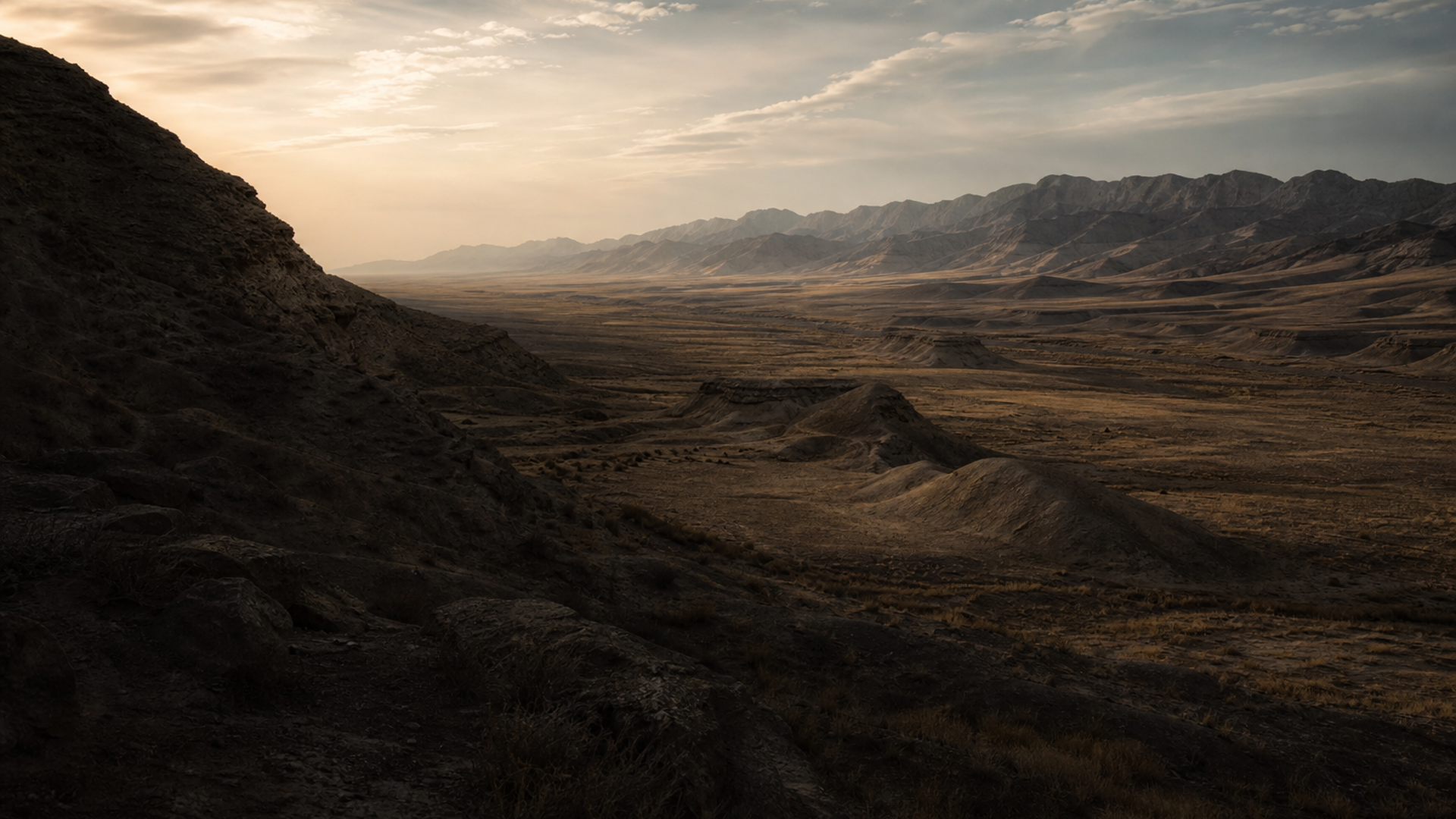
Parkhai II sits like a quiet archive on the eastern edges of the Karakum margins, its burials casting long shadows into the Chalcolithic past. Archaeological data indicates activity at Parkhai II between roughly 3700 and 2907 BCE, a time when small farming and pastoral communities carved livelihoods from steppe-edge environments. Material culture described from the Parkhai horizon — simple ceramics, copper use consistent with Chalcolithic technologies, and burial practices — connects this locale to a wider network of Central Asian Chalcolithic settlements sometimes grouped under the broader Parkhai tradition.

Limited excavations and a sparse set of graves make the archaeological picture fragmentary. Radiocarbon dates from the site provide the temporal frame above, but patterns of migration, trade, and cultural contact remain matters of active research. The cinematic sweep of grasses and salt flats that would have surrounded Parkhai hides a complex interplay of local adaptation and external influence: material echoes of contacts with neighboring lowland and foothill communities are plausible but not yet firmly demonstrated.

Because the genetic dataset from Parkhai II is very small (n=4), any reconstruction of origins must remain cautious. Early DNA hints at West Eurasian maternal connections, but broader inferences about population movements or the arrival of cultural traits require more data.

  • Parkhai II: Chalcolithic site with burials dated 3700–2907 BCE
  • Material culture points to local farming/pastoral economy and copper use
  • Sparse evidence — origins remain provisional and debated
Chapter IV

Daily Life & Society

Archaeological remains at Parkhai II suggest a community shaped by margins — seasonal herding, small-scale cultivation, and connections to regional exchange routes. Pottery fragments and tool forms indicate domestic tasks: cooking, processing plant foods, and working copper for simple ornaments or tools. Burials recovered from Parkhai II are modest: individuals interred with few grave goods, which may indicate egalitarian social structure or limits of preservation.

Environmental reconstructions imply a landscape of mixed steppe and watered belts, where communities exploited both wild resources and cultivated stands. Mobility likely played a role: animal management and the transport of raw materials such as copper could have tied Parkhai households into wider networks. The cinematic image is of low, wind-swept horizons punctuated by small settlements whose rhythms followed seasons and the movement of herds.

Archaeological evidence indicates ritual attention to the dead but does not reveal clear elite markers or monumental architecture. Social complexity at Parkhai II was likely modest, yet connected — not isolated — within Chalcolithic Central Asia.

  • Economy: mixed pastoralism and small-scale cultivation
  • Burials modest; limited grave goods suggest egalitarian structures
Chapter V

Genetic Profile

Ancient DNA from Parkhai II comprises four published mitochondrial genomes: three belong to haplogroup HV and one to haplogroup I. These maternal lineages are informative in broad strokes. Haplogroup HV is a West Eurasian mtDNA clade with deep roots across the Near East and parts of Europe; its presence at Parkhai II suggests maternal connections to a West Eurasian gene pool. MtDNA I is less common but is also distributed across Europe and western Asia, adding a further signal of western affinities.

Crucially, no Y-chromosome haplogroups are reported for these four individuals, so insights about paternal ancestry, male-mediated migration, or kinship patterns at Parkhai remain unresolved. With only four samples, statistical power is very limited — patterns observed may reflect local chance or burial bias rather than population-wide frequencies. Archaeological data indicates these individuals belong to a Chalcolithic Parkhai context, and the maternal signals are broadly consistent with mixtures documented elsewhere in Chalcolithic Central Asia that combine Near Eastern and western Eurasian elements.

Future sampling is needed to test whether mtDNA HV dominance at Parkhai II reflects a genuine demographic pattern, maternal continuity from earlier Neolithic populations, or later movement. For now, genetic conclusions must be framed as preliminary but suggestive of West Eurasian maternal impact.

  • mtDNA: HV dominant (3/4), mtDNA I present (1/4)
  • No Y-DNA reported — paternal lines remain unknown; sample size (n=4) is preliminary
Chapter VI

Legacy & Modern Connections

Parkhai II offers a cinematic, if tentative, bridge between ancient Chalcolithic lifeways and the deep genetic tapestry of Central Asia. The predominance of West Eurasian maternal lineages at this small sample hints that maternal ancestry in this place and time carried echoes from the west — a pattern echoed in other fragments of Chalcolithic Central Asia. However, archaeological data indicates complex local histories and the potential for later admixture, so direct lines to modern Turkmen populations cannot be assumed.

Modern genetic landscapes of Turkmenistan and adjacent regions are the result of many layers of migration, empire, and exchange since the Chalcolithic. Parkhai II contributes a single, evocative chapter to that long story: it shows that early inhabitants carried maternal lineages tied into broader West Eurasian networks. More extensive ancient DNA sampling and careful archaeological synthesis will be required to trace how these threads were woven into later population histories.

  • Suggests West Eurasian maternal influence in early Parkhai communities
  • Direct links to modern populations are uncertain; more sampling needed
AI 电源

AI 助手

就 Parkhai Chalcolithic (Turkmenistan) 文化提问

AI 助手 由DNAGENICS公司制作

解锁此特性
Ask questions about the Parkhai Chalcolithic (Turkmenistan) culture. Our AI assistant can explain genetic findings, historical context, archaeological evidence, and modern connections.
AI 样本分析

Parkhai Chalcolithic (Turkmenistan) 文化是人类历史中值得了解的一章……

遗传分析揭示了与早期种群的联系,同时显示了独特的适应和文化创新的证据。 古代DNA样本提供了对迁徙模式、社会结构以及古代种群之间的生物关系的深刻见解。

这是人工智能分析的预览。 解锁全AI 助手, 以探索关于:

  • 遗传组成和祖先
  • 移徙模式和起源
  • 日常生活和文化习俗
  • 现代遗传遗产

探索更古老的文化

揭开古代世界文明的故事

使用优惠码 可减免 35% • 11月12日 到期