Penghu Neolithic Echoes

下载的 PDF 是图像副本。如需可选中文本及更好的辅助技术支持,请使用打印功能。

Penghu Neolithic Echoes

揭开一个失落的文明

正在加载考古记录……

正在收集古代记录

跳转到主内容
Penghu Neolithic Echoes
文明焦点

Penghu Neolithic Echoes

Two island burials hint at coastal lifeways and mainland ties in the Taiwan Strait

2850 CE - 2350 BCE
Penghu Island (Magong, Suogang), Taiwan Strait, China
滚动开始
Chapter I

剧情

了解 Penghu Neolithic Echoes 文化

Archaeological and genetic evidence from two Late Neolithic individuals (2850–2350 BCE) from Suogang, Penghu Island suggests maritime-adapted coastal communities with Y-DNA haplogroup O. Limited samples mean conclusions are preliminary but evocative of wider island–mainland networks.

Time Period

2850–2350 BCE

Region

Penghu Island (Magong, Suogang), Taiwan Strait, China

Common Y-DNA

O (2)

Common mtDNA

Not reported / undetermined

Chapter II

时间线

这种文化历史上的关键时刻

2500 BCE

Documented occupation at Suogang (approx.)

Two Late Neolithic individuals dated within c. 2850–2350 BCE indicate human presence and maritime connections at Penghu's Suogang site.

Chapter III

Origins & Emergence

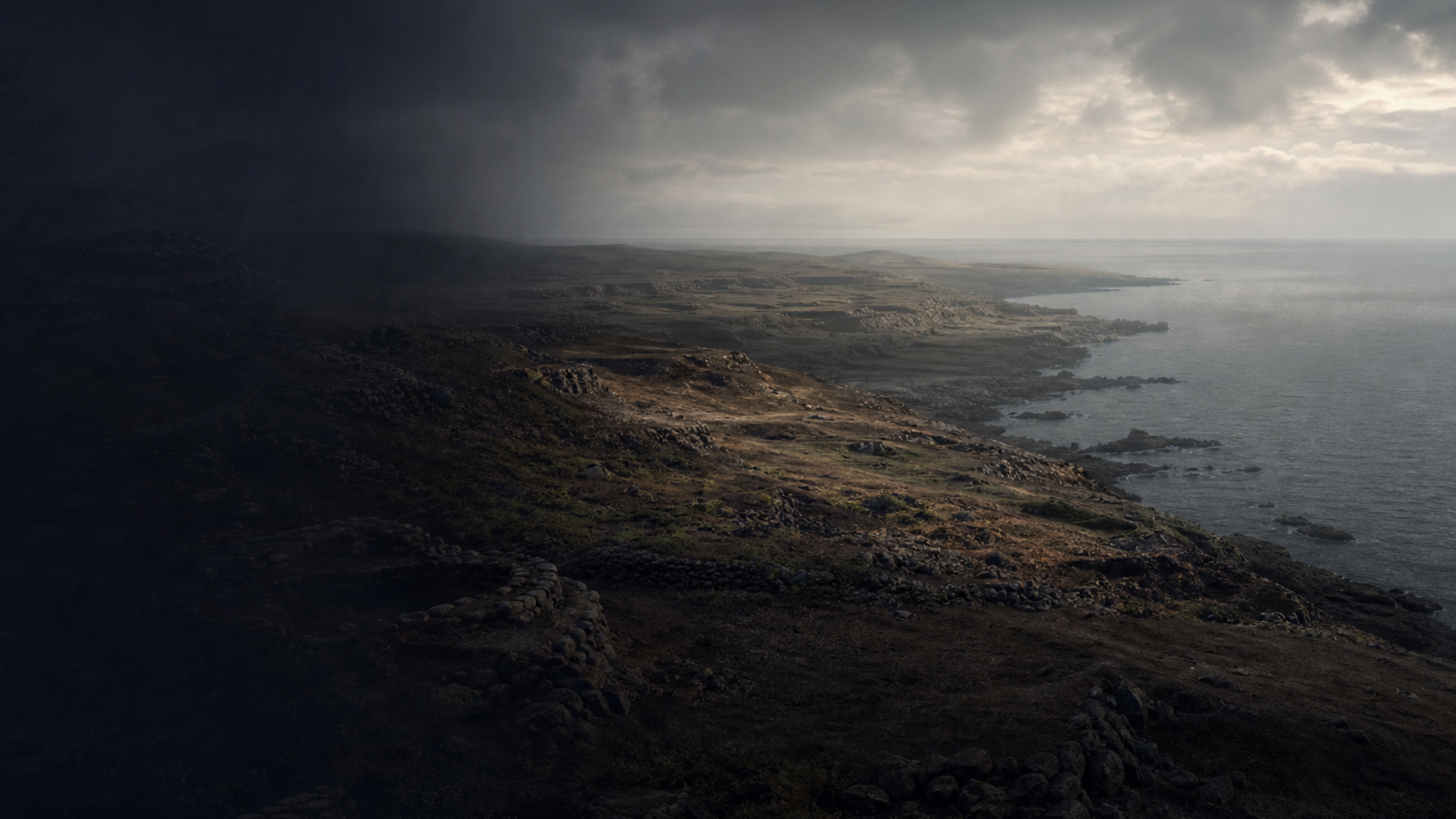
On the wind-swept rim of the Taiwan Strait, archaeological data indicates human presence at Penghu Island during the Late Neolithic (c. 2850–2350 BCE). The site at Suogang, Magong City, occupies a strategic maritime corridor that archaeologists interpret as a place of coastal foraging, seasonal visits, and perhaps incipient settlement. Limited evidence suggests communities here engaged with both the open sea and the mainland: material culture and raw materials point to ties across the islands and onto the Chinese littoral.

Genetic results from two analysed individuals provide a slender but telling thread. Both males carry Y-chromosome haplogroup O, a lineage widespread across East and Southeast Asia today; this is consistent with a deep mainland–island connection. Yet the small sample count (n = 2) makes any sweeping narrative tentative. Archaeological patterns in the region more broadly—coastal middens, shell assemblages, and ceramics in nearby contexts—hint at a lifeway tuned to marine resources and to networks of exchange that knit islands and coasts together.

Taken together, the material and genetic signals paint a scene of an emergent island corridor: people negotiating oceanic space while remaining linked to mainland demography. Further sampling is essential to move from evocative possibility to robust history.

  • Late Neolithic occupation in the Taiwan Strait, c. 2850–2350 BCE
  • Site: Suogang, Magong City, Penghu Island — maritime strategic position
  • Limited sample size means origin hypotheses are preliminary
Chapter IV

Daily Life & Society

The coastal setting of Penghu suggests a world shaped by tides, wind, and the sea's bounty. Archaeological data indicates reliance on marine resources—fish, shellfish and coastal plants—complemented perhaps by seasonal travel to nearby coasts for plant cultivation and trade. Pottery styles in the broader region reflect local innovation alongside influences from neighboring island chains; these stylistic echoes imply movement of people, ideas and goods across water.

Settlement patterns may have been mobile or semi-sedentary, with small groups exploiting shorelines and shallow reefs. Craft specializations such as shell-working, net-making, and small-boat construction are plausible given the environment; limited evidence points to the use of specialized coastal tools and hearth contexts. Social life was likely organized around kin groups with flexible networks of exchange—marriage ties and maritime voyaging would have extended social reach beyond a single island.

Cinematic scenes emerge: dawn light on coral-swept shallows, smoke from simple hearths, and woven nets drying on rocks. Yet these images rest on fragmentary data. The two genetic samples come from a narrow time slice and cannot alone reveal the full social complexity of Penghu communities.

  • Coastal foraging and marine-focused subsistence inferred from regional archaeology
  • Likely small, mobile or semi-sedentary groups connected by maritime exchange
Chapter V

Genetic Profile

The genetic signal from Suogang is concise: both recovered male individuals carry Y-chromosome haplogroup O. Haplogroup O is widespread across East and Southeast Asia today and is often associated with agricultural and coastal populations in late prehistoric contexts. In this Penghu sample, the presence of O suggests continuity or gene flow with mainland East Asian source populations, reinforcing archaeological impressions of island–mainland connectivity.

Crucially, mitochondrial haplogroups were not reported for these two samples, leaving maternal lineages and sex-biased migration patterns unknown. With only two individuals analyzed, population-level inferences are preliminary. Archaeogenetic studies in adjacent regions during the Late Neolithic and the later island Southeast Asian sequence often reveal complex mixtures—local hunter-gatherer ancestry, incoming farmers, and maritime-mediated gene flow—so any single-site finding must be interpreted within that broader tapestry.

Future aDNA from more individuals and from both sexes will be necessary to test whether Penghu communities were genetically continuous with nearby coastal populations, were a contact zone with mixed ancestries, or represented a distinctive island-adapted genetic profile. For now, the Y‑DNA O signal is a compelling hint of mainland ties, not a definitive account.

  • Both male samples carry Y-haplogroup O, suggesting mainland links
  • mtDNA not reported; two samples only — conclusions are highly preliminary
Chapter VI

Legacy & Modern Connections

Penghu's Late Neolithic occupants occupy an evocative middle ground in East Asian prehistory: island dwellers who were not isolated. Archaeological and genetic threads together suggest these people were part of larger maritime and coastal networks that would continue to shape demographics across the Taiwan Strait and into Island Southeast Asia. Modern populations around the strait bear genetic and cultural traces of millennia of movement; the Penghu individuals may represent an early chapter in that long story.

Because the dataset is extremely small, linking these two individuals directly to specific contemporary groups would be speculative. Instead, their value lies in illuminating processes—sea‑borne connectivity, coastal adaptation, and demographic interchange—that underpin later population histories in the region. Each new ancient genome from Penghu and neighboring coasts will sharpen our picture of how island life and mainland connections co-evolved.

  • Suggests early maritime connections that feed into later regional histories
  • Direct links to modern groups remain speculative until larger samples are analysed
AI 电源

AI 助手

就 Penghu Neolithic Echoes 文化提问

AI 助手 由DNAGENICS公司制作

解锁此特性
Ask questions about the Penghu Neolithic Echoes culture. Our AI assistant can explain genetic findings, historical context, archaeological evidence, and modern connections.
AI 样本分析

Penghu Neolithic Echoes 文化是人类历史中值得了解的一章……

遗传分析揭示了与早期种群的联系,同时显示了独特的适应和文化创新的证据。 古代DNA样本提供了对迁徙模式、社会结构以及古代种群之间的生物关系的深刻见解。

这是人工智能分析的预览。 解锁全AI 助手, 以探索关于:

  • 遗传组成和祖先
  • 移徙模式和起源
  • 日常生活和文化习俗
  • 现代遗传遗产

探索更古老的文化

揭开古代世界文明的故事

使用优惠码 可减免 35% • 11月12日 到期