Queensland Coastal Ancestors (Pre‑European)

下载的 PDF 是图像副本。如需可选中文本及更好的辅助技术支持,请使用打印功能。

Queensland Coastal Ancestors (Pre‑European)

揭开一个失落的文明

正在加载考古记录……

正在收集古代记录

跳转到主内容
Queensland Coastal Ancestors (Pre‑European)
文明焦点

Queensland Coastal Ancestors (Pre‑European)

Maritime lifeways of Aboriginal Queenslanders seen through shells, shores and four ancient genomes

410 CE - 1788 CE
Queensland, Australia (Flinders Island; Mapoon)
滚动开始
Chapter I

剧情

了解 Queensland Coastal Ancestors (Pre‑European) 文化

Archaeological evidence from Flinders Island and Mapoon (410–1788 CE) paints a portrait of coastal Aboriginal communities. Four ancient genomes show mtDNA P continuity; limited Y-DNA signals (F, P) are preliminary but link to deep Australo‑Papuan ancestry. More samples needed.

Time Period

410 CE – 1788 CE

Region

Queensland, Australia (Flinders Island; Mapoon)

Common Y-DNA

F, P (each observed once; very small sample)

Common mtDNA

P (observed in all 4 samples)

Chapter II

时间线

这种文化历史上的关键时刻

50000 BCE

Deep ancestral settlement of Sahul

Human groups reach Sahul (Australia–New Guinea landmass), establishing the deep ancestral roots of Aboriginal Australians (approx. 50,000 years ago).

Chapter III

Origins & Emergence

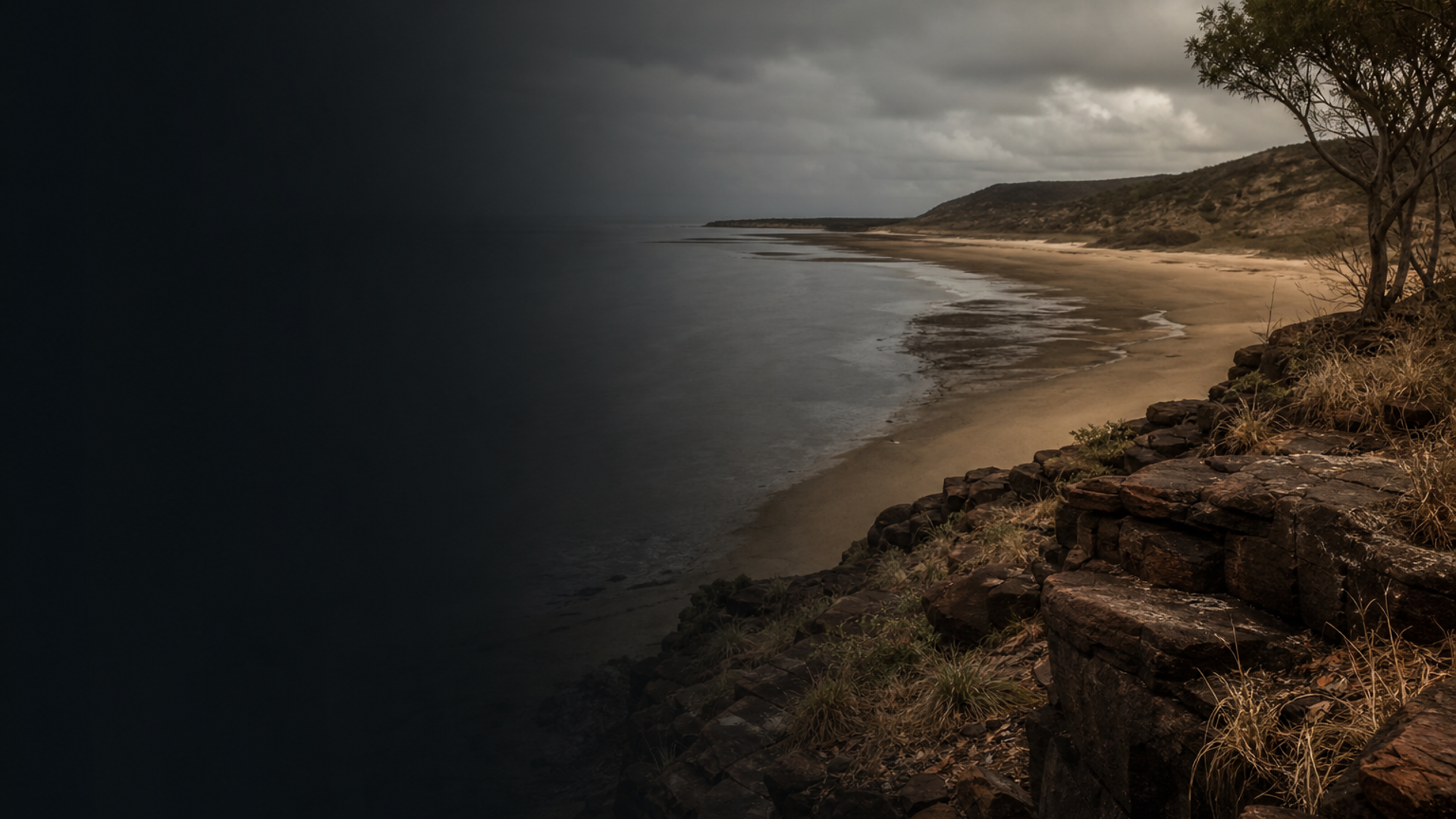
The coastal communities sampled from Flinders Island (Great Barrier Reef Marine Park) and Mapoon (Cape York) represent a late Holocene chapter in a story that stretches back tens of thousands of years. Archaeological data indicates persistent occupation of Queensland coasts by Aboriginal peoples who adapted to reef, estuary and open‑shore environments. Shell middens, stone tools and rock art sequences across northern Australia show long‑term use of marine resources and place these sites within a broader web of coastal mobility and exchange.

These four radiocarbon‑dated individuals fall between 410 CE and 1788 CE — a period of dynamic local lifeways prior to sustained European contact. Limited evidence suggests continuity of maternal lineages (mtDNA P) in this region; however, with only four genomes available, conclusions about population structure, migration, or demographic change remain preliminary. Archaeology provides the cultural texture — seasonal fishing, shellwork and specialized coastal technologies — while ancient DNA offers glimpses of biological continuity and deep connections to Australo‑Papuan ancestry.

  • Samples dated 410–1788 CE from Flinders Island and Mapoon
  • Archaeological indicators: shell middens, coastal lithics, rock art contexts
  • Small sample size limits broad population claims
Chapter IV

Daily Life & Society

Along the Queensland shoreline, lifeways were sculpted by tides and reef channels. Archaeological deposits on islands and peninsulas record repeated visits to productive shellfish beds and fishing grounds; ceremonial sites and pigment‑stained shelters attest to rich symbolic lives. Material traces — shell beads, worked bone and stone tools — reflect specialized technologies for harvesting fish, turtles and molluscs, and for processing marine resources.

Social organization likely centered on family groups with seasonally shifting camps that exploited reef flats in the dry season and sheltered bays in the wet season. Exchange networks connected Cape York and the northern Great Barrier Reef to inland and trans‑coastal partners, carrying goods, songlines and shared stories. While archaeology outlines activity patterns, the four ancient genomes provide only a narrow genetic snapshot; ethnographic continuity and living community knowledge remain essential to reconstructing everyday life.

  • Marine diet and reef specialization evident in midden assemblages
  • Seasonal mobility and exchange networks across Cape York and islands
Chapter V

Genetic Profile

Genetic data from the four individuals yields a consistent maternal signal: all four carry mitochondrial haplogroup P. Haplogroup P is a lineage known among Australo‑Papuan populations and its presence here supports archaeological indications of deep maternal continuity in northern Australia. On the paternal side, two different Y‑chromosome markers were observed in the small male subset: one individual with haplogroup F and one with haplogroup P. Both Y‑lineages are broadly ancient; haplogroup P (Y) is a deep branch in the region and haplogroup F is widespread in many non‑European contexts.

These findings must be read with caution. With only four genomes (and only two males represented by Y‑DNA), statistical confidence is low and the observed frequencies may not reflect broader population variation. Archaeological context strengthens interpretation: continuity of mtDNA P alongside coastal cultural markers suggests maternal line stability, while the limited paternal signal hints at more complex male lineages that larger sample sets could clarify. Future work comparing these genomes to modern Aboriginal Queenslanders and regional ancient samples will be necessary to map continuity, admixture, and demographic events.

  • mtDNA P in all 4 samples suggests maternal continuity with Australo‑Papuan lineages
  • Y‑DNA signals (F, P) seen in single individuals; sample size too small for firm inferences
Chapter VI

Legacy & Modern Connections

These ancient genomes shine a scientific light on enduring links between ancestors and contemporary Aboriginal communities of Queensland. Archaeological continuity — of coastal practices, material culture, and place names — often resonates with living oral histories and custodial traditions. Genetic results here tentatively support long‑term maternal continuity in the region, but the small sample size means biological narratives must be integrated with cultural, linguistic and community knowledge.

Respectful future research will prioritize collaboration with Traditional Owners of Flinders Island, Mapoon and surrounding areas, ensuring that archaeological and genetic interpretations honor local sovereignty and knowledge. Expanded sampling, when ethically approved and community‑led, will help reveal the deeper demographic rhythms of Queensland’s coastal peoples without replacing the rich cultural record that persists today.

  • Tentative genetic continuity complements living cultural traditions
  • Community collaboration and expanded, ethical sampling are essential
AI 电源

AI 助手

就 Queensland Coastal Ancestors (Pre‑European) 文化提问

AI 助手 由DNAGENICS公司制作

解锁此特性
Ask questions about the Queensland Coastal Ancestors (Pre‑European) culture. Our AI assistant can explain genetic findings, historical context, archaeological evidence, and modern connections.
AI 样本分析

Queensland Coastal Ancestors (Pre‑European) 文化是人类历史中值得了解的一章……

遗传分析揭示了与早期种群的联系,同时显示了独特的适应和文化创新的证据。 古代DNA样本提供了对迁徙模式、社会结构以及古代种群之间的生物关系的深刻见解。

这是人工智能分析的预览。 解锁全AI 助手, 以探索关于:

  • 遗传组成和祖先
  • 移徙模式和起源
  • 日常生活和文化习俗
  • 现代遗传遗产

探索更古老的文化

揭开古代世界文明的故事

使用优惠码 可减免 35% • 11月12日 到期




