Queensland Pre‑European Coastlines

下载的 PDF 是图像副本。如需可选中文本及更好的辅助技术支持,请使用打印功能。

Queensland Pre‑European Coastlines

揭开一个失落的文明

正在加载考古记录……

正在收集古代记录

跳转到主内容
Queensland Pre‑European Coastlines
文明焦点

Queensland Pre‑European Coastlines

Coastal lifeways and deep maternal continuity on Flinders Island and Cape York

410 CE - 1788 CE
Queensland, Australia (Flinders Is., Mapoon)
滚动开始
Chapter I

剧情

了解 Queensland Pre‑European Coastlines 文化

Archaeological and genetic glimpses from Flinders Island and Mapoon (410–1788 CE) reveal coastal traditions and a strong mtDNA P signal. With only four samples, conclusions are preliminary but suggest maternal continuity and links to broader Aboriginal Australian lineages.

Time Period

410 CE – 1788 CE

Region

Queensland, Australia (Flinders Is., Mapoon)

Common Y-DNA

F (1), P (1)

Common mtDNA

P (4)

Chapter II

时间线

这种文化历史上的关键时刻

50000 BCE

Initial peopling of Sahul

Archaeological and genetic evidence indicate the first human colonization of Sahul (Australia–New Guinea) in the Late Pleistocene, creating deep ancestry for later Queensland populations.

Chapter III

Origins & Emergence

A vast coastline of mangroves, reefs and tidal flats frames the human story of Queensland’s pre‑European era. Archaeological deposits at places such as Flinders Island (Great Barrier Reef Marine Park) and coastal Cape York localities near Mapoon preserve shell middens, fish bone concentrations and hearths that attest to long‑standing marine adaptation. Radiocarbon dates for the samples discussed here span 410 CE to the eve of sustained European colonisation in 1788 CE, situating them in the late Holocene cultural landscapes of northern Australia.

These communities are part of the broader Aboriginal Australians of Queensland cultural tradition, which emerged from the deep peopling of Sahul (the Pleistocene landmass joining Australia and New Guinea). Limited evidence suggests strong local continuity: the repeated presence of maternal lineage mtDNA P across four samples points to enduring maternal ancestries in these coastal populations. However, only four genetic samples underpin these observations, so interpretations about population movement, contact, or replacement must remain tentative.

Archaeological data indicates sophisticated coastal economies—seasonal movement between islands and mainland, specialized fishing and shellfish gathering, and landscape knowledge encoded in stone arrangement, camp placement and oral geographies. When paired with genetic data, these material traces begin to outline kinship networks that sustained communities along Queensland’s seaboard for centuries.

  • Late Holocene coastal occupation documented at Flinders Island and Mapoon
  • Maternal continuity suggested by pervasive mtDNA P (preliminary)
  • Small sample size requires cautious interpretation
Chapter IV

Daily Life & Society

Daily life on Queensland’s coasts unfolded at the rhythm of tides, seasonal fish runs and the flowering of inland plants. Archaeological sites preserve shell middens—piled shells, fish vertebrae and cooking stones—that map repeated camp locations and resource use. Stone tools, grindstones and bone implements recovered from coastal deposits and nearby rock shelters indicate a broad toolkit suited to fishing, processing plant foods and making items for trade or ceremony.

Communities likely practised fine‑grained seasonal mobility: moving between reef islands like Flinders Island and mainland locales such as Mapoon to exploit different resource pulses. Social life would have been organized around kin groups, with strong emphasis on intergenerational knowledge transmission—navigational lore, shellfish ecology, fire management and ceremonial cycles. Archaeological traces hint at long relationships with particular coastal places, but the fragmentary nature of surface deposits and the limited genomic sample set mean that many social details remain archaeologically and genetically unresolved.

  • Shell middens and tool assemblages reflect marine-focused subsistence
  • Seasonal island–mainland mobility likely structured community life
Chapter V

Genetic Profile

Four ancient genomes recovered from Flinders Island and Mapoon date between 410 CE and 1788 CE. All four carry mitochondrial haplogroup P, a lineage found among Indigenous Australians and some neighbouring Papuan groups, suggesting strong maternal continuity in this coastal region during the late Holocene. On the paternal side, the tiny sample includes one individual assigned to Y‑haplogroup F and one to Y‑haplogroup P. Both Y lineages are phylogenetically deep and broadly distributed in Oceania and parts of South and Southeast Asia, but the observed counts here (F:1, P:1) are too small to infer population structure or sex‑biased processes with confidence.

Archaeogenetic interpretation must stress the preliminary nature of these results. With fewer than ten samples, apparent patterns (for example, universal mtDNA P) could reflect sampling bias, kin groups buried in the same place, or true regional continuity. When combined with archaeology—the continuity of coastal sites and the persistence of technological strategies—the genetics point toward long‑term local ancestry, but they do not yet resolve questions of interregional contact, migration timing, or fine‑scale social organization.

Future sampling across additional sites in Queensland and integration with ancient and present‑day genomes will be essential to test whether mtDNA P dominance here reflects widespread maternal continuity, local endogamy, or other demographic processes.

  • All four samples carry mtDNA haplogroup P — suggests maternal continuity
  • Y lineages F and P each observed once; sample size too small for broader claims
Chapter VI

Legacy & Modern Connections

These archaeological and genetic glimpses animate long connections between people and place on Queensland’s coasts. Maternal continuity signalled by mtDNA P complements cultural continuity in coastal technologies, place names and oral histories still maintained by Aboriginal communities. The genetic data, while limited, helps anchor local histories within a larger story of Aboriginal Australian persistence before and after first sustained European contact in 1788 CE.

Respectful collaboration with local Traditional Owners, continued archaeological stewardship of coastal sites, and careful expansion of sampling are crucial to deepen understanding. Each additional sample will help transform preliminary patterns into robust narratives that connect ancient genomes to living communities and their enduring cultural landscapes.
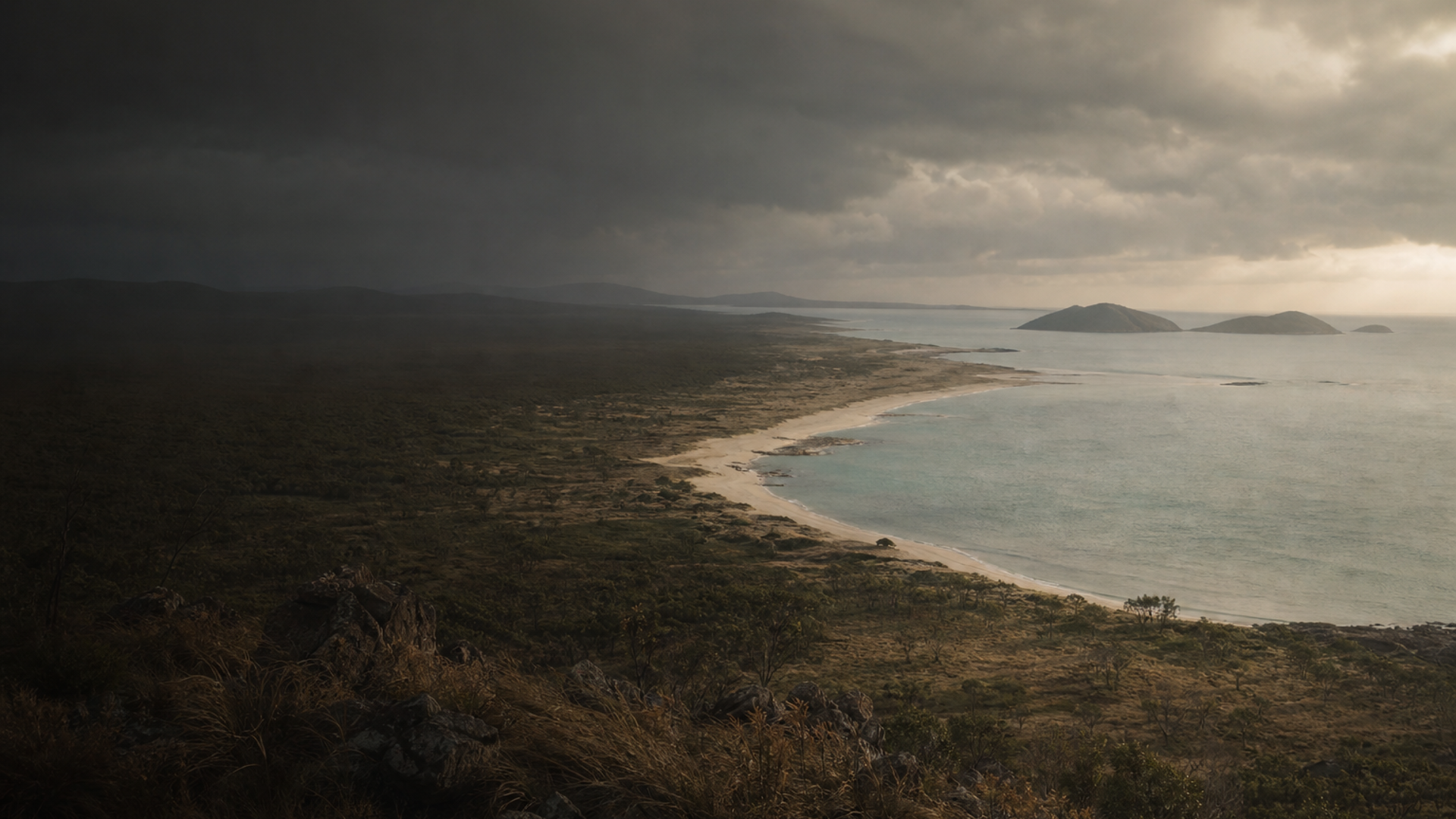
  • mtDNA continuity resonates with living Aboriginal connections to place
  • Expanded, collaborative sampling is needed to strengthen genetic inferences
AI 电源

AI 助手

就 Queensland Pre‑European Coastlines 文化提问

AI 助手 由DNAGENICS公司制作

解锁此特性
Ask questions about the Queensland Pre‑European Coastlines culture. Our AI assistant can explain genetic findings, historical context, archaeological evidence, and modern connections.

AI 样本分析

Queensland Pre‑European Coastlines 文化是人类历史中值得了解的一章……

遗传分析揭示了与早期种群的联系,同时显示了独特的适应和文化创新的证据。 古代DNA样本提供了对迁徙模式、社会结构以及古代种群之间的生物关系的深刻见解。

这是人工智能分析的预览。 解锁全AI 助手, 以探索关于:

  • 遗传组成和祖先
  • 移徙模式和起源
  • 日常生活和文化习俗
  • 现代遗传遗产

探索更古老的文化

揭开古代世界文明的故事

使用优惠码 可减免 35% • 11月12日 到期




