Salt & Silk: Tylos under Sasanian Rule

下载的 PDF 是图像副本。如需可选中文本及更好的辅助技术支持,请使用打印功能。

Salt & Silk: Tylos under Sasanian Rule

揭开一个失落的文明

正在加载考古记录……

正在收集古代记录

跳转到主内容
Salt & Silk: Tylos under Sasanian Rule
文明焦点

Salt & Silk: Tylos under Sasanian Rule

Three ancient genomes from Madinat Hamad illuminate Bahrain’s Late Tylos world

300 CE - 647 CE
Bahrain (Madinat Hamad, Northern Governorate)
滚动开始
Chapter I

剧情

了解 Salt & Silk: Tylos under Sasanian Rule 文化

Ancient DNA from three individuals (c. 300–647 CE) at Madinat Hamad, Bahrain, links Late Tylos island life to broader Persian Gulf networks. mtDNA (R2, T2b, U) suggests a mix of South/Central and West Eurasian maternal ancestry. Conclusions are preliminary (n=3).

Time Period

c. 300–647 CE

Region

Bahrain (Madinat Hamad, Northern Governorate)

Common Y-DNA

Undetermined (no common Y profiles reported)

Common mtDNA

R2 (1), T2b (1), U (1)

Chapter II

时间线

这种文化历史上的关键时刻

300 CE

Late Tylos/Sasanian integration

Madinat Hamad occupied during intensifying Sasanian influence in the Persian Gulf (archaeological evidence of trade and administrative ties).

647 CE

End of sample range / Early Islamic expansions

The latest sampled individuals date to c. 647 CE, a horizon near early Islamic transformations across the Gulf region.

Chapter III

Origins & Emergence

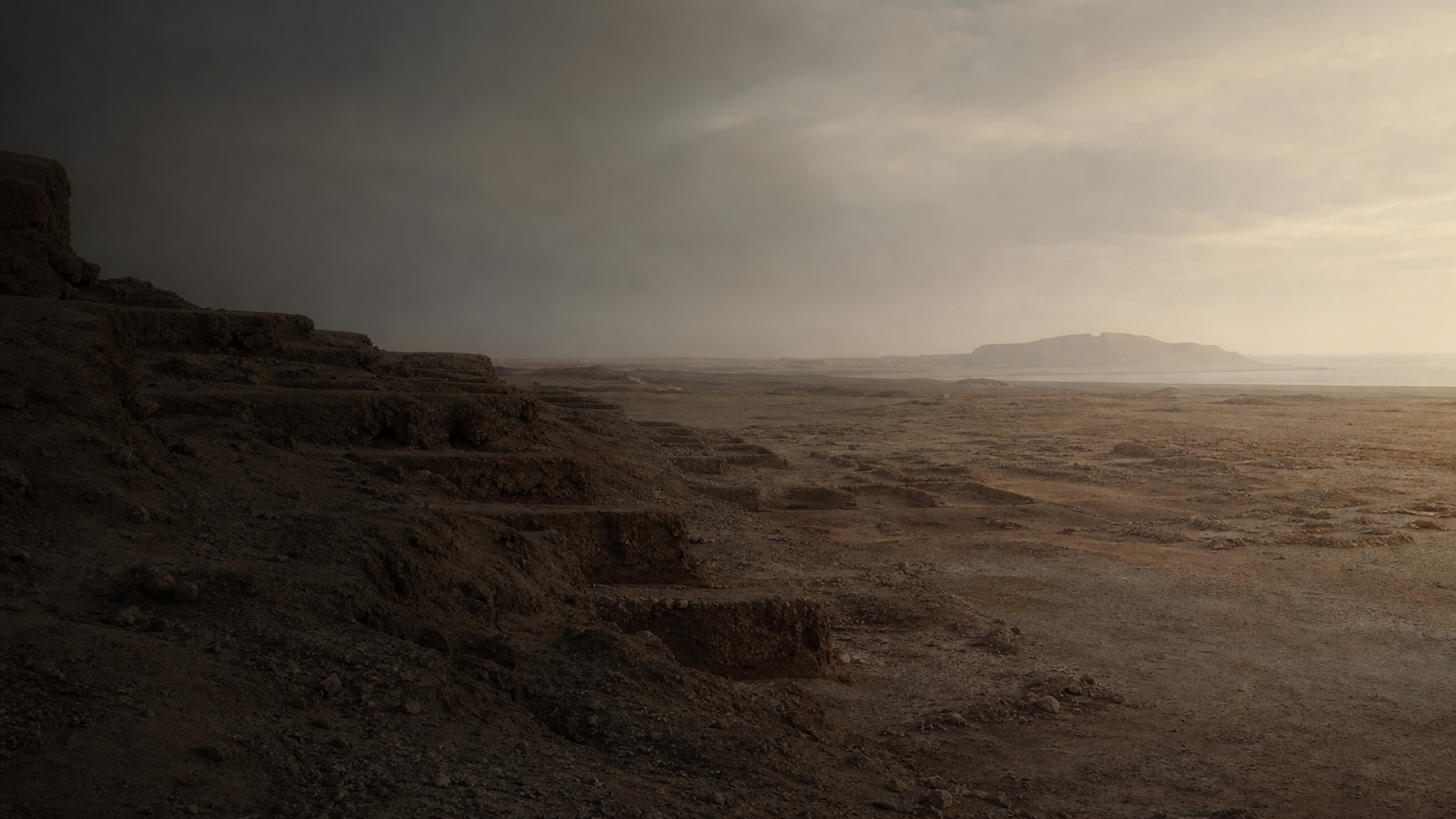
Madinat Hamad sits on the northern edge of Bahrain, an island long known in antiquity as Tylos. By the third century CE the region was woven into the geopolitical tapestry of Late Antiquity: local elites operated in a maritime landscape shaped by trade with the Arabian Peninsula, the Persian mainland, and the wider Indian Ocean world. Archaeological layers dated to the Late Tylos and Sasanian period show imported ceramics, coinage styles aligned with Sasanian administration (c. 224–651 CE), and settlement patterns that emphasize coastal trade hubs rather than large, inland agricultural estates.

The three individuals sampled from Madinat Hamad date between c. 300 and 647 CE, a span that brackets intensified Sasanian influence in the Persian Gulf and the era immediately preceding the early Islamic expansions in the mid‑7th century. Material culture—harbor installations, imported amphorae, and locally produced glazed ware—indicates active long‑distance connections. Limited evidence suggests these people lived in a cosmopolitan maritime community where local Arabian traditions met Persian administrative and mercantile frameworks.

Because the genetic sample is small (n=3), the genetic portrait is necessarily provisional. Archaeological data indicates continuity of coastal occupation and integration into Gulf trade routes, and the ancient DNA provides a first, cautious glimpse of maternal ancestries present in Late Tylos society.

  • Madinat Hamad: northern Bahrain, important Late Tylos habitation site
  • Period aligns with Sasanian imperial influence (c. 224–651 CE)
  • Archaeological evidence shows strong maritime trade connections
Chapter IV

Daily Life & Society

Life in Late Tylos would have been shaped by salt‑touched winds, bustling docks, and a mosaic of languages and goods. Excavations around Madinat Hamad reveal domestic compounds, pottery kilns, fish processing installations, and imported trade ceramics—signs of both local production and active exchange. Residents likely engaged in fishing, pearl diving, small‑scale agriculture where freshwater allowed, and mercantile activities tied to the Persian Gulf’s seasonal and long‑distance networks.

Burial customs from the era show regional variability: tomb forms and grave goods at some sites reflect local Arabian and Gulf traditions, while other burials contain imported artifacts suggesting status ties to wider Sasanian or Indian Ocean contacts. Numismatic remains and seal impressions attest to economic integration with Sasanian administrative systems and commercial actors who traversed the Gulf.

Social life in Tylos was probably stratified yet fluid—maritime economies create opportunities for mobility and mixed households. Archaeological indicators point to a society adept at navigating maritime routes and cultural frontiers. However, the picture remains incomplete: settlement surveys are uneven, and the small aDNA sample from Madinat Hamad provides just a narrow window into the island’s demography and social complexity.

  • Economy: fishing, pearling, local crafts, and maritime trade
  • Burials and artifacts reflect both local traditions and external contacts
Chapter V

Genetic Profile

Genome analysis of three individuals from Madinat Hamad (c. 300–647 CE) recovered mitochondrial haplotypes R2, T2b, and U. Each mtDNA lineage offers a different geographic resonance: R2 is today most frequent in South and Central Asia, T2b is a branch widespread in West Eurasia and often linked to Neolithic and later movements, and haplogroup U is diverse and common across West Eurasia with deep Paleolithic roots. This mix suggests maternal ancestries connected both to the broader West Eurasian sphere and to regions farther east in the Indian subcontinent or Iran.

No consistent Y‑chromosome pattern is reported for these samples, so paternal affinities remain undetermined. The small sample size (n=3) requires caution: these three mitochondria cannot represent the full population structure of Late Tylos Bahrain. Still, the presence of R2 alongside T2b and U aligns with archaeological expectations for a maritime crossroads—regular movement of people and goods between the Persian Gulf, the Iranian plateau, and South Asia.

Genetic signals therefore complement archaeological evidence of trade and mobility. They point to a community in which maternal lineages derive from a tapestry of regional connections. Future sampling—both more individuals from Bahrain and comparative data from nearby Gulf ports—will be essential to test whether these mtDNA types were widespread or reflect isolated immigrant families.

  • mtDNA: R2 (South/Central Asian links), T2b (West Eurasian), U (diverse West Eurasian)
  • Small sample (n=3) — interpretations are provisional and need larger datasets
Chapter VI

Legacy & Modern Connections

The Late Tylos period in Bahrain is a chapter in a long story of maritime exchange that shaped the genetic and cultural heritage of the Persian Gulf. The mtDNA diversity seen in the three Madinat Hamad individuals resonates with modern genetic continuity in the region: present‑day Gulf populations carry mixtures of Arabian Peninsula, Iranian, and South Asian ancestries reflecting centuries of seafaring commerce and migration. Archaeological continuity—ports, trade goods, and shared craft traditions—reinforces this picture of sustained connectivity.

Because the ancient dataset is limited, we must be careful about drawing direct lines to living communities. Nevertheless, these genomes intimate the deep time roots of Gulf cosmopolitanism: a living legacy of tides, trade winds, and human movement that has continued to shape populations around the Arabian littoral up to the present day.

  • Reflects long‑term Persian Gulf connectivity between Arabia, Iran, and South Asia
  • Preliminary ancient DNA hints at ancestries present in modern Gulf populations
AI 电源

AI 助手

就 Salt & Silk: Tylos under Sasanian Rule 文化提问

AI 助手 由DNAGENICS公司制作

解锁此特性
Ask questions about the Salt & Silk: Tylos under Sasanian Rule culture. Our AI assistant can explain genetic findings, historical context, archaeological evidence, and modern connections.
AI 样本分析

Salt & Silk: Tylos under Sasanian Rule 文化是人类历史中值得了解的一章……

遗传分析揭示了与早期种群的联系,同时显示了独特的适应和文化创新的证据。 古代DNA样本提供了对迁徙模式、社会结构以及古代种群之间的生物关系的深刻见解。

这是人工智能分析的预览。 解锁全AI 助手, 以探索关于:

  • 遗传组成和祖先
  • 移徙模式和起源
  • 日常生活和文化习俗
  • 现代遗传遗产

探索更古老的文化

揭开古代世界文明的故事

使用优惠码 可减免 35% • 11月12日 到期




