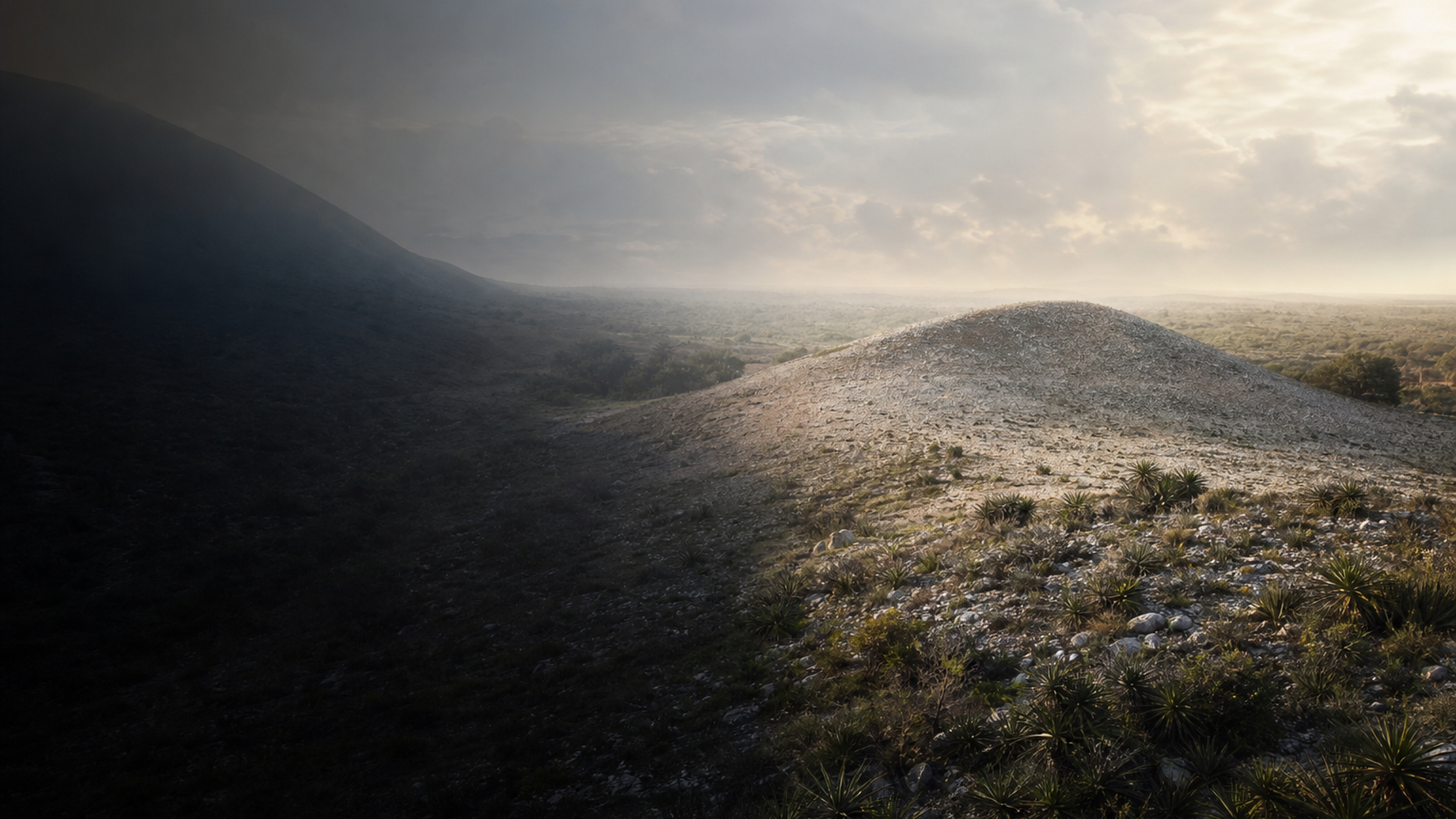
Sambaqui at Loca do Suin (c. 7300 BCE)

下载的 PDF 是图像副本。如需可选中文本及更好的辅助技术支持,请使用打印功能。

Sambaqui at Loca do Suin (c. 7300 BCE)

揭开一个失落的文明

正在加载考古记录……

正在收集古代记录

跳转到主内容
Sambaqui at Loca do Suin (c. 7300 BCE)
文明焦点

Sambaqui at Loca do Suin (c. 7300 BCE)

A lone ancient genome from a Brazilian shell mound hints at deep coastal lifeways and rare maternal lineage connections.

7315 CE - 70479100 BCE
Central Brazil — Loca do Suin
滚动开始
Chapter I

剧情

了解 Sambaqui at Loca do Suin (c. 7300 BCE) 文化

An early Sambaqui individual (c. 7315–7047 BCE) from Loca do Suin, central Brazil. Archaeological shell-mound context meets genetics: Y-DNA Q and mtDNA C4c in a single sample. Limited data make conclusions preliminary, but the find illuminates early coastal occupation and deep Native American lineages.

Time Period

c. 7315–7047 BCE (≈9,100 BP)

Region

Central Brazil — Loca do Suin

Common Y-DNA

Q (single sample)

Common mtDNA

C4c (single sample)

Chapter II

时间线

这种文化历史上的关键时刻

7181 BCE

Loca do Suin individual dated

Radiocarbon-calibrated dates place the sampled individual between 7315 and 7047 BCE, anchoring an early sambaqui context in central Brazil.

Chapter III

Origins & Emergence

The individual from Loca do Suin sits within the early Holocene chapter of Brazil's Atlantic coast — a time when rising shorelines and abundant marine resources shaped human settlement. Archaeological data indicate this burial or occupation is associated with sambaqui formation: layered shell mounds constructed by successive generations. Radiocarbon-calibrated dates for the sample place it between 7315 and 7047 BCE (roughly 9,100 years before present), making it one of the earlier securely dated sambaqui-associated individuals from central Brazil.

Limited evidence suggests these coastal communities developed complex, place-based lifeways that emphasized marine foods, seasonal harvesting, and possibly long-distance exchange of raw materials. The cinematic sweep of shell terraces rising from mangrove flats captures a landscape engineered through repetitive human labor — emplacements that preserved bones, artifacts, and now, genetic traces. Yet interpretation must remain cautious: with a single genome, statements about population origins, mobility, or cultural transmission remain provisional. Archaeological context at Loca do Suin anchors the genetic data in a tangible human story of early coastal adaptation, but broader sampling is needed to resolve demographic dynamics along the Brazilian littoral.

  • Early Holocene sambaqui context (c. 7315–7047 BCE)
  • Loca do Suin: shell-mound formation on central Brazilian coast
  • Single-sample evidence — conclusions are preliminary
Chapter IV

Daily Life & Society

Archaeological evidence from sambaqui sites across Brazil suggests daily life was tightly interwoven with the sea. Shell mounds at places like Loca do Suin likely accumulated through repeated shellfish harvesting, fish processing, and food consumption events over generations. Midden stratigraphy preserves fish bones, shell, charcoal, and often stone and bone tools — traces of a subsistence economy focused on estuarine and coastal resources.

Beyond diet, the physical architecture of sambaquis implies social rhythms: repeated communal labor to build and maintain mounds, probable reuse of preferred habitation spots, and spatial organization around resource patches. Grave goods are not uniformly reported at all sambaqui sites, and the degree of social differentiation remains debated. Archaeological data indicates varied mobility strategies; some groups appear to have been relatively sedentary on the coast, while others maintained seasonal movement. Environmental fluctuation during the early Holocene would have required flexible strategies and deep ecological knowledge.

While evocative reconstructions are possible, it is important to stress uncertainty. The single genetic sample provides a human voice from these layers, but it cannot by itself map household practices, belief systems, or the full range of social complexity at Loca do Suin.

  • Coastal foraging centered on shellfish and fish
  • Sambaquis result from repeated communal activity over generations
Chapter V

Genetic Profile

The recovered genome from Loca do Suin carries paternal haplogroup Q and mitochondrial haplogroup C4c. Haplogroup Q is widely recognized among Indigenous populations of the Americas and appears frequently in ancient and modern Native American male lineages; its presence here aligns with a deep-standing paternal continuity in South America. Mitochondrial C4c is rarer within the Americas and is often discussed in the context of early Beringian and subarctic lineages that contributed to Native American maternal diversity.

Crucially, only one individual is available from this context. With a sample count of one, any population-level inference must be presented as tentative. The genetic data provide a snapshot: an early coastal resident who carried a common Native American paternal marker and a less common maternal lineage. Archaeological context ties these markers to sambaqui lifeways, suggesting that by the early Holocene such lineages had reached central Brazilian coasts.

Broader ancient DNA sampling across South America has revealed complex regional structure and multiple deep lineages; the Loca do Suin genome fits into that emerging mosaic but cannot define it. Future recovery of additional genomes from sambaqui sites would clarify whether the Q/C4c pairing reflects local continuity, mobility along the coast, or connections to wider continental gene pools. Until then, statements about migration routes or demographic turnovers remain provisional and dependent on expanded sampling.

  • Y-DNA Q aligns with widespread Native American paternal lineages
  • mtDNA C4c is rare; single sample makes conclusions preliminary
Chapter VI

Legacy & Modern Connections

The Loca do Suin individual connects the deep human past of the Brazilian coast to living Indigenous histories. Genetic markers like haplogroup Q persist among many Indigenous communities, providing continuity threads across millennia. The detection of mtDNA C4c in an early sambaqui context highlights the often-underappreciated diversity of maternal lineages that contributed to South America's peopling.

At the same time, scientific humility is required. One genome cannot map cultural inheritance, language, or direct ancestry to present-day groups. Ethical engagement and collaboration with Indigenous communities, alongside more comprehensive archaeological and genetic studies, are essential to transform these genetic glimpses into fuller narratives that respect descendant peoples. The cinematic shell terraces of the sambaquis remain both archaeological monuments and reminders of long-standing human connections to coastal landscapes — connections that modern research is only beginning to illuminate.

  • Genetic continuity hints but does not prove direct descent
  • Further sampling and community collaboration are essential
AI 电源

AI 助手

就 Sambaqui at Loca do Suin (c. 7300 BCE) 文化提问

AI 助手 由DNAGENICS公司制作

解锁此特性
Ask questions about the Sambaqui at Loca do Suin (c. 7300 BCE) culture. Our AI assistant can explain genetic findings, historical context, archaeological evidence, and modern connections.
AI 样本分析

Sambaqui at Loca do Suin (c. 7300 BCE) 文化是人类历史中值得了解的一章……

遗传分析揭示了与早期种群的联系,同时显示了独特的适应和文化创新的证据。 古代DNA样本提供了对迁徙模式、社会结构以及古代种群之间的生物关系的深刻见解。

这是人工智能分析的预览。 解锁全AI 助手, 以探索关于:

  • 遗传组成和祖先
  • 移徙模式和起源
  • 日常生活和文化习俗
  • 现代遗传遗产

探索更古老的文化

揭开古代世界文明的故事

使用优惠码 可减免 35% • 11月12日 到期