Sappali Tepe: Bronze Age Crossroads

下载的 PDF 是图像副本。如需可选中文本及更好的辅助技术支持,请使用打印功能。

Sappali Tepe: Bronze Age Crossroads

揭开一个失落的文明

正在加载考古记录……

正在收集古代记录

跳转到主内容
Sappali Tepe: Bronze Age Crossroads
文明焦点

Sappali Tepe: Bronze Age Crossroads

A Bronze Age community in Uzbekistan where burials and DNA reveal threads of steppe and south Asian ancestry

2031 CE - 1600 BCE
Sappali Tepe, Uzbekistan (Central Asia)
滚动开始
Chapter I

剧情

了解 Sappali Tepe: Bronze Age Crossroads 文化

Archaeological and aDNA data from Sappali Tepe (2031–1600 BCE) reveal a Bronze Age Uzbek community marked by diverse male lineages (R, J, G, Q, L) and maternal haplogroups (U, W, HV). Excavations and genetics suggest regional mixing between steppe and southern/inner Asian networks.

Time Period

2031–1600 BCE

Region

Sappali Tepe, Uzbekistan (Central Asia)

Common Y-DNA

R (2), J (2), G (1), Q (1), L (1)

Common mtDNA

U (4), W (2), HV (2), HV3 (1), J1b (1)

Chapter II

时间线

这种文化历史上的关键时刻

2031 BCE

Earliest dated burials at Sappali Tepe

Radiocarbon dates place initial burials at Sappali Tepe around 2031 BCE, marking Bronze Age occupation and the start of the site's genetic record.

Chapter III

Origins & Emergence

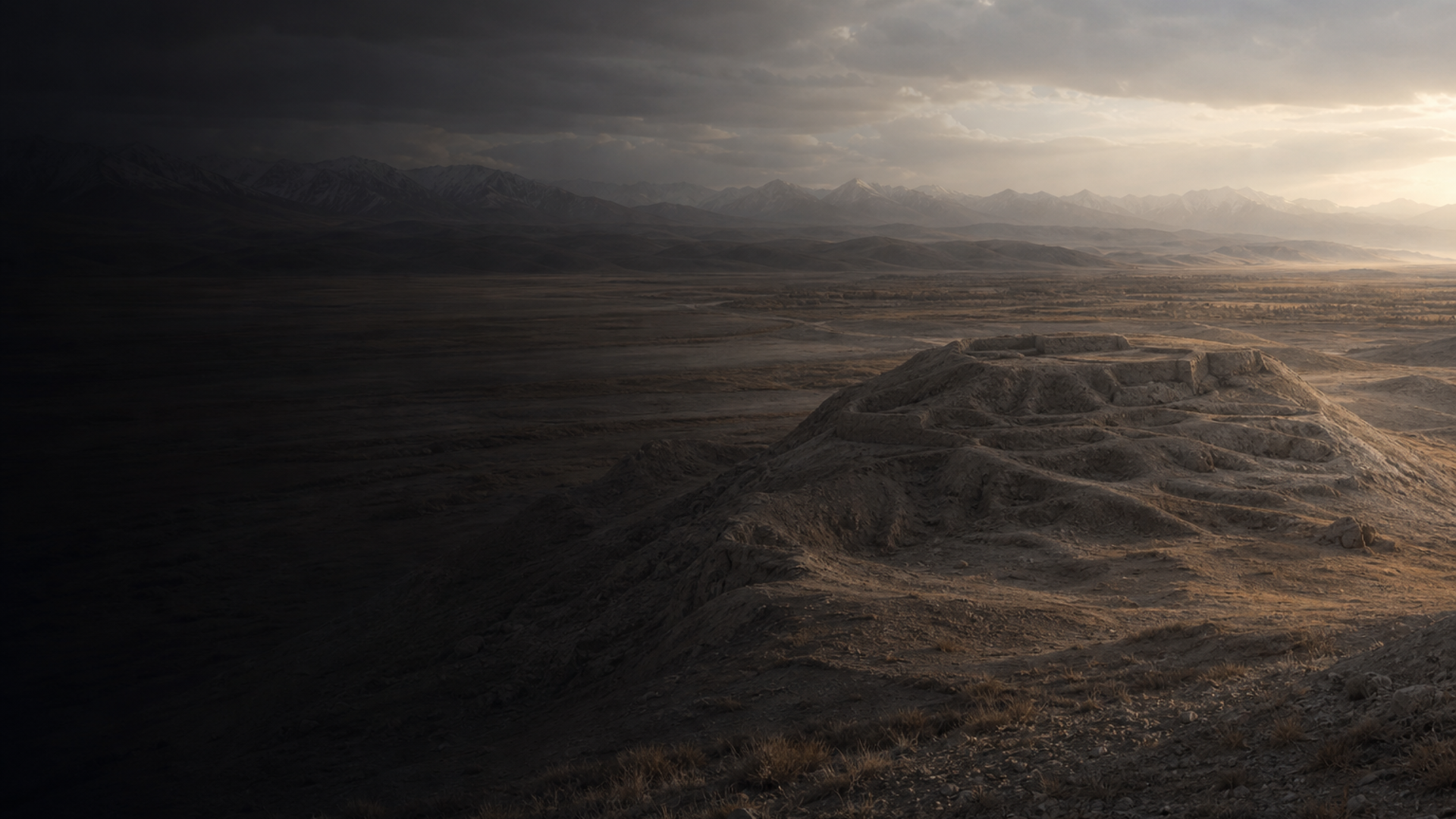
Sappali Tepe stands on the arid plains of present-day Uzbekistan, visible to the modern traveler as low mounds where Bronze Age lives once clustered. Radiocarbon dates from human remains and associated contexts place the occupation between roughly 2031 and 1600 BCE, a period of shifting alliances and mobile networks across Central Asia. Archaeological data indicate a community engaged with both local traditions and broader Bronze Age currents — trade in raw materials, shared ceramic forms, and funerary practices that reflect contact with neighboring lowland and steppe groups.

Genetically, the site marks an intersection: male lineages include haplogroup R, commonly associated with steppe ancestry, alongside J, G, Q and L, which hint at influences from south and inner Asia or long-distance exchanges. Mitochondrial diversity (notably haplogroups U and W) suggests continuity with regional maternal lineages and female-mediated connections across ecologies. While these signals evoke a tapestry of movement and mixture, caution is necessary: the sample set is moderate (n=14), and population-level conclusions remain provisional. Limited evidence suggests Sappali Tepe was neither an isolated enclave nor a single-origin colony, but rather a local hub where incoming lineages assimilated into established social landscapes.

  • Dated burials and contexts: 2031–1600 BCE
  • Located at Sappali Tepe, Uzbekistan — a Bronze Age local center
  • Evidence points to regional contact between steppe and southern/inner Asian networks
Chapter IV

Daily Life & Society

The lived world of Sappali Tepe would have been shaped by seasonal rhythms, pastoral mobility, and exchange. Archaeological indicators — burial assemblages, fragmented ceramics, and landscape position — suggest a mixed economy in which herding, small-scale farming and long-distance exchange all played roles. Graves imply social differentiation: some individuals were interred with more goods or distinct treatments, while others received simpler rites, hinting at household or lineage-based status differences.

Material culture and burial orientation can reflect both local tradition and external influence. Archaeological data indicates that Sappali Tepe participated in networks that carried metals, crafted goods, and perhaps ideas about social display and ancestry. Gendered divisions of labor likely existed, as in many Bronze Age communities, but genetic evidence (diverse maternal lineages combined with heterogeneous Y-DNA) also suggests that mobility and marriage networks brought people into the community from varying directions. The interplay of settled life and movement across landscapes created a dynamic social fabric in which identities were negotiated through kinship, ritual, and exchange.

  • Mixed economy likely: herding, cultivation, and exchange
  • Burial variation hints at social differentiation and external influences
Chapter V

Genetic Profile

Ancient DNA from 14 individuals recovered at Sappali Tepe provides a window into the biological ancestry of this Bronze Age community. The Y-chromosome pool is heterogeneous: two individuals carry haplogroup R (a lineage common in steppe groups), two carry J (often associated with Near Eastern and South Asian connections), and single occurrences of G, Q and L point to additional, more diverse ancestries — Q can reflect northern or eastern inputs, while L is more frequently observed in South and Southwest Asian contexts.

On the maternal side, haplogroups U (4 individuals) and W (2) dominate, with HV and J1b also present. Haplogroup U is widespread across Eurasia and can indicate deep regional continuity; W and HV are less common but attested in West and Central Asian Bronze Age populations. Together the Y and mtDNA patterns suggest admixture between steppe-related males and a broader set of maternal lineages, or alternatively multiple waves of incoming males from different source regions.

These interpretations are scientifically cautious: with n=14, this is a moderate dataset that reveals diversity but cannot fully resolve population history or demographic processes. Genome-wide autosomal data would better estimate admixture proportions and directionality; existing haplogroup counts are a first, evocative map of biological connections.

  • Mixed Y-DNA: R and J predominate, with G, Q, L also present
  • Maternal diversity: U, W, HV dominate, indicating regional continuity and connections
Chapter VI

Legacy & Modern Connections

Sappali Tepe's legacy is not a single lineage but a story of convergence. The genetic mosaic preserved in burials reflects long-standing Central Asian patterns of movement, marriage, and cultural exchange. Modern populations of Uzbekistan and surrounding regions inherit threads of this Bronze Age tapestry, though millennia of further migrations, empire-building and local change mean that direct one-to-one continuity is complex.

For descendants who seek ancestral links, the site offers a narrative of connectivity: steppe-derived paternal markers, southern/inner Asian inputs, and maternal lineages rooted in the broader Eurasian landscape. Archaeological and genetic research at sites like Sappali Tepe helps anchor those narratives with dates, places, and scientific context, while reminding us that conclusions must remain provisional until larger, genome-wide datasets clarify the patterns hinted at by these 14 individuals.

  • Genetic diversity at Sappali Tepe reflects long-term connectivity in Central Asia
  • Modern regional ancestry likely includes but is not exclusively derived from these Bronze Age populations
AI 电源

AI 助手

就 Sappali Tepe: Bronze Age Crossroads 文化提问

AI 助手 由DNAGENICS公司制作

解锁此特性
Ask questions about the Sappali Tepe: Bronze Age Crossroads culture. Our AI assistant can explain genetic findings, historical context, archaeological evidence, and modern connections.
AI 样本分析

Sappali Tepe: Bronze Age Crossroads 文化是人类历史中值得了解的一章……

遗传分析揭示了与早期种群的联系,同时显示了独特的适应和文化创新的证据。 古代DNA样本提供了对迁徙模式、社会结构以及古代种群之间的生物关系的深刻见解。

这是人工智能分析的预览。 解锁全AI 助手, 以探索关于:

  • 遗传组成和祖先
  • 移徙模式和起源
  • 日常生活和文化习俗
  • 现代遗传遗产

探索更古老的文化

揭开古代世界文明的故事

使用优惠码 可减免 35% • 11月12日 到期