Sardinia: Middle Bronze Age Echoes

下载的 PDF 是图像副本。如需可选中文本及更好的辅助技术支持,请使用打印功能。

Sardinia: Middle Bronze Age Echoes

揭开一个失落的文明

正在加载考古记录……

正在收集古代记录

跳转到主内容
Sardinia: Middle Bronze Age Echoes
文明焦点

Sardinia: Middle Bronze Age Echoes

Four Middle Bronze Age individuals from Anghelu Ruju and Seulo reveal island life and ancestry.

1800 CE - 1234 BCE
Sardinia, Italy (Anghelu Ruju, Seulo)
滚动开始
Chapter I

剧情

了解 Sardinia: Middle Bronze Age Echoes 文化

Ancient DNA from four Middle Bronze Age Sardinians (1800–1234 BCE) from Anghelu Ruju and Seulo suggests continuity of island lineages with signals of Neolithic farmer and local European ancestry. Sample size is small; conclusions remain provisional.

Time Period

1800–1234 BCE

Region

Sardinia, Italy (Anghelu Ruju, Seulo)

Common Y-DNA

I (2), G (1) — small sample

Common mtDNA

J (2), H (1), T (1)

Chapter II

时间线

这种文化历史上的关键时刻

2500 BCE

Neolithic foundations

Neolithic settlement on Sardinia establishes agricultural and megalithic traditions that shape later Bronze Age societies.

Chapter III

Origins & Emergence

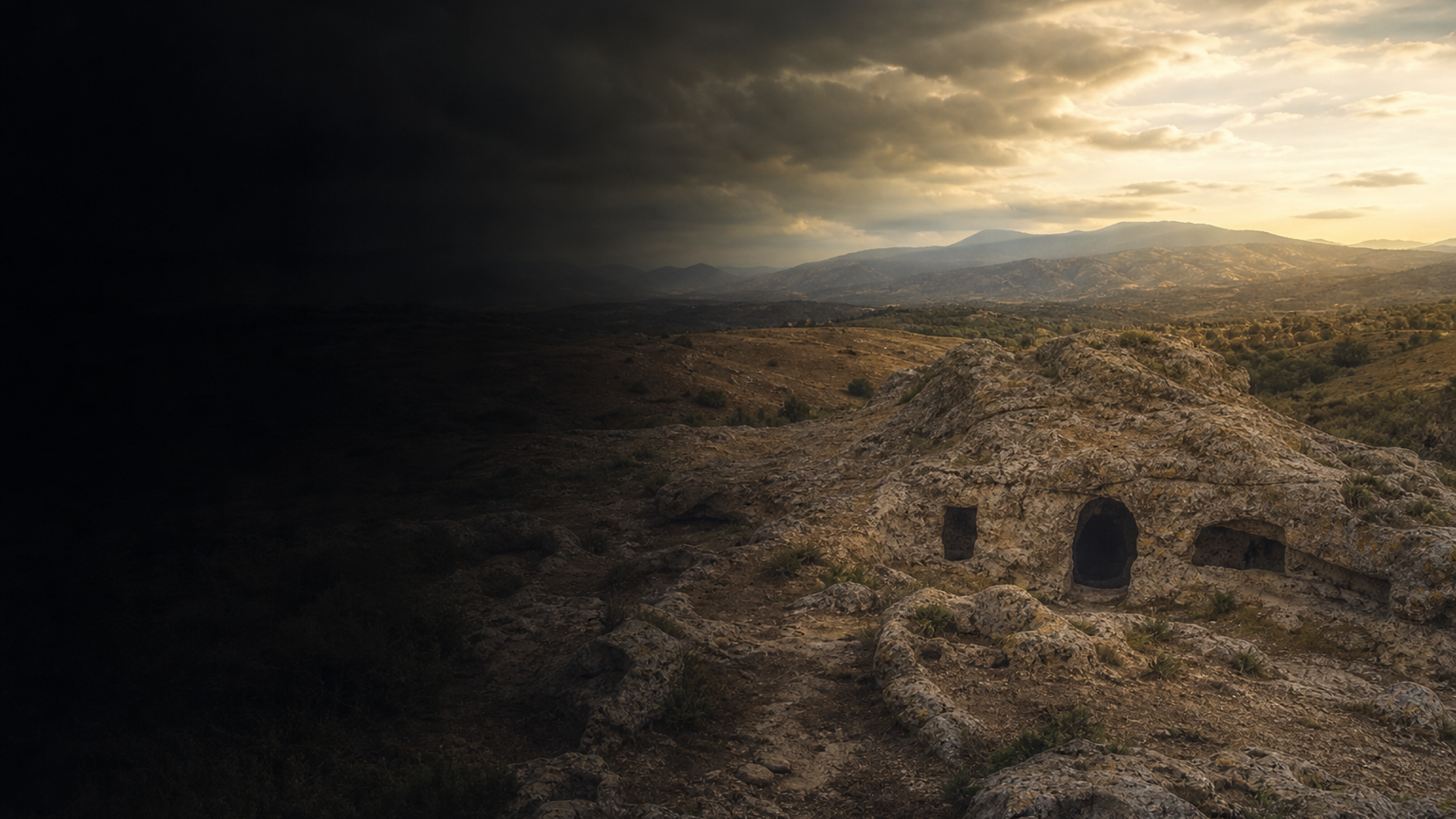
Beneath wind-swept maquis and the silhouette of limestone ridges, Middle Bronze Age Sardinia (1800–1234 BCE) stands as an island chapter written in stone and bone. Archaeological contexts tied to Anghelu Ruju and Seulo yield a fragile window into this era: funerary deposits, reused ritual spaces, and settlement traces that suggest communities negotiating long-term Mediterranean networks. The islands’ long Neolithic legacy — visible in pottery traditions and megalithic architecture — frames the Middle Bronze Age as both continuity and change.

Limited evidence suggests that local traditions persisted while new material influences reached the coast and interior. Radiocarbon-dated contexts place these samples squarely within the Middle Bronze Age horizon, but stratigraphic mixing and later use of ancient sites complicate a simple narrative. Archaeological data indicate that Sardinian communities maintained island-specific lifeways while participating in broader Bronze Age exchange across the central Mediterranean.

Because only four individuals are available, any model of population emergence must remain tentative. These remains are best seen as pieces of a larger, still incomplete puzzle: they hint at enduring local roots layered with incoming influences from maritime contacts, rather than wholesale population replacement.

  • Samples dated to 1800–1234 BCE from Anghelu Ruju and Seulo
  • Archaeology suggests continuity with Neolithic traditions plus new Bronze Age influences
  • Stratigraphic complexity and small sample size make interpretations provisional
Chapter IV

Daily Life & Society

The everyday world of Middle Bronze Age Sardinia can be glimpsed through pottery fragments, worked bone, and the arrangement of graves. Communities combined pastoralism and agriculture on rugged terrain, moving herds between lowland fields and upland pastures. At sites like Seulo, landscape management appears pragmatic: terraces, seasonal movement, and localized craft production sustained island populations.

Burial practices recorded at Anghelu Ruju and nearby complexes reveal careful treatment of the dead, with reused Neolithic monuments sometimes serving Bronze Age interments. Funerary assemblages—where preserved—point to a society where status was expressed through grave goods and deposited objects, yet material wealth remained modest compared with contemporary eastern Mediterranean elites. Maritime links likely introduced exotic items and stylistic motifs, but local forms persisted strongly.

Archaeobotanical and faunal records from wider Sardinia show reliance on cereals, legumes, sheep, goats, and cattle, while coastal diets supplemented by marine resources. Craft specialists—potters, metalworkers, and shepherds—operated within family and village networks. These social rhythms set the stage for genetic continuity: long-term residence, endogamous tendencies, and island isolation would shape ancestry patterns visible in DNA.

  • Mixed agro-pastoral economy with seasonal mobility
  • Reuse of Neolithic monuments for Bronze Age burials
Chapter V

Genetic Profile

Ancient DNA from four Middle Bronze Age individuals on Sardinia produces a cautious but evocative genetic portrait. Paternal lineages include haplogroups I (two individuals) and G (one individual reported); mtDNA haplogroups include J (two), H (one), and T (one). These signals are consistent with a mosaic of deep European hunter-gatherer heritage (often linked to Y-haplogroup I) and enduring Neolithic farmer-related ancestry (Y-haplogroup G and mtDNA lineages like J and T).

Archaeogenetic research across Sardinia and the central Mediterranean has repeatedly shown that the island retained a high proportion of early farmer ancestry relative to many continental populations. The presence of mtDNA lineages J, H, and T in these MBA individuals aligns with that broader pattern. However, with only four samples, statistical power is low: observed haplogroups may reflect local family structure or burial selection rather than island-wide frequencies.

Limited evidence suggests continuity from Neolithic to Bronze Age populations on Sardinia, punctuated by gene flow events of varying intensity across centuries. These four genomes contribute to a growing dataset that, when combined with additional samples, will refine models of continuity, admixture, and the demographic impact of Bronze Age maritime connections.

  • Y-haplogroups include I (2) and G (1); mtDNA J (2), H (1), T (1)
  • Small sample size (n=4) means conclusions about population-wide trends are preliminary
Chapter VI

Legacy & Modern Connections

The stones of Sardinia still echo with the footsteps of ancestors; genetic echoes persist as well. Modern Sardinian genomes are notable for elevated Neolithic farmer ancestry compared with many mainland Europeans, and the Middle Bronze Age profiles from Anghelu Ruju and Seulo are compatible with long-term island continuity. Yet cultural continuity does not translate to genetic stasis: Sardinia’s story includes episodes of contact, exchange, and selective migration.

These four individuals provide tangible links between ancient lifeways and present-day genetic landscapes, but they cannot alone resolve the island’s complex demographic history. Future sampling across multiple sites and time periods will be essential to map the ebb and flow of ancestry that produced contemporary Sardinians. For now, the remains speak in measured whispers—suggesting stubborn local roots shaped by centuries of maritime connections and island resilience.

  • Findings align with broader evidence of strong Neolithic-derived ancestry in Sardinia
  • Additional sampling is needed to clarify population continuity and later influences
AI 电源

AI 助手

就 Sardinia: Middle Bronze Age Echoes 文化提问

AI 助手 由DNAGENICS公司制作

解锁此特性
Ask questions about the Sardinia: Middle Bronze Age Echoes culture. Our AI assistant can explain genetic findings, historical context, archaeological evidence, and modern connections.
AI 样本分析

Sardinia: Middle Bronze Age Echoes 文化是人类历史中值得了解的一章……

遗传分析揭示了与早期种群的联系,同时显示了独特的适应和文化创新的证据。 古代DNA样本提供了对迁徙模式、社会结构以及古代种群之间的生物关系的深刻见解。

这是人工智能分析的预览。 解锁全AI 助手, 以探索关于:

  • 遗传组成和祖先
  • 移徙模式和起源
  • 日常生活和文化习俗
  • 现代遗传遗产

探索更古老的文化

揭开古代世界文明的故事

使用优惠码 可减免 35% • 11月12日 到期