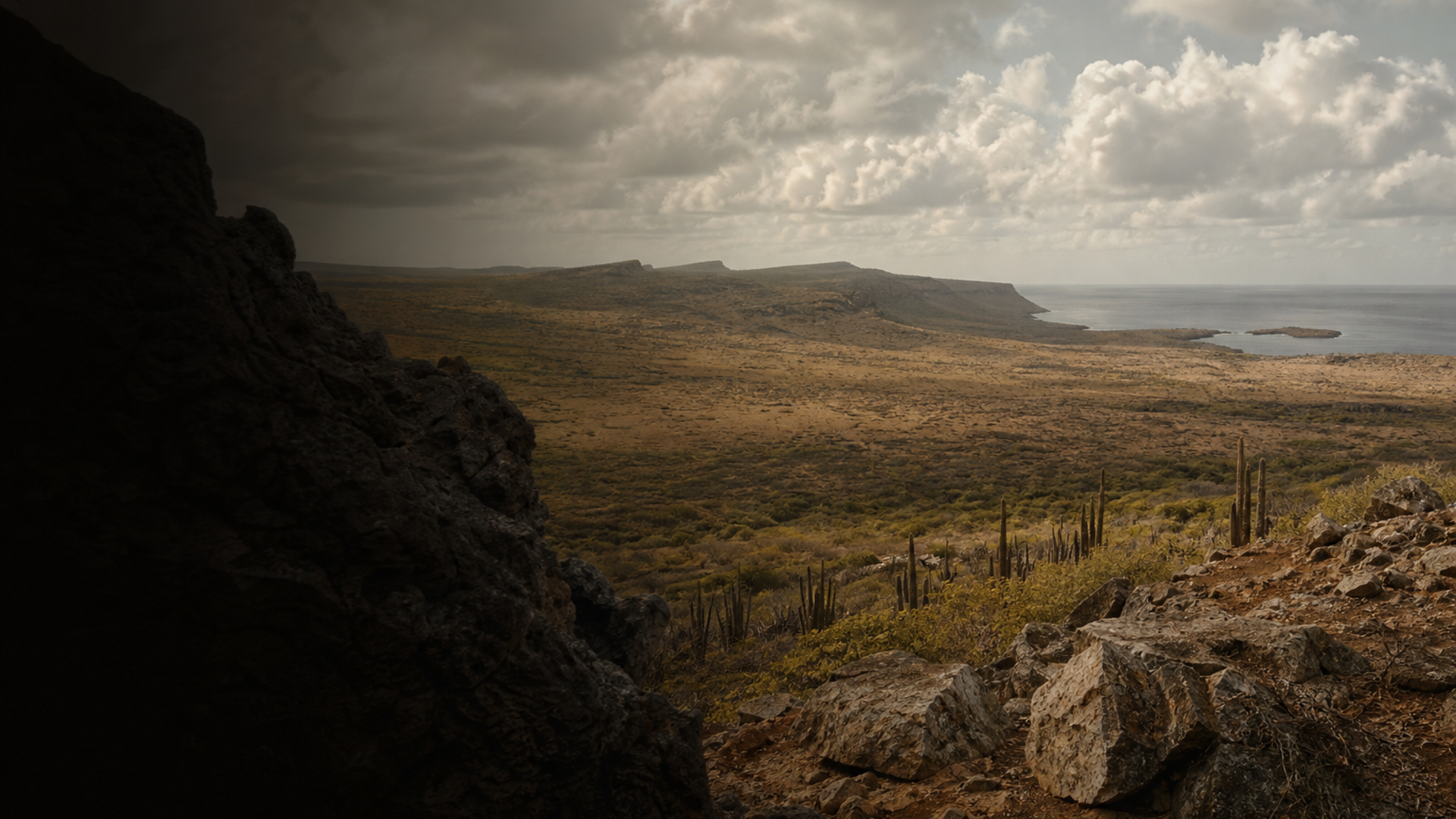
Savaan Ceramic Curve: Curaçao 1200–1400 CE

下载的 PDF 是图像副本。如需可选中文本及更好的辅助技术支持,请使用打印功能。

Savaan Ceramic Curve: Curaçao 1200–1400 CE

揭开一个失落的文明

正在加载考古记录……

正在收集古代记录

跳转到主内容
Savaan Ceramic Curve: Curaçao 1200–1400 CE
文明焦点

Savaan Ceramic Curve: Curaçao 1200–1400 CE

A coastal Ceramic Period community on Curaçao seen through potsherds and ancient genomes

1200 CE - 1400 CE
Curaçao (Savaan site)
滚动开始
Chapter I

剧情

了解 Savaan Ceramic Curve: Curaçao 1200–1400 CE 文化

Archaeological and limited aDNA evidence from Savaan (Curaçao) reveals a Ceramic Period community (1200–1400 CE). Four samples show Y-haplogroup Q and mtDNA lineages A, C, D1, hinting at Indigenous Caribbean connections; conclusions remain preliminary due to small sample size.

Time Period

1200–1400 CE

Region

Curaçao (Savaan site)

Common Y-DNA

Q (2 of 4 samples)

Common mtDNA

A (2), D1 (1), C (1)

Chapter II

时间线

这种文化历史上的关键时刻

1200 CE

Savaan occupation begins (approx.)

Archaeological and radiocarbon contexts place the Savaan Ceramic occupation in the early 2nd millennium CE (c.1200–1400 CE), marking a phase of Ceramic-period coastal settlement on Curaçao.

Chapter III

Origins & Emergence

On the low limestone terraces of Savaan, ceramic vessels whisper of a people shaped by sea and season. Archaeological data indicates occupation during the Ceramic Period de Savaan between roughly 1200 and 1400 CE. Excavations at Savaan have recovered diagnostic pottery styles, shell midden deposits and burial contexts that place the site within broader Late Ceramic networks across the southern Caribbean. The material repertoire — cord-marked and painted ceramics, coastal resource concentrations — suggests communities oriented toward fishing, shellfish collection and nearshore horticulture.

The archaeological signal is consistent with regional processes known from the Ceramic Period: the spread of pottery-using groups into the island arc, maritime lifeways, and intensified inter-island contact. Limited evidence suggests these movements did not necessarily replace all local lifeways but layered new technologies and social practices onto long-standing adaptations. Genetic data from four individuals sampled at Savaan offer an additional line of evidence that can help test models of migration versus local continuity. However, the small sample count and the narrow chronological window mean that interpretations of origin and population movement must remain cautious and provisional.

  • Savaan dated c.1200–1400 CE within the Ceramic Period de Savaan
  • Pottery styles and shell middens indicate coastal subsistence and inter-island ties
  • Archaeological data align with regional Ceramic expansion but do not prove simple population replacement
Chapter IV

Daily Life & Society

Life at Savaan likely unfolded in rhythms set by the sea. Archaeological indicators — pottery used for cooking and storage, dense shell deposits, and the presence of fish bones and turtle remains in midden contexts — point to a diet dominated by marine protein augmented by cultivated and wild plants. Ceramic vessels, some decorated and others utilitarian, suggest domestic craft specialization and household-level ceramic production.

Settlement appears to have favored sheltered coastal benches that provided easy access to reefs and tidal flats. Spatial organization inferred from surface scatters and excavation trenches suggests clusters of hearths and activity areas rather than large, centralized compounds; this pattern fits many Caribbean Ceramic communities where households were semi-autonomous but linked by exchange and ritual ties. Burial evidence at similar-era sites in the region hints at social distinctions expressed in grave goods and placement, but Savaan's mortuary record remains fragmentary. Overall, the archaeological portrait is of small, connected communities whose everyday life combined maritime mastery with pottery-based domestic economies.

  • Marine resources (fish, shellfish, turtles) prominent in diet
  • Pottery indicates household craft, storage, and culinary practices
Chapter V

Genetic Profile

Four ancient individuals from Savaan provide a tantalizing, though preliminary, genetic glimpse into the island's people between 1200 and 1400 CE. Two of the four male-line (Y-chromosome) profiles are haplogroup Q — a lineage widely observed among Indigenous peoples of the Americas and often interpreted as a signal of Native American paternal ancestry. The mitochondrial DNA pool shows haplogroups A (2 individuals), D1 (1), and C (1), all of which are among the primary maternal founding lineages distributed across the Americas and frequently found in ancient and modern Caribbean samples.

These results are consistent with expectations for Indigenous Caribbean populations: Y-Q and mtDNA A/C/D reflect deep ancestry ultimately tied to continental migrations into the Americas. However, with only four samples the statistical power is very limited. Archaeological data can contextualize these genetic signals by linking sampled individuals to specific features (burials, strata, artifact assemblages), but no single small dataset can resolve complex questions of migration scale, gender-biased mobility, or admixture with neighboring island or mainland groups. Future sampling — more individuals, broader temporal coverage, and genome-wide (autosomal) data — will be essential to test whether Savaan represents a local continuation of earlier island populations, influxes from South America, or a mixture of both.

  • Y-haplogroup Q present in 2 of 4 samples, consistent with Indigenous American paternal lineages
  • mtDNA A, D1, C observed — maternal lineages common across the Americas; conclusions are preliminary given the small sample size
Chapter VI

Legacy & Modern Connections

The material and genetic traces from Savaan speak to cultural landscapes that shaped the pre-contact history of Curaçao. Archaeological affinities to wider Ceramic Period networks suggest long-distance ties of exchange, ideas and perhaps people. Genetically, the presence of Indigenous Y and mtDNA lineages at Savaan aligns with broader patterns of Native American ancestry in the Caribbean, but direct lines of descent to modern populations cannot be asserted from four individuals alone.

For contemporary communities in Curaçao and the wider Caribbean, these finds are part of a slowly unfolding story that archaeology and aDNA together can illuminate: how islands were peopled, how lifeways adapted to maritime environments, and how local identities formed. Continued respectful collaboration with local stakeholders, expanded sampling, and integration of ancient genomes with archaeological context will clarify how the echoes detected at Savaan fit into the living heritage of the region.

  • Finds at Savaan contribute to understanding Indigenous Caribbean ancestries
  • Direct continuity to modern populations requires broader genetic and archaeological sampling
AI 电源

AI 助手

就 Savaan Ceramic Curve: Curaçao 1200–1400 CE 文化提问

AI 助手 由DNAGENICS公司制作

解锁此特性
Ask questions about the Savaan Ceramic Curve: Curaçao 1200–1400 CE culture. Our AI assistant can explain genetic findings, historical context, archaeological evidence, and modern connections.
AI 样本分析

Savaan Ceramic Curve: Curaçao 1200–1400 CE 文化是人类历史中值得了解的一章……

遗传分析揭示了与早期种群的联系,同时显示了独特的适应和文化创新的证据。 古代DNA样本提供了对迁徙模式、社会结构以及古代种群之间的生物关系的深刻见解。

这是人工智能分析的预览。 解锁全AI 助手, 以探索关于:

  • 遗传组成和祖先
  • 移徙模式和起源
  • 日常生活和文化习俗
  • 现代遗传遗产

探索更古老的文化

揭开古代世界文明的故事

使用优惠码 可减免 35% • 11月12日 到期