Scotland — Middle Bronze Age Echoes

下载的 PDF 是图像副本。如需可选中文本及更好的辅助技术支持,请使用打印功能。

Scotland — Middle Bronze Age Echoes

揭开一个失落的文明

正在加载考古记录……

正在收集古代记录

跳转到主内容
Scotland — Middle Bronze Age Echoes
文明焦点

Scotland — Middle Bronze Age Echoes

Coastal communities in Scotland revealed by burials, Bronze artifacts, and emerging DNA signals

1502 CE - 940 BCE
Scotland, United Kingdom
滚动开始
Chapter I

剧情

了解 Scotland — Middle Bronze Age Echoes 文化

DNA from five Middle Bronze Age burials (1502–940 BCE) at Longniddry and Pabbay Mor links archaeological coastal graves and metalworking traditions to broad Bronze Age genetic patterns. Small sample sizes make conclusions preliminary.

Time Period

1502–940 BCE

Region

Scotland, United Kingdom

Common Y-DNA

R (2), I (1)

Common mtDNA

H (4), U (1)

Chapter II

时间线

这种文化历史上的关键时刻

2500 BCE

Beaker and Bronze Ingredients

Earlier Beaker-related arrivals and metalworking foundations set demographic and technological contexts for later Middle Bronze Age communities.

1502 BCE

Start of Scotland_MBA Range

Earliest dated individuals in the Scotland_MBA set (Longniddry) fall into the Middle Bronze Age horizon.

940 BCE

End of Scotland_MBA Range

Latest sampled burials around 940 BCE, reflecting continued coastal burial traditions into the later Bronze Age.

Chapter III

Origins & Emergence

Across windswept shores and peat-rich moors, Middle Bronze Age communities in Scotland coalesced from a deep palimpsest of earlier Neolithic and Beaker-era populations. Archaeological data indicates continued maritime contacts and local metalworking traditions between about 1502 and 940 BCE. Burials at sites such as Longniddry (Evergreen and Grainfoot) and the island burial at Pabbay Mor show regional mortuary practices—urns, crouched interments, and isolated cemetery clusters—typical of Middle Bronze Age Scotland.

Limited evidence suggests these communities were not isolated newcomers but the descendants of earlier British populations who adopted new Bronze Age technologies and social practices. Material culture—bronze tools, pottery forms, and coastal grave placements—points to a culture shaped by sea routes and local resources. Because the genetic dataset for Scotland_MBA is small (5 individuals), conclusions about population origins remain provisional and should be read as emerging patterns rather than definitive histories.

  • Sites: Longniddry (Evergreen, Grainfoot) and Pabbay Mor
  • Dates: 1502–940 BCE, Middle Bronze Age Scotland
  • Evidence: coastal burials, bronze artifacts, localized cemetery use
Chapter IV

Daily Life & Society

Daily existence in Middle Bronze Age Scotland likely unfolded between sea and upland pasture. Archaeological assemblages from coastal graves indicate reliance on mixed farming, fishing, and seasonal herding. Metal objects—bronze knives, socketed tools, and simple ornaments—signal access to metalworking skills and exchange networks that brought raw or finished metal along maritime routes. Settlement evidence in the region is often ephemeral, with few large towns; instead, people lived in small farms and hamlets clustered around arable patches and sheltered bays.

Mortuary contexts reveal social dimensions: differential burial goods and cemetery placement suggest social differentiation—kin-based groups with varying access to metal items. The presence of both richly furnished and modest burials hints at social hierarchies emerging alongside metallurgical prestige. Environmental evidence—peat accumulation, pollen records—suggest changing landscapes that communities negotiated through adaptive subsistence strategies.

  • Economy: mixed farming, pastoralism, fishing, and coastal exchange
  • Material culture: bronze tools, personal ornaments, domestic pottery
Chapter V

Genetic Profile

Genetic data from the Scotland_MBA dataset (5 individuals) provides tantalizing but preliminary glimpses into Middle Bronze Age ancestry in Scotland. Y-chromosome haplogroups observed include R (2 individuals) and I (1 individual), while mitochondrial lineages are dominated by H (4 individuals) with a single U.

Mitochondrial haplogroup H is widespread across Europe in the Bronze Age and today, and its prevalence here aligns with broader maternal continuity in western Europe. Haplogroup U has deeper Mesolithic roots and appears intermittently in Bronze Age contexts. The presence of R and I Y-lineages reflects a mix of paternal ancestries; R types are common across Bronze Age Britain, often associated in broader studies with steppe-derived expansions, while I lineages can reflect older regional male lineages.

Because the sample size is small (<10), patterns should be treated as provisional: they suggest a community with largely European maternal ancestry and mixed paternal signals, consistent with Bronze Age demographic processes of continuity and mobility. Future, larger datasets will be needed to confirm fine-scale population structure, sex-biased migration, and connections to neighboring regions.

  • Y-DNA: R (2), I (1) — mixed paternal signals
  • mtDNA: H (4), U (1) — maternal continuity with wider Europe; findings are preliminary
Chapter VI

Legacy & Modern Connections

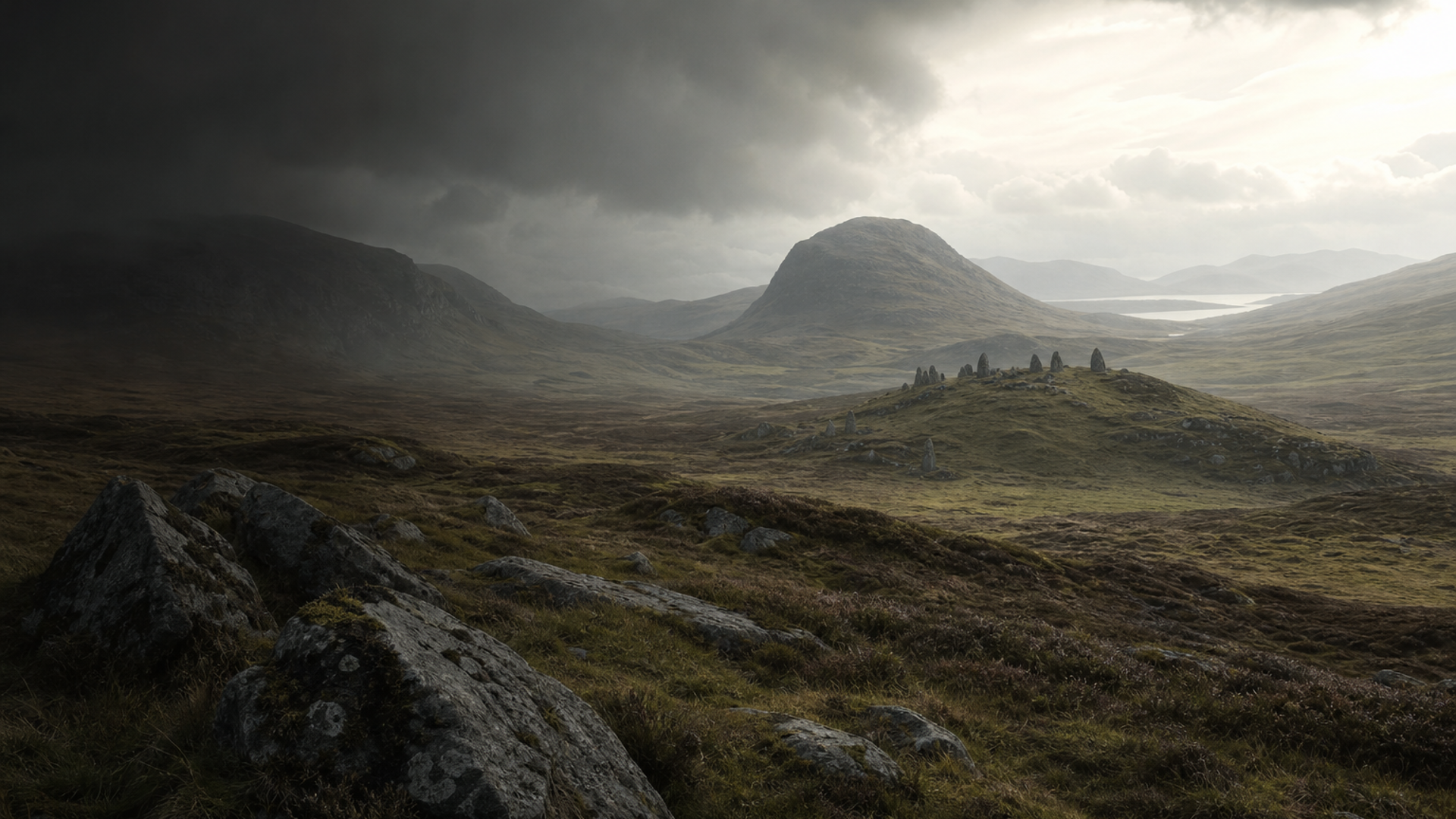
The echo of these Middle Bronze Age people persists in the Scottish landscape—ringed by stone, peat, and shore—where burial mounds and metal fragments surface as quiet testimonies. Genetically, the makeup of these five individuals fits into larger patterns of Bronze Age Britain that contribute to the deep ancestry of present-day populations in Scotland and the British Isles.

Archaeogenetic links do not map one-to-one onto modern identities, but they reveal threads of maternal continuity and paternal mixing that helped shape later population structure. As more genomes are recovered from Scottish Bronze Age contexts, we can expect clearer pictures of mobility, kinship practices, and how coastal communities participated in Atlantic and North Sea networks.

  • Contributes to the deep ancestral mosaic of modern Scots
  • Highlights maritime connectivity and localized continuity
AI 电源

AI 助手

就 Scotland — Middle Bronze Age Echoes 文化提问

AI 助手 由DNAGENICS公司制作

解锁此特性
Ask questions about the Scotland — Middle Bronze Age Echoes culture. Our AI assistant can explain genetic findings, historical context, archaeological evidence, and modern connections.
AI 样本分析

Scotland — Middle Bronze Age Echoes 文化是人类历史中值得了解的一章……

遗传分析揭示了与早期种群的联系,同时显示了独特的适应和文化创新的证据。 古代DNA样本提供了对迁徙模式、社会结构以及古代种群之间的生物关系的深刻见解。

这是人工智能分析的预览。 解锁全AI 助手, 以探索关于:

  • 遗传组成和祖先
  • 移徙模式和起源
  • 日常生活和文化习俗
  • 现代遗传遗产

探索更古老的文化

揭开古代世界文明的故事

使用优惠码 可减免 35% • 11月12日 到期