Sedgeford Anglo‑Saxon Echoes

下载的 PDF 是图像副本。如需可选中文本及更好的辅助技术支持,请使用打印功能。

Sedgeford Anglo‑Saxon Echoes

揭开一个失落的文明

正在加载考古记录……

正在收集古代记录

跳转到主内容
Sedgeford Anglo‑Saxon Echoes
文明焦点

Sedgeford Anglo‑Saxon Echoes

Fragmentary voices from 700–800 CE Norfolk linking archaeology and ancient DNA

700 CE - 800 CE
Norfolk, England (Sedgeford)
滚动开始
Chapter I

剧情

了解 Sedgeford Anglo‑Saxon Echoes 文化

Archaeological and genetic glimpses from three samples at Sedgeford, Norfolk (700–800 CE) illuminate Early Medieval Anglo‑Saxon lifeways. Limited evidence suggests mixed local and continental ancestry; conclusions are preliminary given the small sample size.

Time Period

700–800 CE

Region

Norfolk, England (Sedgeford)

Common Y-DNA

I, R (observed: 1, 1; n=3)

Common mtDNA

H, T2 (observed: 1, 1; n=3)

Chapter II

时间线

这种文化历史上的关键时刻

750 CE

Sedgeford burials dated to 700–800 CE

Human remains and associated material culture at Sedgeford are dated to the Early Medieval period; three individuals yielded ancient DNA used in preliminary population analysis.

Chapter III

Origins & Emergence

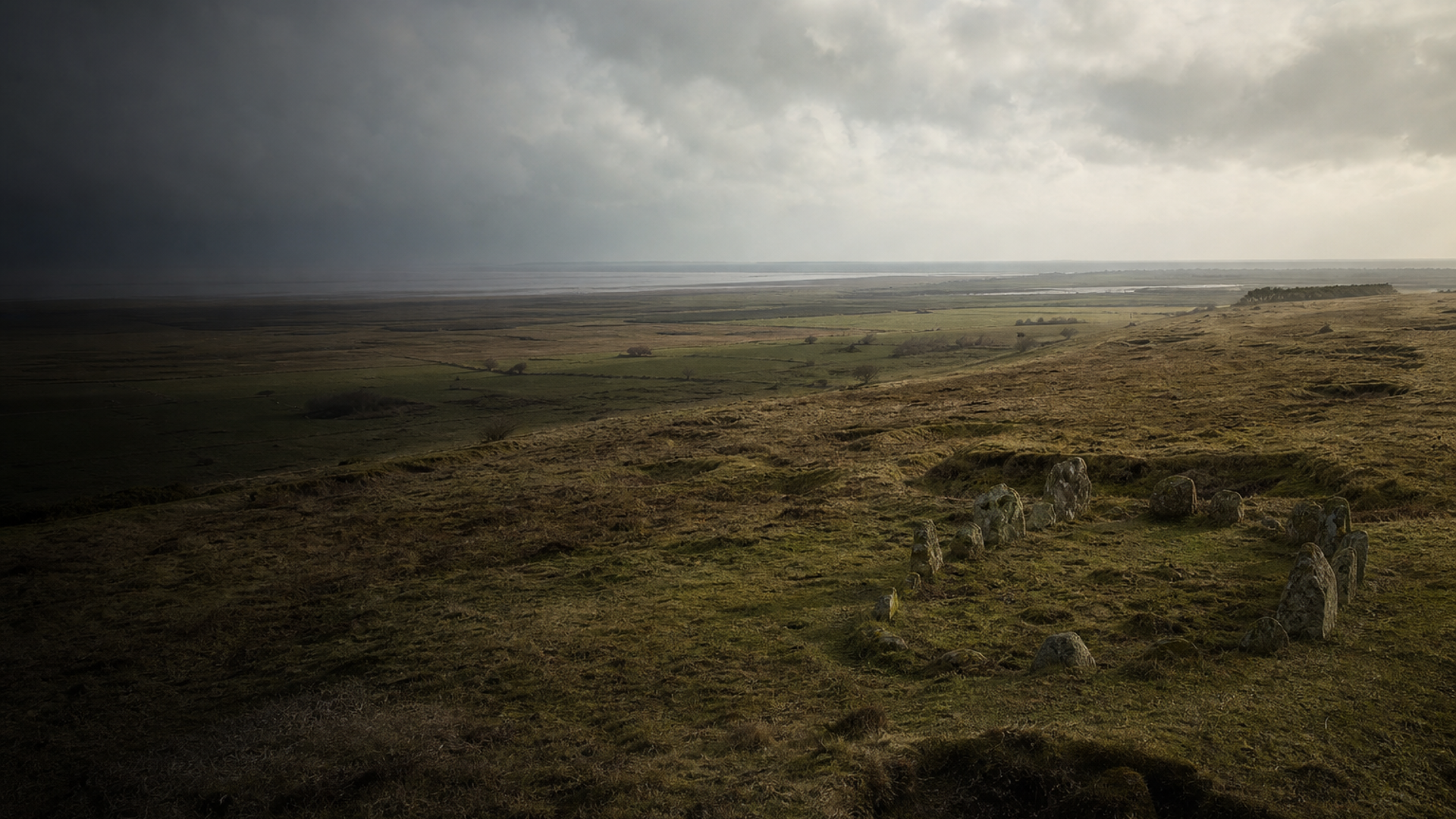
In the low, wind‑hardened fields of Norfolk, an Early Medieval tapestry emerges where archaeological traces and fragile strands of DNA begin to intersect. Excavations at Sedgeford reveal burials and settlement features dated to roughly 700–800 CE — a century when Anglo‑Saxon social landscapes were still taking shape after centuries of migration and regional adaptation. Archaeological data indicates a blend of burial practices and grave goods that reflect local continuities alongside influences from the North Sea world.

Limited evidence suggests that communities in coastal East Anglia were composed of people with varied ancestries: descendants of long‑standing British populations alongside newcomers whose material culture resonates with continental Germanic traditions. The three ancient DNA samples from Sedgeford provide tantalizing, if preliminary, genetic snapshots. Because the dataset is small, broad population‑level claims would be premature; instead, these samples should be read as evocative fragments that complement artifact studies, isotopic analyses, and landscape archaeology. Together they hint at a lived landscape where identities were negotiated — kinship, mobility, and local affiliation braided together in ways only partly preserved in bone and bronze.

  • Sedgeford burials dated to ~700–800 CE connect to Early Medieval Norfolk
  • Material culture shows both local continuities and North Sea influences
  • Small DNA sample size means interpretations are provisional
Chapter IV

Daily Life & Society

Archaeology paints a cinematic scene of daily life: timber longhouses clustered near arable strips, smoke rising over peat soils, and hands busy with weaving, metalworking, and animal husbandry. Finds from Anglo‑Saxon contexts in Norfolk often include domestic tools, combs, and dress accessories — the intimate objects that anchor people to place and practice. Archaeological data indicates agricultural economies dominated by mixed farming, supplemented by fishing and salt production along tidal creeks.

Society in this period was likely organized around kin groups and small nucleated settlements rather than large urban centers. Burial variability suggests social differentiation: some graves contain personal ornaments and metalwork, while others are simpler, indicating diverse status and access to material wealth. Isotopic work at comparable sites across East Anglia shows diets based on terrestrial proteins and cereals, with occasional marine input; such patterns fit a landscape shaped by both field and estuary. The Sedgeford evidence, while limited, fits this broader picture, offering a humanized glimpse into work, family, and ritual in Early Medieval Norfolk.

  • Economy centered on mixed farming with local craft production
  • Burial variability points to social differences within communities
Chapter V

Genetic Profile

The genetic evidence from Sedgeford is sparse but illuminating when treated cautiously. Among three analysed individuals (700–800 CE), Y‑chromosome lineages observed include haplogroups I and R (one instance each), while mitochondrial lineages include H and T2 (one instance each). These haplogroups are widespread across Europe through prehistory and history; haplogroup I has deep Mesolithic and later northern European associations, while R (a broad category encompassing multiple R subclades) is common across both prehistoric and medieval Europe. mtDNA H is the most frequent maternal lineage in Europe; T2 is also well‑attested in Neolithic and later contexts.

Because the sample count is under 10, conclusions about population turnover, migration magnitudes, or sex‑biased migration are preliminary. Nevertheless, the mix of Y and mtDNA lineages is consistent with a heterogeneous population in Early Medieval Norfolk — one that could reflect local continuity with incoming gene flow from continental North Sea regions. Broader ancient DNA studies of Anglo‑Saxon England show varied regional patterns: some locales reveal substantial continental ancestry, others more continuity. The Sedgeford data add a local piece to this complex mosaic and underscore the need for larger, contextualized datasets (more genomes, isotopes, and robust archaeological association) before resolving the dynamics of migration and integration at the village level.

  • Observed Y‑DNA: I and R; mtDNA: H and T2 (n=3) — patterns are preliminary
  • Lineages align with broader European diversity, suggesting mixed ancestry
Chapter VI

Legacy & Modern Connections

The echoes of Sedgeford ripple into the present: place‑names, agricultural patterns, and genetic threads all bear witness to Early Medieval lifeways in Norfolk. Modern inhabitants of East Anglia carry ancestries that reflect millennia of continuity and change — from prehistoric farmers to Roman and Anglo‑Saxon-era movements — but teasing apart those layers requires dense sampling and careful modelling.

Limited but evocative ancient DNA from Sedgeford reminds us that the genetic landscape of Britain was shaped by many episodes of mobility and local endurance. Culturally, Anglo‑Saxon elements contributed to language, law, and settlement forms that persist in the historic record. Scientifically, the site demonstrates the power of combining archaeology and genetics: even tiny datasets can challenge assumptions, guide new questions, and invite more comprehensive sampling to reveal the full human story.

  • Modern East Anglian ancestry reflects long admixture and continuity
  • Sedgeford samples highlight the value—and limits—of small ancient‑DNA datasets
AI 电源

AI 助手

就 Sedgeford Anglo‑Saxon Echoes 文化提问

AI 助手 由DNAGENICS公司制作

解锁此特性
Ask questions about the Sedgeford Anglo‑Saxon Echoes culture. Our AI assistant can explain genetic findings, historical context, archaeological evidence, and modern connections.
AI 样本分析

Sedgeford Anglo‑Saxon Echoes 文化是人类历史中值得了解的一章……

遗传分析揭示了与早期种群的联系,同时显示了独特的适应和文化创新的证据。 古代DNA样本提供了对迁徙模式、社会结构以及古代种群之间的生物关系的深刻见解。

这是人工智能分析的预览。 解锁全AI 助手, 以探索关于:

  • 遗传组成和祖先
  • 移徙模式和起源
  • 日常生活和文化习俗
  • 现代遗传遗产

探索更古老的文化

揭开古代世界文明的故事

使用优惠码 可减免 35% • 11月12日 到期