Shadows of Early Medieval England

下载的 PDF 是图像副本。如需可选中文本及更好的辅助技术支持,请使用打印功能。

Shadows of Early Medieval England

揭开一个失落的文明

正在加载考古记录……

正在收集古代记录

跳转到主内容
Shadows of Early Medieval England
文明焦点

Shadows of Early Medieval England

Bones, brooches and genomes tracing lives across 500–900 CE

500 CE - 900 CE
England (United Kingdom)
滚动开始
Chapter I

剧情

了解 Shadows of Early Medieval England 文化

Archaeology and ancient DNA from 42 individuals across England (500–900 CE) reveal lives shaped by local continuity and new connections across the North Sea. Sites range from Dorset to North Yorkshire; mtDNA shows H, K, U, J, T dominance, while Y-DNA signal remains varied.

Time Period

500–900 CE

Region

England (United Kingdom)

Common Y-DNA

Varied / limited resolution in this dataset

Common mtDNA

H (10), K (6), U (6), J (5), T (4)

Chapter II

时间线

这种文化历史上的关键时刻

597 CE

Augustine's Mission to Kent

A Roman church mission arrives in Kent, initiating wider Christian institutional ties across England (archaeologically visible in church foundations and burial rites).

793 CE

Raid on Lindisfarne

Viking attack on Lindisfarne marks intensified North Sea activity, with archaeological evidence of raiding and later settlement.

886 CE

Alfredian Recovery

Political consolidation in southern and central England reshapes settlement patterns and defenses, affecting mobility and cultural exchange.

Chapter III

Origins & Emergence

The centuries after Rome’s withdrawal were a time of slow transformation rather than sudden replacement. Archaeological landscapes from 500–900 CE across England — from the cliff-top burials at Worth Matravers (Dorset) to cemeteries at Bishopstone Rookery Hill (Sussex) and settlement traces at Widemouth Bay (Cornwall) — show a mosaic of continuity and change. Material culture includes reused Roman objects, hand-crafted metalwork, and regional pottery traditions that speak to local identities persisting alongside incoming fashions.

Excavations in North Yorkshire (Fox Holes Cave, Clapdale) and urban contexts such as Hartlepool (Olive Street) uncover funerary practices and domestic debris that suggest communities rooted in long-established landscapes yet increasingly entangled with wider North Sea networks. Archaeological data indicates that some regions absorbed new people and ideas faster than others; coastal sites often show the earliest signs of long-distance contact.

Genetically, this era is one of admixture. Ancient DNA studies across Britain generally point to mixtures between local Late Iron Age/British populations and migrants from continental northwest Europe. For the 42 samples represented here, archaeological context and genetic signals together depict a patchwork process: not a single migration but repeated movements, kinship ties, and local persistence reshaping Early Medieval England over four centuries.

  • Sites span Dorset, Sussex, Cornwall, Buckinghamshire, North Yorkshire, Durham
  • Material culture shows local continuity plus continental influences
  • Archaeology indicates regionally varied rates of contact and change
Chapter IV

Daily Life & Society

Everyday life in Early Medieval England emerges from a scatter of graves, house-platforms, and stray finds. At coastal settlements like Crantock (Newquay) and Widemouth Bay, fishing, tidal foraging, and small-scale farming likely sustained communities, while inland sites such as Wolverton (Buckinghamshire) suggest mixed arable and pastoral economies. Grave assemblages — simple inhumations sometimes accompanied by brooches, beads, and utilitarian items — hint at social differentiation without large elite displays at many of the sampled sites.

Archaeobotanical and zooarchaeological remains from contemporaneous excavations (where preserved) reveal a diet of cereals, legumes, cattle, sheep, and pig, punctuated by marine resources on the coasts. Settlement patterns were often nucleated small hamlets rather than dense towns, though urban centers like Hartlepool show greater craft specialization and long-distance contacts. Isotopic studies from other early medieval cemeteries suggest local childhood origins for many individuals but also occasional non-local signatures consistent with mobility along coastal and riverine routes.

Taken together, the archaeological record paints a cinematic yet measured portrait: communities anchored to place, adaptable, and connected by networks of kin, trade, and marriage that carried both goods and genes.

  • Mixed farming economy with strong coastal resource use at seaside sites
  • Burial practices generally modest; grave goods indicate regional identities
Chapter V

Genetic Profile

The genetic evidence from 42 sampled individuals offers a window into population dynamics across Early Medieval England, but interpretation must be cautious: sample sizes per site vary and the dataset is moderate in scale. Maternal lineages (mitochondrial DNA) are dominated by haplogroup H (10 individuals), with meaningful counts of K (6), U (6), J (5), and T (4). These mtDNA types are broadly consistent with continuity from earlier British and northwest European populations and do not by themselves denote recent mass replacement.

Y-chromosome (paternal) signals in this specific dataset are less consistently reported; therefore the summary presented here treats male-line patterns as heterogeneous. Broader ancient-DNA research on Early Medieval Britain has recovered both local lineages and lineages common on the Continent, reflecting male-mediated as well as female-mediated gene flow. Genome-wide profiles for comparable samples typically reveal admixture proportions: a substantial local Iron Age–British component combined with variable input from continental northwest European groups linked to Anglo-Saxon and North Sea connections.

These genetic patterns align with the archaeological picture of partial migration and assimilation. Where coastal and eastern sites show increased continental ancestry in some individuals, inland and southwestern samples often retain stronger local continuity. With 42 individuals the resolution is useful but not definitive; future sampling, especially of underrepresented regions and male lineages, will refine these population narratives.

  • mtDNA dominated by H, K, U, J, T (counts: H10, K6, U6, J5, T4)
  • Genome-wide signals indicate mix of local British ancestry and continental input
Chapter VI

Legacy & Modern Connections

The echoes of Early Medieval England survive in living genomes and in place-names, craft traditions, and burial landscapes. Modern populations in England carry layered ancestry reflecting millennia of movement; the admixture events of 500–900 CE form one chapter among many. Genetic continuity in maternal lineages suggests that many families remained locally rooted even as the cultural horizon broadened through trade, marriage, and mobility.
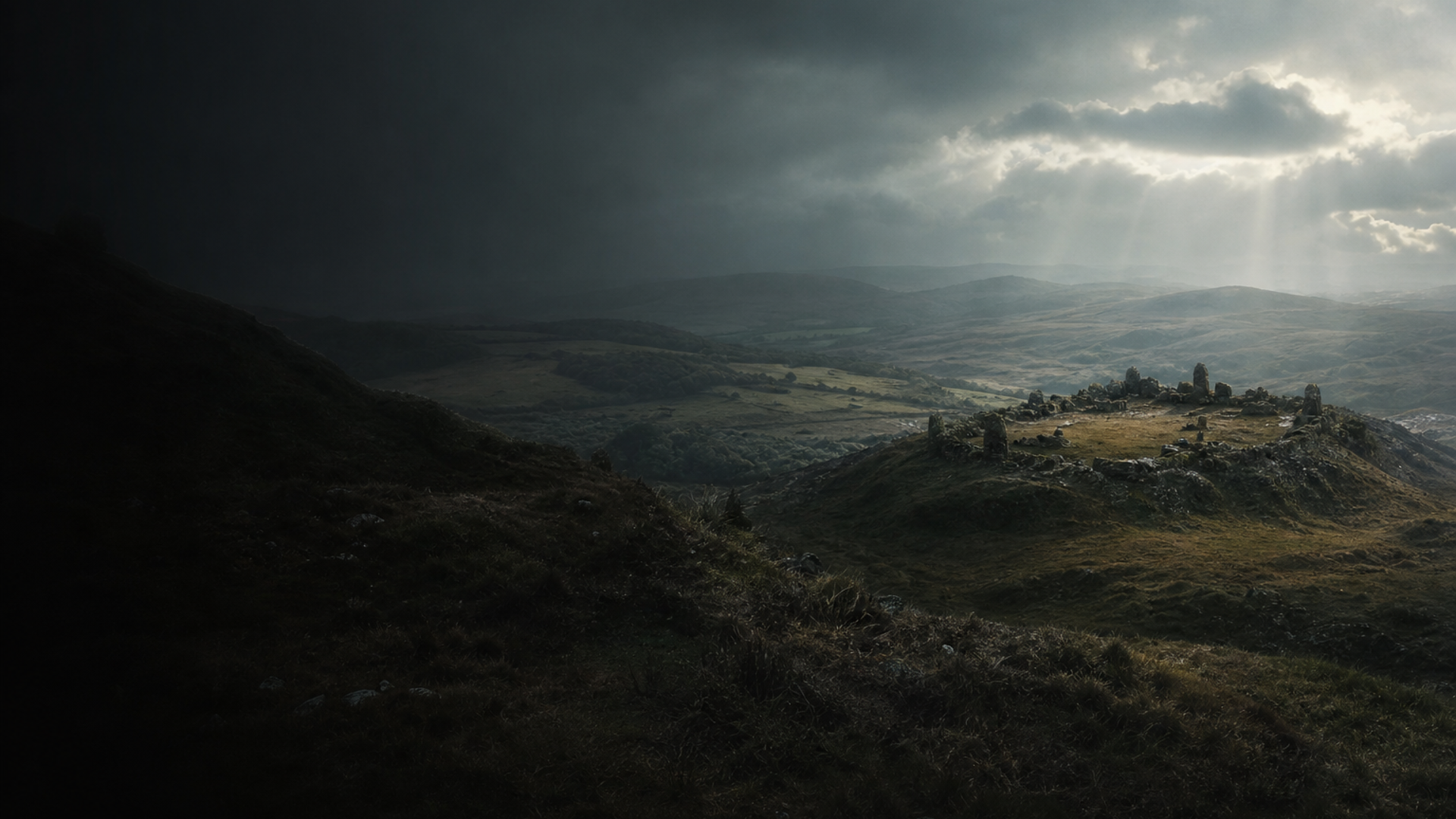

For visitors today, sites such as Worth Matravers and Hartlepool offer tangible links to individuals who navigated a world of coastal voyages and kinship ties. Ancient DNA does not rewrite personal stories so much as illuminate networks of connection: it shows how bodies buried at a cliff edge or beside a village pond were part of wider human currents that shaped the genetic map of Britain. Ongoing sampling and interdisciplinary study will continue to clarify how those currents flowed across centuries.

  • Modern English genomes reflect layered ancestry including Early Medieval admixture
  • Archaeology + genetics together illuminate local continuity amid broader connections
AI 电源

AI 助手

就 Shadows of Early Medieval England 文化提问

AI 助手 由DNAGENICS公司制作

解锁此特性
Ask questions about the Shadows of Early Medieval England culture. Our AI assistant can explain genetic findings, historical context, archaeological evidence, and modern connections.
AI 样本分析

Shadows of Early Medieval England 文化是人类历史中值得了解的一章……

遗传分析揭示了与早期种群的联系,同时显示了独特的适应和文化创新的证据。 古代DNA样本提供了对迁徙模式、社会结构以及古代种群之间的生物关系的深刻见解。

这是人工智能分析的预览。 解锁全AI 助手, 以探索关于:

  • 遗传组成和祖先
  • 移徙模式和起源
  • 日常生活和文化习俗
  • 现代遗传遗产

探索更古老的文化

揭开古代世界文明的故事

使用优惠码 可减免 35% • 11月12日 到期




