Shah Tepe Bronze Age: Voices from Kerman

下载的 PDF 是图像副本。如需可选中文本及更好的辅助技术支持,请使用打印功能。

Shah Tepe Bronze Age: Voices from Kerman

揭开一个失落的文明

正在加载考古记录……

正在收集古代记录

跳转到主内容
Shah Tepe Bronze Age: Voices from Kerman
文明焦点

Shah Tepe Bronze Age: Voices from Kerman

Nine ancient individuals from Shah Tepe illuminate life on the Kerman plateau between 3489–3031 BCE.

3489 CE - 3031 BCE
Kerman plateau, Iran
滚动开始
Chapter I

剧情

了解 Shah Tepe Bronze Age: Voices from Kerman 文化

Archaeological and genomic data from nine Bronze Age individuals at Shah Tepe (Kerman, Iran) suggest a West Asian genetic profile with Near Eastern Y and mtDNA lineages. Limited samples temper conclusions; archaeological evidence frames local lifeways and regional connections.

Time Period

3489–3031 BCE

Region

Kerman plateau, Iran

Common Y-DNA

J (2), T (1)

Common mtDNA

HV (2), U (2), H14, I1a, J

Chapter II

时间线

这种文化历史上的关键时刻

3400 BCE

Shah Tepe Bronze Age burials

Radiocarbon-dated interments at Shah Tepe mark community activity on the Kerman plateau and provide the genetic samples dated c. 3489–3031 BCE.

Chapter III

Origins & Emergence

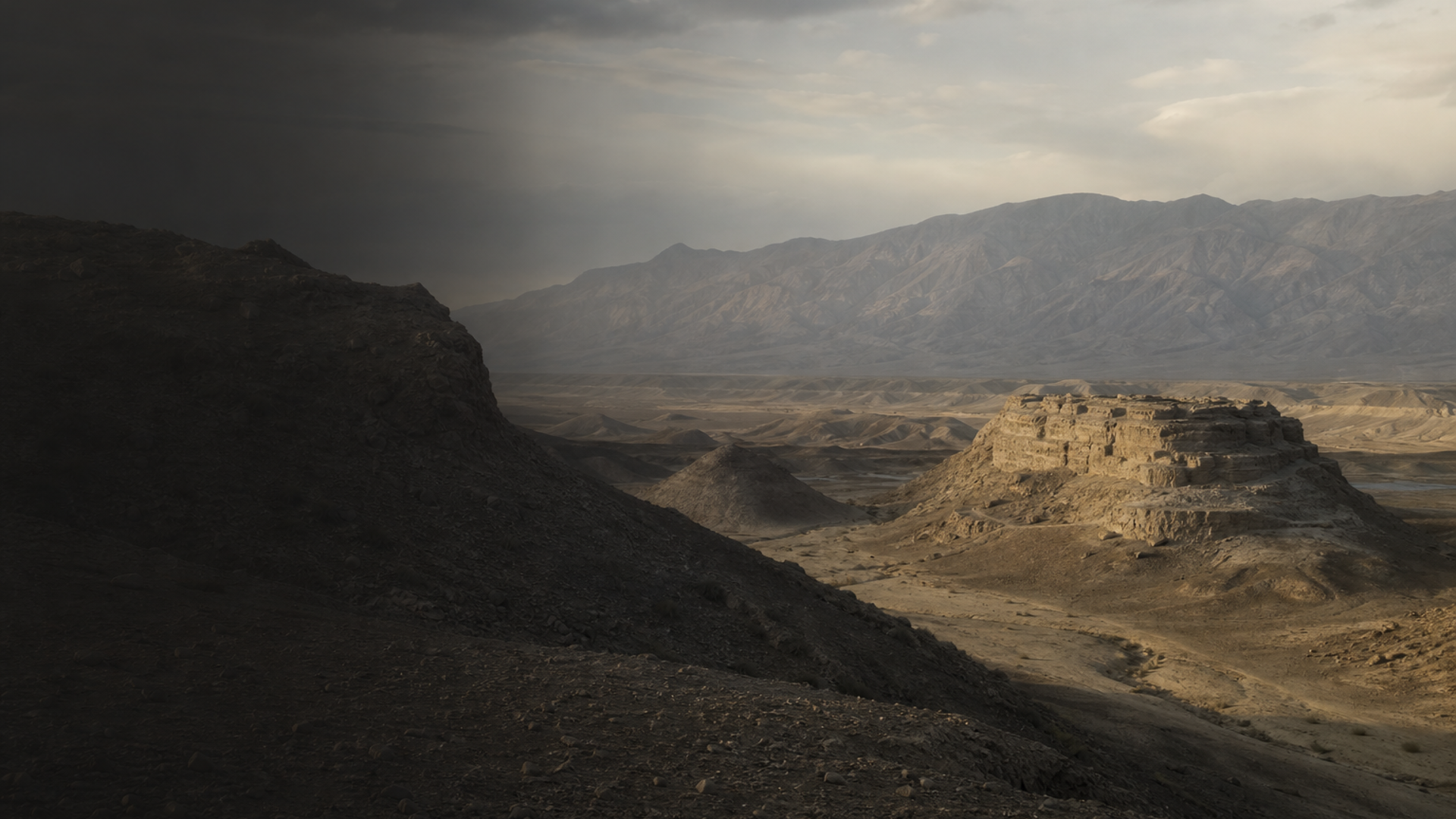
Shah Tepe sits on the arid sweep of the Kerman plateau (Arzuiyeh district), an archaeological node that witnessed increasing social complexity in the early Bronze Age. Radiocarbon-calibrated burials from the site fall between 3489 and 3031 BCE, placing the community in a dynamic era of regional exchange between the Iranian plateau, lowland Mesopotamia, and the Persian Gulf littoral. Archaeological data indicates a settlement economy rooted in mixed farming and herding, with material culture that echoes both local traditions and broader West Asian influences.

Limited excavation reports and fragmentary stratigraphy mean that narratives of emergence remain provisional. Pottery styles and mortuary practices at Shah Tepe show affinities with contemporaneous sites across southeastern Iran but do not present a simple story of migration or replacement. Instead, the archaeological picture suggests a tapestry of enduring local traditions woven together with novel motifs and imported objects — a cultural horizon shaped by mobility, trade, and incremental technological change.

Careful study of burial positions, grave goods, and other contextual markers provides windows into social differentiation and ritual practice, but many interpretations rely on modest sample sizes. Ongoing fieldwork and broader comparative datasets are needed to clarify how Shah Tepe fits into the mosaic of early Bronze Age West Asia.

  • Radiocarbon-dated burials: 3489–3031 BCE at Shah Tepe (Kerman, Arzuiyeh)
  • Material culture shows regional connections across southeastern Iran and the Near East
  • Archaeological evidence is fragmentary; interpretations remain provisional
Chapter IV

Daily Life & Society

Archaeological traces at Shah Tepe evoke domestic rhythms adapted to a dry, elevated landscape. Excavated features and recovered artifacts imply households engaged in mixed agriculture, caprine and ovine herding, and craft production. Ceramic assemblages—though limited in published detail—signal routine storage, cooking, and communal feasting practices. Stone tools and worked bone point to continuity with earlier plateau traditions, while rarer exotic items hint at long-distance exchange.

Burial practices preserve social signals: variations in grave goods and body treatment suggest degrees of status differentiation, perhaps linked to lineage or craft specialization. Architectural remnants suggest modest, seasonally adapted dwellings rather than monumental urban planning; life at Shah Tepe appears organized around small kin groups embedded in broader exchange networks.

Seasonal movement, resource management, and interpersonal ties to neighboring valleys likely structured everyday life. However, the archaeological record from Shah Tepe is incomplete, and reconstructions of diet, craft organization, and household economy rely on comparative data from better-documented contemporary sites. Where direct evidence is thin, archaeobotanical and zooarchaeological studies would be decisive for refining reconstructions of subsistence and labor.

  • Household economy: mixed farming, herding, and local craft production
  • Burials show social differentiation, but full social organization remains unclear
Chapter V

Genetic Profile

Genome-wide data from nine individuals at Shah Tepe provide a rare genetic window into a Bronze Age community on the Kerman plateau. Sample size is small (<10), so all population-level inferences must be treated as preliminary. Within this modest dataset, paternal lineages include haplogroups J (2 individuals) and T (1), both lineages long associated with West Asia. Maternal lineages are diverse—HV (2), U (2), H14 (1), I1a (1), and J (1)—reflecting a mixture of deep West Eurasian maternal ancestries.

The presence of Y-haplogroup J is consistent with continuity of Near Eastern male lineages through the Bronze Age, while T, though less common, appears intermittently across the Near East and South Asia. Maternal HV and U haplogroups point toward mitochondrial lineages that were widespread across West Eurasia from the Neolithic into the Bronze Age. These patterns align with archaeological indications of local continuity mixed with incoming influences, rather than a wholesale population replacement.

Population genetic modeling with such a small cohort cannot robustly resolve fine-scale admixture events, directionality of gene flow, or social mechanisms like patrilocality. Still, the combination of paternal J/T and varied maternal HV/U/H/I signals a community embedded in broader West Asian genetic landscapes. Future sampling from neighboring sites and temporal horizons will be essential to move from tentative snapshots to confident narratives about ancestry, mobility, and kinship at Shah Tepe.

  • Nine genomes: sample size small—interpretations are preliminary
  • Y-DNA dominated by J and T; mtDNA includes HV, U, H14, I1a, J
Chapter VI

Legacy & Modern Connections

The genetic signatures recorded at Shah Tepe resonate with broader patterns across Iran and the Near East: paternal J lineages and maternal HV/U clades persist into present-day West Asian populations. Archaeologically, the site's material traces contribute to a long arc of cultural practice on the Kerman plateau that shaped regional craft traditions and economic strategies.

Caution is essential. With only nine sampled individuals, claims about direct ancestry to modern groups or sweeping cultural continuity are tentative. What Shah Tepe offers confidently is a localized snapshot—an intimate chorus of genomes and artifacts that, when joined with future data, will help reveal how Bronze Age communities in southeastern Iran negotiated migration, exchange, and cultural innovation. For descendants and researchers alike, these remains underscore the deep-time entanglement of place, culture, and biology in shaping the human story.

  • Genetic continuity signals shared West Asian ancestry elements with modern populations
  • Small sample sizes limit claims; broader sampling is needed to confirm long-term links
AI 电源

AI 助手

就 Shah Tepe Bronze Age: Voices from Kerman 文化提问

AI 助手 由DNAGENICS公司制作

解锁此特性
Ask questions about the Shah Tepe Bronze Age: Voices from Kerman culture. Our AI assistant can explain genetic findings, historical context, archaeological evidence, and modern connections.
AI 样本分析

Shah Tepe Bronze Age: Voices from Kerman 文化是人类历史中值得了解的一章……

遗传分析揭示了与早期种群的联系,同时显示了独特的适应和文化创新的证据。 古代DNA样本提供了对迁徙模式、社会结构以及古代种群之间的生物关系的深刻见解。

这是人工智能分析的预览。 解锁全AI 助手, 以探索关于:

  • 遗传组成和祖先
  • 移徙模式和起源
  • 日常生活和文化习俗
  • 现代遗传遗产

探索更古老的文化

揭开古代世界文明的故事

使用优惠码 可减免 35% • 11月12日 到期




