Siena & Chiusi: Early Medieval Voices

下载的 PDF 是图像副本。如需可选中文本及更好的辅助技术支持,请使用打印功能。

Siena & Chiusi: Early Medieval Voices

揭开一个失落的文明

正在加载考古记录……

正在收集古代记录

跳转到主内容
Siena & Chiusi: Early Medieval Voices
文明焦点

Siena & Chiusi: Early Medieval Voices

Maternal lineages from Tuscany (700–1200 CE) revealed in small cemetery assemblages

700 CE - 1200 CE
Tuscany, Italy (Siena, Chiusi)
滚动开始
Chapter I

剧情

了解 Siena & Chiusi: Early Medieval Voices 文化

Archaeological and aDNA evidence from eight Early Medieval burials near Siena and Chiusi (700–1200 CE) highlights maternal haplogroups HV and J. Limited sample size tempers conclusions, but combined osteological and genetic data suggest continuity and Mediterranean connections in medieval Tuscany.

Time Period

700–1200 CE

Region

Tuscany, Italy (Siena, Chiusi)

Common Y-DNA

Undetermined (limited or no consistent calls in 8 samples)

Common mtDNA

HV (2), J (2), HV0 (1), H1e (1), H5 (1)

Chapter II

时间线

这种文化历史上的关键时刻

700 CE

Early Medieval burials at Chiusi

Cemetery contexts around Chiusi yield burials dated to the Early Medieval period (ca. 700 CE), forming the archaeological baseline for sampled individuals.

Chapter III

Origins & Emergence

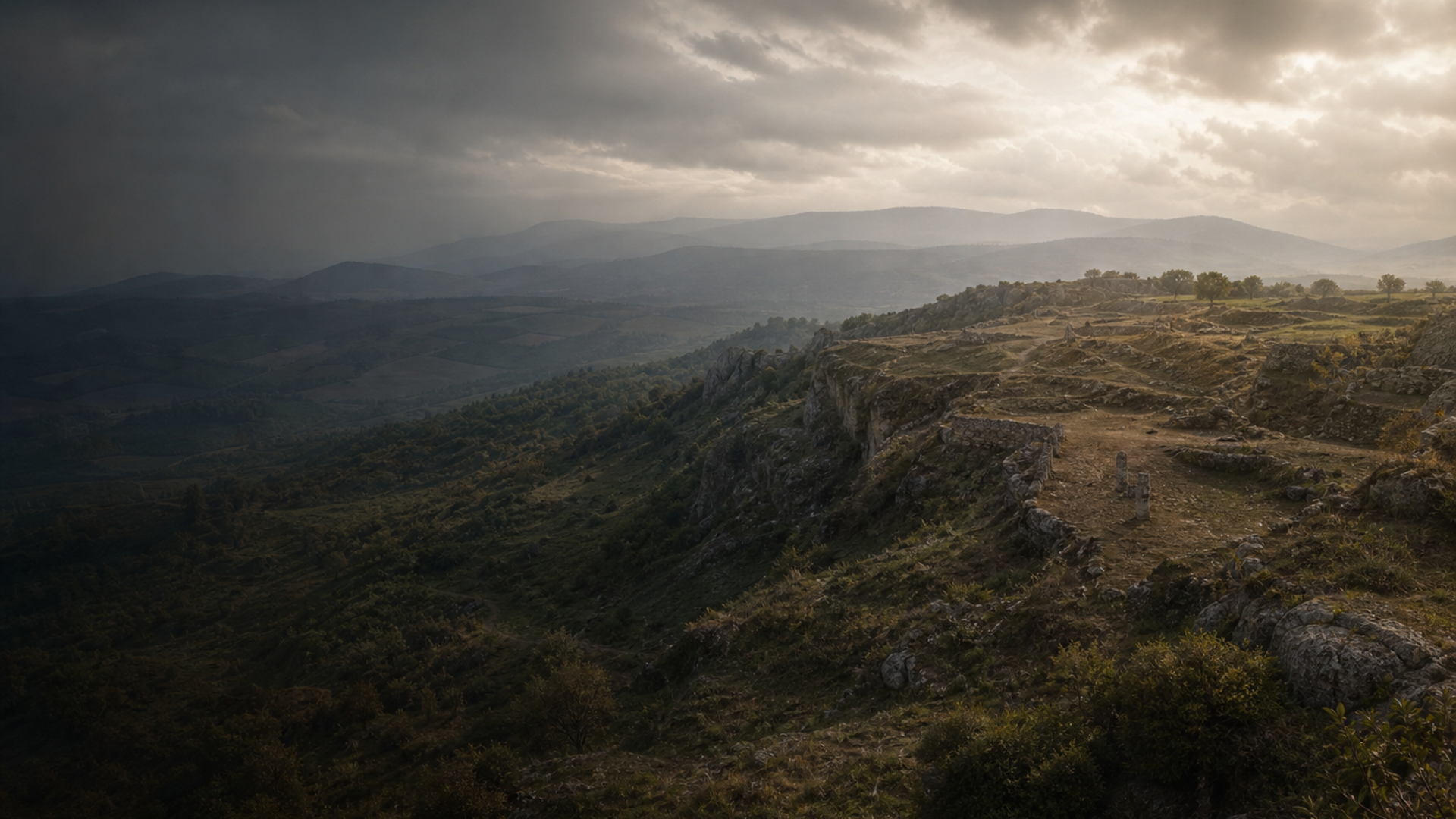
Tuscany in the Early Middle Ages was a palimpsest of earlier Etruscan towns, Roman infrastructures and evolving medieval polities. Archaeological data from cemetery contexts around Chiusi and the environs of Siena indicate continued settlement and reorganization of rural and urban landscapes between ca. 700 and 1200 CE. In the cinematic sweep of cypress-lined hills, stone churches and market lanes took form atop far older foundations; Chiusi itself, with well-known Etruscan roots and an enduring episcopal presence, remained a focal place for continuity and change.

The human remains sampled (n = 8) come from small cemetery assemblages that archaeological excavation has dated by stratigraphy and associated artifacts to the Early Medieval period. Limited evidence suggests these burial grounds reflect local communities rather than large-scale migrant encampments. Material culture—pottery fragments, simple metalwork and churchyard placement—archaeological data indicates a society reorienting around parish structures and regional trade routes. Genetic data, when integrated with this archaeological picture, offers an additional lens on mobility and ancestry: maternal lineages recovered here show affinities common in European and Mediterranean populations, but low sample numbers mean broader population dynamics must be inferred cautiously.

Key threads: continuity of settlement at historic towns, reconfiguration of community life around ecclesiastical centers, and the potential for small-scale mobility evidenced by both artifacts and maternal haplogroups.

  • Settlements around Chiusi and Siena persisted from antiquity into the Early Medieval period
  • Small cemetery assemblages dated 700–1200 CE provide context for sampled individuals
  • Archaeological signals point to local communities centered on parish and rural life
Chapter IV

Daily Life & Society

The daily world of Early Medieval Siena and Chiusi unfolded between cultivated hills, seasonal markets and the shadow of church towers. Archaeological traces—simple domestic architecture, agricultural implements, and cemetery orientations—indicate communities organized around mixed farming, craft exchange and emerging ecclesiastical institutions. Osteological remains often show life marked by heavy physical labor: joint wear consistent with repetitive tasks, enamel markers of childhood stress, and healed fractures that tell of hard rural livelihoods.

Burial practices at these sites are modest and local in scale. Archaeological data indicates interments near parish boundaries or in small community cemeteries, where orientation and associated artifacts vary little, suggesting shared ritual conventions. Portable finds—buckles, dress pins, iron tools—offer glimpses of identity and status but rarely dramatic wealth.

Material culture and landscape together paint a picture of resilient communities adapting old urban fabrics to new social orders. While archaeological evidence cannot record spoken language or personal stories, the bones and artifacts preserve patterns of work, care and belief that shaped family life across generations.

Key takeaways emphasize daily labor, parish-centered community life, and modest mortuary expression visible in the cemetery record.

  • Agrarian and craft-based livelihoods dominated community life
  • Burials occur in modest parish or community cemeteries with conserved ritual patterns
Chapter V

Genetic Profile

Ancient DNA analysis of eight individuals from Siena/Chiusi (700–1200 CE) recovered a maternal assemblage dominated by haplogroups HV and J, with single occurrences of HV0, H1e and H5. Haplogroup HV and its subclades (including H derivatives) are widespread in Europe and the Near Mediterranean and often appear in medieval and later populations across Italy; haplogroup J is frequent in Mediterranean and Near Eastern contexts as well as parts of southern Europe. Archaeological data indicating continuity of settlement suggests these maternal lineages may represent longstanding gene flow within Tuscany, or reflect older, layered ancestry reaching back to Roman and pre-Roman periods.

Crucially, no consistent Y‑DNA signature could be established from this small series, so paternal-lineage inferences remain unresolved. With only eight samples, genetic signals are preliminary: statistical power is low and any population-wide claim would be premature. Still, the mtDNA mix points toward a maternal gene pool typical of Mediterranean Europe, consistent with archaeological expectations of continuity combined with occasional long-range connections (trade, ecclesiastical networks, or individual mobility).

Future aDNA from larger, stratified samples and comparative datasets across Tuscany would clarify whether these haplogroup frequencies reflect local continuity, recent migration, or broader regional dynamics in the Early Medieval period.

  • Maternal haplogroups: HV (2), J (2), HV0 (1), H1e (1), H5 (1)
  • Paternal (Y) lineages undetermined in this dataset; conclusions are preliminary (n = 8)
Chapter VI

Legacy & Modern Connections

The maternal lineages seen in these Siena/Chiusi burials echo haplogroups common in modern Italy and the wider Mediterranean, suggesting threads of biological continuity across a millennium. Archaeological continuity of settlement sites like Chiusi and the persistent role of Siena as a regional center support a narrative where ancestry was layered rather than replaced: populations adapted and absorbed newcomers while maintaining deep local roots.

Caveats matter. With only eight samples, archaeological and genetic data together can suggest plausible connections to modern Tuscan diversity but cannot prove them. Limited evidence suggests that maternal ancestry in Early Medieval Tuscany included widely distributed European and Mediterranean lineages, consistent with patterns of local persistence and episodic mobility along trade and religious networks. Continued sampling, careful stratigraphic control and integration with isotopic mobility studies will help transform these evocative glimpses into robust stories of ancestry and movement.

  • mtDNA composition is consistent with a degree of maternal continuity into modern Tuscany
  • Small sample size means connections to present-day populations remain tentative
AI 电源

AI 助手

就 Siena & Chiusi: Early Medieval Voices 文化提问

AI 助手 由DNAGENICS公司制作

解锁此特性
Ask questions about the Siena & Chiusi: Early Medieval Voices culture. Our AI assistant can explain genetic findings, historical context, archaeological evidence, and modern connections.
AI 样本分析

Siena & Chiusi: Early Medieval Voices 文化是人类历史中值得了解的一章……

遗传分析揭示了与早期种群的联系,同时显示了独特的适应和文化创新的证据。 古代DNA样本提供了对迁徙模式、社会结构以及古代种群之间的生物关系的深刻见解。

这是人工智能分析的预览。 解锁全AI 助手, 以探索关于:

  • 遗传组成和祖先
  • 移徙模式和起源
  • 日常生活和文化习俗
  • 现代遗传遗产

探索更古老的文化

揭开古代世界文明的故事

使用优惠码 可减免 35% • 11月12日 到期




