Songshugou Bronze Age Echoes

下载的 PDF 是图像副本。如需可选中文本及更好的辅助技术支持,请使用打印功能。

跳转到主内容
文明焦点

Songshugou Bronze Age Echoes

Three Bronze Age individuals from Songshugou, Xinjiang hint at West–East genetic threads

3093 CE - 2069 BCE
Xinjiang (Aletai Region), China

剧情

Archaeological and ancient DNA data from three individuals (3093–2069 BCE) at Songshugou in Xinjiang reveal a blend of Eurasian maternal and paternal lineages. Limited samples suggest connections between local Bronze Age lifeways and wider Steppe-related gene flow; conclusions remain preliminary.

Time Period

3093–2069 BCE (Bronze Age)

Region

Xinjiang (Aletai Region), China

Common Y-DNA

R1b (observed in 1 sample)

Common mtDNA

U, H2b (each observed)

时间线

2500 BCE

Bronze Age occupation at Songshugou

Songshugou burials date within the Bronze Age horizon, reflecting regional pastoralist economies and early Eurasian exchange networks.

Origins & Emergence

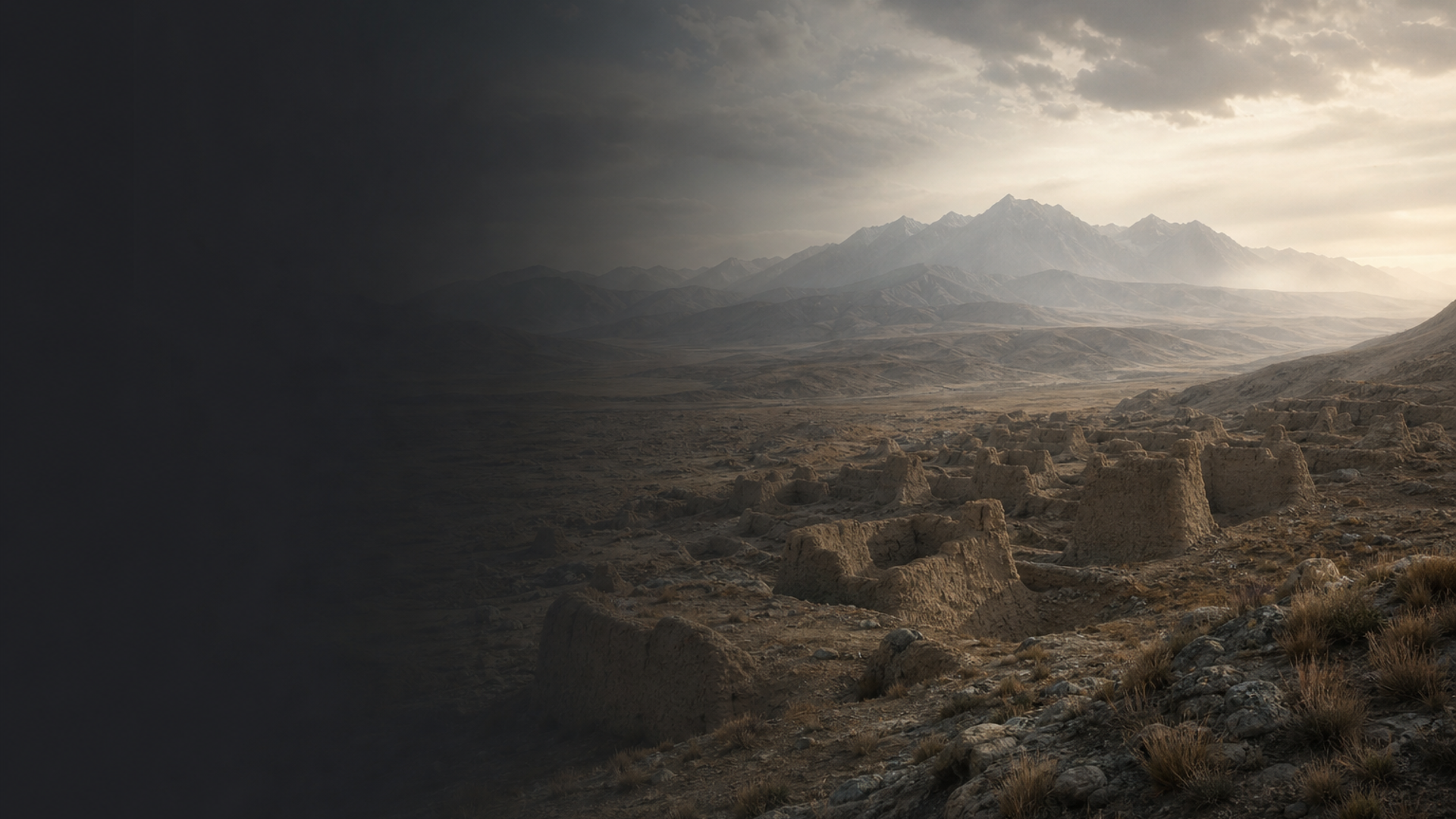
The Songshugou burials sit in the high, wind-scraped landscapes of the Aletai region (Jimunai/Jeminay County) and date to the Bronze Age (3093–2069 BCE). Archaeological data indicates that during this broad horizon Xinjiang communities were part of dynamic networks that connected mountain-steppe pastoralists, river-valley farmers, and long-distance exchange routes. Material culture in the greater Xinjiang Bronze Age includes metalworking, portable pastoral equipment, and funerary practices adapted to mobile lifeways; however, site-specific context for Songshugou remains sparse and under publication.

Genetically, the Songshugou assemblage is extremely small (three individuals), so any reconstruction of origins must be cautious. Limited evidence points to a mixture of lineages with both West Eurasian and local Eurasian affinities — a pattern seen elsewhere in Bronze Age Xinjiang where Steppe-related ancestry intermingled with indigenous gene pools. This region functioned as a crossroads rather than a single cultural horizon, and Songshugou likely reflects that mosaic: communities negotiating mobility, metallurgy, and exchange across mountain corridors.

  • Located in Aletai (Jimunai/Jeminay) County, Xinjiang
  • Dates: 3093–2069 BCE (Bronze Age)
  • Small sample size yields preliminary origin hypotheses

Daily Life & Society

Archaeological patterns across Bronze Age Xinjiang evoke a cinematic landscape of mounted herders, seasonal camps, and itinerant metalworkers. While Songshugou-specific excavations are limited, regional evidence indicates mobile pastoral economies exploiting highland pastures and river valleys, with material culture sized for transport rather than sedentary manufacture. Funerary contexts in the broader region range from simple pit graves to more elaborate burials that sometimes incorporate metal ornaments and imported goods, signaling social differentiation and long-distance contacts.

The environment around Aletai favours mixed pastoralism—sheep, goats, and horses—and seasonal movement. Archaeobotanical and zooarchaeological datasets from nearby Xinjiang Bronze Age sites show a mixture of local subsistence and exotic commodities arriving via emerging exchange networks. Social life was likely organized around kin groups with flexible alliances, and prestige goods may have circulated to cement ties across valleys and steppe corridors. Yet, for Songshugou itself, archaeological documentation remains limited, so daily-life reconstructions should be treated as informed inferences rather than firm facts.

  • Mobile pastoralism and seasonal settlement likely
  • Evidence of metallurgy and exchange in regional Bronze Age contexts

Genetic Profile

Ancient DNA from Songshugou comprises three individuals. Genetic data indicate the presence of a paternal lineage assigned to R1b (observed in one male) alongside maternal lineages including haplogroups U and H2b. R1b is a broad Y-chromosome family with diverse subclades across Europe and western Eurasia; its presence in Xinjiang during the Bronze Age can signal Steppe-related paternal input but does not by itself identify a precise migration or cultural source. Maternal haplogroup U is often associated with deep Eurasian hunter-gatherer ancestry, while H2b is one of several H subclades found across West and Central Eurasia.

Combined, these signals are consistent with other Bronze Age Xinjiang sites where admixture between local East Eurasian groups and West/Steppe-related populations is documented. However, with only three samples the pattern is suggestive rather than definitive. Population-level claims (timing, directionality, or social structure of gene flow) require larger sample sizes, high-resolution Y-chromosome subclade data, and genome-wide analyses to resolve. For now, Songshugou offers a tantalizing glimpse of Bronze Age connectivity on the Eurasian frontier.

  • Y-haplogroup R1b found in 1 individual — possible Steppe-related paternal input
  • mtDNA lineages U and H2b indicate mixed West–East maternal ancestries

Legacy & Modern Connections

The genetic echoes from Songshugou hint that Xinjiang’s Bronze Age populations contributed threads to the wider tapestry of Eurasian ancestry. Modern populations of Xinjiang and adjacent regions show complex admixture profiles shaped by millennia of migrations, and Bronze Age gene flow including Steppe-related components likely played a role in that history. Yet it is important to emphasize uncertainty: with only three samples, we cannot claim direct continuity from these individuals to any specific present-day group.

Archaeologically, Songshugou sits within long-lived exchange landscapes that prefigure later Silk Road corridors. The site’s limited ancient DNA record invites further excavation and sampling to clarify how Bronze Age movements shaped regional genetic structure. Expanding datasets will allow researchers to test whether Songshugou represents a transient community of mixed ancestry, a local lineage absorbing newcomers, or part of broader demographic shifts across Xinjiang.

  • Suggests Bronze Age contributions to regional genetic diversity
  • Direct links to modern populations remain tentative pending more data

AI 助手

AI 助手 由DNAGENICS公司制作

解锁此特性
Ask questions about the Songshugou Bronze Age Echoes culture. Our AI assistant can explain genetic findings, historical context, archaeological evidence, and modern connections.
AI 样本分析

Songshugou Bronze Age Echoes 文化是人类历史中值得了解的一章……

遗传分析揭示了与早期种群的联系,同时显示了独特的适应和文化创新的证据。 古代DNA样本提供了对迁徙模式、社会结构以及古代种群之间的生物关系的深刻见解。

这是人工智能分析的预览。 解锁全AI 助手, 以探索关于:

  • 遗传组成和祖先
  • 移徙模式和起源
  • 日常生活和文化习俗
  • 现代遗传遗产
使用优惠码 可减免 30% • 11月14日 到期





